Our Favorite Copenhagen Hotels
Luxury: Nimb
Boutique: Coco
Cheap: Steel House
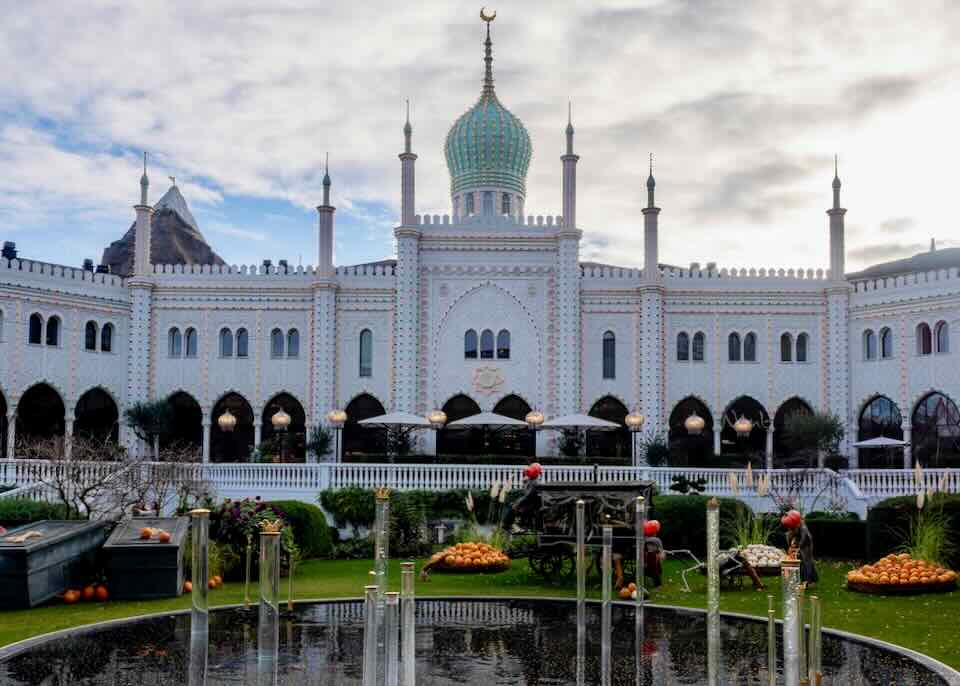
With its Moorish architecture and understated luxury, Nimb Hotel offers a serene, high-end retreat in the heart of Copenhagen’s Tivoli Gardens.
The Best Areas to Stay in Copenhagen
Overlooking the Baltic Sea, cut through by canals, and threaded with tree-lined cycle lanes, Copenhagen is one of Europe’s most attractive and easy-going capitals. It is compact, stylish, safe, and wonderfully livable, with a mix of 17th-century townhouses, modern harborfront architecture, excellent museums, Michelin-starred restaurants, design shops, food halls, waterfront swimming spots, and family-friendly attractions.
Copenhagen is also a pleasure to explore. Walking and cycling are both easy, and the public transportation system is excellent, with metro trains, buses, harbor ferries, and regional trains all well integrated. For most visitors, a central hotel plus a mix of walking, metro rides, and the occasional taxi is the simplest approach. The DOT Tickets app is useful for buying public transport tickets.
Most of Copenhagen’s best hotels are in Indre By, the historic center, where you will find grand 5-star classics, converted warehouse hotels, design-forward boutiques, and reliable midrange chains. Other good areas to stay include stylish Vesterbro and Kødbyen, upscale Frederiksberg, and quieter waterfront districts such as Nordhavn and Sydhavn. Nørrebro is less polished but more local and diverse, with excellent restaurants, bars, and independent shops.
For first-time visitors, Indre By is the best place to stay. It has the easiest access to the main sights, the best selection of hotels, and the most convenient transport links. For nightlife and restaurants, look at Vesterbro or Kødbyen. For a more residential, upscale feel, choose Frederiksberg or Østerbro. For modern architecture and harbor views, Nordhavn is increasingly appealing, though it is less central.
Copenhagen Neighborhoods
Indre By, or “Inner City,” is Copenhagen’s historic core and the best base for most first-time visitors. This is where the city feels most classically Copenhagen, with cobbled streets, old churches, canals, castles, museums, shopping streets, and many of the best-known sights. Nyhavn, Strøget, Rosenborg Castle, Christiansborg Palace, the Round Tower, and several major museums are all in or close to Indre By. It also has the city’s widest range of hotels, from luxury icons to simple budget chains. The downside is that it can feel busy and touristy, especially around Nyhavn and Strøget, but the convenience is hard to beat.
Tucked behind Strøget, the Latin Quarter is one of the most atmospheric parts of Indre By. Centered around the university, it has narrow lanes, small squares, independent shops, cafés, bookstores, and a slightly more creative, lived-in feel than the main shopping streets nearby. It is still very central, but it feels more intimate and less obvious than the busiest parts of the old town. This is a good choice if you want to be in the heart of Copenhagen without staying directly in the tourist crush.
Across the Knippelsbro bridge from Indre By, Christianshavn is one of Copenhagen’s most distinctive neighborhoods. Built on manmade islands in the 17th century, it still has a strong maritime character, with canals, old warehouses, houseboats, and some of the prettiest waterside streets in the city. Today it mixes historic charm with excellent restaurants, bakeries, cocktail bars, and easy access to the harbor. It is close to the center but feels a little more local and relaxed. It is also one of the best areas for travelers who like walking by the water.
Next to Christianshavn is Freetown Christiania, the former military base that became a self-governing alternative community in the 1970s. It remains one of Copenhagen’s most unusual places to visit, with street art, music venues, vegetarian restaurants, workshops, and a deliberately rough-edged atmosphere. The cannabis stalls of Pusher Street were cleared in 2024, changing the feel of the area, but Christiania is still worth visiting for its countercultural history and creative energy. It is not a typical hotel neighborhood, but it adds character to the wider Christianshavn area.
Just north of Christiania, Refshaleøen is a former industrial island turned creative district. Once home to shipyards, it now has food markets, art spaces, festivals, restaurants, climbing walls, swimming spots, and some of Copenhagen’s most interesting seasonal events. It is not the most practical place to stay for a first visit, but it is a fun area to explore, especially in warm weather. Come for casual dining, harbor views, outdoor drinks, and a more experimental side of the city.
West of Indre By, Vesterbro is one of Copenhagen’s best neighborhoods for restaurants, bars, nightlife, and boutique hotels. Once a working-class and red-light district, it has been heavily transformed but still has more edge than the old center. It is convenient, lively, and close to Copenhagen Central Station, Tivoli Gardens, and the city center. The best part for many visitors is Kødbyen, the former meatpacking district, where old industrial buildings now house restaurants, galleries, bars, breweries, and nightlife venues. This is a great area if you want to eat and drink well without staying in the most touristy part of town.
Another notable part of Vesterbro is the Carlsberg City District, a former brewery site redeveloped into a modern residential and cultural quarter. It has striking old industrial buildings, new architecture, restaurants, apartments, and the Home of Carlsberg Museum. It is not as central as Indre By or classic Vesterbro, but it is well connected and increasingly appealing for repeat visitors who want a newer, less obvious base.
South of Vesterbro, Sydhavn is a redeveloped harbor district with canals, footbridges, swimming areas, waterside cafés, and modern apartment buildings. It includes older pockets such as Fiskerhavnen as well as newer residential zones built around the water. Sydhavn is quieter and more local than central Copenhagen, with fewer major sights and a smaller hotel scene, but it can work well if you want a modern waterfront setting and do not mind using public transport to reach the center.
West of the city center, Frederiksberg is an affluent, leafy, and largely residential district that feels polished without being flashy. It has broad avenues, elegant apartment buildings, good shopping, strong restaurants, the Copenhagen Zoo, Frederiksberg Gardens, and Frederiksberg Palace. It is not the best base for sightseeing convenience, but it is a very pleasant area to stay if you prefer a quieter neighborhood with good metro access, excellent dining, and a more local rhythm.
North of Frederiksberg, Nørrebro is Copenhagen’s most diverse and energetic neighborhood. It is less refined than Frederiksberg and less classically pretty than Indre By, but it has some of the city’s best casual food, coffee shops, bars, bakeries, and independent stores. Jægersborggade is especially popular for cafés, restaurants, and small shops, while Ravnsborggade is known for vintage and design stores. Assistens Cemetery, where Hans Christian Andersen is buried, doubles as a leafy local park. Nørrebro is a good choice for younger travelers, food lovers, and repeat visitors, but it is not as polished or central as the main hotel districts.
North of Indre By, Østerbro is spacious, affluent, and residential, with parks, embassies, family-friendly streets, design shops, and some excellent restaurants. It is quieter than Vesterbro and Nørrebro, and better suited to travelers who want a calm base rather than nightlife outside the hotel door. Østerbro is also close to the Little Mermaid, Kastellet, and Fælledparken, one of the city’s largest green spaces. It is a good option for families and longer stays, though first-time visitors may prefer somewhere more central.
Part of Østerbro, Nordhavn is one of Copenhagen’s most ambitious redevelopment areas. Formerly an industrial port, it is now a showcase for contemporary Scandinavian architecture, harbor swimming, waterfront promenades, design shops, cafés, and restaurants. It is clean, modern, and increasingly stylish, with good metro connections to the center. The tradeoff is that it feels newer and less historic than the older neighborhoods. Stay here for harbor views, modern hotels, and a quieter waterfront setting, not for classic old Copenhagen on your doorstep.
Our Favorite Places to Stay in Copenhagen
Coco is our favorite boutique hotel in Copenhagen.
- Best Luxury Hotels in Copenhagen
Nimb • Villa • Hotel D’Angleterre • Radisson Collection • Manon Les Suites- Best Boutique Hotels in Copenhagen
Coco • The Admiral • Hotel Ottilia • 71 Nyhavn- Best Cheap/Midrange Hotels in Copenhagen
Steel House • Generator • AbsalonBest Areas in Copenhagen for…
- Best Neighborhoods in Copenhagen to Stay for First Timer: Indre By, Latin Quarter, Nørrebro
If it’s your first time in Copenhagen, and if you’ve only got a few vacation days, Indre By (downtown Copenhagen) is our recommended neighborhood. We love it because it’s as central as can be, with the city’s biggest attractions and museums, the greatest choice of accommodations, and a diverse dining scene. Latin Quarter (part of Indre By) is equally convenient for all of the above and is a particularly unique part of downtown. If you stay in Nørrebro, a short walk from Indre By across the Peblinge Sø canal, you have the advantage of cheaper accommodations and dining, as well as fewer crowds and proximity to Nørrebro’s excellent nightlife while still being within easy reach of Indre By’s many attractions.- Best Neighborhoods in Copenhagen for Sightseeing: Indre By, Frederiksberg, Nordhavnen, Carlsberg City District
Indre By is the historic center and has Copenhagen’s biggest attractions. You’ll find iconic sights like the Rosenborg Castle, Christiansborg Palace, Kastellet Fortress, the Round Tower (17th-century observatory – Europe’s oldest), the Little Mermaid Statue, and the Kissing Stairs by the harbor. Our top recommended museums, including the National Museum of Denmark, IKONO Copenhagen (contemporary art gallery), Design Museum Denmark, and Ny Carlsberg Glyptotek (fine arts museum), are located here, as well as the Tivoli Gardens amusement park and the vast Botanical Garden that flanks Rosenborg Castle.Nordhavnen is a must-visit if you are into contemporary architecture and design. The Silo and Portland Towers are two of many iconic buildings that have earned Copenhagen the World Capital of Architecture title by UNESCO. We suggest visiting the Home of Carlsberg Museum in the Carlsberg City District in Vesterbro to learn all about the history of Denmark’s most famous beer, and take a brewery tour next door. It’s also worth visiting Frederiksberg for the Copenhagen Zoo and modern art exhibitions in the subterranean Cisterne venue. The industrial island of Nyholm (connected to Refshaleøen island) offers the Ships on Holmen museum and the Sælen submarine. We took the metro from Indre By to the Kastrup Street stop in Amager East, on the outskirts of Copenhagen for the excellent, family-friendly National Aquarium.
- Best Neighborhoods in Copenhagen for Nightlife: Indre By, Nørrebro, Vesterbro, Kødbyen, Østerbro, Freetown Christiania
While there are bars and clubs all over Copenhagen, much of the nightlife is concentrated in the three ‘bros: Nørrebro, Vesterbro, and Østerbro. We also enjoyed the rich pickings in Indre By in the form of pubs and cocktail bars along Strøget pedestrian street and in the waterside Nyhavn area, popular bars include The Zoo and The Jane. Freetown Christiania is known for its underground bars, such as Woodstock Christiania and Café Inuit. In multicultural Nørrebro, seek out Blågård’s Pharmacy for live blues, rock, and jazz, The Barking Dog for creative cocktails, Rust for alternative music and DJ nights, and Brus, Ølbaren and Mikkeller & Friends for excellent craft beer. In Vesterbro, the clubbing scene is largely concentrated in the Kødbyen district, where you’ll find DJ nights and alternative music at Baggen and KB3. There’s also live music at Vega, farther west, and in the summer, there are numerous live events at the historic Carlsberg Brewery. Østerbro is more sedate, with much of the action centering on beer and wine bars; Standouts include Bubbles Bar, Holstein, and Søernes Ølbar.- Best Neighborhoods in Copenhagen for Food and Restaurants: Indre By, Nørrebro, Vesterbro, Frederiksberg, Nordhavn, Østerbro
Copenhagen is one of the world’s top destinations for foodies, with a high concentration of Michelin-starred restaurants, Modern Nordic eateries, street food markets, and numerous places representing the best global cuisine. Indre By (downtown Copenhagen) has restaurants to suit all tastes and budgets. Standouts include Krogs Fiskerestaurant (a refined 19th-century place known for fish dishes), Höst (contemporary Nordic), Barraba (casual Italian), Väkst (creative vegetarian), and Hija de Sanchez (award-winning food truck serving tacos).In refined Frederiksberg, top restaurants include Formel B (Michelin-starred Modern Danish cuisine), Hanzo (reimagined street food from Japan, Thailand, Vietnam, and China), Mielcke & Hurtigkarl (fine dining in a 16th-century building), Anarki (globally-inspired bistro food) and Circolo (Italian food from Tuscany).
In hip Refshaleøen, choose between Michelin-starred noma that kicked off the New Nordic Kitchen movement, Alchemist (2 Michelin stars, 50 courses!) Reffen street food market that showcases global flavors, Seaside Toldboden (informal setting, open kitchens, street food concept, Michelin chefs), and La Banchina (rustic Danish waterside setting).
Of the three ‘bros, Nørrebro is the most globe-spanning, with offerings ranging from Kiin Kiin (Michelin-starred Thai) and Ramen to Biíru (ramen and craft beer) to Hooked (wallet-friendly seafood), Sliders (burgers and beer) and Grød (porridge café).
Vesterbro’s Meatpacking District has a high concentration of excellent restaurants, including Tommi’s Burger Joint, Fleisch (a combined butcher’s, bar, and meat-heavy restaurant), and Warpigs (22 craft beers on tap, American BBQ).
Finally, Østerbro offers a great mix of refined and casual dining, from 3-Michelin-starred Geranium and VeVe (Michelin-starred vegetarian) to Gro Spiseri (dine in an organic rooftop farm), Ø12 (excellent brunch, casual dining) and Café Boppa (buzzy, family-friendly bistro).
- Best Neighborhoods in Copenhagen for Families: Frederiksberg, Indre By, Østerbro
If you’re looking for a quiet neighborhood to stay with your kids in a family-friendly hotel while being within easy reach of Copenhagen’s attractions, Østerbro is a good choice. We like because it’s within walking distance (or a short bus ride) from Indre By’s many sights but is considerably quieter, less touristy, and primarily residential. Here, you’ll find Fælledparken, one of the city’s biggest green spaces, and a cluster of lakes – a favorite strolling spot for Copenhagen’s families. There are limited accommodations, though.A short bus ride from Indre By is another quiet, family-friendly neighborhood, Frederiksberg, where you’ll find the Copenhagen Zoo – one of the city’s top attractions for kids. Accommodations fall into the midrange and high-end categories. In Indre By, there’s no shortage of kid-friendly entertainment, from the Tivoli Gardens amusement park and the Rundetaarn tower observatory to the Rosenborg Castle grounds, the Museum of Natural History with its dinosaur skeletons, and the interactive displays on Vikings at the National Museum of Denmark. You also have plenty of accommodations and kid-friendly restaurants, but the downside is that parts of Indre By can be noisy and crowded.
- Most Romantic Neighborhoods in Copenhagen: Indre By, Sydhavnen, Nordhavn, Frederiksberg
It depends on what you consider romantic: Indre By is perhaps the most atmospheric part of the city, complete with a fairytale castle (Rosenborg), cobbled streets, and centuries-old buildings, and is a joy to stroll around, hand in hand. Nordhavn is best for waterside strolls past some of Copenhagen’s most cutting-edge contemporary architecture. In Sydhavnen, you can paddleboard together along a picturesque waterway and stroll past scenic canals. In Frederiksberg, you can explore the landscaped grounds of Frederiksberg Palace and wander past the 19th-century villas along the neighborhood’s tranquil, tree-lined streets.- Best Neighborhoods in Copenhagen for a Local Vibe: Nørrebro, Freetown Christiania, Vesterbro, Kødbyen, Refshaleøen, Latin Quarter, Sydhavnen
These neighborhoods each have a distinctive character. Nørrebro is the most diverse part of the city, with numerous cultural grocery stores and vintage stores and we like the slightly grungy vibe. With a bit of an edgy vibe, Vesterbro is still Copenhagen’s red-light district but is primarily known for its nightlife and street markets. Part of Vesterbro but with its particular character, Kødbyen is a trendy part of town consisting of repurposed slaughterhouses turned art studios and more. Refshaleøen is another art hub inside reimagined industrial buildings, this time on an island. The compact former hippie enclave of Freetown Christiania on an island across from Indre By may no longer be as known for its marijuana stalls but still has plenty of fascinating corners to explore. The Latin Quarter is a particularly charming part of Indre By, with a thriving bohemian community and numerous independent cafes, while Sydhavnan retains the feel of ye olde Copenhagen that relied on the sea for its livelihood, with its old fishing harbor and boat-lined, narrow streets.- Best Neighborhoods in Copenhagen for Walking: Indre By, Frederiksberg, Nordhavn, Østerbro, Sydhavnen
Most of Copenhagen’s neighborhoods are well-designed for being explored on foot, but some are more scenic. Indre By is known for its attractive cobbled streets, which seemed to take us back in time as we wandered between its royal residences and fortresses. You can also take to the trails in the Botanic Garden. Frederiksberg has strollable, tree-lined streets and numerous walking trails crisscrossing the vast landscaped grounds surrounding its namesake palace. Østerbro also features ample green spaces – particularly the large Fælledparken and smaller parks surrounding its cluster of lakes. Nordhavn is great for waterside paths that take you past some of Copenhagen’s most striking contemporary architecture, while Sydhavnen is also a joy to explore on foot, with quiet streets flanking the old fishing harbor and numerous boat-lined canals.- Safest Areas of Copenhagen
Copenhagen is a very safe city. Apart from some opportunistic pickpocketing and bag snatching in touristy places, there are few safety concerns. All neighborhoods frequented by visitors are safe to walk around at most times of day. Alcohol-fueled nights out in the city’s nightspots, such as Nørrebro, very occasionally result in scuffles.- Unsafe Areas of Copenhagen
Copenhagen’s neighborhoods with higher crime rates are primarily residential, not places where visitors are likely to find themselves. That said, pickpocketing is common in Indre By, particularly around the main train station and wherever you get large crowds, such as along the pedestrianized Strøget Street, so keep an eye on your valuables. Common sense precautions apply, such as not walking alone along a poorly lit street at night.The 12 Best Neighborhoods in Copenhagen for Tourists
1. Indre By
Flanked by the harbor and the Peblinge Sø canal, compact, walkable Indre By is Copenhagen’s downtown and most visited neighborhood. Here, you’ll find the city’s main train station, 19 museums, and other cultural institutions that make up the Copenhagen Cultural District. There’s also the largest concentration of accommodations for every budget, a diverse dining scene comprising dozens of restaurants and cafes, and excellent public transportation.
In this historic heart of the city, our favorite attractions include the Tivoli Gardens amusement park, the much-Instagrammed Little Mermaid statue, and watching the changing of the guard at the royal residence of Amalienborg. Also, visit the fortresses of Christiansborg and Kastellet along the harbor. Explore the atmospheric squares and cobblestone streets, including the popular pedestrianized Strøget, with its excellent shopping opportunities. The food scene in Indre By ranges from hearty American (The Midwestern Diner), burgers (Gasoline Grill), and Italian (Cantina) to the Torvehallerne produce market, contemporary Scandinavian cuisine (Höst), farm-to-table small plates at Uformel, and tasting menus in a 17th-century mansion at Aoc – one for special occasions.
- Best Luxury Hotels in Indre By
Nimb • Marriott • Manon Les Suites • Villa Copenhagen • Hotel D’Angleterre • Radisson Collection- Best Cheap/Midrange Hotels
Coco • The Admiral • 71 Nyhavn2. Latin Quarter
The Latinerkvarteret (Latin Quarter) is one of the oldest parts of historic Indre By. A tight grid of medieval streets bookended by the Aarhus Domkirke church to the west and hemmed in by the harbor and Nørregade, Kystvegen, and Skolebakken streets. One of Copenhagen’s artistic hubs, the Latin Quarter features a good mix of coffee shops, eclectic stores, and art studios. Go for homemade food at the Next Door Café, Mefisto for seafood, La Cabra for excellent coffee, and Café Mellemfolk for brunch. Attractions include the medieval frescoes at the Aarhus Domkirke and the Occupation Museum devoted to the German occupation of Denmark in WWII. There are only a few hotels here, but plenty more in Indre By.
- Best Luxury Hotels in Latin Quarter
Hotel Royal • SOFS3. Christianshavn & Freetown Christiania
Bisected by an Amsterdam-style canal lined with boats, Christianshavn is an artificial island in the center of Copenhagen. During warmer months, it’s particularly popular with locals who come for pints and picnics on the waterfront, and it has a superb dining scene: several Michelin-starred restaurants and fantastic street food from around the world, like noma.
Freetown Christiania is the eastern half of this island. In 1971, a hippie commune was established on this former military base; it’s locally notorious for its Green Light District, formerly centered on the marijuana stalls of Pusher Street before the residents symbolically shut them down in April 2024. However, there are also jazz bars here, vegetarian restaurants, bakeries, hand-built homes, and artists’ workshops, best explored on a tour led by a Freetown Christiania local.
- Best Luxury Hotels in Christianshavn & Freetown Christiani
NH Collection • Kanalhuset4. Refshaleøen
Refshaleøen occupies an island across the harbor from the Little Mermaid and the Kastellet Fortress. It’s a former industrial district locally known as a creative hub with alternative urban development and a strong sense of identity. It attracts visitors and locals alike with its festivals, art center, theater, and food court showcasing global cuisines. There are no accommodations here, but Refshaleøen is easily reached by harbor bus or bicycle from Indre By or Christianshavn.
5. Vesterbro
Copenhagen’s skid row for many years is still home to the city’s red light district, though the vibe is much less seedy than similar parts of town in Amsterdam and Berlin. Tattoo parlors, underground bars, vintage shops, sex boutiques, and street art murals pepper Vesterbro. This old working-class neighborhood is in transition. It’s no longer one of Copenhagen’s poorest ‘hoods; in recent years, it’s become known for its craft breweries, like Mikkeller, hip cafes like Mad & Kaffe, summertime street markets, and a lively bar scene. It’s where you shop for vintage sneakers and leather jackets before enjoying the buzzy nightlife, mainly around Vesterbrogade and Istedgade.
- Best Luxury Hotels in Vesterbro
CityHub • 66 Guldsmeden6. Kødbyen
Compact Kødbyen (Meatpacking District) is a distinctive part of Vesterbro and a few minutes walk from Copenhagen Central Station. Revamped former slaughterhouses transformed into art studios, breweries, bars, restaurants, and clubs. Here, you’ll find the V1 Gallery – a top contemporary art venue, and Fotografisk Center, showcasing the efforts of up-and-coming Danish photographers. You can join Copenhagen’s hipsters on a night out, whether at Warpigs for beer and barbecue or Kødbyens Fiskebar for stellar seafood, before venturing into one of the underground clubs.
- Best Luxury Hotel in Kødbyen
Scandic7. Carlsberg City District
It is part of Vesterbro but also a neighborhood in its own right. Copenhagen’s newest, the Carlsberg City District, used to be a closed industrial ground centered on the Copenhagen-founded Carlsberg brewery. It’s now a residential neighborhood whose primary attraction is the excellent Home of Carlsberg Museum. There’s only one hotel here, but the Carlsberg City District is easily reachable by bus or subway from downtown Copenhagen.
- Best Luxury Hotel in the Carlsberg City District
Hotel Ottilia8. Sydhavnen
Sydhavnen, just south of Vesrterbro, gives you a taste of Copenhagen in the olden days while showcasing new foodie destinations in its repurposed warehouses. The old fishing port of Fiskerihavn and numerous waterways and canals feature waterfront apartment buildings, houseboats, and docked old fishing boats. You can go kayaking or paddle boarding along the Sluseholmen harbor bathing area, hang out with alpacas – Copenhagen’s fluffy ambassadors – at the Sydhavnstippen nature area, and stroll along the canals. Dine out at Pauli (brewery and contemporary Danish cuisine), Wild Horses (superb coffee and brunch), or Banegaarden – a food court spread across nine wooden barns. A newly opened metro line connects Sydhavnen to other neighborhoods, and while there are few accommodations here, there are numerous hotel options in nearby Vesterbro and Indre By.
- Best Luxury Hotel in Sydhavnen
Scandic Sluseholmen9. Frederiksberg
Leafy Frederiksberg, with its tree-lined residential streets, is Copenhagen’s most affluent neighborhood, west of Indre By and just north of Vesterbro. Its centerpiece is Frederiksberg Have (gardens). A vast parkland surrounding an 18th-century palace and the Copenhagen Zoo. South of the zoo, across Roskildevej Street, is Søndermarken, another green space with the historic Cisterne reservoir used for outdoor art exhibitions. There’s a handful of primarily upscale hotels here, globe-spanning restaurants (including Michelin-starred options), stylish boutiques, and one of the city’s best flea markets held on Saturdays from April to October.
10. Nørrebro
Just across the Sortedams Sø waterway from Indre By (downtown Copenhagen), vibrant Nørrebro is Copenhagen’s young-feeling, culturally diverse neighborhood. It’s home to 55+ nationalities with a distinctive vibe. Much of the dining and nightlife action is centered on Nørrebrogade Street. Ravnsborggade is particularly rich in antique and vintage stores and independent coffee shops. Jægersborggade – formerly a gathering spot for drug dealers and bikers – is now a foodie haunt, offering everything from nitrogen ice cream to fine dining. Food-wise, choose between Kebabistan (kebabs), Ma’ed (Ethiopian), Nørrebro Bryghus (award-winning brewery), and Kiin Kiin (innovative Thai).
You can visit the stately Assistens Kirkegård cemetery to view the final resting places of Hans Christian Andersen and other famous Danes or check out sculptures from around the world at Superkilen Park. Accommodations are few, but there are numerous hotels in Indre By, a short walk away.
- Best Luxury Hotel in Nørrebro
Nora- Best Cheap/Midrange Hotels
Sleep in Heaven • Globalhagen Hostel11. Østerbro
Østerbro is north of downtown Copenhagen and primarily residential. It’s a welcome escape from the city’s more touristy neighborhoods. The neighborhood is spread out, upscale, and family-friendly, with plenty of dining options and shopping opportunities. Also, Fælledparken, one of the city’s most prominent green spaces, is here. Along Århusgade and Nordre Frihavnsgade streets are restaurants and boutiques. Don’t miss shopping for Danish fashion and interior design along the latter, and grab lunch at Wokshop (Thai) or Ramen to Biiru (Japanese noodles). Østerbro’s attractions are low-key: you can run, stroll, or have brunch beside the Copenhagen lakes, or check out Enigma – the Museum of Communication. Accommodations are limited.
- Best Luxury Hotel in Østerbro
Bob W12. Nordhavn
Nordhavn is part of Østerbro and is a repurposed industrial port area. It is bisected by designated bicycle lanes and a mere 15-minute hop on the metro from downtown Copenhagen. You can spot some of the city’s most exciting contemporary architecture, such as Portland Towers and The Silo, take a tour of the UN City campus, workout at the rooftop gym overlooking the water at Konditaget Lüders, shop for innovative design at Menu Space, and swim at the Sandkaj Harbor bathing zone, with its inviting sandy strip and beach cafes. The dining scene around the buzzy Göteborg Plads square runs the gamut from authentic Japanese at Sushi Anaba to Mexican at Hija de Sanchez Cantina, and you can even stay the night in an exclusive one-room hotel inside a former coal crane.
- Best Luxury Hotels in Nordhavn
Stay • The Krane • Stay Seaport

About Santorini Dave