By Santorini Dave • Updated: July 17, 2026
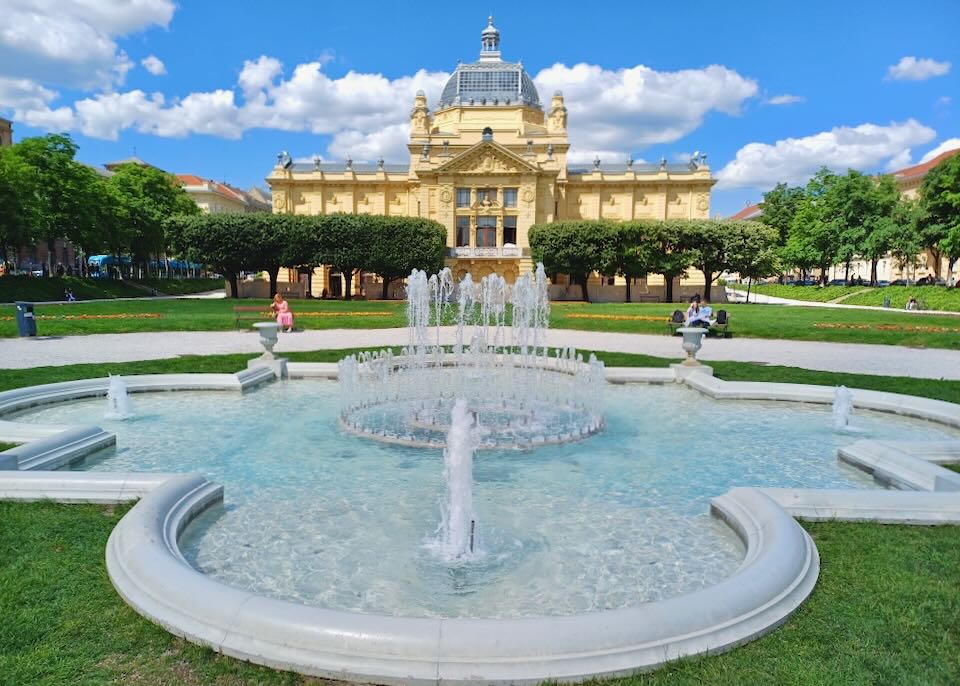
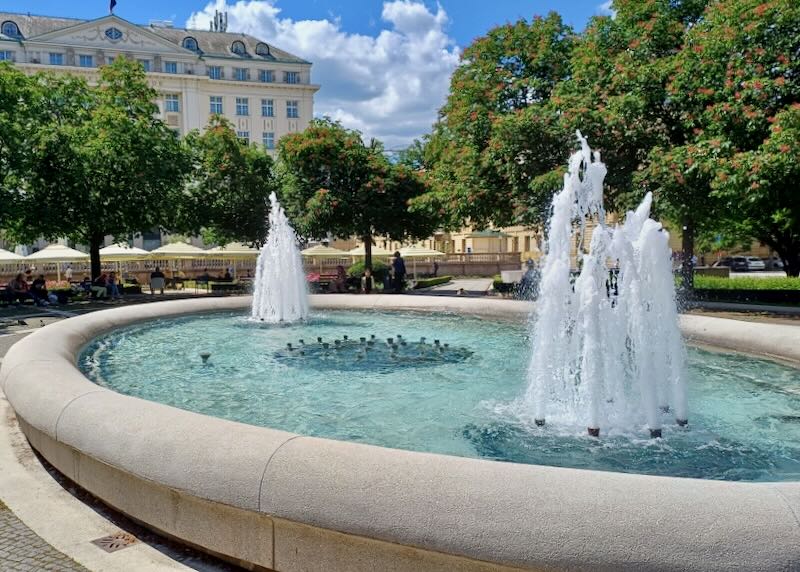
The Lower Town by King Tomislav Square Fountain in front of the Art Pavilion followed by three blocks of beautiful parks.
The Best Areas to Stay in Zagreb
Choosing where to stay in Zagreb comes down to one main decision: stay in Lower Town for the most convenient sightseeing base, or stay in and around Upper Town for historic atmosphere, restaurants, bars, and nightlife.
Lower Town is the best area for most first-time visitors. Its central streets contain many of Zagreb’s best hotels, museums, parks, shops, and tram connections. Ban Jelačić Square and the entrance to Upper Town are within a 5 to 15-minute walk, while the main train station is at the southern end of the district.
Upper Town is better for travelers who prioritize character over convenience. The lanes around Tkalčićeva, Radićeva, Kaptol, and the historic hilltop are more atmospheric, especially after dark. The tradeoff is that some hotels require walking over cobblestones, climbing hills or stairs, or carrying luggage through pedestrian areas.
Staying near the train station works well for rail passengers, families, and anyone who wants larger full-service hotels. The bus station is convenient for airport transfers and intercity buses but less appealing for sightseeing. Novi Zagreb offers more space, easier parking, and lower prices, but most visitors will spend considerable time traveling into the center.
Zagreb Neighborhoods
- Lower Town: Best overall for first-time visitors, sightseeing, shopping, museums, parks, and easy access to both Upper Town and the train station.
- Upper Town: Best for historic atmosphere, restaurants, bars, nightlife, and couples. Check the exact location because the western hilltop streets can involve steep climbs and stairs.
- Around the Train Station: Best for train passengers, families, and travelers who prefer larger hotels. Ban Jelačić Square is approximately 15 to 20 minutes away on foot through the Lenuci Horseshoe parks.
- Around the Bus Station: Best for early airport transfers, late bus arrivals, and lower hotel prices. The central sightseeing areas are roughly 20 to 30 minutes away on foot or a short tram ride.
- Novi Zagreb: Best for parking, Arena Zagreb events, the Museum of Contemporary Art, larger rooms, and lower rates. It is not the best choice for a short sightseeing visit.
Quick Hotel Picks
- Best Overall: Esplanade – Zagreb’s most memorable luxury hotel, beside the train station and about a 15-minute walk from Ban Jelačić Square.
- Best Central Location: art’otel – Modern rooms, an indoor pool, and an excellent Lower Town location within a few minutes of the main square.
- Best Boutique Hotel: Le Premier – An elegant smaller hotel in a restored historic building, east of the busiest central streets.
- Best Historic Location: Hotel Jägerhorn – Hidden just off Ilica, with easy access to both Lower Town and Upper Town.
- Best for Families: Hotel Academia – A practical Upper Town choice near restaurants and a shopping center, with easier vehicle access than many historic-area hotels.
- Best Value: Hotel Park 45 – Spacious rooms and a strong location on Ilica, west of the main square and close to tram services.
- Best Near the Train Station: Hotel Astoria – Quiet, traditional, and close to both the station and Lower Town’s parks.
- Best Hotel Pool: The Westin – A large full-service hotel with an indoor pool, gym, and spa facilities.
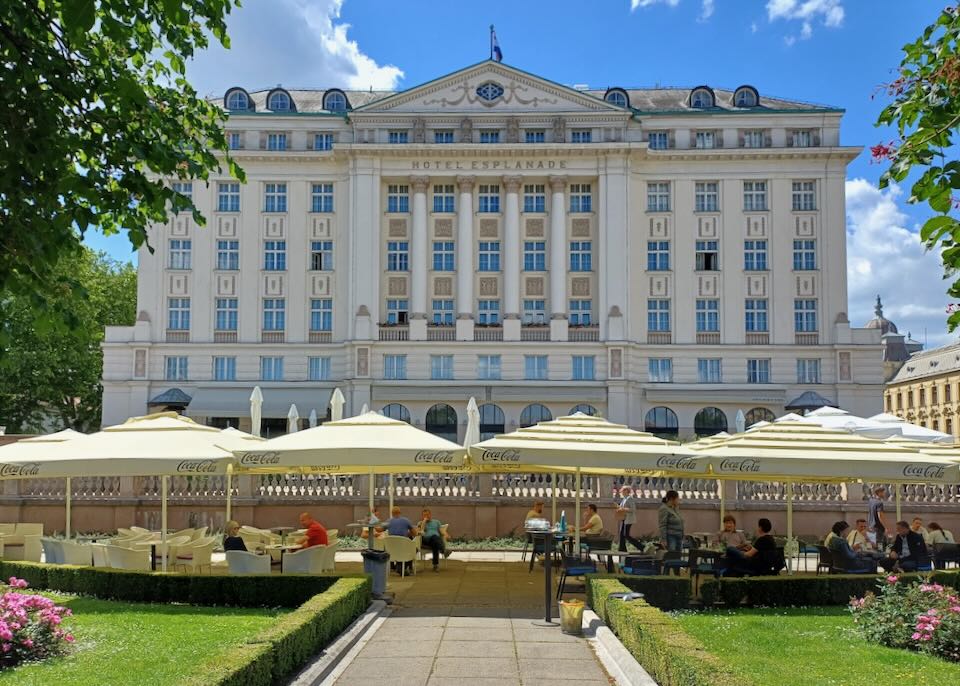
Esplanade, beside the train station, is our favorite 5-star hotel and one of Zagreb’s most historic places to stay.
The Best Places to Stay in Zagreb
- Best Luxury Hotels in Zagreb
Esplanade • Canopy • DoubleTree • Sheraton • The Westin- Best Boutique Hotels in Zagreb
Le Premier • art’otel • Hotel Capital • Boutique Hotel HOH • Hotel Jägerhorn • Hotel Sundial- Best Cheap/Midrange Hotels in Zagreb
Hotel Astoria • Hotel Park 45 • Grand Bells Bed and Breakfast • Hotel Central • Garden Hotel- Best Hotels for Families in Zagreb
art’otel • Esplanade • Le Premier • Hotel Jägerhorn- Best Hotels for Couples in Zagreb
Hotel Academia • Hotel Astoria • Hotel Park 45 • Hotel Dubrovnik • Hotel Aristos (airport)
Best Areas in Zagreb for…
- Best Area in Zagreb for First-Time Visitors: Lower Town
Lower Town is the best base for most first-time visitors. Ban Jelačić Square, Ilica’s shops, the Lenuci Horseshoe parks, museums, restaurants, cafés, and Zagreb’s main tram routes are all within easy walking distance, while Upper Town begins just a few minutes north of the square.Hotels in the northern half of Lower Town are a 5 to 10-minute walk from Ban Jelačić Square and the Upper Town. Those closer to the Main Railway Station are about 15 to 20 minutes away on foot. The area is mostly flat, making it much easier with luggage than Upper Town, though rooms facing major streets or tram lines can experience some traffic noise.
Choose Lower Town if you want the easiest base for sightseeing, restaurants, shopping, and public transport. Upper Town is more atmospheric and historic, but its steep streets, stairs, and smaller number of hotels make it better suited to travelers who prioritize character over convenience.
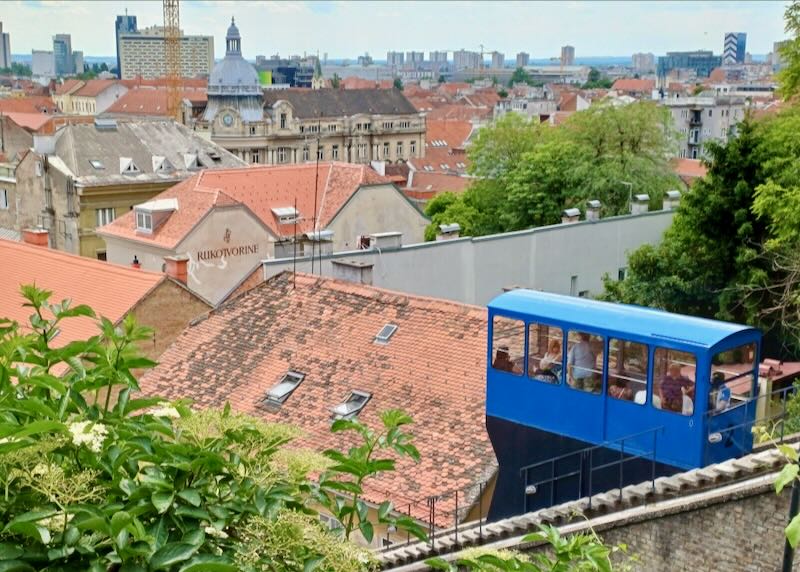
Zagreb’s blue funicular between Lower Town and Upper Town.
- Best Area in Zagreb for Sightseeing and History: Lower Town
Lower Town is the most practical base for exploring both halves of central Zagreb. Its museums, Croatian National Theatre, Botanical Garden, and Lenuci Horseshoe parks are within walking distance, while Ban Jelačić Square, Dolac Market, Zagreb Cathedral, Tkalčićeva Street, and Upper Town are immediately to the north.Stay near Ban Jelačić Square for the shortest walk to Upper Town. The historic streets around St. Mark’s Church have more character, but reaching them involves slopes, cobblestones, and some stairs, although the funicular provides an easier route from Lower Town. Accommodation farther uphill is quieter and more historic but less convenient with luggage or limited mobility.
Lower Town feels more like a working Central European city than a preserved Old Town, but it is the better overall sightseeing base, especially for a short visit. Several cultural buildings remain affected by post-earthquake restoration: the Mimara Museum and the historic Upper Town location of the Croatian History Museum are closed, and Zagreb Cathedral remains under reconstruction. The Zagreb City Museum is the best introduction to the city’s history within Upper Town.
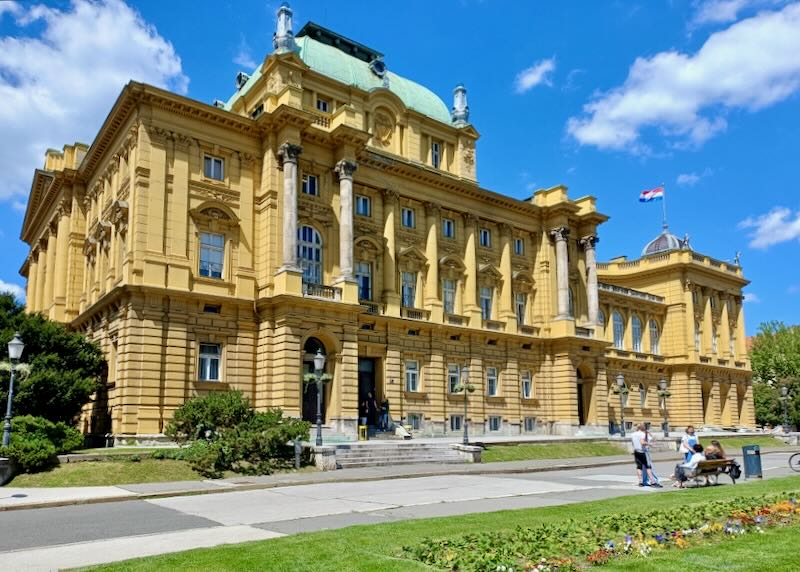
The Croatian National Theatre offers ballet, theater, and opera performances.
- Best Area in Zagreb for Nightlife: Upper Town
Upper Town is the best base for nightlife, especially around Tkalčićeva Street and the lanes just north of Ban Jelačić Square. The area is strongest for bars, pubs, wine bars, casual restaurants, terraces, and late-evening crowds rather than large clubs.Staying near Tkalčićeva puts most nightlife within a few minutes on foot, but rooms directly above bars can be noisy well into the night. For a better balance, choose a side street or accommodation slightly uphill, where the main bar district remains close but late-night noise is less intense.
Choose Upper Town if you want to walk to drinks and dinner without using taxis. Lower Town is better for concerts, opera, ballet, and larger cultural events, especially around the Croatian National Theatre, but its nightlife is more spread out.
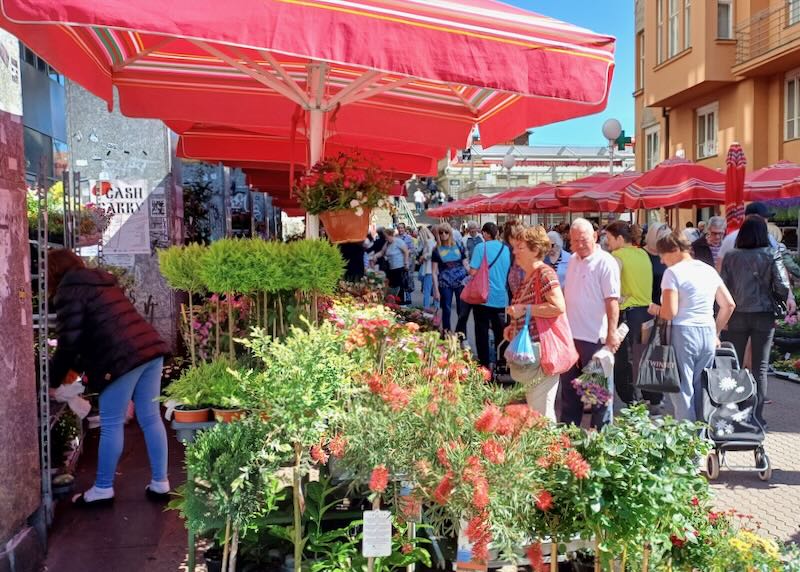
Fresh vegetables, fruits, baked goods, and flowers at the large outdoor Dolac Market.
- Best Areas in Zagreb for Shopping: Lower Town and Upper Town
The main central shopping corridor runs through Ban Jelačić Square and west along Ilica. Lower Town has department stores, international fashion chains, pharmacies, supermarkets, and everyday shops. Zagreb has only a small selection of designer and luxury-brand boutiques, though the choice is modest compared with larger European capitals and is spread across the city rather than concentrated in a single luxury shopping district.Radićeva, Tkalčićeva, and the smaller Upper Town streets are better for independent boutiques, Croatian design, jewelry, souvenirs, and specialty shops. Dolac Market, just north of Ban Jelačić Square, is best visited in the morning for produce, flowers, baked goods, meat, cheese, and small souvenir stalls.
Croatia restricts Sunday retail openings, so many supermarkets, malls, and larger stores close on most Sundays. Restaurants, cafés, bakeries, markets, and permitted shops follow different rules, so check individual hours rather than assuming the entire center will be open.
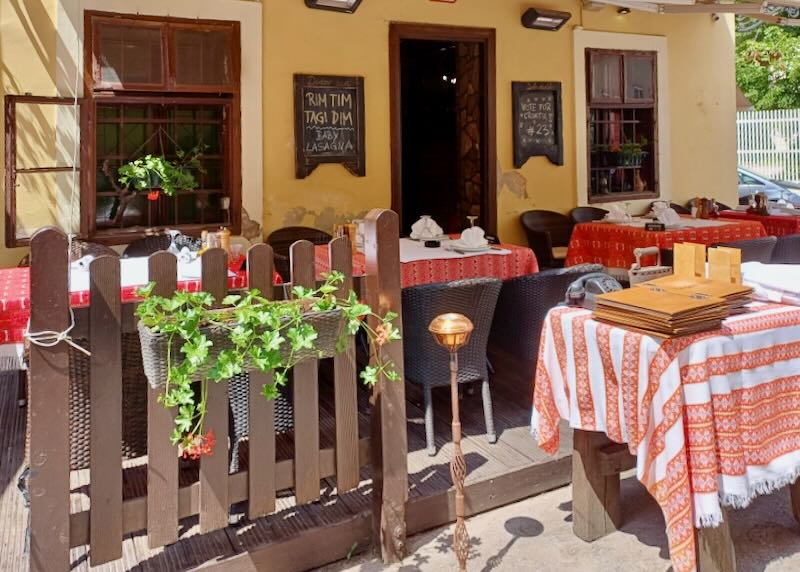
Traditional Croatian cuisine at Tavern Didov San.
- Best Area in Zagreb for Restaurants: Upper Town
Upper Town has Zagreb’s best concentration of restaurants, wine bars, cafés, and outdoor terraces, especially around Tkalčićeva Street, Radićeva Street, Kaptol, and the lanes just north of Ban Jelačić Square. Staying here lets you walk to breakfast, dinner, and evening drinks without needing a taxi or tram.Tkalčićeva is lively and convenient but also one of the city’s most tourist-oriented dining streets. Many of Zagreb’s best-value and more locally focused restaurants are scattered throughout Lower Town and nearby residential neighborhoods, so food lovers should venture beyond the main pedestrian strip.
Stay near the lower end of Tkalčićeva for the widest restaurant choice and the easiest access to Lower Town. The quieter hilltop streets are more romantic but have fewer dining options and require walking up steep streets or stairs to reach your accommodation.
- Best Area in Zagreb Without a Car: Lower Town
Lower Town is the best base without a car. Most central sights are within a 5 to 20-minute walk, the terrain is largely flat, and frequent trams connect the area with the Main Railway Station, Zagreb Bus Station, and neighborhoods beyond the center. For most sightseeing trips, walking and occasional rides on Zagreb’s tram and bus network are sufficient.A car is more trouble than help for most city stays. Central Zagreb has one-way streets, tram tracks, pedestrian zones, traffic, and limited or paid parking. Travelers arriving by car should book a hotel with confirmed parking and follow its access instructions rather than relying on nearby street spaces.
The area around the bus station is useful for a late intercity arrival, an early airport departure, or a one-night connection. The airport shuttle takes about 35 to 40 minutes, depending on traffic, but the surrounding district is less appealing for sightseeing and roughly 20 to 30 minutes from central Lower Town on foot. Choose Lower Town for the best balance of walking, trams, restaurants, and attractions.
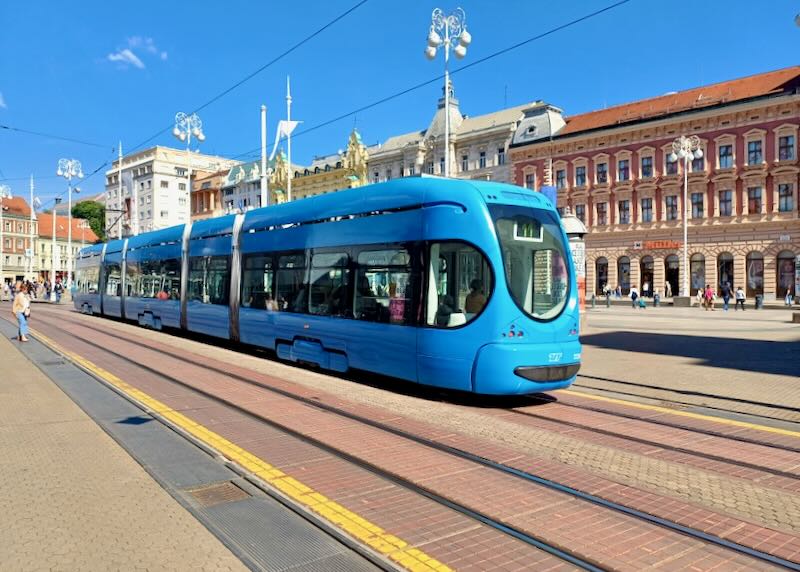
The tram from upper town to lower town.
- Best Area in Zagreb for Families: Around the Main Railway Station
The area north of Zagreb’s Main Railway Station is a practical family base, with relatively flat streets, larger hotels, tram connections, and easy access to the parks and squares of Lower Town. It is especially useful for families arriving by train or looking for more spacious, full-service accommodation than is typical in Upper Town.The Lenuci Horseshoe parks provide room for children to walk, rest, and play between sightseeing stops. Ban Jelačić Square is about 15 to 20 minutes away on foot, while trams make the trip easier with tired children, strollers, or luggage.
The main drawback is that the station area feels more functional than atmospheric, and the best restaurant choice begins farther north. Choose it for space, easier luggage handling, rail access, and family-friendly hotels. Northern Lower Town is the stronger alternative for families who want to be closer to restaurants and major sights.
- Best Area in Zagreb for Couples: Upper Town
Upper Town is the best choice for couples who want historic streets, intimate restaurants, wine bars, and evening walks close to Zagreb’s main sights. Tkalčićeva, Radićeva, Strossmayer Promenade, and the lanes around St. Mark’s Church provide the city’s most romantic setting, while boutique hotels and apartments in older buildings often feel more distinctive than the larger hotels near the stations.Stay near the lower end of Radićeva or Tkalčićeva for the easiest access to restaurants and Lower Town. Accommodation farther uphill is quieter and more historic but involves steeper streets, cobblestones, and more stairs.
The main drawbacks are difficult luggage access, limited vehicle access, and possible late-night noise near Tkalčićeva. Couples who want more space, larger hotels, and flatter streets may prefer Lower Town, but Upper Town is the stronger choice for character and evenings spent walking to dinner and drinks.
- Best Areas in Zagreb on a Budget: Around the Bus Station and Novi Zagreb
The area around the bus station is the best budget choice for a short stay. Hotels are less expensive than in Lower Town, trams reach the center in roughly 10 to 15 minutes, and the location is useful for airport shuttles, intercity buses, late arrivals, and early departures.Novi Zagreb offers cheaper apartments, larger rooms, and easier parking, but journeys into the center are longer and less convenient. It works best for drivers, Arena Zagreb events, longer stays, or travelers who plan to spend most of the day sightseeing rather than returning frequently to their accommodation.
The main tradeoff in both areas is atmosphere. The bus station district is functional rather than attractive, while Novi Zagreb feels removed from the historic center. Lower Town is the better alternative for travelers who find a good-value guesthouse or apartment and want to walk to the main sights, but rates rise during summer, Advent, conferences, concerts, and holiday weekends.
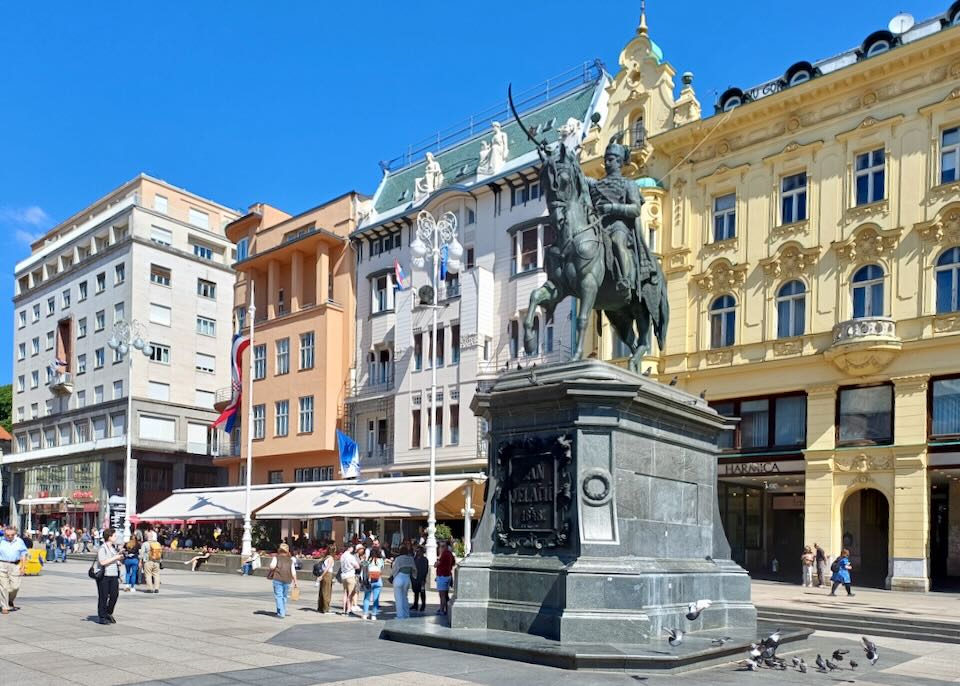
Ban Josip Jelačić Square is Zagreb’s central meeting point and the main link between Lower Town and Upper Town.
The 5 Best Areas in Zagreb for Tourists
1. Upper Town
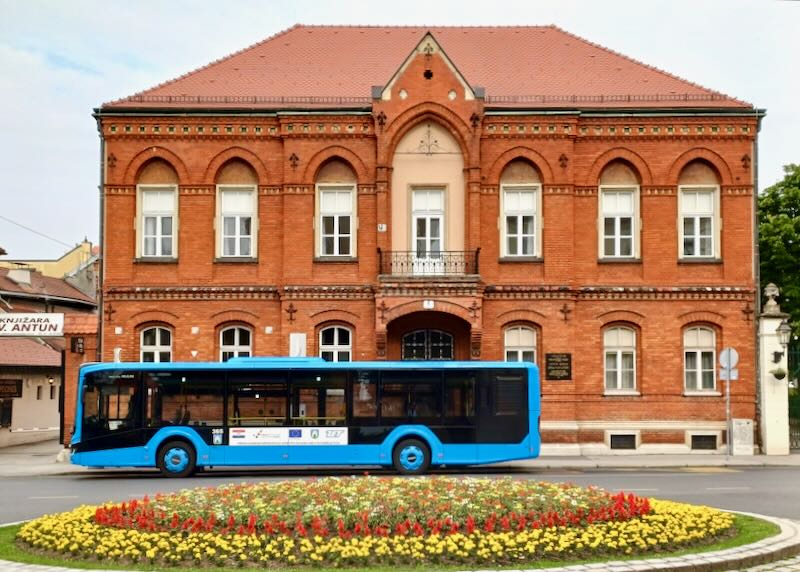
A local bus at the Kaptol terminal near Zagreb Cathedral
Upper Town is the best place to stay for historic atmosphere, restaurants, cafés, bars, and pedestrian streets. For accommodation purposes, the name covers several areas with very different terrain and access.
The lower section around Ban Jelačić Square, Dolac Market, Radićeva, Kaptol, and Tkalčićeva is central and lively. It provides immediate access to restaurants and nightlife, with Lower Town only a few minutes away. This is the most convenient part of Upper Town, although rooms overlooking busy streets can be noisy.
The hilltop historic district around St. Mark’s Church, Strossmayer Promenade, and the Museum of Broken Relationships is quieter and more atmospheric. It also has steeper approaches, cobblestones, stairs, restricted vehicle access, and fewer practical services. The renovated funicular makes the climb easier during operating hours, but it does not eliminate the difficulty of reaching every hotel.
Some Upper Town hotels require climbing steep streets or stairs.
Upper Town is best for couples, nightlife, dining, and travelers who prefer atmosphere to full-service hotel facilities. It is less suitable for wheelchairs, strollers, heavy luggage, or anyone who struggles with hills. Confirm the precise entrance, taxi drop-off point, stairs, and elevator situation before booking an apartment or small hotel.
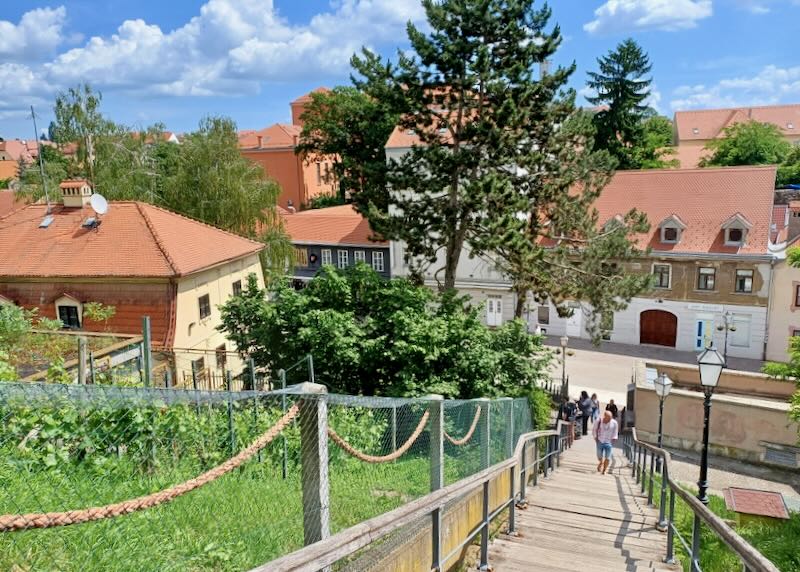
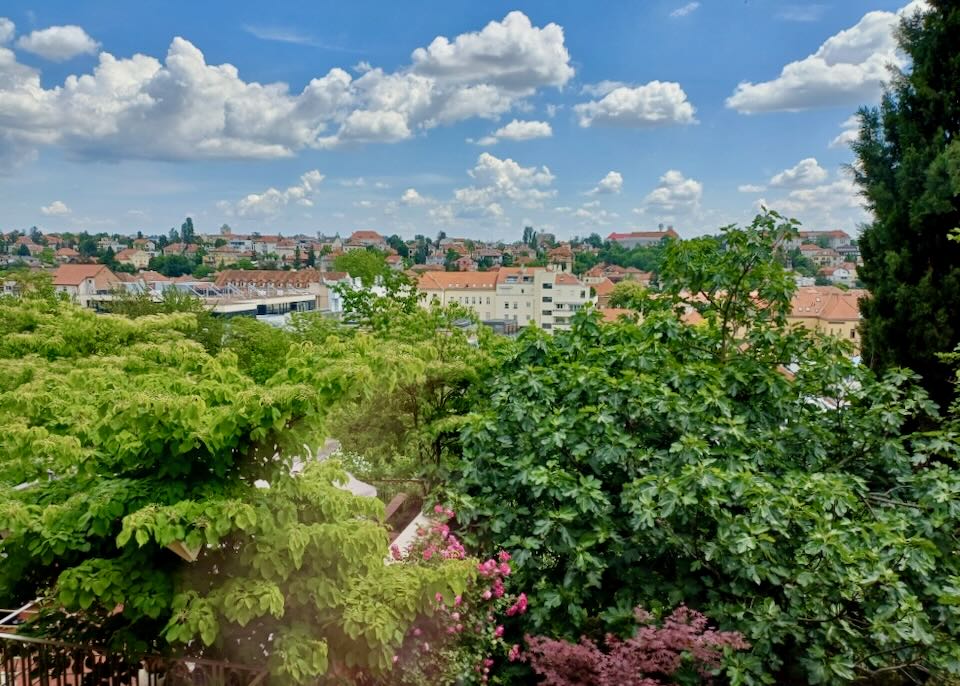
Our gorgeous view from Boutique Hotel HOH.
- Best Luxury Hotels in Upper Town
Hotel Jägerhorn • Hotel Academia • Hotel AS (north of Upper Town) • Hotel Puntijar (north of Upper Town)- Best Boutique Hotels
Boutique Hotel HOH • Hotel Jägerhorn • Timeout Heritage • Grand Bells Bed and Breakfast- Best Rooms & Apartments
Apartman Kaptol • Upper Town Apartments • Apartments Dolac • Apartments Cilindar • Paon- Best Affordable Hotels
Grand Bells Bed and Breakfast • Stay Swanky Bed and Breakfast • Guest House Ilicki Plac • Chillout Hostel • Art Hotel Like- Best Hotels for Families
Hotel Academia
2. Lower Town
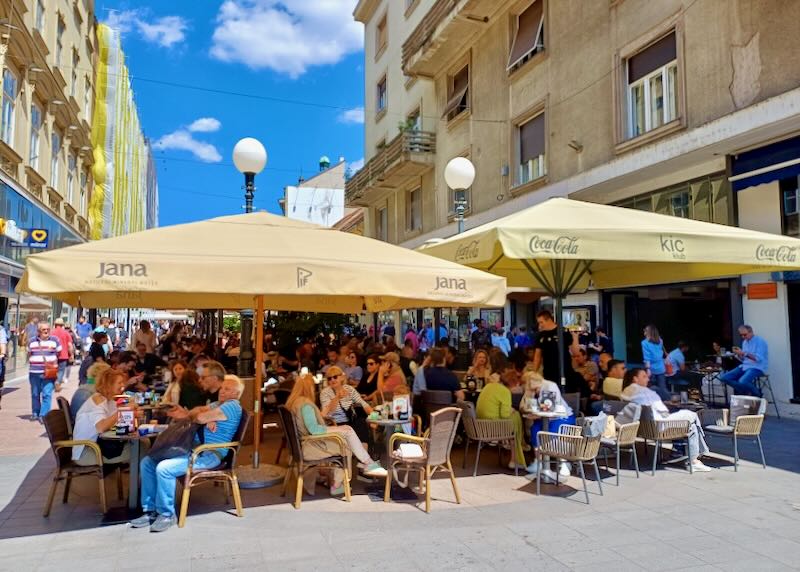
Outdoor dining in Lower Town.
Lower Town is the best place to stay in Zagreb for most first-time visitors. It extends south from Ban Jelačić Square toward the main train station and contains the widest selection of central hotels, museums, shops, parks, restaurants, and tram connections.
The most convenient hotels are in the northern half of the district, within a 5 to 10-minute walk of Ban Jelačić Square and the entrances to Upper Town. Hotels farther south near King Tomislav Square and the train station remain central but add approximately 10 minutes to most walks.
Lower Town is mostly flat and easier than Upper Town with luggage, children, strollers, or limited mobility. Its main streets can be busy, however, and rooms facing tram lines may hear traffic from early morning.
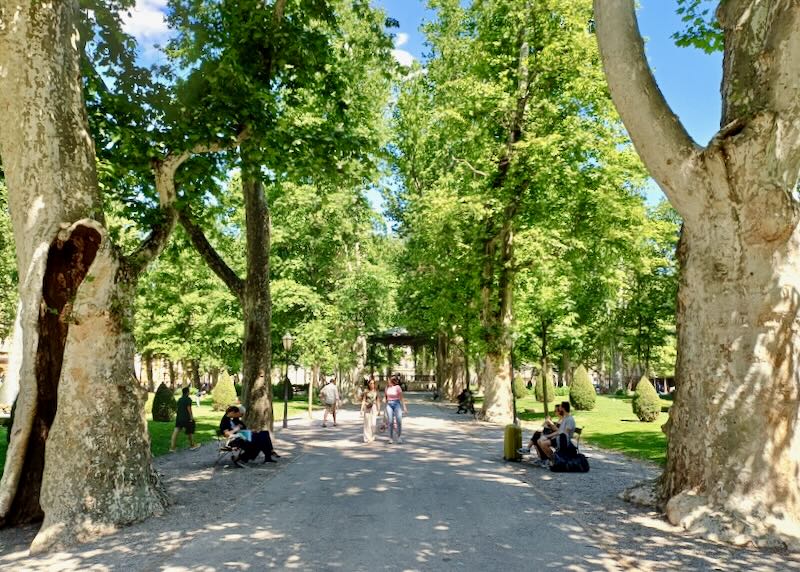
Nikola Šubić Zrinski Square is one of three parks north of the Art Pavilion.
The district’s most appealing route follows the landscaped squares of the Lenuci Horseshoe between the station and the center. Lower Town is best for sightseeing, shopping, museums, short stays, and travelers without a car. Upper Town is more atmospheric after dark, but almost all of it can be visited easily from a Lower Town hotel.
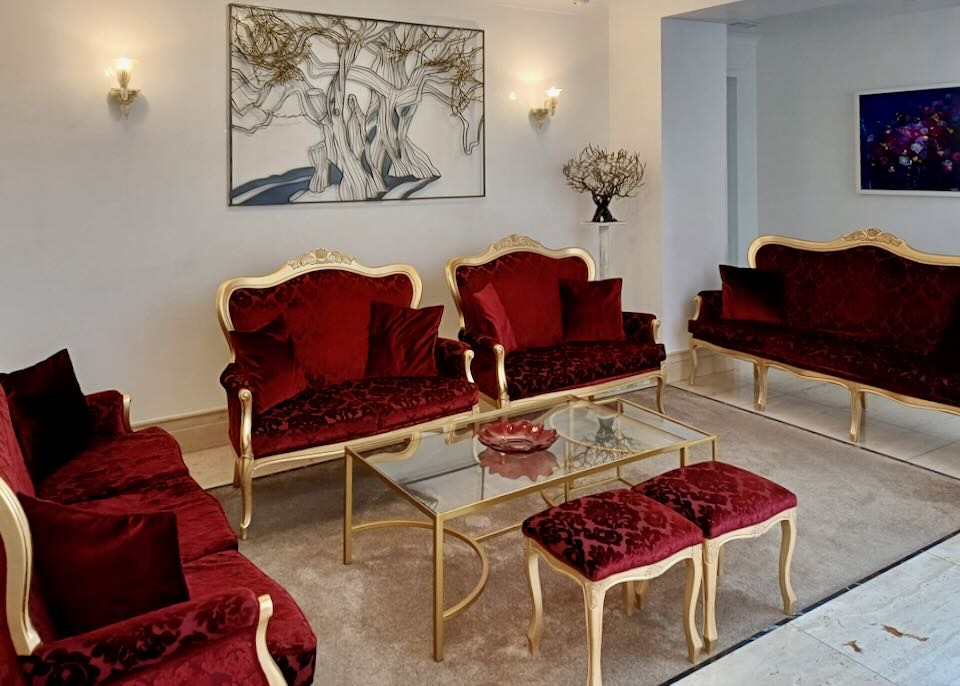
The Le Premier Boutique Hotel lobby.
- Best Luxury Hotels in Lower Town
Hotel Capital • Le Premier • art’otel • Hotel Dubrovnik- Best Boutique Hotels
Le Premier • art’otel • Hotel Capital • Met • MANDA Heritage- Best Rooms & Apartments
Verde • Bumblebee • Berry Berry Studios • The Place- Best Cheap Hotels
The Dots Hostel • Centar Guesthouse- Best Hotels for Families
Hotel Park 45 • Hotel Dubrovnik
3. Around the Train Station
The calming Esplanade faces the landscaped squares between Zagreb’s train station and Lower Town
The area immediately north of Zagreb’s main train station combines easy rail access with several of the city’s best full-service hotels. It is especially convenient for rail passengers, families, and travelers who prefer hotel facilities over a small historic property.
King Tomislav Square begins directly outside the station, and the attractive parks of the Lenuci Horseshoe continue north toward the city center. Ban Jelačić Square is approximately 15 to 20 minutes away on foot. The walk is flat and pleasant through the parks, although crossing the surrounding roads can be awkward with heavy luggage.
The best station-area hotels are north or northwest of the tracks. Properties south of the railway lines are less convenient for sightseeing because the tracks create a significant barrier between them and Lower Town.
The district is quieter at night than Upper Town and has fewer restaurants immediately outside some hotels. It is a strong base for two or more nights, but travelers focused on nightlife may prefer northern Lower Town.
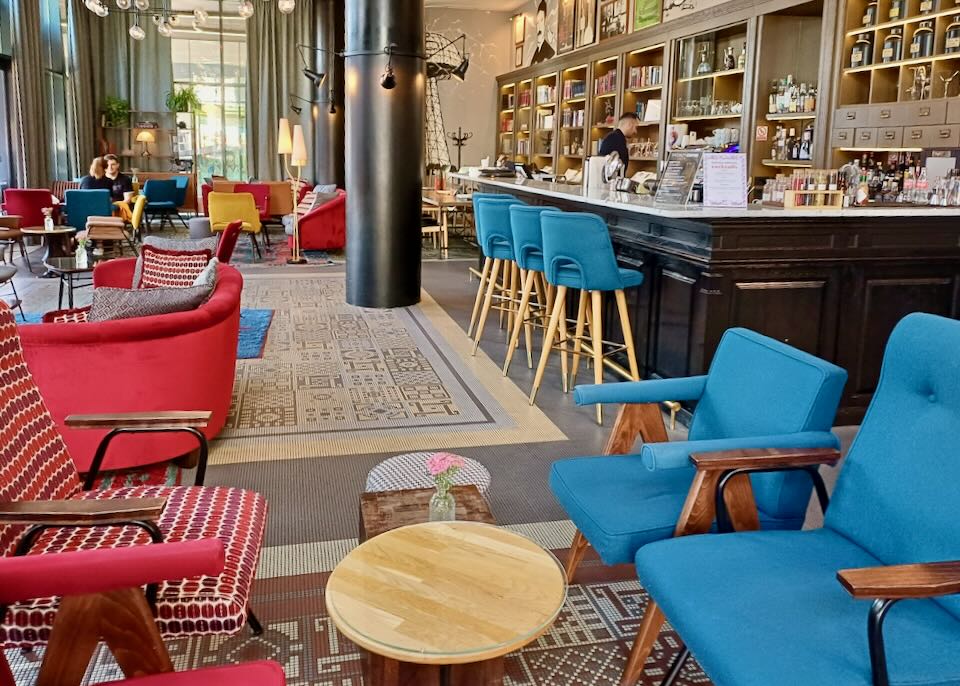
The bright lobby and bar at Canopy by Hilton.
- Best Hotels in Around the Train Station
Esplanade • Canopy • Sheraton • The Westin- Best Rooms & Apartments
Fingerprint • Time Apartments • Lux Nest II- Best Affordable Hotels
Hotel Astoria • Hotel Central • Hotel Orient • Himalayan Hostel • Garden Hotel- Best Hotels for Families
Hotel Astoria • Maistra City Vibes
4. Around the Bus Station
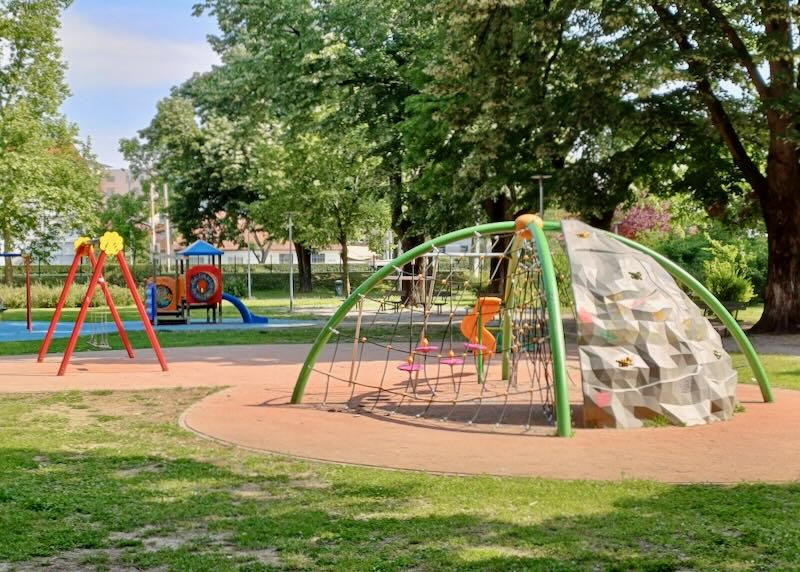
A neighborhood playground near Zagreb’s main bus station.
The Zagreb Bus Station area is best for airport transfers, intercity buses, lower hotel prices, and short overnight stays. It is not one of Zagreb’s most attractive districts, but it is practical and well connected.
Hotels immediately east and southeast of the station sit among busy roads, offices, apartment blocks, and newer commercial buildings. The DoubleTree and Hilton Garden Inn offer more facilities than most central boutique hotels, while smaller hotels and apartments around Supilova Street provide better value.
The airport shuttle operates between the airport and the bus station, normally taking approximately 35 to 40 minutes. The exact departure frequency varies through the day and may be coordinated with scheduled flights, so check the current timetable rather than relying on a fixed 30-minute interval.
Lower Town is roughly 20 to 30 minutes away on foot or a short tram ride. This area works well for transport, but first-time visitors staying several nights will have a better overall experience in Lower Town.
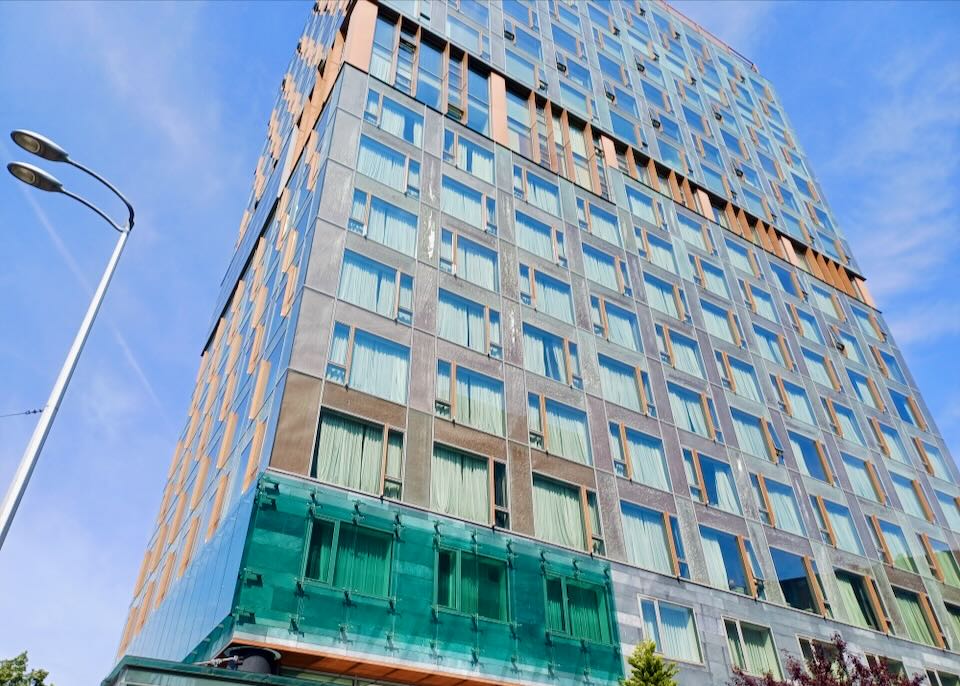
DoubleTree by Hilton.
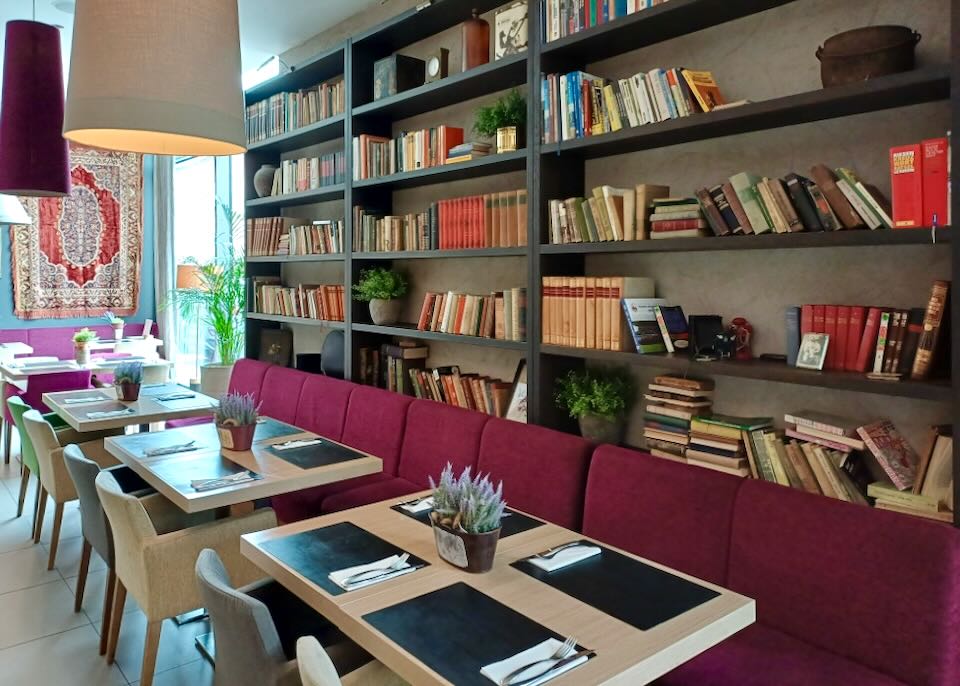
The restaurant in Hotel Sliško.
- Best Luxury Hotels Around the Bus Station
DoubleTree • Hilton Garden Inn- Best Boutique Hotels
Livris Hotel • Hotel 9 • Hotel Sliško- Best Rooms & Apartments
Dormir • Paw Rooms • Rooms Vukovarska- Best Affordable Hotels
Log In Rooms • Avenue 21 • Hotel iNova • National Plus • Hotel National • Hotel Meridijan 16- Best Hotels for Families
DoubleTree • Avenue 21 • The Loop
5. Novi Zagreb
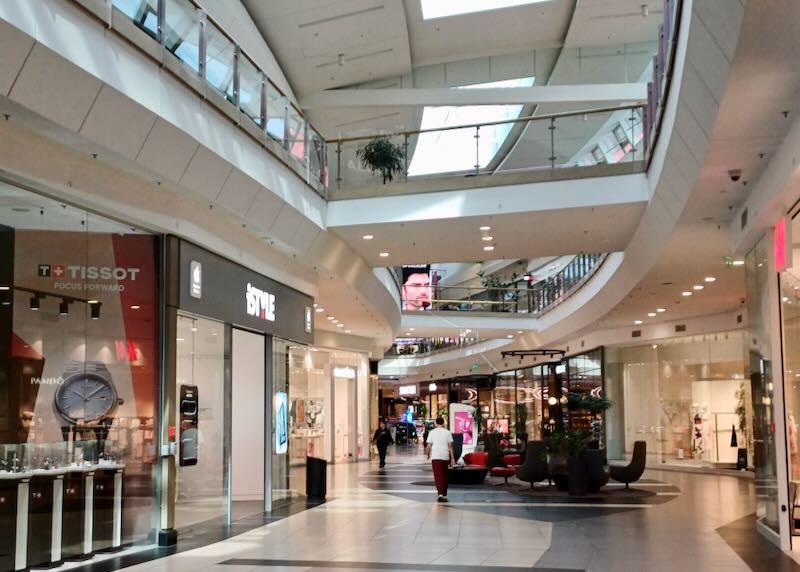
Arena Centar shopping mall.
Novi Zagreb spreads south of the Sava River and is better understood as a group of modern residential and commercial districts than as a single tourist neighborhood. It offers more space, easier parking, lower prices, and a less tourist-oriented experience than central Zagreb.
The most useful areas for visitors are around Bundek Park and the Museum of Contemporary Art, around Arena Zagreb and Arena Centar, and farther southeast toward Buzin and the airport. These locations are not interchangeable, so choose a hotel based on the specific reason for staying south of the river.
Bundek works well for parks and access to the Museum of Contemporary Art. The Arena area is best for concerts, sporting events, shopping, and travelers with cars. Buzin and the southeastern districts are more useful for airport access and business travel than for sightseeing.
Public buses and trams connect Novi Zagreb with the center, but journey times vary considerably by exact location and traffic. A central outing can take 20 to 40 minutes each way, and returning to the hotel between sightseeing and dinner is inconvenient. Novi Zagreb is best for longer stays, events, parking, and larger rooms, not a first two-night visit.
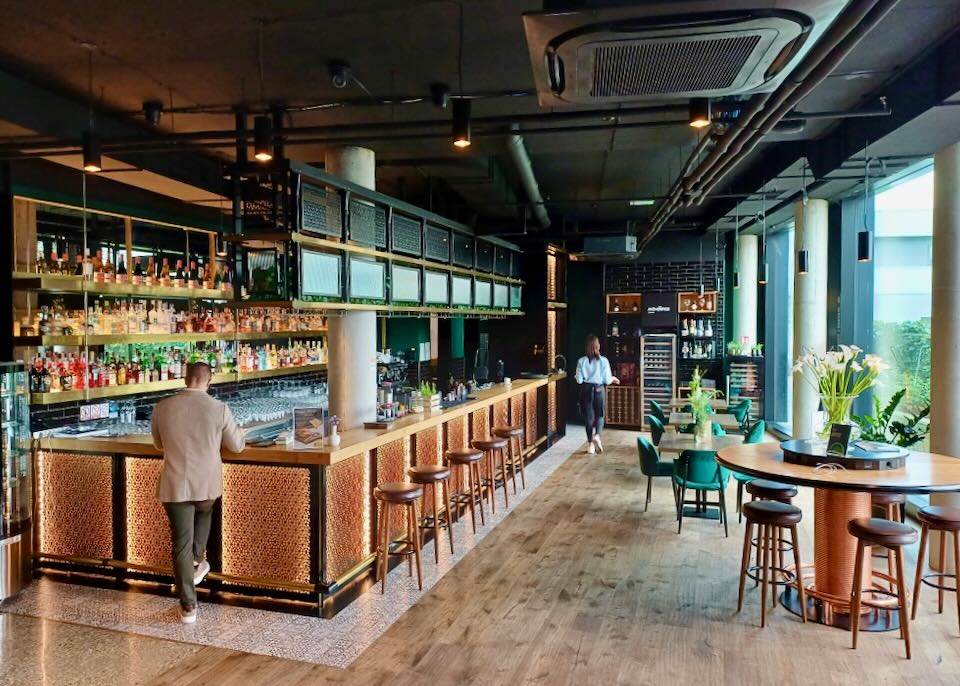
Nikola’s Bar and Restaurant at Mövenpick has a chocolate hour every afternoon serving delicious treats.
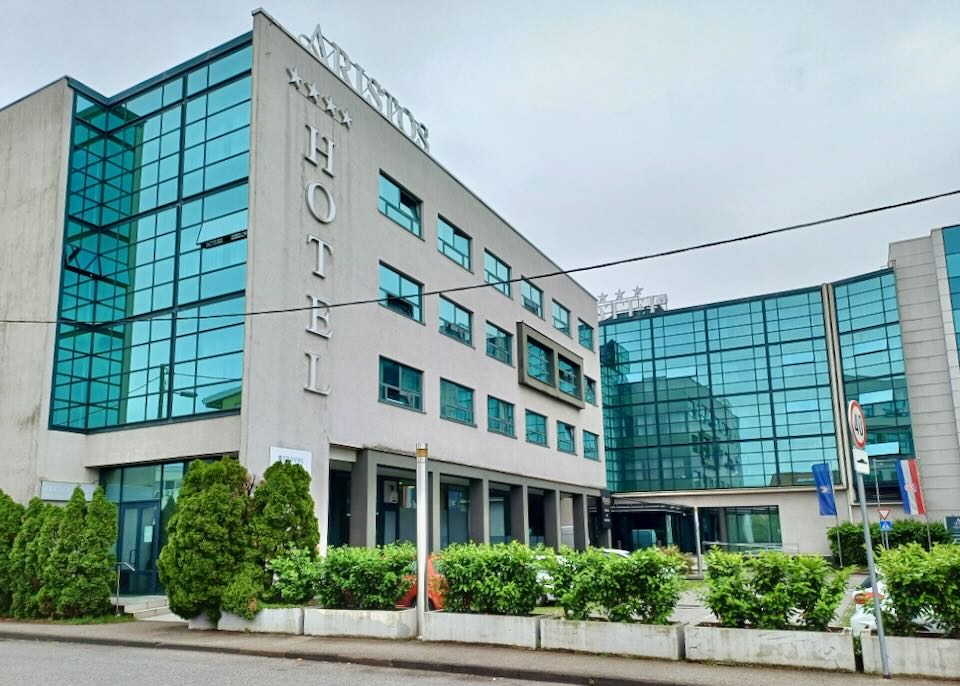
Hotel Aristos is our favorite hotel near the Airport. It’s in Buzin and offers easier and quicker access to Zagreb Airport than hotels in the city center.
- Best Hotels in Novi Zagreb
Mövenpick • Best Western Airport Hotel Stella • Hotel Diplomat- Best Boutique Hotel
Sundial- Best Rooms & Apartments
North&South Apartments • Rooms Indigo Bundek • White Rooms Arena • Arena- Best Moderate Hotels
Grey Suites • Hotel Magdalena • Sundial- Best Hotels for Families
Hotel Aristos • Best Western Airport Hotel Stella • Hotel Diplomat

About Santorini Dave