Updated: October 27, 2026 • By Santorini Dave
My Favorite Hotels in Lisbon
- 5-Star: Avenida Palace
- 4-Star: LX Boutique Hotel
- Boutique: Torel Palace
- For Families: Chiado Flats
- For Couples: Verride Palácio Santa Catarina
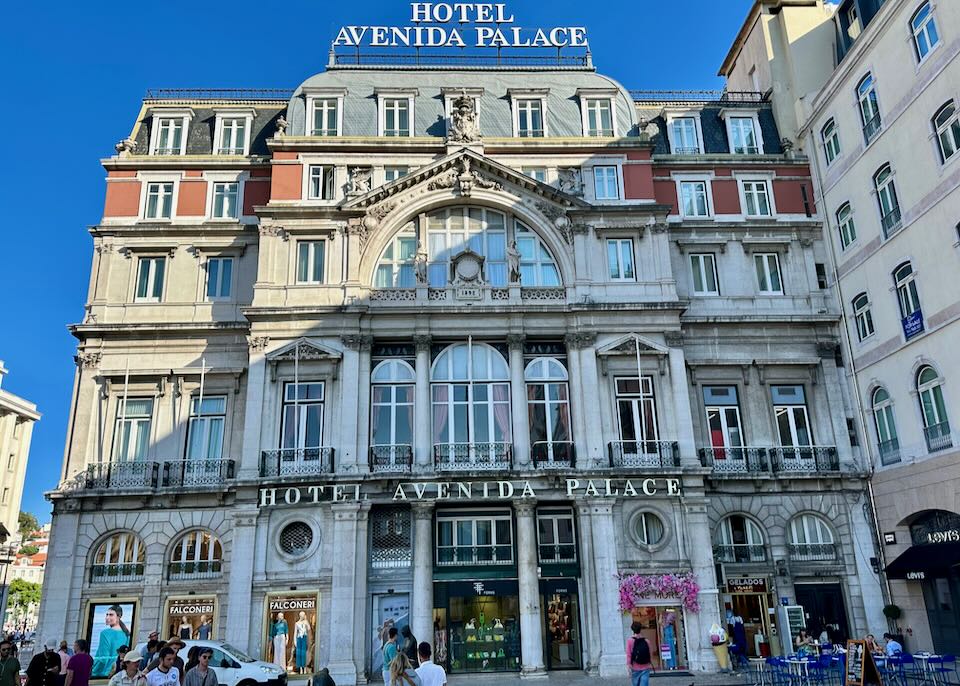
My favorite historic luxury hotel in Lisbon is the 5-star Avenida Palace overlooking Restauradores Square.
Where to Stay in Lisbon
Baixa and Rossio are my favorite areas for first-time visitors to Lisbon. They’re central, relatively flat, and within walking distance of many major sights, restaurants, and transportation connections. My favorite hotel here is the historic Avenida Palace.
Chiado is my favorite area for restaurants, shopping, and an upscale central stay. It’s a little hillier than Baixa but has more neighborhood character and excellent hotels. The The Ivens and Bairro Alto Hotel are two of the best.
Avenida da Liberdade is best for luxury hotels. The wide, tree-lined boulevard has designer shops, excellent restaurants, and convenient Metro access. It’s quieter than Baixa and Bairro Alto, though slightly farther from the historic sights. My favorite hotels in the area are Valverde and Four Seasons Ritz, near Parque Eduardo VII.
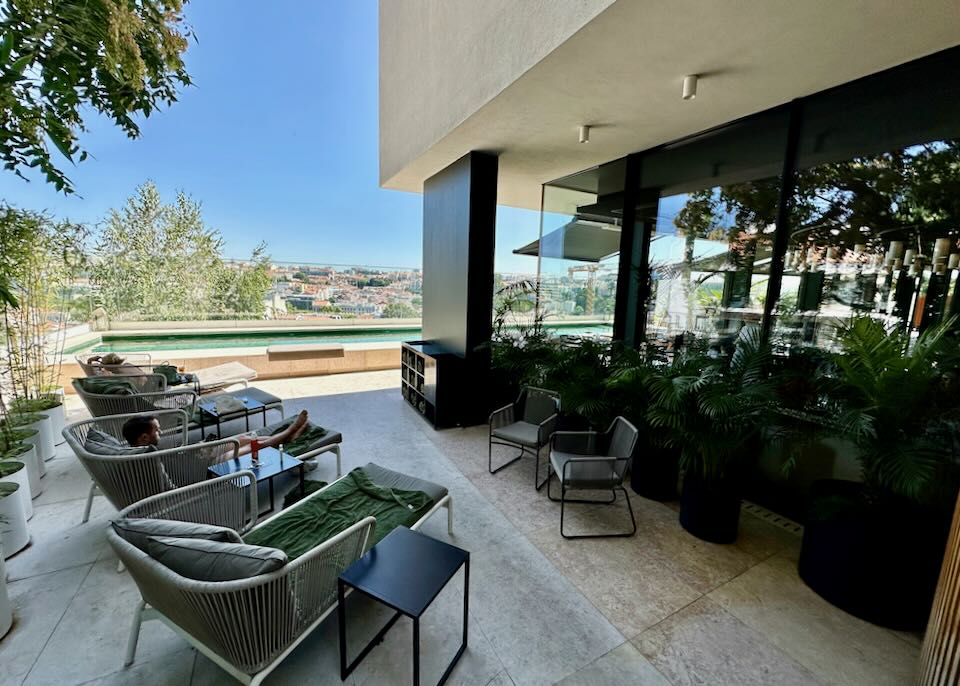
Príncipe Real is best for boutique hotels, restaurants, and a quieter neighborhood atmosphere. It’s one of my favorite alternatives to Chiado, particularly for couples. Memmo Príncipe Real has a beautiful terrace, pool, and city views.
Alfama is best for historic character and romance. Its narrow medieval streets, viewpoints, and traditional fado restaurants make it one of Lisbon’s most interesting neighborhoods. But it’s steep, and some hotels cannot be reached directly by car. I love Santiago de Alfama.
Bairro Alto and Cais do Sodré are best for nightlife. Both have excellent bars and restaurants, but noise can be a serious problem, especially around Bairro Alto’s bar streets and Pink Street in Cais do Sodré. I’d stay in nearby Chiado or Príncipe Real unless nightlife is the main reason for your visit.
Belém and Parque das Nações are better for visiting than staying. Belém has major historic sights, museums, and riverside parks. Parque das Nações has the aquarium, cable car, and family attractions. Both have good hotels, but they’re less convenient for exploring central Lisbon.
My advice: For most visitors, choose Baixa, Rossio, or Chiado. Lisbon is very hilly, and a hotel that looks close to everything on a map can involve steep climbs and stairways. Check the exact hotel location, not just the neighborhood.

A Lisbon tram in front of Le Consulat, one of my favorite boutique hotels in Chiado.
Best Neighborhoods in Lisbon for…
- Best for First-Time Visitors: Baixa, Rossio, Chiado
Baixa and Rossio are the easiest bases for sightseeing, with relatively flat streets, excellent transportation, and plenty of hotels. Chiado is hillier but better for upscale shopping, restaurants, and nightlife within walking distance.- Best for Sightseeing: Baixa, Rossio, Chiado
These central neighborhoods put you within walking distance of Praça do Comércio, the Santa Justa Lift, Carmo Convent, and many of Lisbon’s main attractions. Alfama and Castelo de São Jorge are nearby, though uphill. Visit Belém for Jerónimos Monastery and Belém Tower, but you don’t need to stay there.- Best for Luxury Hotels: Avenida da Liberdade, Chiado
Avenida da Liberdade has Lisbon’s largest concentration of luxury hotels and designer boutiques. Chiado is better for staying among historic streets, restaurants, and shops. Príncipe Real is another excellent choice for smaller luxury hotels.- Best for Nightlife: Bairro Alto, Cais do Sodré
Bairro Alto has narrow streets packed with bars, with crowds spilling outside late into the night. Cais do Sodré has Pink Street, cocktail bars, and clubs. Príncipe Real is better for upscale bars and a quieter place to sleep.- Best for Families: Baixa, Chiado, Belém, Parque das Nações
Baixa and Chiado are my first choices for families sightseeing across Lisbon. Belém has parks, museums, and riverside walks. Parque das Nações is excellent for younger children, with the Oceanário aquarium, cable car, and Pavilion of Knowledge science museum, but it’s farther from the historic center.- Best for Restaurants: Chiado, Príncipe Real, Cais do Sodré
Chiado has excellent Portuguese restaurants and fine dining, including Michelin-starred Belcanto. Príncipe Real has some of the city’s most interesting contemporary restaurants. Cais do Sodré is home to Time Out Market Lisbon, traditional restaurants, and lively bars. Be more selective around the busiest tourist streets in Baixa.- Best for Couples: Chiado, Príncipe Real, Alfama
Chiado is my favorite all-around choice for couples, with excellent hotels, restaurants, and easy sightseeing. Príncipe Real has stylish boutique hotels and a quieter atmosphere. Alfama is the most atmospheric, but its steep streets and limited vehicle access aren’t ideal for everyone.- Best for Shopping: Avenida da Liberdade, Chiado, Príncipe Real
Avenida da Liberdade has the luxury designer boutiques. Chiado is better for a mix of international brands, independent shops, and historic bookstores. Príncipe Real has smaller boutiques and the EmbaiXada shopping gallery.- Best for Local Neighborhood Character: Graça, Mouraria, Campo de Ourique
Graça has residential streets, traditional restaurants, and excellent viewpoints. Mouraria is more multicultural, with Portuguese, Bangladeshi, Goan, and Mozambican restaurants. Campo de Ourique is farther from the main sights but has a good neighborhood market, restaurants, and fewer tourists.- Best for Easy Walking: Baixa, Rossio, Avenida da Liberdade
Baixa and Rossio are among the flattest parts of central Lisbon. Avenida da Liberdade has broad sidewalks and shaded walking paths. Alfama and Graça are more interesting for wandering through old streets, but require steep climbs and steps.Lisbon is a great city for walking, but the hills and slippery stone pavement can be challenging.
Getting Around Lisbon Without a Car
- Walking: Walking is the best way to explore central Lisbon, but the hills are steep and the stone sidewalks can be slippery, especially when wet. Wear shoes with good grip. Hotels in Alfama, Bairro Alto, and Graça can involve steep climbs and stairs, even from the nearest Metro station.
- Uber and Bolt: Both are widely available and relatively inexpensive. They’re particularly useful for airport transfers with luggage, late-night rides, and avoiding steep uphill walks. Traffic can make short journeys slow.
- Metro and Trains: The Metro is the fastest way to travel longer distances within Lisbon, including to the airport and Parque das Nações. It doesn’t serve Alfama or Belém. For Belém, take the Cascais Line train from Cais do Sodré (about 10 minutes). The same line continues to Estoril and Cascais.
- Trams, Buses, and Funiculars: Tram 28E passes through several historic neighborhoods but is crowded and slow. Ride early if you want the experience, but don’t rely on it for transportation. Tram 15E connects central Lisbon with Belém, though I prefer the train. Buses and funiculars are useful for reaching areas not served by the Metro. Check the operating status of historic lifts and funiculars before relying on them, particularly the Glória funicular and Santa Justa Lift.
- Transportation Tickets: Lisbon Metro accepts contactless credit and debit cards. For trams, buses, and other public transportation, buy a rechargeable Navegante Occasional card (€0.50) at a Metro station. Load it with individual tickets, Zapping credit, or a 24-hour pass. The 24-hour Carris/Metro ticket is good value if you’re making several journeys. Each passenger needs their own card.
- Don’t Rent a Car: Lisbon’s narrow streets, steep hills, traffic, and difficult parking make driving more trouble than it’s worth. Walking, public transportation, and Uber or Bolt are all you need for exploring the city.
Safety in Lisbon
Lisbon is generally safe, including the main hotel areas of Baixa, Chiado, Rossio, and Avenida da Liberdade. Pickpocketing is the biggest concern, particularly on crowded trams, around major attractions, and in busy transportation stations.
Bairro Alto and Cais do Sodré get loud and crowded late at night. Parts of Martim Moniz and Intendente can feel less comfortable after dark, though both have good restaurants, hotels, and increasingly popular nightlife. As in any large city, use normal precautions and pay attention to your surroundings.
The Best Hotels in Lisbon
Four Seasons Hotel Ritz Lisbon, one of the city’s finest luxury hotels.
- Best Luxury Hotels in Lisbon
Four Seasons Ritz • Avenida Palace • Memmo Príncipe Real • Verride Palácio Santa Catarina- Best Boutique Hotels in Lisbon
Le Consulat • Santiago de Alfama • Torel Palace- Best Affordable and Midrange Hotels in Lisbon
Chalet d’Ávila • Hall Chiado • LX Boutique Hotel- Best Hostels in Lisbon
Goodmorning Solo Traveller Hostel • Home Lisbon Hostel • Lisbon Destination • Lost Inn Lisbon • This Is Lisbon • Yes LisbonThe 8 Best Neighborhoods in Lisbon for Tourists
1. Baixa and Rossio
Best for first-time visitors, sightseeing, and easy transportation.
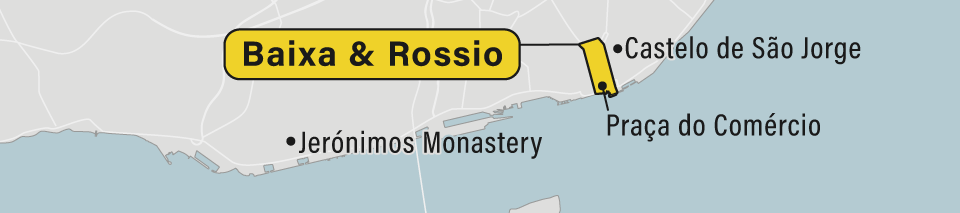
Baixa is Lisbon’s historic downtown, rebuilt on a grid after the devastating 1755 earthquake. Its relatively flat streets make it one of the easiest parts of Lisbon to explore on foot. Rossio and Restauradores, immediately to the north, have excellent transportation connections and some of the city’s best hotels.
The main sights include Praça do Comércio, the pedestrianized Rua Augusta, and the Santa Justa Lift, designed by Portuguese engineer Raoul Mesnier du Ponsard. Around Rossio Square are traditional cafés and tiny ginjinha bars serving Lisbon’s famous sour-cherry liqueur. The historic streets of Alfama and the shops and restaurants of Chiado are within walking distance, though both involve uphill climbs.
Baixa is busy and tourist-oriented, with plenty of restaurants, shops, and hotels at different price points. It isn’t the best area for a quiet residential atmosphere, but for convenience, especially on a first visit, it’s hard to beat.
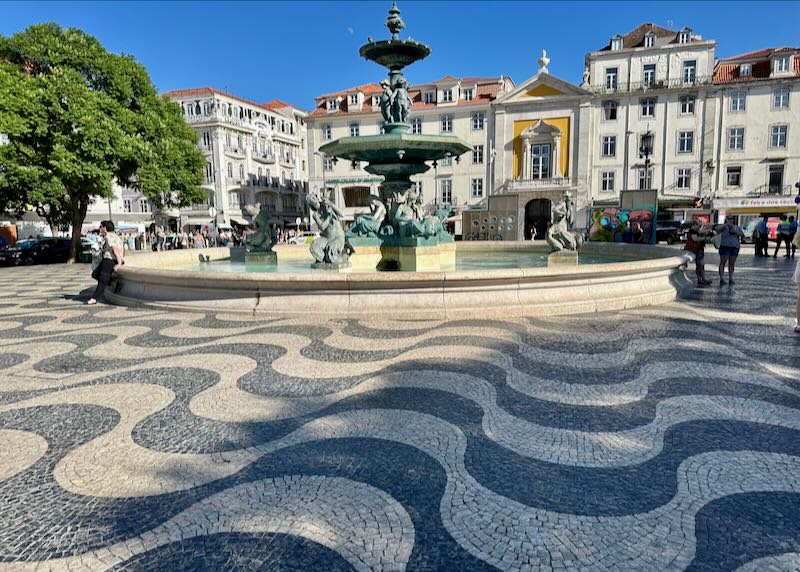
Rossio Square
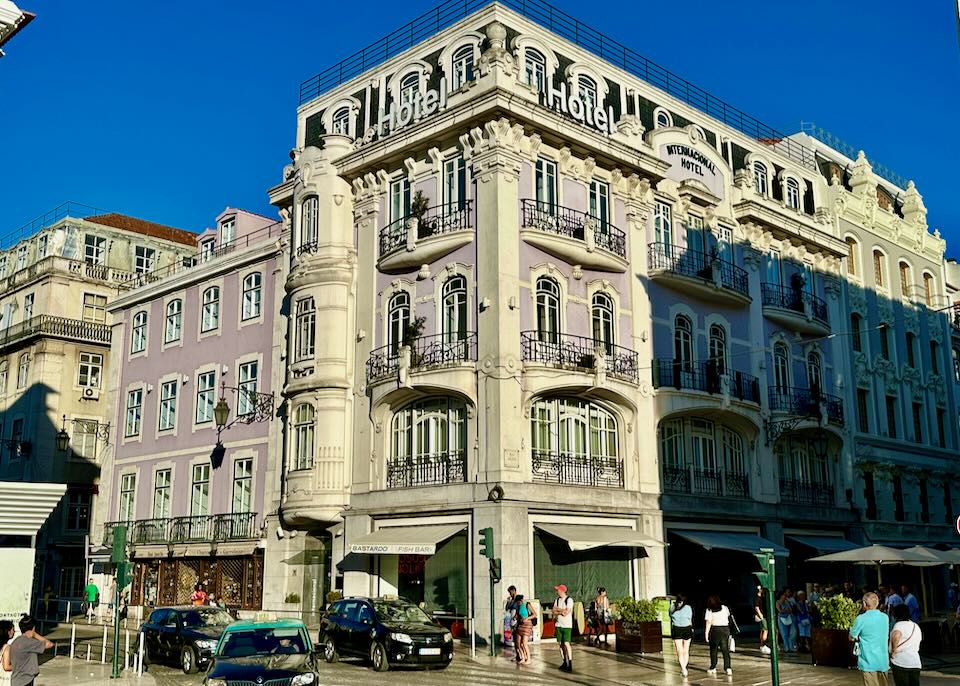
The centrally located Internacional Design Hotel sits on the south side of Rossio Square.
- Best Hotels in Baixa and Rossio
Avenida Palace • Altis Avenida • Hotel da Baixa • Internacional Design Hotel • Portugal Boutique Hotel • Pousada de Lisboa • Tesouro da Baixa- Best Affordable Hotels
Art Inn • Be Poet Baixa Hotel • Brown’s Boutique Hotel • Tempo FLH Hotels • Urbano FLH Hotels- Best Hostels
Home Lisbon Hostel • Lisbon Destination • Living Lounge • Yes Lisbon
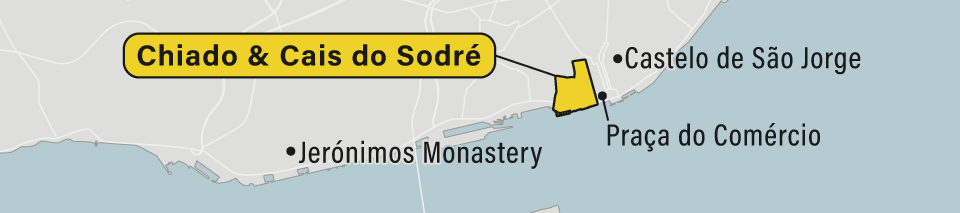
2. Chiado and Cais do Sodré
Best for restaurants, shopping, and upscale hotels. Cais do Sodré is better for nightlife.
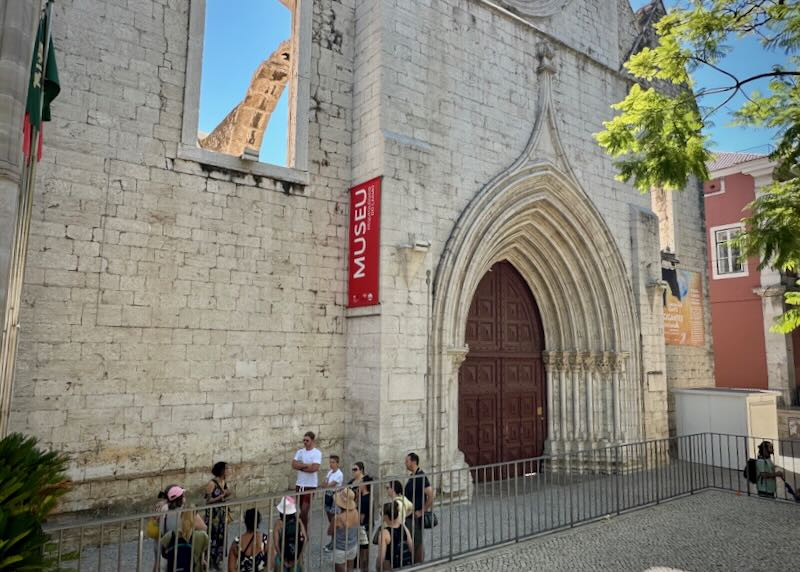
Chiado rises above Baixa and is one of Lisbon’s best neighborhoods for restaurants, shopping, and hotels. Its main streets are lined with historic cafés, bookstores, theaters, and boutiques. Highlights include the ruins of Carmo Convent, the National Museum of Contemporary Art, and Livraria Bertrand, founded in 1732 and recognized as the world’s oldest operating bookstore.
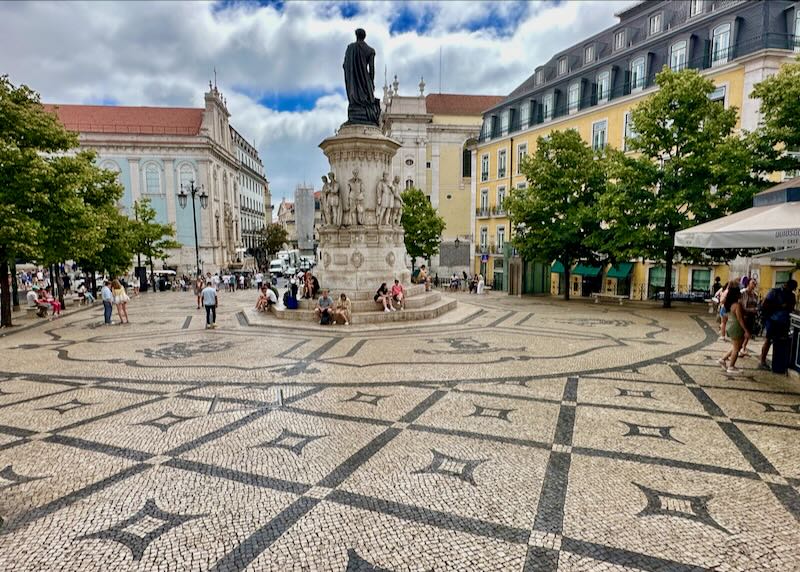
Praça Luís de Camões and Rua Garrett are good starting points for exploring the neighborhood. For restaurants, Chiado has everything from traditional Portuguese cooking to fine dining at Belcanto. The Baixa-Chiado Metro station makes getting around easy, though the surrounding streets are hilly.
Praça Luís de Camões
Downhill toward the river, Cais do Sodré has a younger, busier atmosphere. Its main attractions are Time Out Market Lisbon, the bars around Pink Street (Rua Nova do Carvalho), and the waterfront. Pensão Amor and Sol e Pesca are two well-known bars. Cais do Sodré station also has trains to Belém and Cascais, Metro connections, and ferries across the Tagus.
I’d stay in Chiado rather than Cais do Sodré unless nightlife is a priority. Chiado has better upscale hotels and is quieter overall. In Cais do Sodré, check the exact hotel location carefully, especially near Pink Street and the busiest bars.
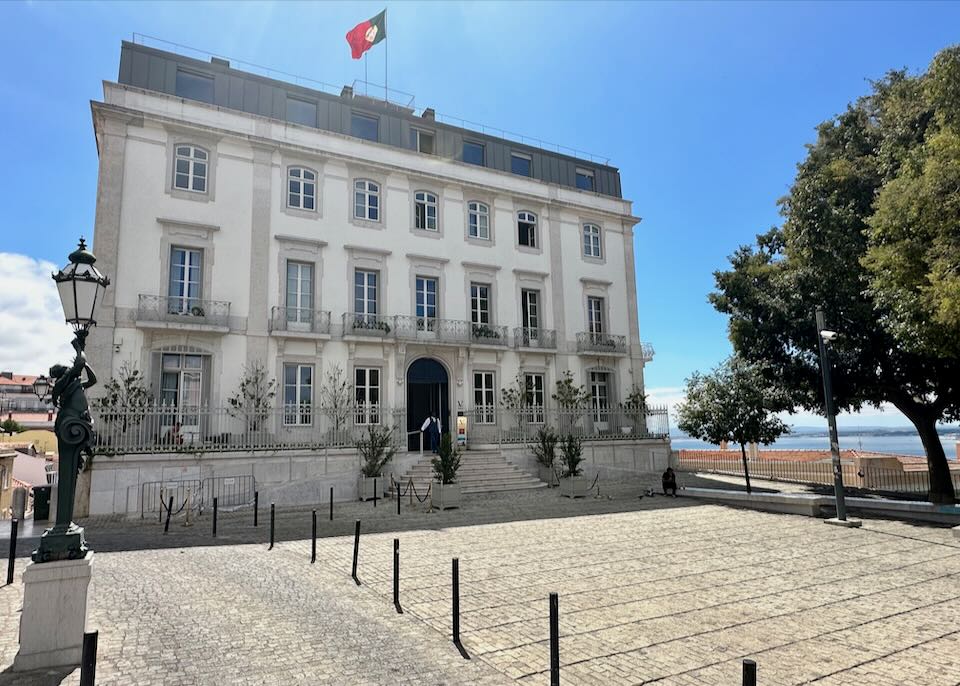
Verride Palácio Santa Catarina in nearby Santa Catarina has excellent views over Lisbon’s rooftops and the Tagus River.
- Best Hotels in Chiado and Cais do Sodré
Bairro Alto Hotel • Casa Balthazar • Corpo Santo • The Ivens • Le Consulat • Hotel do Chiado • Verride Palácio Santa Catarina- Best Affordable and Midrange Hotels
Boho Guesthouse • Chiado Arty Flats • Feeling Chiado 15 • Hall Chiado • LX Boutique Hotel- Best Hostels
Lisbon Calling • Lisb’on Hostel • Lost Inn Lisbon
3. Bairro Alto and Príncipe Real
Best for nightlife, boutique hotels, and restaurants. Príncipe Real is the better choice for a quiet stay.
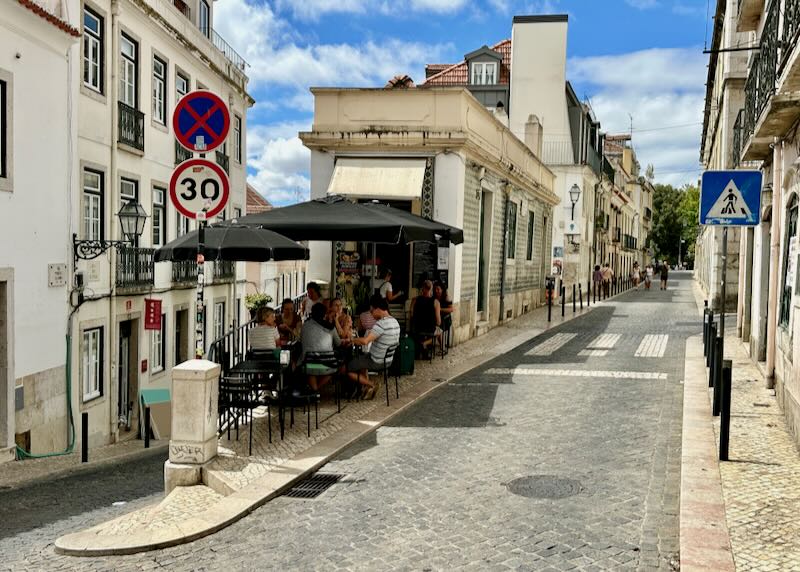
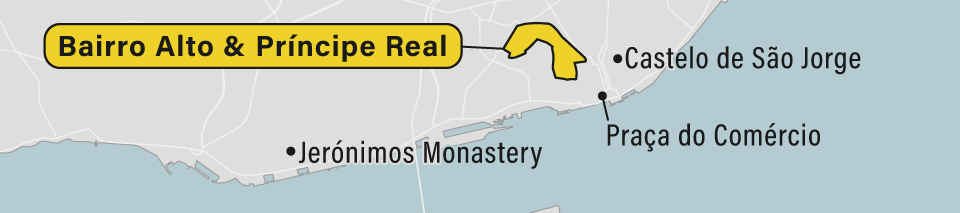
Bairro Alto and Príncipe Real sit on the hills above Chiado, but they have quite different atmospheres. Bairro Alto is one of Lisbon’s main nightlife districts, with narrow streets full of bars and restaurants. It’s relatively quiet during the day but gets crowded and noisy at night, particularly on weekends.
Príncipe Real, immediately north of Bairro Alto, is more upscale and residential. It has excellent restaurants, independent boutiques, leafy squares, and some of Lisbon’s best boutique hotels. It’s also a center of Lisbon’s LGBTQ+ nightlife.
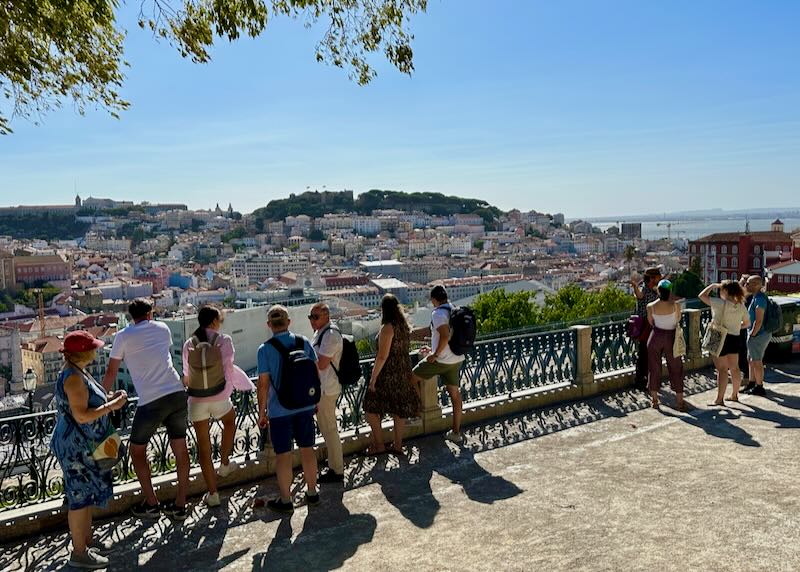
The area’s main sights include the Miradouro de São Pedro de Alcântara, with excellent views across the city, the richly decorated Church of São Roque, the Botanical Garden, and the National Museum of Natural History and Science. The Casa-Museu Amália Rodrigues is worth visiting for anyone interested in fado.
Miradouro de São Pedro de Alcântara.
For shopping, visit EmbaiXada, housed in a restored palace, and the independent boutiques along Rua Dom Pedro V. Restaurants include Ljubomir Stanisic’s 100 Maneiras and A Cevicheria.
My advice: Stay in Príncipe Real for the restaurants, boutique hotels, and neighborhood atmosphere. Stay in Bairro Alto only if you plan to be out late. Noise from bars and people in the streets can continue well into the early morning.
The pool and terrace at Memmo Príncipe Real.
- Best Hotels in Bairro Alto and Príncipe Real
Casa do Príncipe • The Lumiares Hotel & Spa • Memmo Príncipe Real • The Vintage Lisbon- Best Affordable Hotels
Anjo Azul • Casa de São Mamede • Casa do Jasmim- Best Hostel
Independente Príncipe Real
4. Avenida da Liberdade
Best for luxury hotels, designer shopping, and a quieter central location.
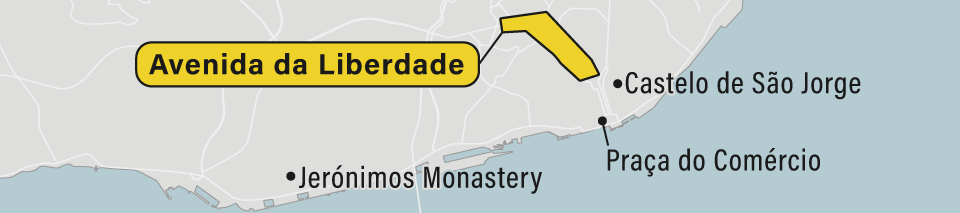
Avenida da Liberdade is Lisbon’s grand, tree-lined boulevard, running northwest from Restauradores Square to Marquês de Pombal. It’s the city’s main luxury shopping district, with designer boutiques, upscale restaurants, and several excellent hotels.
The avenue has wide sidewalks, shaded walking paths, and Metro stations along its length. It’s a good choice for travelers who want a comfortable, upscale base without the crowds and narrow streets of Baixa or Bairro Alto. Hotels near Restauradores are within easy walking distance of Rossio and Chiado. Those farther north, near Marquês de Pombal, are better for Parque Eduardo VII but require a longer walk or Metro ride to the historic center.
At the northern end, Parque Eduardo VII has gardens, city views, and the Estufa Fria greenhouse. The avenue also hosts the Feira na Avenida market on selected weekends. Restaurants and bars include JNcQUOI Avenida, Red Frog, and Monkey Mash.
My advice: Avenida da Liberdade is an excellent alternative to Baixa and Chiado, especially for luxury hotels. Stay toward the southern end if you want to walk to restaurants and sights in the historic center.
- Best Hotels in Avenida da Liberdade and Nearby
EPIC SANA Marquês • Four Seasons Ritz • Hotel Britania Art Deco • Hotel Lisboa Plaza • InterContinental Lisbon • Tivoli Avenida Liberdade • Torel Palace • Valverde Hotel • Iberostar Selection Lisboa • Heritage Avenida LiberdadeLooking over central Lisbon from Torel Palace, on the hill east of Avenida da Liberdade.
- Best Affordable and Midrange Hotels
Alegria • HF Fénix Music • Hotel Portuense Lisboa • Maxime Hotel- Best Hostels
room00 Lisboa Hostel • Goodmorning Solo Traveller Hostel • Lisboa Central Hostel
5. Alfama
Best for historic character, traditional restaurants, and romantic boutique hotels.
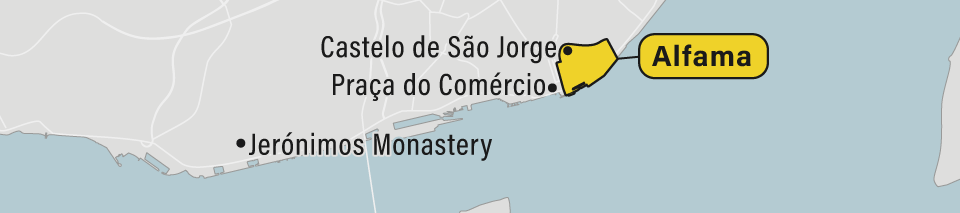
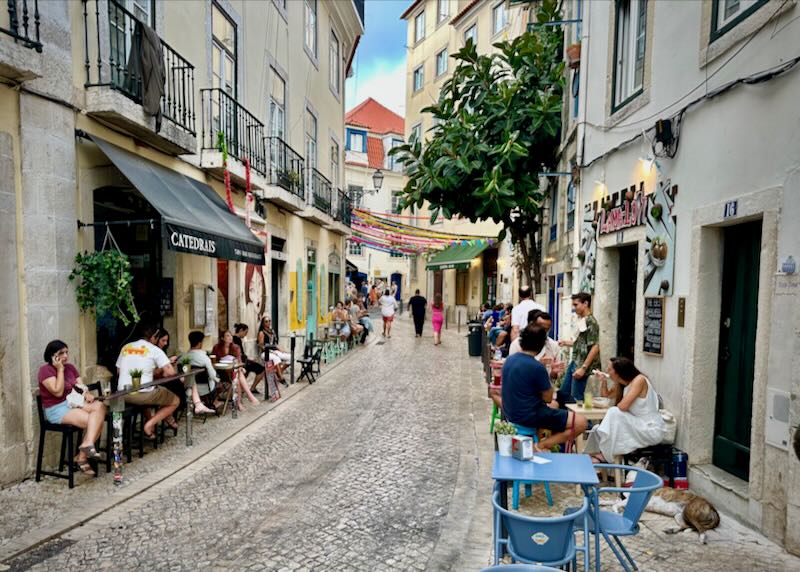
Alfama is Lisbon’s oldest neighborhood, with narrow medieval streets, steep stairways, traditional houses, and viewpoints overlooking the Tagus. Much of the district survived the destruction caused by the 1755 earthquake, preserving a street layout very different from Baixa.
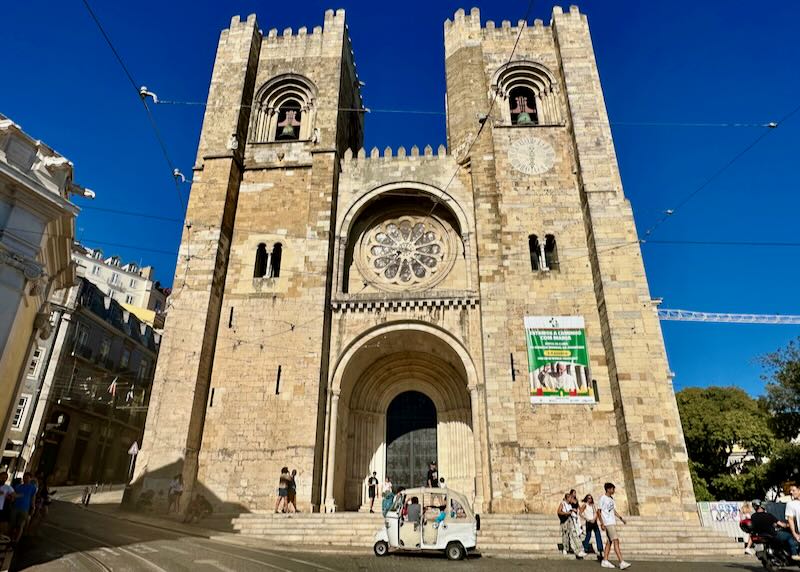
The main sights include Lisbon Cathedral, the Museu do Fado, and Castelo de São Jorge, which has excellent views from its battlements. The Museu do Aljube Resistência e Liberdade covers Portugal’s dictatorship and the struggle for democracy.
Lisbon Cathedral
At the eastern end of the neighborhood are the National Pantheon, the Church of São Vicente de Fora, and the Feira da Ladra flea market, held on Tuesdays and Saturdays. Alfama is also one of Lisbon’s traditional fado districts, with small restaurants offering live performances in the evening.
Alfama has some excellent boutique hotels, but fewer large properties than Baixa or Avenida da Liberdade. The main drawback is access. Many streets are too narrow for cars, and some hotels require walking uphill or carrying luggage up steps from the nearest taxi drop-off point.
My advice: Alfama is a great place to stay if you want historic atmosphere and don’t mind hills. For easier transportation, more hotel choices, and fewer logistical headaches, I’d choose Baixa or Chiado.
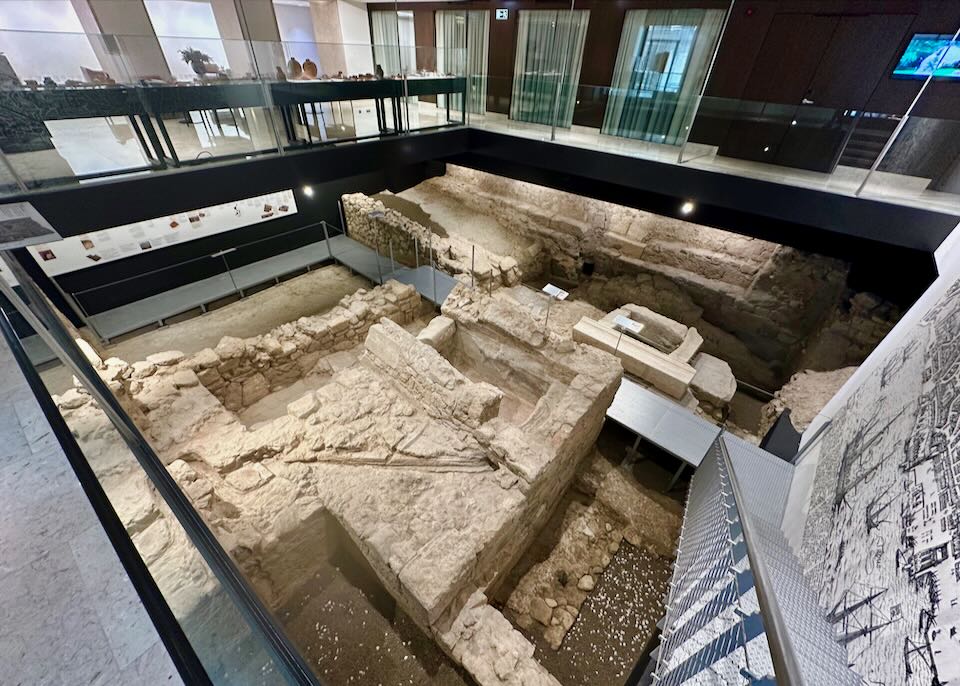
The 5-star Áurea Museum Hotel has a permanent archaeological exhibition, indoor pool, and spa facilities.
- Best Hotels in Alfama
Áurea Museum • Palacete Chafariz d’El Rei • Santiago de Alfama • Solar do Castelo • Memmo Alfama • São Vicente Alfama Hotel • Solar dos Mouros- Best Affordable Hotel
Hostel Petit Lusa- Best Hostel
This Is Lisbon
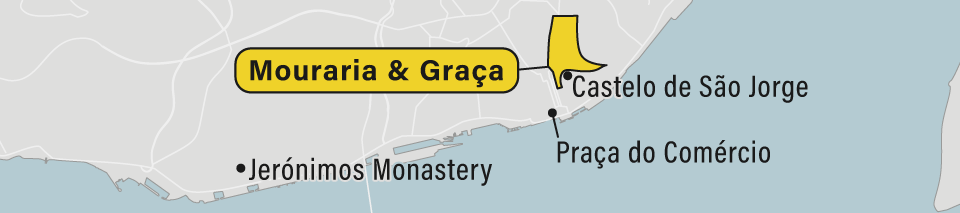
6. Mouraria and Graça
Best for neighborhood character, viewpoints, and affordable restaurants.
Mouraria and Graça sit north and northeast of Alfama. Both have historic streets and a more residential atmosphere than Baixa or Chiado, though tourism has increased considerably.
Mouraria is one of Lisbon’s most multicultural neighborhoods, with Portuguese, Bangladeshi, Goan, Mozambican, and other restaurants around Rua do Benformoso and Martim Moniz. The neighborhood developed after the Christian conquest of Lisbon in 1147, when Muslims were permitted to settle outside the city walls. It later became closely associated with the development of fado.
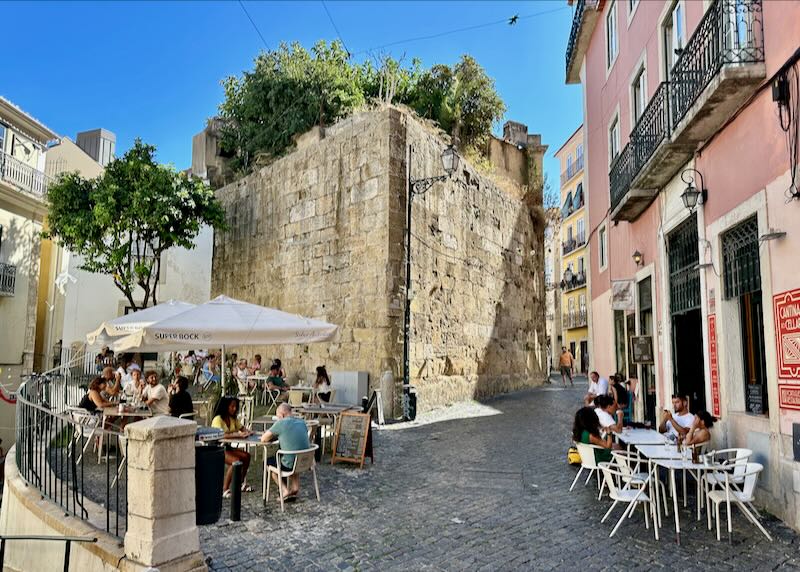
Graça is quieter and more residential, with some of Lisbon’s best viewpoints. The Miradouro da Graça and Miradouro da Senhora do Monte are both worth visiting, especially around sunset. The streets are steep, and getting to the main sights involves walking downhill and back uphill or taking a bus or taxi.
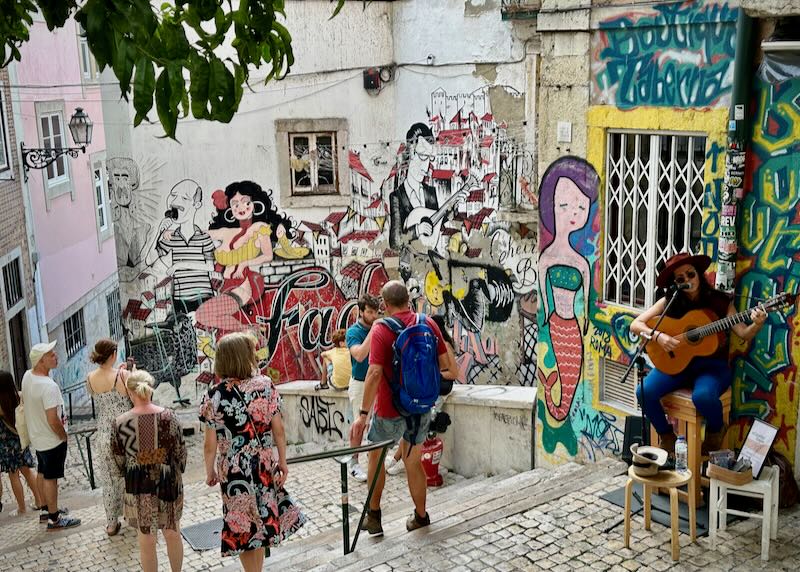
Stairway in Mouraria
Good restaurants include Mozambican cooking at Cantinho do Aziz and Goan food at Tentações de Goa. For contemporary art, visit Hangar in Graça.
My advice: Graça is the better choice for a quiet stay with neighborhood restaurants and views. Mouraria is more convenient for Martim Moniz and central transportation, but parts of it are less polished, particularly around the busiest streets near Intendente.
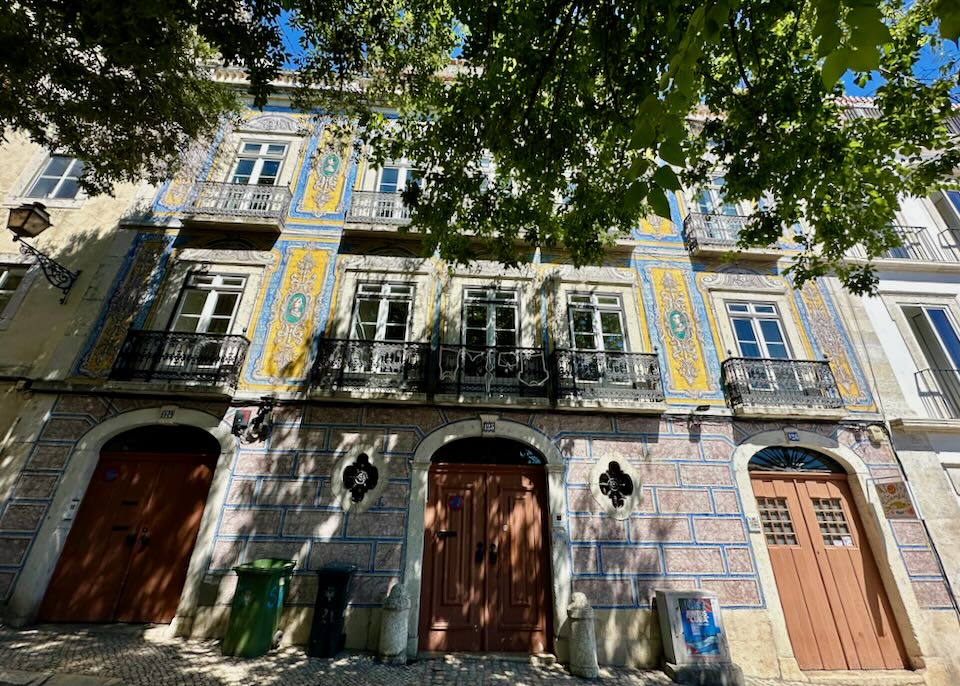
The colorful Casa dell’Arte Club House.
- Best Hotels in Mouraria, Graça, and Nearby Intendente
1908 Lisboa Hotel • Casa dell’Arte Club House- Best Affordable and Midrange Hotels
Mouraria Lisboa Hotel • Tings Lisbon • WC by The Beautique Hotels- Best Hostels
Be Lisbon Hostel Intendente • Lisbon Poets Inn • Sant Jordi Hostels Lisbon • We Hate F Tourists
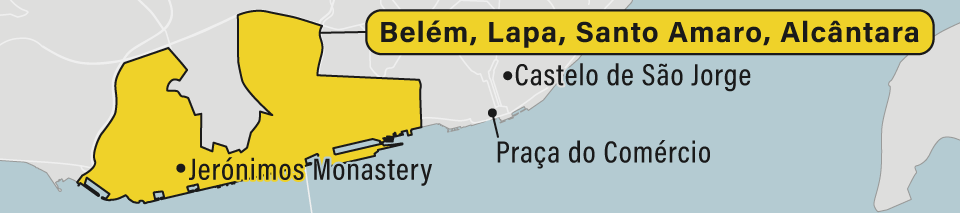
7. Belém, Lapa, Santos, and Alcântara
Best for historic sights, riverside walks, quiet luxury hotels, and longer stays.
These neighborhoods stretch west along the Tagus River, away from Lisbon’s historic center. They’re quite different from one another, so the exact location matters.
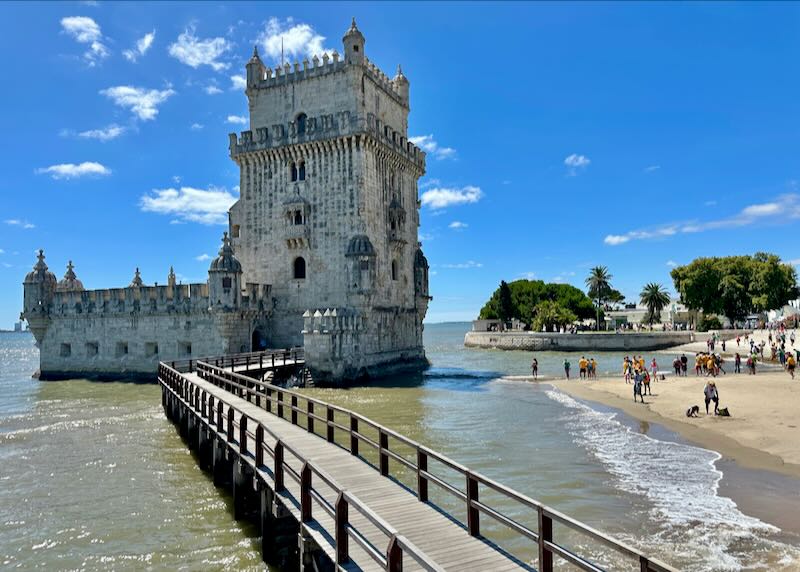
Belém is the main sightseeing destination, home to two UNESCO World Heritage sites: Jerónimos Monastery and Belém Tower. The waterfront was an important departure area during Portugal’s Age of Discovery. Other highlights include the Monument to the Discoveries, the MAAT museum, the Museum of Contemporary Art (MAC/CCB), and the National Coach Museum.
Don’t miss Pastéis de Belém, which has been making its famous custard tarts since 1837. The takeaway line moves faster than the line for tables.
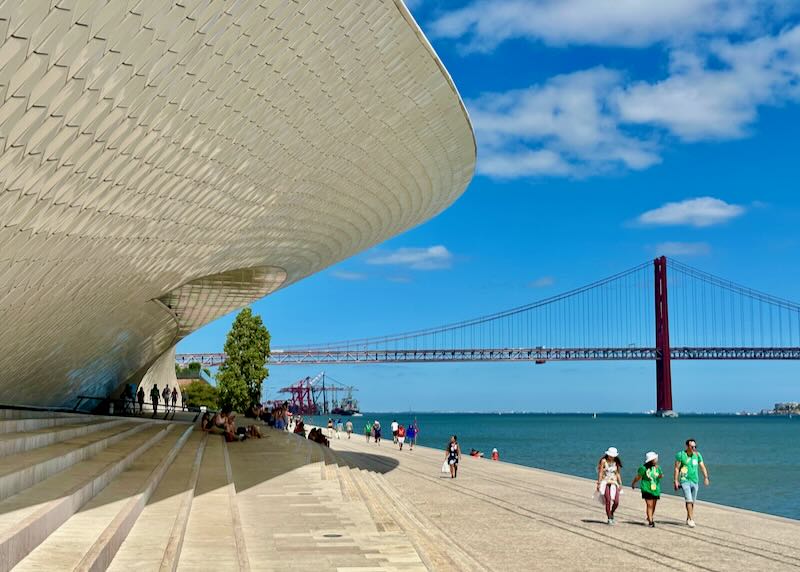
The Museum of Art, Architecture, and Technology (MAAT) in Belém.
Lapa is a quiet, upscale residential district with embassies, historic mansions, and some of Lisbon’s finest luxury hotels. It’s a good choice for travelers who prefer a peaceful neighborhood and don’t mind using taxis to reach the main sights.
Santos has more restaurants, bars, and nightlife, particularly around the waterfront. It’s a good alternative to Cais do Sodré for travelers who want a lively area outside the busiest tourist streets.
Alcântara and Santo Amaro are best known for LX Factory, a former industrial complex filled with shops, restaurants, and galleries. The Doca de Santo Amaro marina has waterfront restaurants beneath the Ponte 25 de Abril bridge. Nearby attractions include the Museu do Oriente.
Belém is approximately 10 minutes by train from Cais do Sodré, but reaching the main sights from Belém station involves additional walking. Trams and buses are alternatives, though traffic can make them slower.
My advice: Visit Belém for its monuments and museums, but stay in central Lisbon unless you specifically want a quiet riverside hotel. Lapa is my favorite of these neighborhoods for a luxury stay, while Santos is better for restaurants and nightlife.
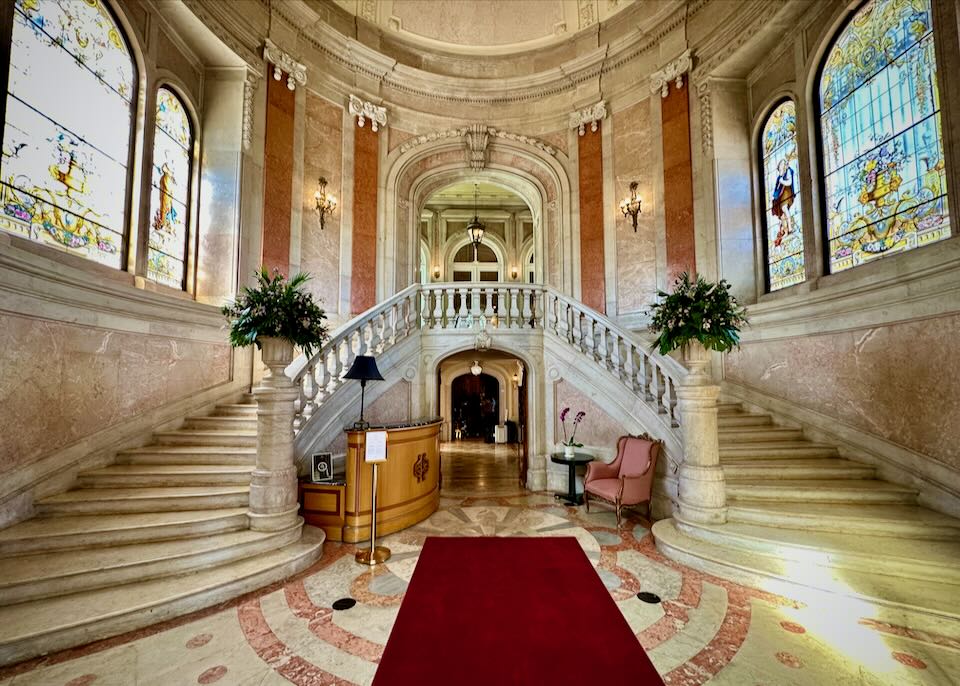
The historic interiors of Pestana Palace in Alcântara.
- Best Hotels in Belém, Lapa, Santos, and Alcântara
Altis Belém Hotel & Spa • Emerald House Lisbon • Olissippo Lapa Palace • Palácio do Governador • Pestana Palace • Wine & Books Lisboa Hotel • As Janelas Verdes- Best Affordable and Midrange Hotels
C&O Guest House • Garam Lisboa Guesthouse • Gerónimo Guest House Belém • Jardim da Lapa- Best Hostels
LX Hostel • Terrace Lisbon Hostel
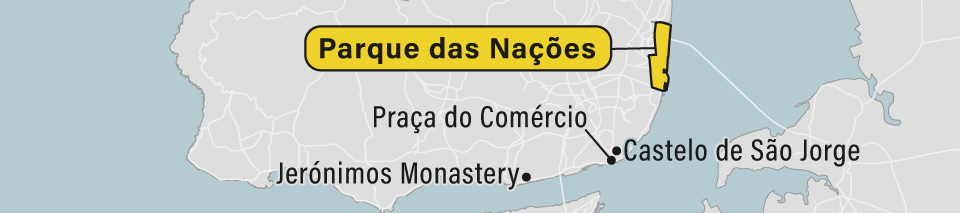
8. Parque das Nações
Best for families visiting the aquarium, modern hotels, and convenient airport access.
Parque das Nações is a modern waterfront district northeast of central Lisbon, developed for Expo 98. It has wide pedestrian paths, contemporary architecture, shopping malls, and views of the 17.2-km Vasco da Gama Bridge.
The main attraction is the excellent Oceanário, one of Europe’s best aquariums. Other family attractions include the Telecabine Lisboa cable car, the Pavilion of Knowledge science museum, and the waterfront gardens. The area also has major event venues, including MEO Arena.
Oriente station has Metro, train, and bus connections, making this one of Lisbon’s easiest neighborhoods for public transportation. The airport is only a few Metro stops away, though reaching Baixa or Chiado takes longer and requires a transfer.
My advice: Parque das Nações is a good base for business travelers, families spending substantial time at the aquarium, or anyone wanting a modern hotel near the airport. For a first visit focused on historic Lisbon, stay in Baixa, Chiado, or Avenida da Liberdade.
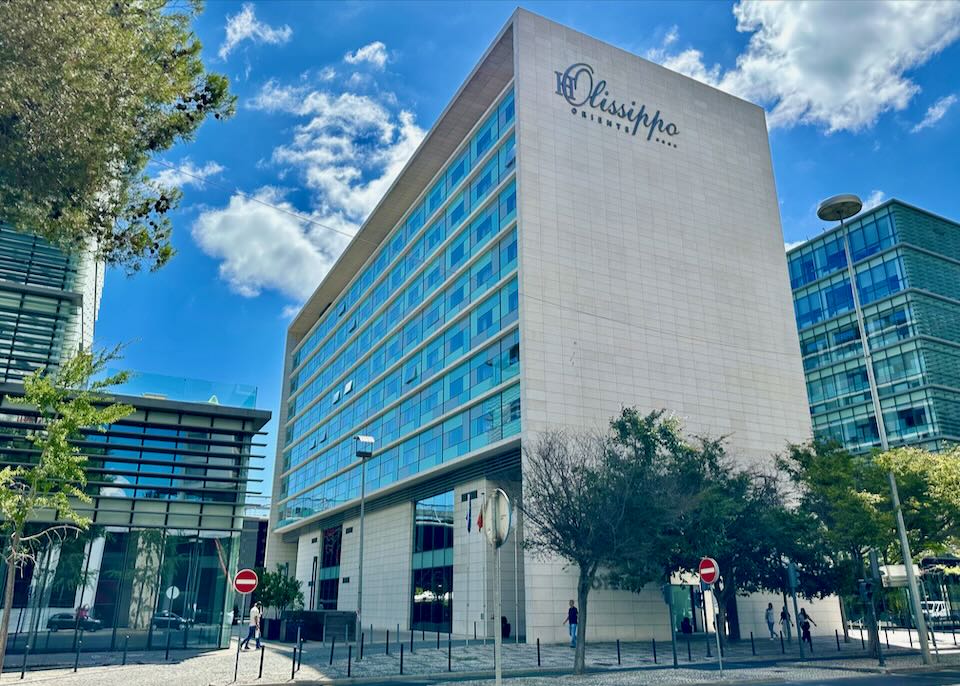
Olissippo Oriente Hotel is close to Oriente station, with easy Metro and train connections.
- Best Hotels in Parque das Nações
MYRIAD by SANA • Olissippo Oriente Hotel • Tivoli Oriente Hotel- Best Affordable Hotel
Moxy Lisboa OrienteMore Lisbon Neighborhoods
- Saldanha and Avenidas Novas: North of the historic center, these neighborhoods have broad streets, business hotels, shopping, restaurants, and excellent Metro connections. They’re less atmospheric than Baixa or Chiado but can offer better hotel value. The standout attraction is the Calouste Gulbenkian Museum, one of Lisbon’s best art museums. For an affordable stay near Saldanha, I recommend Chalet d’Ávila. Another option is EVOLUTION Lisboa.
- Estrela and Campo de Ourique: These residential neighborhoods west of Bairro Alto have good restaurants, parks, and fewer tourists. Estrela is known for its gardens and the Basílica da Estrela. Campo de Ourique has an excellent neighborhood market and the Casa Fernando Pessoa museum. They’re good choices for longer stays, though less convenient for first-time sightseeing.
- Beato and Xabregas: East of Alfama, these former industrial areas have galleries, restaurants, and creative spaces. The main attraction is the National Tile Museum, housed in a former convent. Worth visiting, but not among my favorite areas to stay.
- North Lisbon: The main attractions are the Lisbon Zoo, Benfica’s Estádio da Luz, and Sporting CP’s Estádio José Alvalade. Both football clubs have stadium tours and museums. All are easily reached by public transportation, so there’s little reason to stay nearby unless you’re attending an event.
- Ajuda and Queluz: West of central Lisbon, the Palácio Nacional da Ajuda is worth visiting for its restored royal interiors. Farther outside the city, the Palácio Nacional de Queluz has ornate rooms and formal gardens. Both are better visited as excursions than used as hotel bases.
- South of the Tagus: Take the ferry from Cais do Sodré to Cacilhas for waterfront restaurants and views back toward Lisbon. The nearby Cristo Rei monument has an observation terrace overlooking the city and Ponte 25 de Abril. The Atlantic beaches of Costa da Caparica are farther west and south. This side of the river is worth exploring, but I wouldn’t recommend staying here for a first Lisbon visit.
- Lisbon Airport: There’s little reason to stay near the airport unless you have a very early flight or a short overnight connection. The airport is close to central Lisbon and connected by Metro. If you need an airport hotel, Meliá Lisboa Aeroporto is my first choice, with Star Inn a good alternative.




 Santorini Dave was started in 2011 when I posted a short guide to visiting Santorini with kids. Now, my site publishes regularly updated guides to

Hey Dave, It would be a BONUS for me if you’d include hotel information that mentions if these have 24 hour front desk service or not. That is always important to me when traveling. Thanks for all you do.
Lisa Peurrung
That’s a great idea Lisa. Thanks for the feedback.
Brilliant post! I know Lisbon well and this info is surprisingly good.