Updated: July 17, 2026
By Santorini Dave • dave@santorinidave.com
Rome Hotels: My Favorites
- 5-Star: Hassler Roma (Top of Spanish Steps)
- 4-Star: Hotel Artemide (Via Nazionale) • Singer Palace (Near Pantheon)
- 3-Star & Boutique: Palm Gallery (Quiet neighborhood) • HT6 Hotel (Jewish Ghetto)
- For Families: Internazionale Domus (Near Spanish Steps)
- For Couples: Inn at the Roman Forum (Near Colosseum)
Quick Tips
• Stay as central as your budget allows. Rome’s metro skirts much of the Historic Center, and buses can be slow and crowded. A hotel within walking distance of the main sights is usually more useful than one beside a metro station.
• For a first visit, stay in the Centro Storico (Historic Center). The areas around the Pantheon, Piazza Navona, Trevi Fountain, and Spanish Steps put many major sights within a 5 to 25-minute walk and make it easier to return to your hotel for a break. Expect higher prices, cobblestones, crowds, and possible street noise.
• Choose Trastevere for restaurants, bars, and lively evenings, but avoid its busiest lanes if you are a light sleeper. Choose Monti for the Colosseum, independent shops, wine bars, and a more relaxed neighborhood feel. Both have more atmosphere than convenience for sightseeing across the entire city.
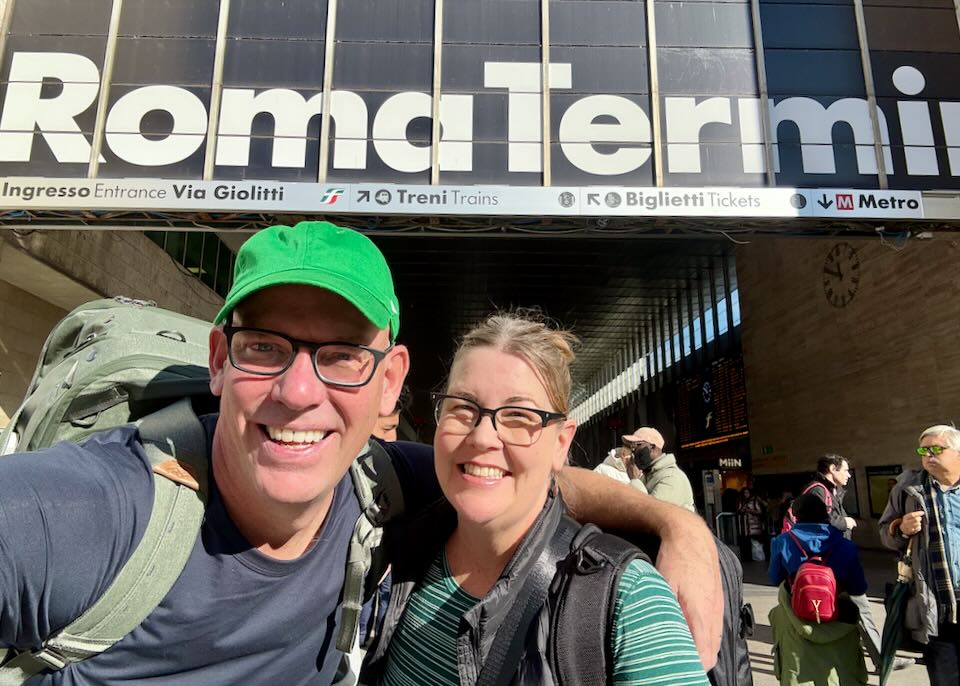
My wife and I at the Rome train station.
Best Areas to Stay in Rome
Rome is best explored on foot, so location matters more here than proximity to a metro station. The metro skirts much of the historic core, buses can be slow and crowded, and many of the city’s most memorable streets, piazzas, churches, and ruins are discovered while walking between major sights.
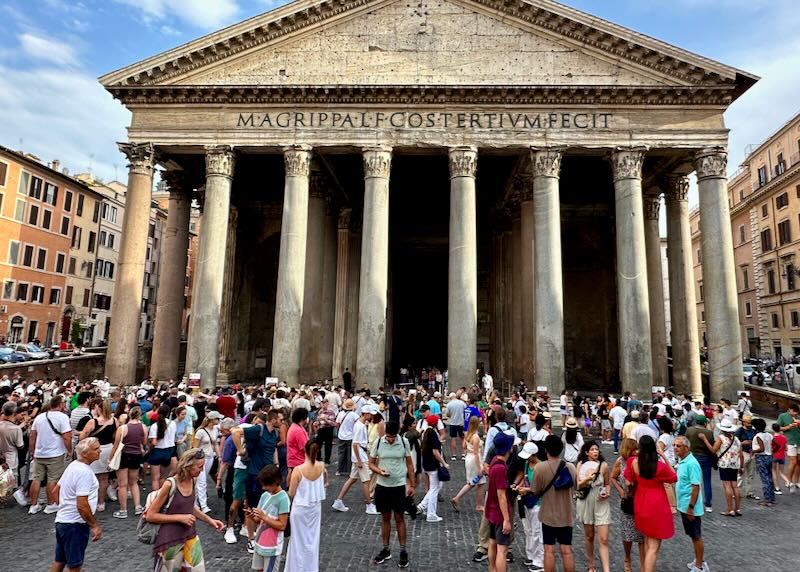
For most first-time visitors, the best place to stay is the Centro Storico (Historic Center), especially near the Pantheon, Piazza Navona, Campo de’ Fiori, Trevi Fountain, or the Spanish Steps. From these areas, many headline attractions are within a 5 to 25-minute walk, and you can often return to your hotel between sightseeing stops. The main drawbacks are high prices, crowds, cobblestones, and possible street noise.
The Historic Center is not one uniform neighborhood. The northern section around the Spanish Steps, Trevi Fountain, and Piazza del Popolo is polished, expensive, and best for shopping. The southern section around Piazza Navona, Campo de’ Fiori, the Pantheon, and the Jewish Quarter has narrower streets, more restaurants, and a livelier atmosphere.
South of the Historic Center, Ancient Rome and Monti are best for the Colosseum, Roman Forum, and a younger neighborhood feel. Across the river, Trastevere is best for restaurants, bars, and lively evenings, though its busiest streets can be noisy and less convenient for sightseeing across the city.
Prati is calmer, has wider streets and good metro access, and is the best base for the Vatican. Testaccio is farther from the main sights but excellent for traditional Roman food and a more local atmosphere. Villa Borghese and the nearby northern neighborhoods suit families and couples who want parks, quieter streets, and upscale hotels.
Choose the Historic Center for the easiest first visit, Monti for the Colosseum and neighborhood character, Trastevere for nightlife and dining, Prati for the Vatican and quieter evenings, or Testaccio for food and fewer tourists.
Me and my boys along the Tiber in Trastevere, Rome.
Getting Around Rome
Cobblestones, uneven pavements, summer heat, crowds, and long sightseeing days make location especially important for families, older travelers, and anyone with limited mobility. A central hotel also makes it easier to return for a rest between sights.
The metro is most useful for longer journeys rather than everyday sightseeing within the Historic Center. Line A serves the Spanish Steps, Prati, and the Vatican, while Line B connects Termini, Monti, and the Colosseum. Prati and Monti are better choices than the Historic Center for travelers who expect to use public transportation frequently.
Rome’s buses, trams, and metro accept tap-and-go payment with a contactless bank card, wearable device, or phone (Apple Pay and Google Pay). A single €1.50 fare is valid for 100 minutes, and contactless payments are capped at €7 per day. Use the same physical card or device for every journey, as each phone, watch, and physical card is treated as a separate payment method (even if they’re linked to the same credit card).
Buses and trams reach neighborhoods the metro does not, including Trastevere, but traffic makes journey times unpredictable. Taxis are useful for luggage, late-night arrivals, airport transfers, and trips between distant neighborhoods.
Choose the Historic Center to minimize daily travel, Prati or Monti for better metro access, and Trastevere or Testaccio when dining and neighborhood atmosphere matter more than the shortest sightseeing routes.
Good hotels near Roma Termini Train Station:
St Regis (5-star) • Palazzo Montemartini (4-star) • Des Artistes (3-star)
Good hotels near the Pantheon:
The area around the Pantheon is the most central place to stay in Rome.
• Hotel Pantheon (Centro Storico): A polished hotel in a 17th-century building, just around the corner from the Pantheon.
• Albergo del Senato (Centro Storico): A classic and elegant hotel with a rooftop terrace that looks directly out at the Pantheon.
• Singer Palace (Centro Storico): A chic and luxurious boutique hotel with an excellent rooftop restaurant, just a five-minute walk away.
Good hotels near the Trevi Fountain:
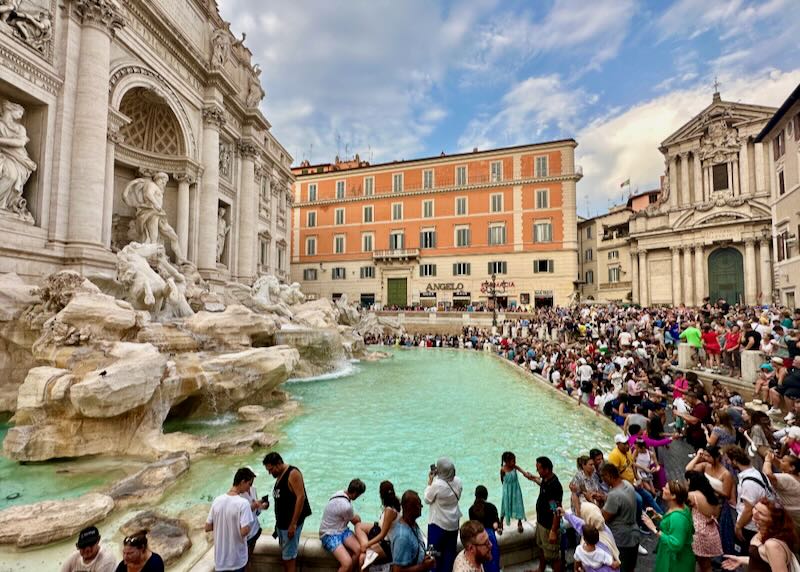
This area is perfect for those who want to be in the heart of the action, close to Rome’s most famous fountain.
• Hotel Delle Nazioni (Trevi): A classic and comfortable hotel in a superb location, just a one-minute walk to the Trevi Fountain.
• Hotel Fontana (Trevi): A classic hotel with an unbeatable location, situated directly opposite the Trevi Fountain.
• Relais Fontana Di Trevi (Trevi): An upscale hotel with a fantastic rooftop terrace offering direct views of the fountain.
• Maalot Roma (Trevi): A superb luxury boutique hotel hidden on a quiet side street, just a one-minute walk from the fountain.
• Harry’s Bar Trevi Hotel & Restaurant (Trevi): A stylish and sophisticated hotel with a famous bar, located a two-minute walk away.
Good hotels near the Colosseum & Roman Forum:
Staying in the charming Monti neighborhood puts you steps from Rome’s most incredible ancient sites.
• Palazzo Manfredi (Monti): A five-star luxury hotel with an incredible rooftop restaurant offering direct, jaw-dropping views of the Colosseum.
• Hotel Lancelot (Celio): A charming, family-run hotel with a homey atmosphere, located a five-minute walk from the Colosseum.
• Inn at the Roman Forum (Monti): A unique luxury guesthouse with its own Roman ruins on the property, located a five-minute walk from the Forum entrance.
• Mercure Roma Centro Colosseo (Monti): A modern hotel with a rooftop pool and bar that has spectacular views of the Colosseum.
Good hotels near Piazza Navona:
This magnificent piazza is the heart of Baroque Rome, surrounded by beautiful alleys and great restaurants.
• Bio Raphael (Centro Storico): A luxurious and iconic hotel with a famous ivy-clad façade and a beautiful rooftop restaurant, one street from Piazza Navona.
• Hotel Martis Palace (Centro Storico): A chic and comfortable hotel with a great rooftop terrace, located steps from the piazza.
• Eitch Borromini (Centro Storico): A stunning luxury hotel with panoramic views from its rooftop bar, situated directly on Piazza Navona itself.
• Lifestyle Suites Rome (Centro Storico): An elegant and romantic adults-only guesthouse with some rooms overlooking the piazza’s famous fountains.
Good hotels near the Spanish Steps:
This is the center of high-end luxury in Rome, home to designer shopping and iconic 5-star hotels.
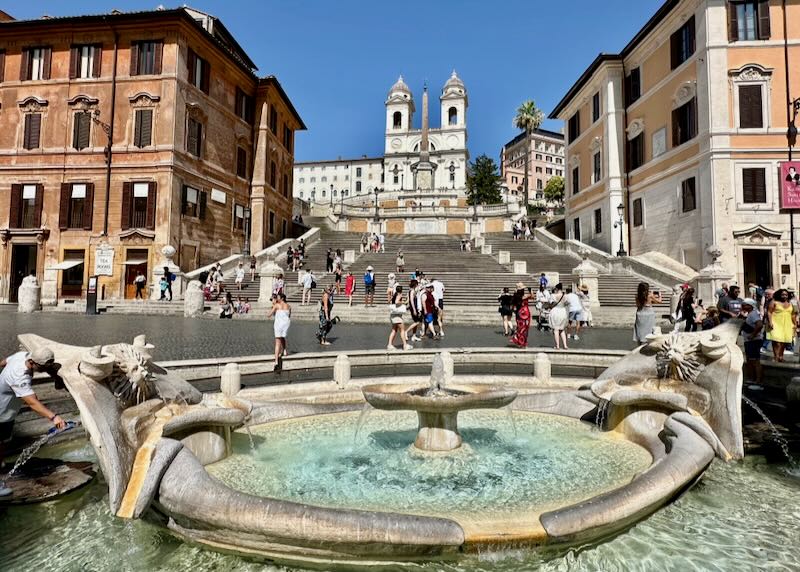
• Hassler Roma (Tridente): A legendary 5-star hotel perched at the very top of the Spanish Steps with incredible city views.
• Rocco Forte Hotel de la Ville (Tridente): A sophisticated and stylish luxury hotel, also at the top of the Spanish Steps.
• Inn at the Spanish Steps (Tridente): A classic and charming hotel with a fantastic rooftop terrace, located right in the heart of the action.
• Internazionale Domus (Tridente): My favorite hotel in Rome for families, located directly on Piazza di Spagna.The Best Places to Stay in Rome

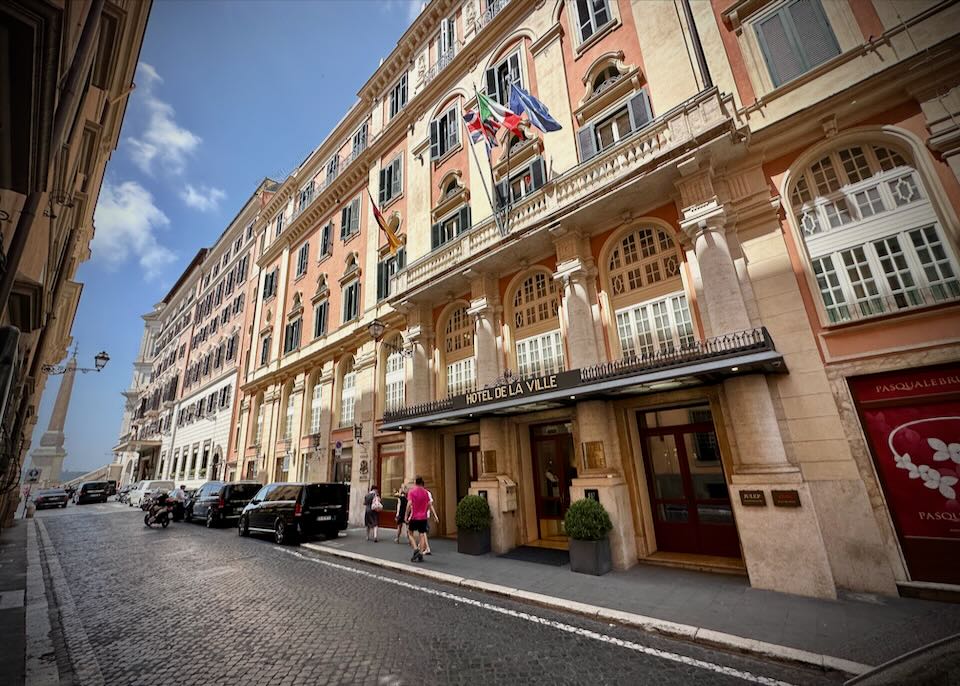
The 5-star Rocco Forte Hotel de la Ville is located just past the obelisk at the top of the Spanish Steps.
- Best Luxury Hotels in Rome
Hassler Roma • Hotel de la Ville • Hotel Artemide • Hotel Vilòn • St. Regis • Villa Spalletti Trivelli- Best Boutique Hotels in Rome
Inn at the Roman Forum • Campo de’ Fiori • Portrait Roma • J.K. Place • San Anselmo • Hotel Santa Maria- Best New Hotels in Rome
Hotel Vilòn • Six Senses • Bulgari • Maalot Roma • EDITION- Best Hotels for Families in Rome
Internazionale Domus • Parco dei Principi • Hotel Canada • Hotel Grifo • Ripetta 25- Best Midrange/Value Hotels in Rome
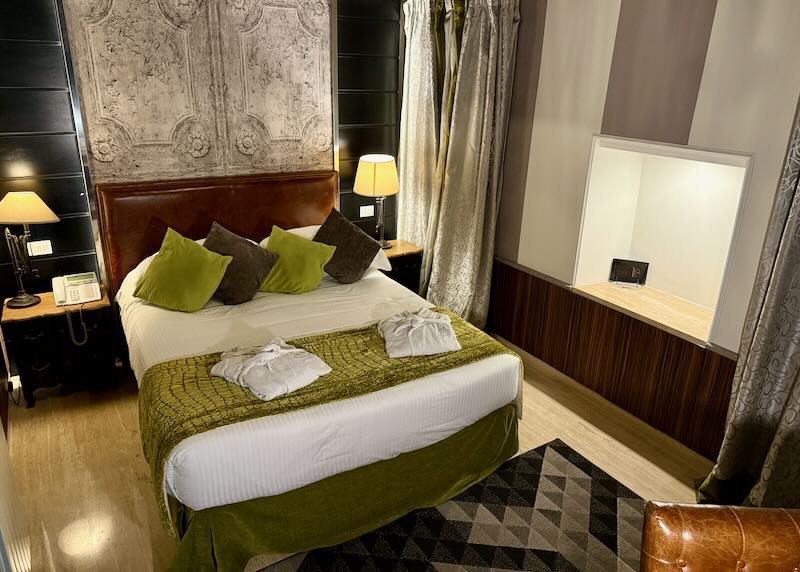
Hotel Des Artistes • iQ Hotel • The RomeHello • Hotel CanadaOur room at the Inn at the Roman Forum. Great location for the Colosseum and Ancient Rome.
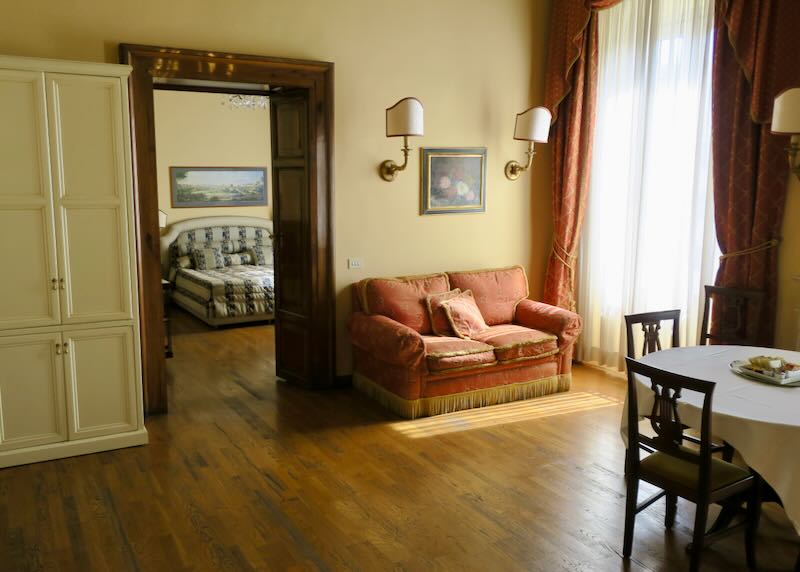
Our room at the Internazionale Domus Hotel. A fantastic place to stay for families. Great location near the metro and Spanish Steps.
Best Places in Rome for…
- Best Neighborhoods to Stay for First Timers: Historic Center and Trastevere
The Historic Center is the best choice for most first-time visitors. Staying near the Pantheon, Piazza Navona, Campo de’ Fiori, Trevi Fountain, or the Spanish Steps puts many of Rome’s major sights within a 5 to 25-minute walk and reduces reliance on buses, taxis, and the limited metro network. The tradeoffs are higher hotel rates, heavy daytime crowds, cobblestones, and street noise.Trastevere is the strongest alternative for travelers who care more about restaurants, nightlife, and neighborhood atmosphere than maximum sightseeing convenience. The section near Piazza di Santa Maria and the river is a 15 to 25-minute walk from the Pantheon and Piazza Navona, but the Colosseum, Spanish Steps, and Vatican require longer walks or transit. Trastevere’s central lanes can be noisy late into the night, and taxis cannot reach every narrow street easily.
Choose the Historic Center for a short visit, a packed sightseeing schedule, or the simplest possible first stay. Choose Trastevere for livelier evenings, somewhat better-value guesthouses and apartments, and a more residential setting, but not if quiet nights or the shortest walks to Rome’s headline sights matter most.
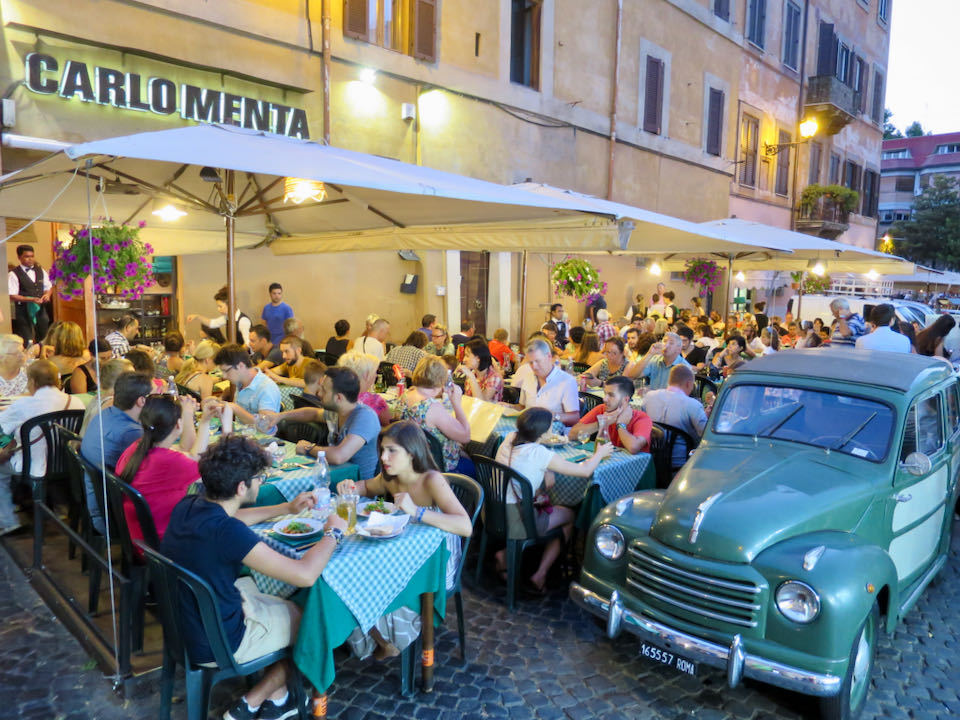
My favorite neighborhood in Rome is Trastevere – a lively walkable area with good restaurants and nightlife. Santa Maria is a great hotel close to the action.
- Best Neighborhoods for Nightlife: Trastevere, Historic Center, and Pigneto
Trastevere is the best area for most visitors who want nightlife. Around Piazza di Santa Maria and the surrounding streets you’ll find dozens of bars, wine bars, pubs, and restaurants that stay busy until late, making it easy to spend the entire evening on foot. The tradeoff is noise, especially on weekends and in summer, so choose a hotel on a quieter side street if you are a light sleeper. The Hotel Santa Maria is one of the area’s most charming places to stay. Favorites include Bar San Calisto, Big Star Bar Diner, Mr. Brown Pub, and craft beer favorite Ma Che Siete Venuti A Fà.The Historic Center is a better choice if you want lively evenings without staying in Rome’s busiest nightlife district. Piazza Navona, Campo de’ Fiori, and the streets between them have cocktail bars, wine bars, and outdoor cafés that remain active late into the evening while keeping you within easy walking distance of Rome’s main sights. Try La Botticella near Piazza Navona or Il Baretto near Campo de’ Fiori.
For a younger, more local scene, head to Pigneto or nearby San Lorenzo, east of Termini. Both neighborhoods have independent bars, live music, and clubs with far fewer tourists than central Rome. They’re better suited to visitors specifically seeking nightlife than first-time tourists, as reaching Rome’s main attractions requires metro, tram, taxi, or a longer ride. Popular spots include Giove Live Music and Spirito.
Having a drink in Trastevere.
- Best Neighborhood for Couples: Aventine Hill
The Aventine Hill is Rome’s best neighborhood for couples seeking a quieter, more romantic stay. Tree-lined streets, elegant villas, peaceful gardens, and panoramic viewpoints create a calm atmosphere that feels removed from the crowds while remaining about a 15 to 20-minute walk from Trastevere, the Circus Maximus, and the Colosseum. The area has relatively few hotels, but that is part of its appeal. The San Anselmo and Villa San Pio are two of Rome’s most charming boutique hotels.The Giardino degli Aranci (Orange Garden) is one of the city’s best sunset spots, and the famous Knights of Malta keyhole offers a perfectly framed view of St. Peter’s Basilica. The main drawback is that there are relatively few restaurants and bars nearby compared with Trastevere or the Historic Center, so you’ll probably walk or take a short taxi ride for dinner. Couples wanting lively evenings and immediate access to cafés will prefer Trastevere, while those prioritizing peace, charm, and romance should choose the Aventine.
- Best Neighborhoods for Families: Historic Center, Villa Borghese, and Prati
The Historic Center is the best choice for most families, especially around Piazza Navona, the Pantheon, Piazza del Popolo, and the Spanish Steps. Staying here keeps many major sights within a 5 to 25-minute walk, makes it easier to return to the hotel for naps or breaks, and reduces time spent on crowded buses and metro trains. Apartments and family suites are particularly useful in this area. Internazionale Domus near the Spanish Steps and Ripetta 25 near Piazza del Popolo are good options for families wanting extra space. The drawbacks are high prices, crowds, cobblestones, and occasional street noise.Families who want a quieter setting and outdoor space should consider the northern edge of the Historic Center near Villa Borghese. The park has playgrounds, shaded paths, bike rentals, and plenty of room for children to run around, while the Spanish Steps and Piazza del Popolo remain within walking distance. Parco dei Principi is an excellent upscale choice here, with a pool and resort-like facilities rarely found in central Rome. The tradeoff is a longer walk or taxi ride to the Colosseum, Vatican, and western Historic Center.
Prati is another strong option for families who prefer wider pavements, less nightlife, practical restaurants, and easier metro access. It is particularly convenient for the Vatican, but most other headline sights are across the river. Monti works well for families with older children who want to stay near the Colosseum; Hotel Grifo is a friendly, well-located choice, though Monti’s hills, steps, and busy evening streets can be tiring with toddlers or strollers.
Choose the Historic Center for the easiest first family visit, Villa Borghese for parks and hotel amenities, or Prati for a calmer neighborhood and convenient Vatican access.
- Best Neighborhood for Food & Restaurants: Testaccio
Testaccio is Rome’s best neighborhood for travelers who want excellent food and a more local atmosphere. Long regarded as the heart of traditional Roman cooking, it has authentic trattorias, neighborhood wine bars, bakeries, markets, and specialty food shops, with fewer tourist-oriented restaurants than the Historic Center or Trastevere. Excellent choices include Ristorante Pecorino, Osteria degli Amici, Taverna Volpetti, and Osteria San Giorgio.For lunch, the Mercato di Testaccio is one of Rome’s best food markets, with favorites including Casa Manco for pizza and Mordi & Vai for sandwiches. Trapizzino is another good stop for its signature filled pizza pockets and supplì. Between meals, the neighborhood has several worthwhile sights, including the Mattatoio arts complex and the Non-Catholic Cemetery, where the poets Keats and Shelley are buried. Nearby Ostiense adds street art, Centrale Montemartini, Eataly Roma, and the Basilica of St. Paul Outside the Walls.
The main drawback is location. Testaccio is about a 25 to 35-minute walk from the Pantheon and Piazza Navona, so most visitors will use the metro, bus, tram, or taxi for sightseeing. Stay here if food, neighborhood character, and fewer tourists matter more than being surrounded by Rome’s headline attractions. Choose the Historic Center or Trastevere for shorter sightseeing walks and a broader choice of hotels.

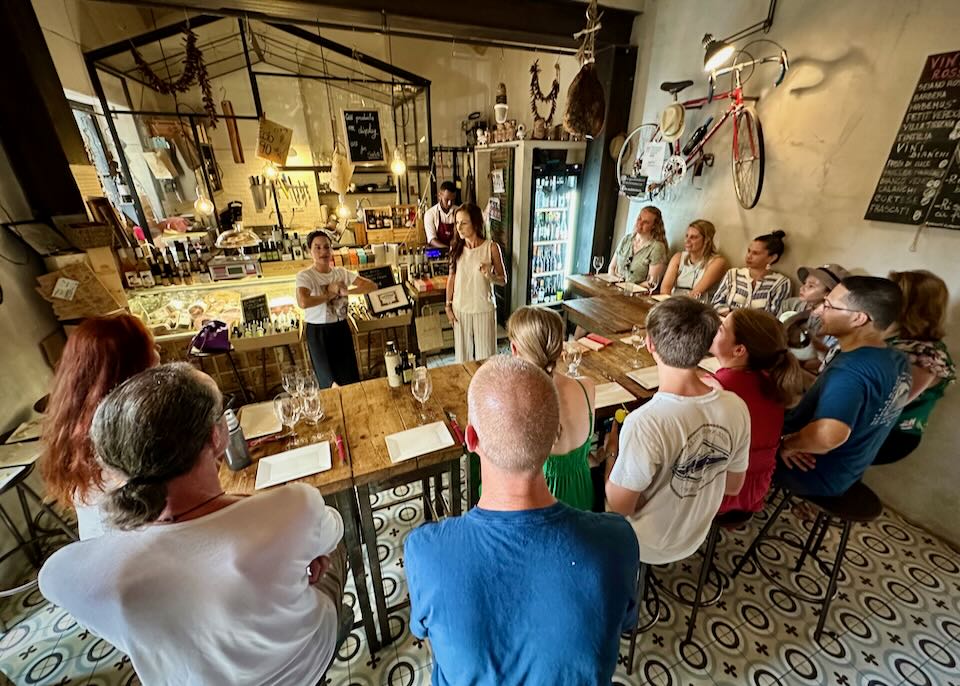
A guided food tour that we did in Testaccio.
- Best Neighborhood for Sightseeing: Historic Center
The Historic Center is the best sightseeing base for most visitors because it places the Pantheon, Piazza Navona, Trevi Fountain, Campo de’ Fiori, and the Spanish Steps within roughly a 5 to 25-minute walk. The Colosseum and Roman Forum are 20 to 30 minutes away on foot, while St. Peter’s Basilica and the Vatican Museums require a longer walk, bus, taxi, or metro ride. Staying here minimizes daily transit and makes it easy to return to the hotel between sights, but rooms are expensive and the busiest streets can be crowded and noisy.Ancient Rome is the better choice if the Colosseum, Roman Forum, and Palatine Hill are the main priorities. Hotels around Monti and Via Cavour also provide good metro access, but the Vatican and western side of the Historic Center are less convenient. Prati is best for early entry to the Vatican Museums and St. Peter’s Basilica, with wider streets and a calmer evening atmosphere, but most other major sights are across the river.
Choose the Historic Center for the best overall sightseeing location, Ancient Rome for archaeology and the Colosseum, or Prati for a Vatican-focused visit.
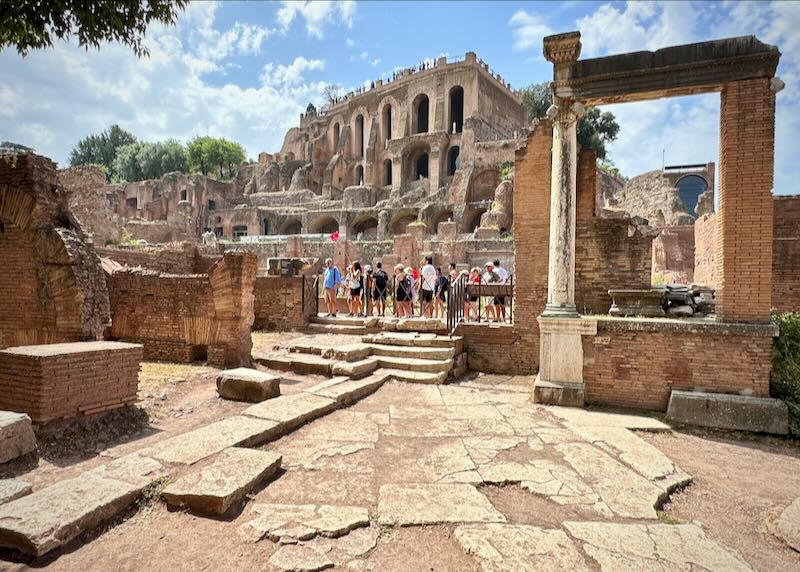
We find that we get the most out of any historic site visit when we book a guided tour. And this was especially true of the Roman Forum.
- Best Neighborhood for Shopping: Historic Center
The Historic Center is Rome’s best base for shopping, especially around the Spanish Steps, Via dei Condotti, Via del Babuino, and Via del Corso. Via dei Condotti and the surrounding streets have the city’s highest concentration of luxury fashion and designer boutiques, while Via del Corso is better for mainstream Italian and international brands. Staying nearby also keeps most major sights within a 5 to 25-minute walk, though hotels around the Spanish Steps are among Rome’s most expensive.For independent boutiques, vintage clothing, records, and small design shops, Monti is the strongest alternative. Stores such as Radiation Records and Pifebo Vintage Shop reflect the neighborhood’s younger, more alternative character. Via del Governo Vecchio and Via dei Coronari, west of Piazza Navona, are also good for independent fashion, antiques, and leisurely browsing.
Prati is best for practical, less touristy shopping along Via Cola di Rienzo, while Trastevere has scattered boutiques, bookshops, and craft stores rather than a concentrated retail district. Its Almost Corner Bookshop is one of Rome’s best English-language bookstores, and the large Porta Portese flea market takes place on Sunday mornings. Choose the Historic Center for luxury and convenience, Monti for vintage and independent shops, or Prati for mainstream shopping with fewer crowds.
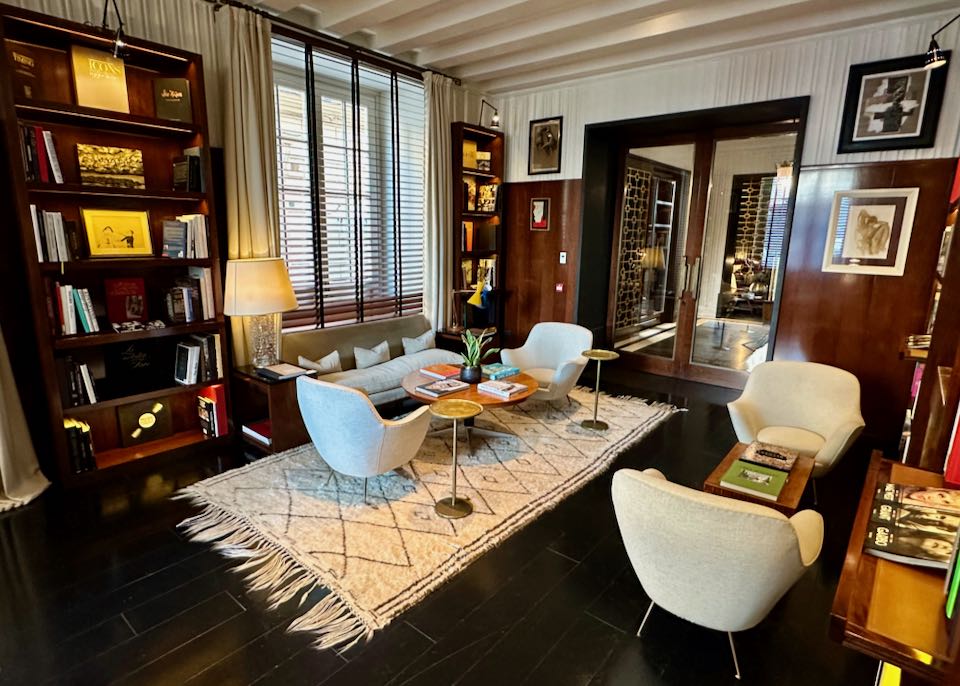
The J.K. Place hotel has a great central location (10-minute walk from the Trevi Fountain) and a luxurious charm.
- Safest Neighborhoods in Rome: Prati, Spanish Steps, and Aventine Hill
Rome’s central neighborhoods are generally safe for visitors, and there is no major sightseeing area that tourists need to avoid. Prati is one of the best choices for travelers who want a calm, orderly neighborhood with wide streets, good metro access, restaurants, and an easy walk to the Vatican. The area around the Spanish Steps and Piazza del Popolo is also central, well lit, and relatively quiet after the shops close, though hotels are expensive. Aventine Hill is even more peaceful and residential but has fewer restaurants, hotels, and transport options.The streets immediately around Termini station can feel hectic and less inviting late at night, particularly around Via Giolitti and Piazza dei Cinquecento, but the area is not what I would call dangerous. Its main drawbacks are crowds, traffic, aggressive touts, and a higher risk of pickpocketing or phone theft. Travelers arriving late, carrying luggage, or uncomfortable in busy station districts will prefer Prati, Monti, or the Historic Center. Wherever you stay, take normal precautions on crowded buses, metro trains, station platforms, and around major attractions.
The 8 Best Areas in Rome for Tourists
1. Historic Center (Centro Storico) and Jewish Quarter
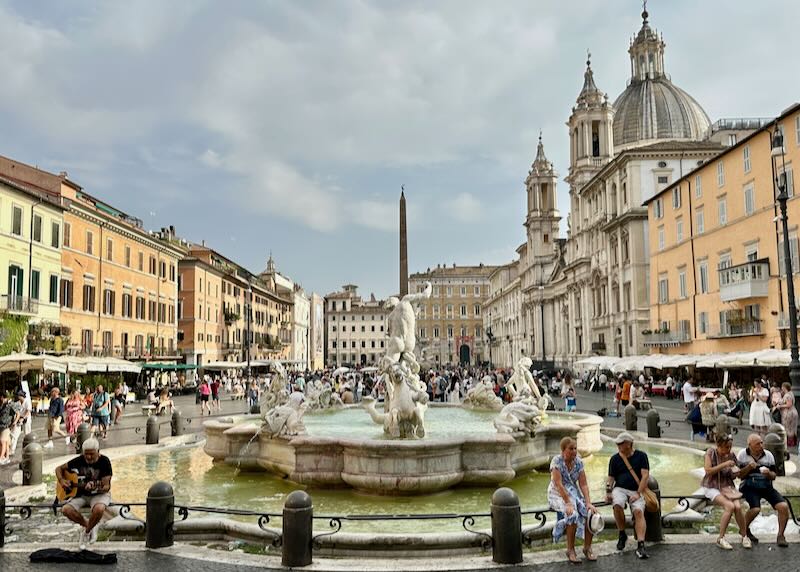
For the heart of the action, Rome’s Historic Center is the place to be. It is a touristy part of town but locals also enjoy its excellent restaurants and trattorias, fashionable boutiques, and busy bars and cafes. Those staying in Centro Storico will have top sights such as the Pantheon, Museo di Roma (Palazzo Braschi), Galleria Doria Pamphilj, Spada Gallery, and the Piazza Navona’s grand Neptune Fountain at their doorstep, along with countless historic churches (like Borromini’s Sant’Ivo and the Gesù, mother church of the Jesuits) and cobbled lanes to explore. Campo de’ Fiori is one of the city’s liveliest squares, home to a produce market and the famous monument to Renaissance thinker Giordano Bruno, while the Palazzo Altemps displays the Museo Nazionale Romano’s best statuary.
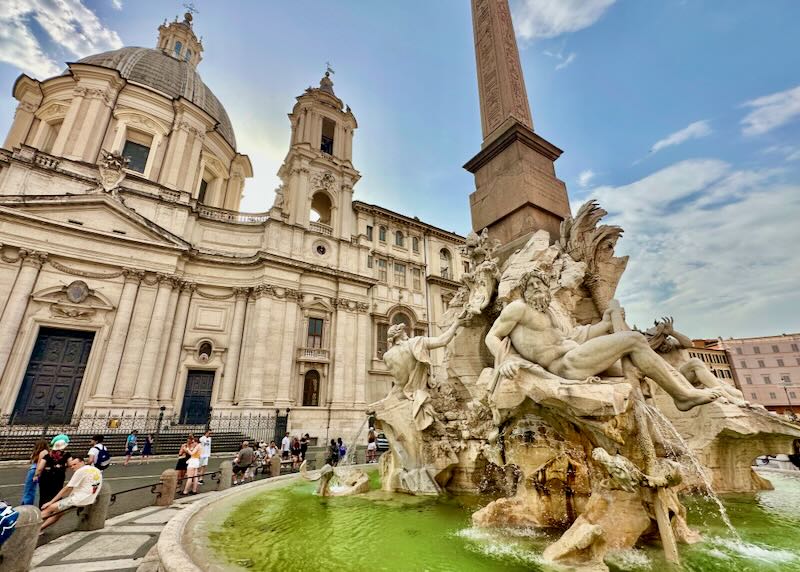
Piazza Navona
The southern section of the historic district encompasses the old Jewish Quarter (or “Ghetto”), home to the impressively grand Tempio Maggiore, the great Synagogue and Jewish Museum, plus the Fondazione Museo della Shoah, which is a moving reminder of the Holocaust in Italy. Locals flock to the Roman-Jewish restaurants on Via del Portico D’Ottavia (featuring dishes like artichokes alla giudia and anchovy pie), while its ancient portico leads to the ruined Temples of Apollo Sosiano and Bellona, and the Teatro di Marcello, a smaller version of the Colosseum founded by Julius Caesar.
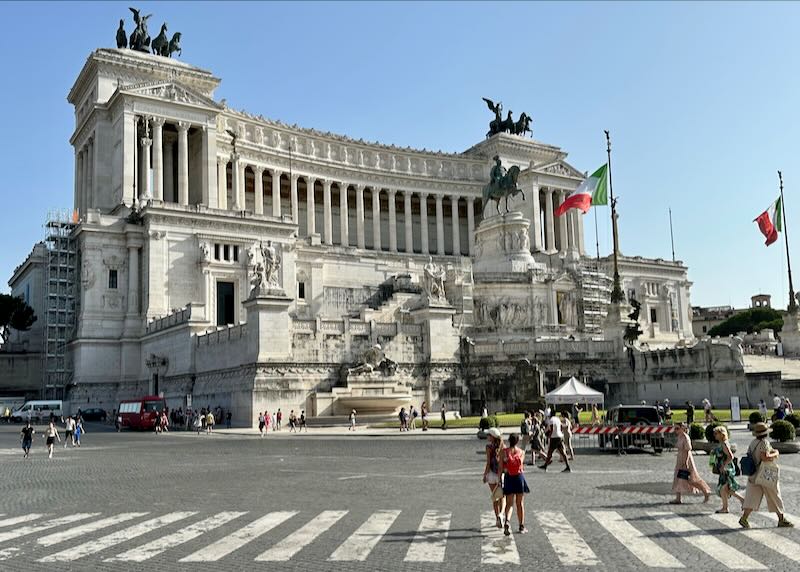
The boundary between the Historic Center and Ancient Rome is marked by traffic-snarled Piazza Venezia, dominated by the monumental Altare della Patria (or “Vittoriano”), commemorating Italian Unification.
Altare della Patria in Piazza Venezia.
The Historic Center is carpeted with hotels, so you’ll find plenty of choice in Rome’s most central and liveliest district. But there are some downsides here, too: it’s the busiest part of the city and is often overwhelmed by tourists, rates are expensive (though we’ve listed some good bargains below), and its narrow streets are far from the nearest metro stations (the closest public transport options are trams and buses on the periphery).
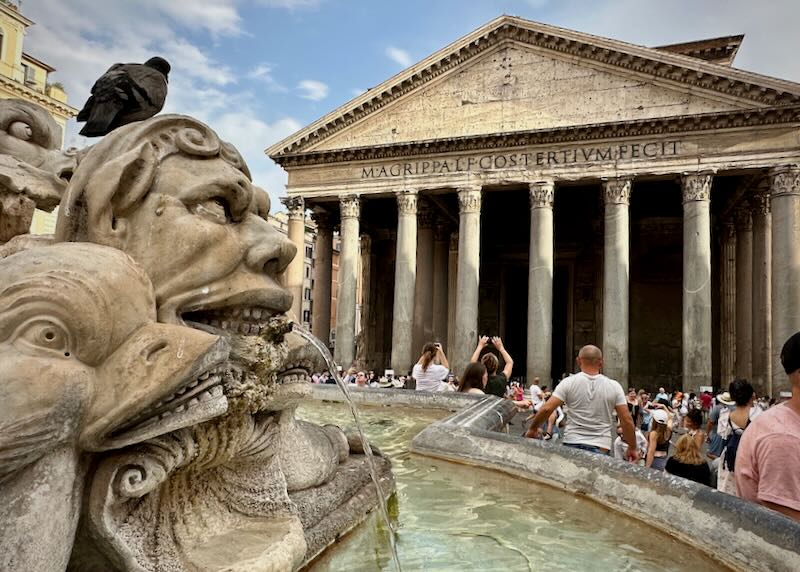

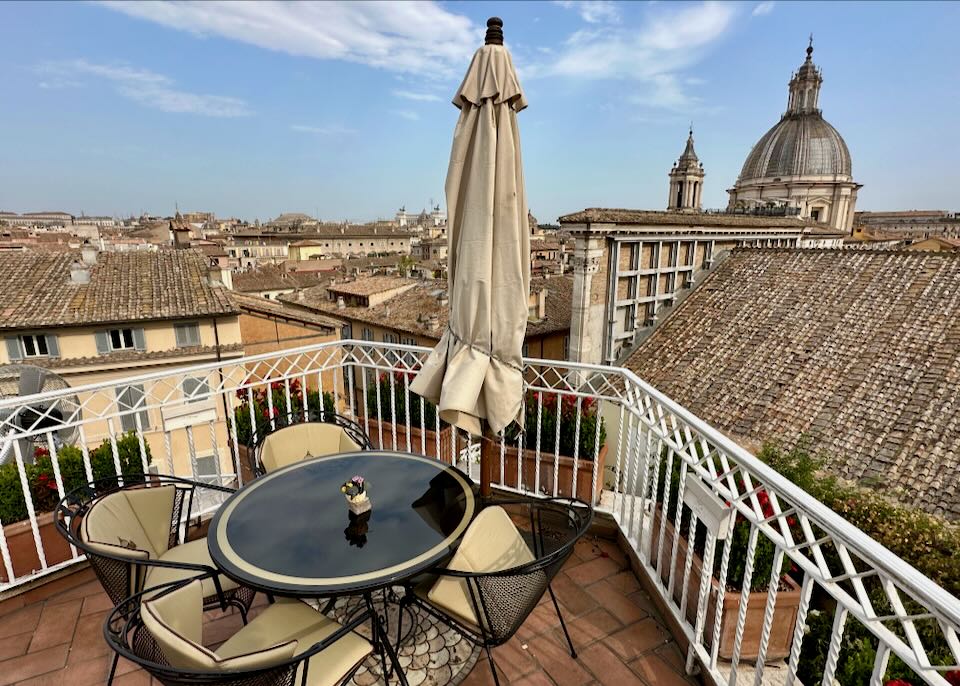
Views of Rome from the rooftop restaurant at Bio Raphael.
- Best Hotels in the Historic Center and Jewish Quarter
Bio Raphael • Hotel phone: +39 06 682831
Campo de’ Fiori • Hotel phone: +39 06 687 4886
Chapter Roma • Hotel phone: +39 06 8993 5351
Hotel Damaso • Hotel phone: +39 06 4550 3061
Hotel De’Ricci • Hotel phone: +39 06 687 4775
Singer Palace • Hotel phone: +39 06 697 6161
Six Senses • Hotel phone: +39 06 868 14000
9Hotel Cesari • Hotel phone: +39 06 674 9701- Best Cheap/Midrange Hotels
Albergo del Senato • Hotel phone: +39 06 678 4343
HT6 Hotel • Hotel phone: +39 06 6880 9597
Nikis Collection Navona • Hotel phone: +39 350 029 9913
2. Tridente and Trevi Fountain (Historic Center)
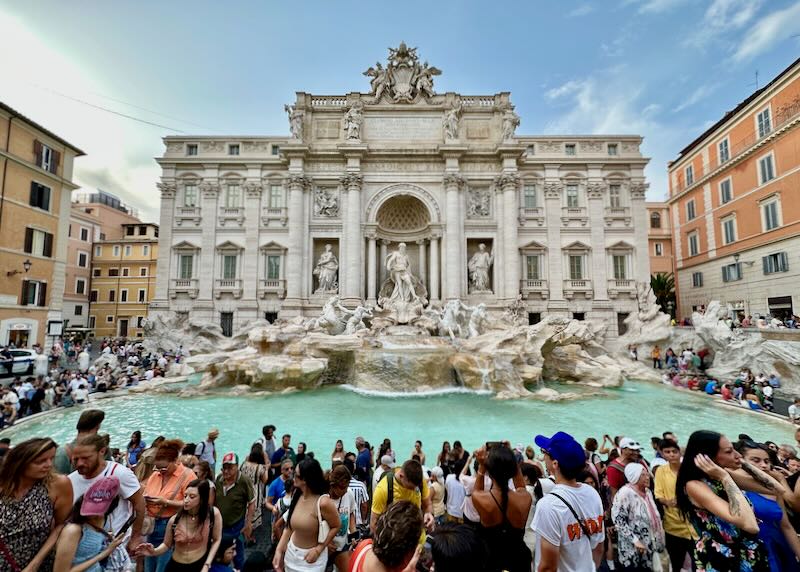
The northern half of the Historic Center is characterized by the area known as the “Tridente”, named after the three streets that run south from Piazza del Popolo in the form of a trident: Via di Ripetta (to Piazza Cardelli), Via del Corso (to Piazza Venezia), and Via del Babuino (to Piazza di Spagna). Upmarket, elegant, and touristy, this area encompasses Rome’s top shopping strip, Via de’ Condotti – running east from Piazza di Spagna, home to the Spanish Steps, the Keats-Shelley House, and Babington’s 19th-century tea room. 600 meters south from Piazza di Spagna lies one of the city’s most popular attractions, the Trevi Fountain of La Dolce Vita fame – plan to visit very early if you want to avoid the crowds.
Don Pasquale restaurant and bar, inside the newly-opened Maalot Roma hotel.
Nestled among the high-end designer boutiques and prestigious flagship stores, the historic district boasts charming cafes, such as the iconic Antico Caffè Greco, and several sophisticated bars frequented by affluent Romans and visiting celebrities. Notable attractions include the colossal Mausoleum of Augustus and the adjacent Museo dell’Ara Pacis, showcasing a Roman altar within its contemporary architecture masterfully designed by New York-based Richard Meier. Additionally, the Tempio di Adriano presents a rare, preserved façade of a Roman temple on site. For an immersive experience of Rome’s finest Renaissance art, visit the awe-inspiring church of Santa Maria del Popolo, which proudly displays masterpieces by Caravaggio and Raphael. While the Tridente district bustles with activity during the day, it transforms into a serene haven come nightfall.
There’s a huge choice of hotels here, mostly expensive, though there are still a few bargains to be had. And while it’s great to be in the heart of things, note that this area can be jam-packed with tourists during the day and that the metro and most buses bypass this area, meaning more walking (or taxis) for you.

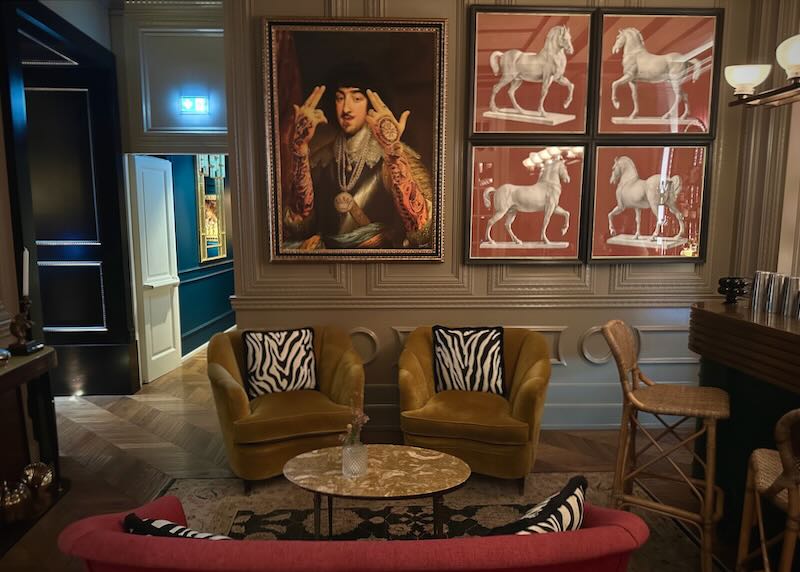
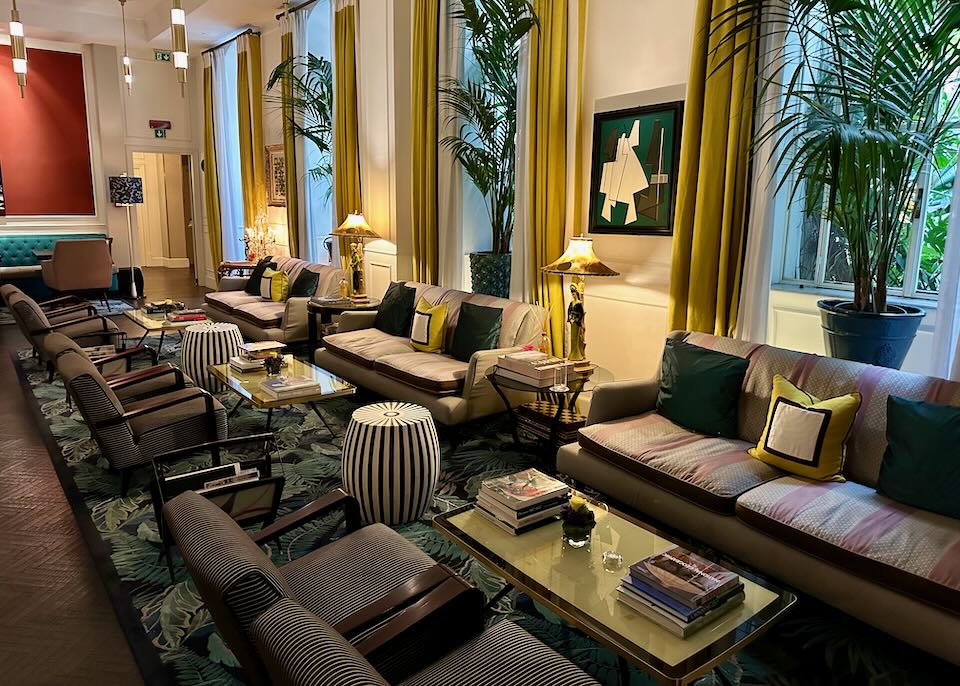
The swanky lobby lounge of the Hotel Vilòn.
- Best Hotels in Tridente and Trevi Fountain Area
Hassler Roma • Hotel phone: +39 06 699340
Bulgari • Hotel phone: +39 06 3608 0400
Hotel de Russie • Hotel phone: +39 06 328881
Hotel de la Ville • Hotel phone: +39 06 977931
Hotel Vilòn • Hotel phone: +39 06 878187
Internazionale Domus • Hotel phone: +39 06 6919 0237
J.K. Place • Hotel phone: +39 06 982634
Maalot Roma • Hotel phone: +39 06 878087
Portrait Roma • Hotel phone: +39 06 6938 0742
Villa Spalletti Trivelli • Hotel phone: +39 06 4890 7934- Best Cheap/Midrange Hotels
Albergo delle Regioni • Hotel phone: +39 06 6936 7981
Maison Evelina • Hotel phone: +39 366 890 5884
Poēsis Experience Hotel • Hotel phone: +39 06 9933 3369
Ripetta 25 • Hotel phone: +39 06 3265 0574
3. Ancient Rome (including Capitoline Hill and Monti)
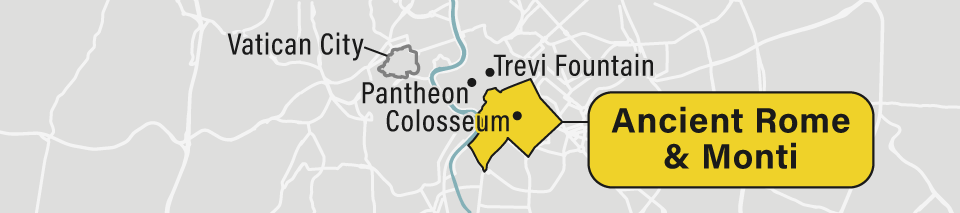
Sightseeing is the main activity in Ancient Rome, the part of town centered on the Colosseum and ancient forums (Foro Romano is the most famous of these). There are several good accommodation options here, but fewer decent restaurants than in other areas. The main attractions begin on the Capitoline Hill, behind the giant Altare della Patria; the statue-lined Cordonata Capitolina staircase leads up to the Michelangelo-designed Campidoglio square, home to the Santa Maria in Aracoeli church (with frescoes by Pinturicchio) and Capitoline Museums, with their world-class collections of ancient sculpture and art.
Capitoline Museums
Ancient Rome stretches out to the southeast from here, the most densely packed section of Roman ruins in the city. The huge site of the Roman Forum (including Palatine Hill), the Imperial Forums, Trajan’s Markets, Domus Aurea (the remains of Emperor Nero’s palace), Arch of Constantine, and the Colosseum itself are all unmissable. Where possible, book tickets and time slots in advance online, as the crowds here can be overwhelming.
A short hop away, Monti is a favorite haunt of Rome’s boho set and exudes a laid-back village vibe from its hip boutiques, popular bars, and excellent restaurants. The center of action is Piazza Madonna dei Monti, but there’s also plenty going on around Via Leonina, Via Cavour, and Via Urbana. Make time for the church of San Pietro in Vincoli, home to Michelangelo’s statue of Moses, Leah, and Rachel (and the supposed chains of St Peter).
Church of San Pietro in Vincoli
There are a few hotels near the forums, but these tend to be expensive and a little out of the way. In contrast, there are plenty of good value hotels in Monti (which is much livelier) and east of the Colosseum (in Celio), but be picky, some of these are not great (though never too dire).
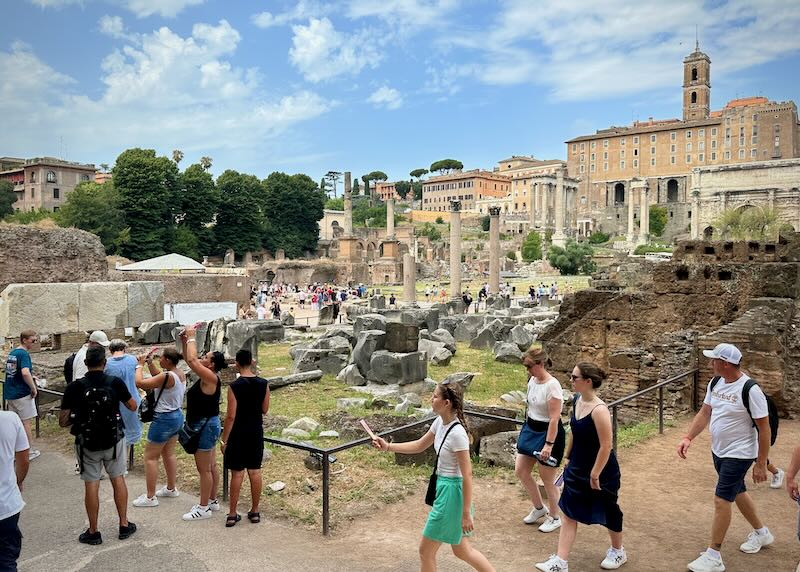
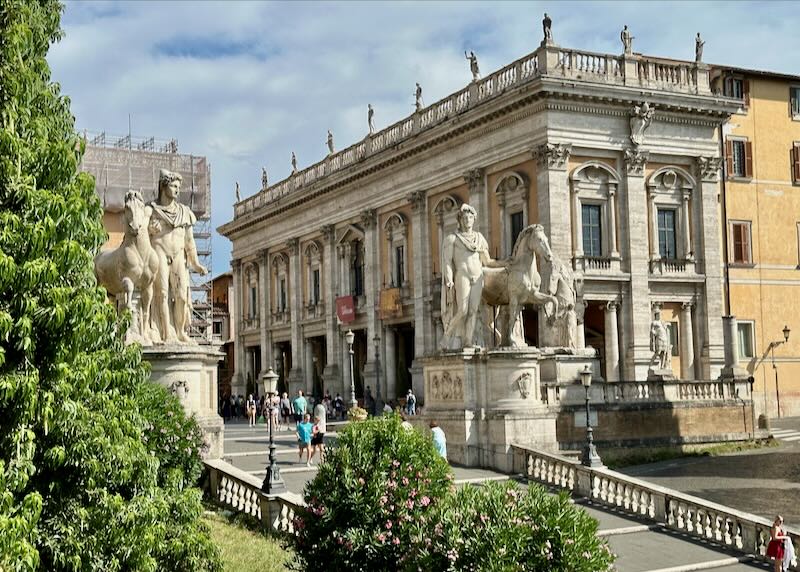
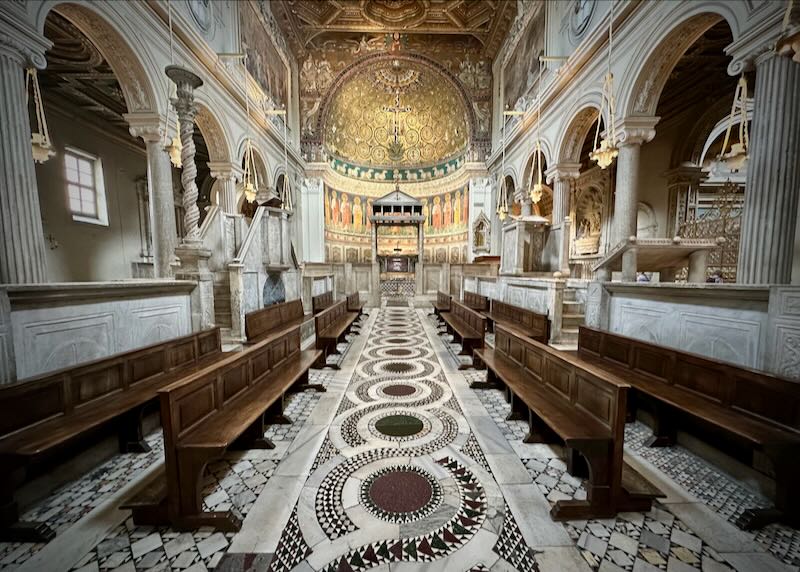
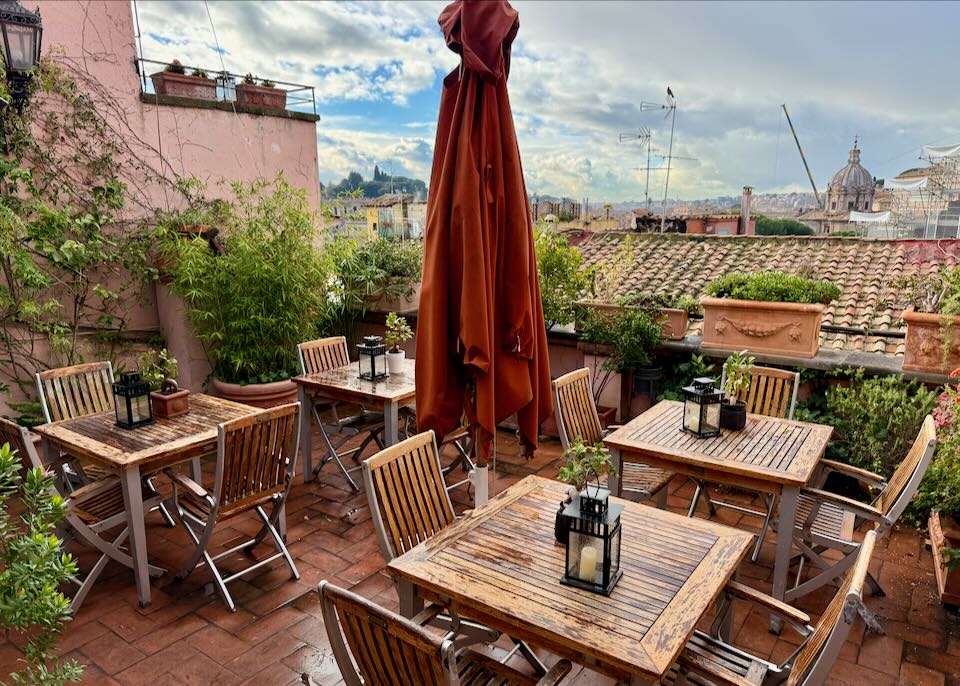
The view of Ancient Rome from the Inn at the Roman Forum – where we stayed on our last visit. (Fantastic breakfasts!)
- Best Hotels in the Ancient Rome and Monti
47 Boutique Hotel • Hotel phone: +39 06 678 7816
H10 Palazzo Galla • Hotel phone: +39 06 429810
Hotel Lancelot • Hotel phone: +39 06 7045 0615
Inn at the Roman Forum • Hotel phone: +39 06 6919 0970
Nerva Boutique Hotel • Hotel phone: +39 06 678 1835
NH Collection Fori Imperiali • Hotel phone: +39 06 6976 89911
Palazzo Manfredi • Hotel phone +39 06 7759 1380- Best Cheap/Midrange Hotels
DoubleTree Rome Monti • Hotel phone: +39 06 4577 4500
Hotel Grifo • Hotel phone: +39 06 487 1395
Zefiro Home B&B • Hotel phone: +39 335 694 8212
4. Trastevere
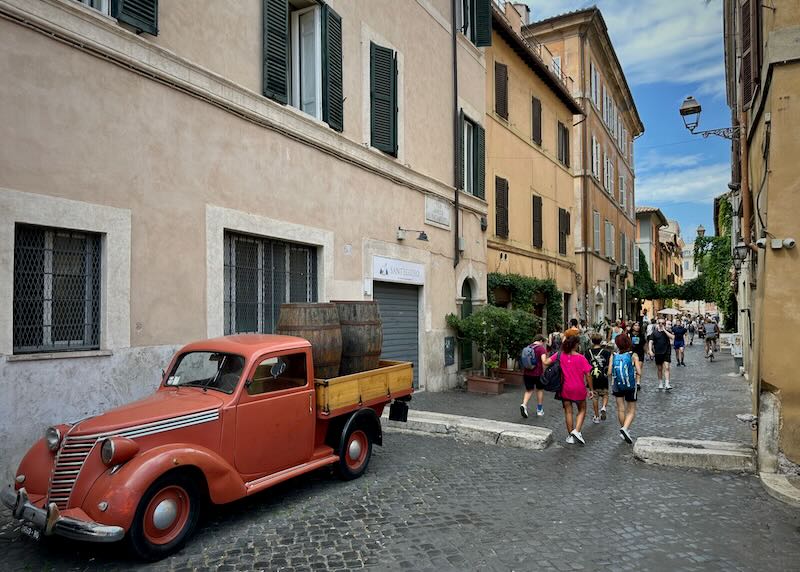
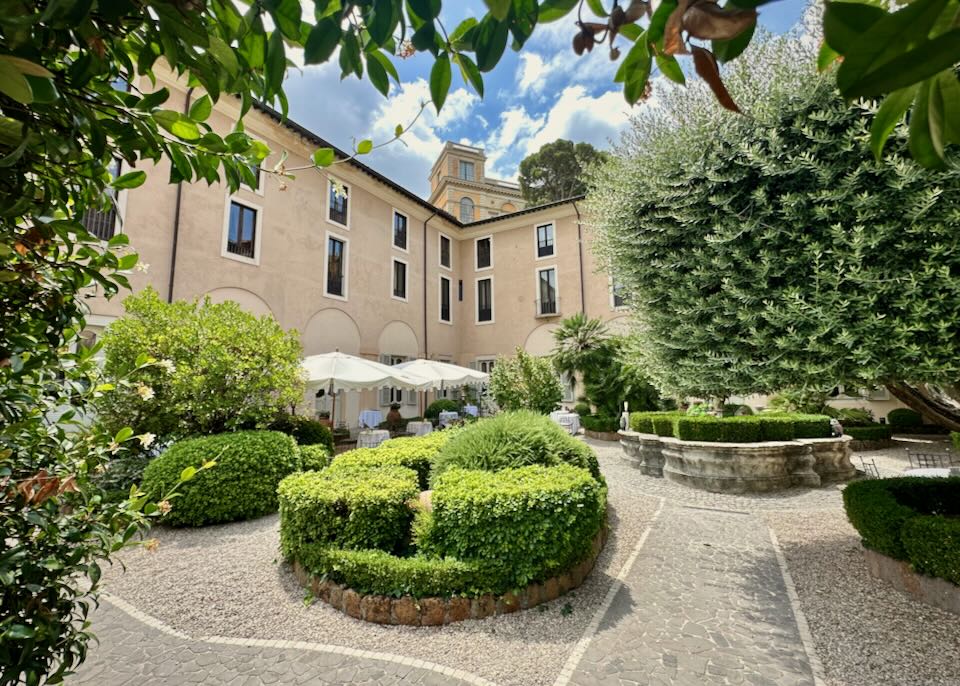
Across the river from the Historic Center lies Trastevere, a charming maze of medieval streets and lively piazzas. This area is home to several noteworthy sites, including art-adorned churches such as the Basilica di Santa Maria in Trastevere, the Basilica of Santa Cecilia (with frescoes by Cavallini), and San Francesco a Ripa Grande, which houses Bernini sculptures and De Chirico’s tomb. Additional attractions include the 16th-century Palazzo Corsini, which houses the National Gallery of Ancient Art and Rome’s Botanical Garden; the Villa Farnesina, adorned with Raphael’s stunning frescoes; and the Museo di Roma in Trastevere, which documents local history. Every Sunday, the Porta Portese flea market takes place from 7 am to 2 pm.
During the day, Trastevere is perfect for leisurely exploration, but it truly comes alive at night, bustling with tourists and locals alike. Trastevere offers a diverse dining scene, from Michelin-starred restaurants to authentic neighborhood pizzerias and cozy cafes. To reach Trastevere, stroll across the picturesque Isola Tiberina in the middle of the Tiber River, crossing the Ponte Fabricio – an ancient Roman bridge built in 62 BC.
Trastevere is rich in character but not as convenient for sightseeing as the Historic Center; it’s not on the metro lines, but is linked by buses and trams. Because of this, it’s cheaper to stay in Trastevere than in the city center, with more B&Bs, apartment rentals, and family-run guesthouses to choose from.

- Best Hotels in Trastevere
Donna Camilla Savelli • Hotel phone: +39 06 588861
Giuditta In Trastevere • Hotel phone: +39 348 018 1008
Le Clarisse • Hotel phone: +39 06 5833 4437
Residenza San Calisto • Hotel phone: +39 393 973 5447
Ripense In Trastevere • Hotel phone: +39 06 581 2870
Hotel Santa Maria • Hotel phone: +39 06 589 4626- Best Cheap/Midrange Hotels
B&B Trastevere’s Friends • Hotel phone: +39 06 9357 7587
Domus Corsini • Hotel phone: +39 388 198 5023
Nikis Collection Trastevere • Hotel phone: +39 350 551 3688
Residenza delle Arti • Hotel phone: +39 389 496 4608
5. Villa Borghese and Barberini
Northeast of Rome’s Historic Center lies Villa Borghese, the city’s Central Park. This green oasis provides a perfect respite and houses several exceptional art museums, including the renowned Borghese Gallery (advance booking required), Villa Medici, and Museo Carlo Bilotti. On the park’s north side, you’ll find the National Gallery of Modern and Contemporary Art and the National Etruscan Museum of Villa Giulia, which showcases precious artifacts from the ancient Etruscan civilization. The park’s Terrazza Viale del Belvedere offers great views of the Historic Center, the Vatican, and Piazza del Popolo.
Leading up to the park from Piazza Barberini, the wide, tree-lined Via Vittorio Veneto is lined with luxurious hotels and elegant sidewalk restaurants. Along this avenue, you can also visit the Museo e Cripta dei Frati Cappuccini, a medieval monastery and crypt, the National Gallery of Ancient Art in Barberini Palace, and the Galleria d’Arte Moderna.
Quiet at night, this area is well positioned for exploring the city while also offering some relief from the crowds. You’ll find very expensive chain hotels (the W, Westin, etc) south of the park.

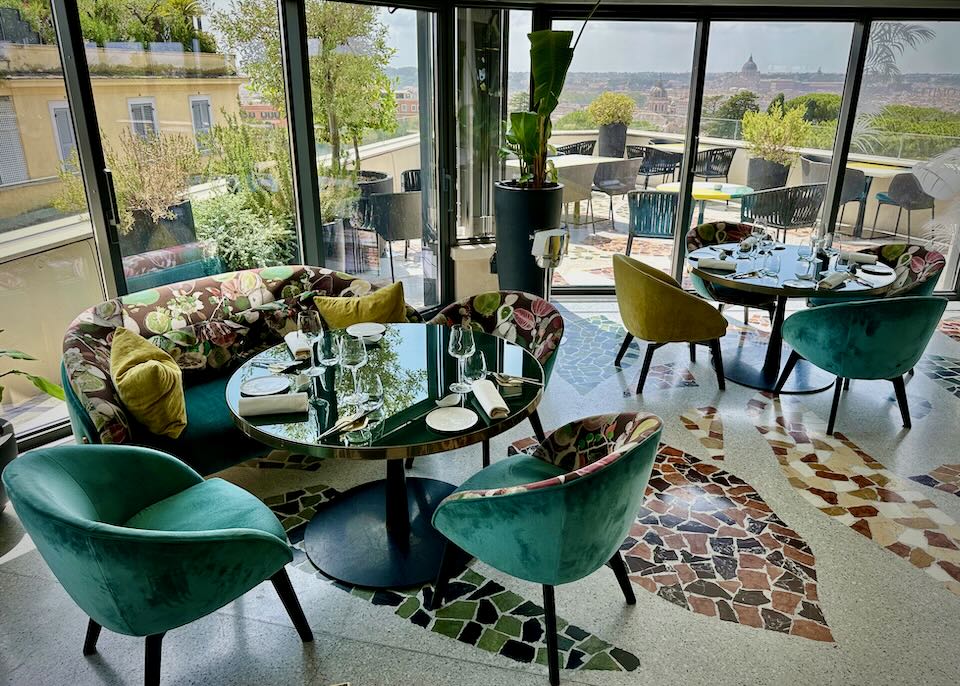
Incredible views over Rome’s seven hills and St. Peter’s Basilica from the rooftop restaurant of the Sofitel Villa Borghese.
- Best Hotels near Villa Borghese and Barberini
Baglioni Hotel Regina • Hotel phone: +39 06 421111
Eden • Hotel phone: +39 06 478121
The Hoxton • Hotel phone: +39 06 9450 2700
Parco dei Principi • Hotel phone: +39 06 854421
The Regency • Hotel phone: +39 06 9468 2000
Sofitel Villa Borghese • Hotel phone: +39 06 478021
Splendide Royal • Hotel phone: +39 06 421689- Best Cheap/Midrange Hotels
Domus RomAntica • Hotel phone: +39 331 245 6137
Palm Gallery • Hotel phone: +39 06 6478 1859
Relais Donna Lucrezia • Hotel phone: +39 334 731 3657
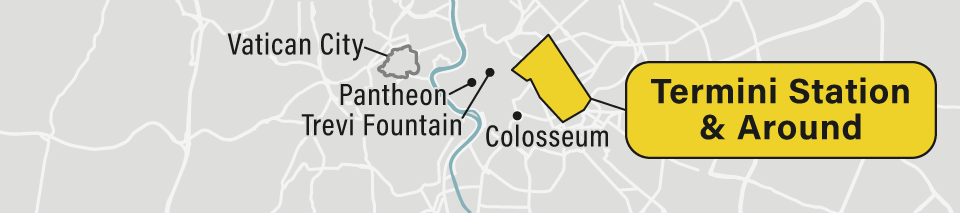
6. Termini Station and Around
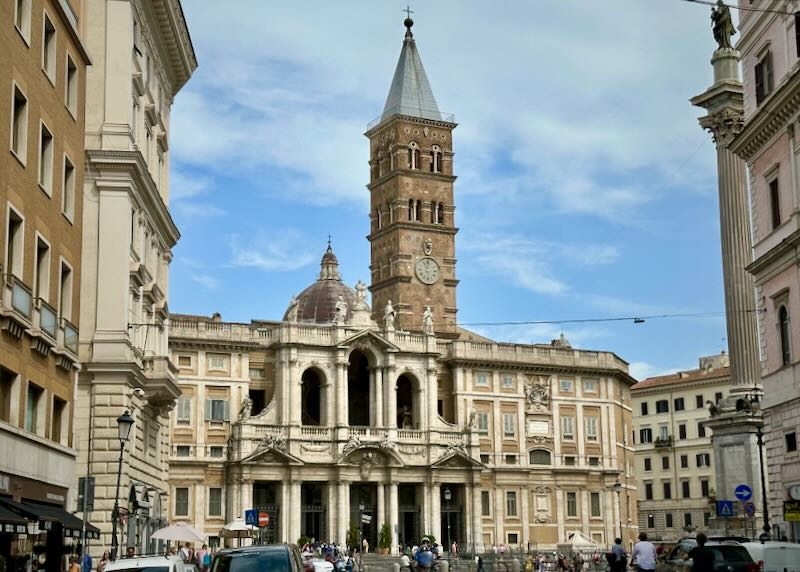
Most of Rome’s budget accommodation is found in the area around Stazione Termini. This is not the most attractive part of town, but nor is it as bad as it’s sometimes made out to be, though its facilities, restaurants, and cafés are squarely aimed at tourists. There are several exceptional museums nearby, such as the Baths of Diocletian and the Palazzo Massimo alle Terme, as well as remarkable churches like Santa Maria degli Angeli e dei Martiri and the grand Basilica Papale di Santa Maria Maggiore.
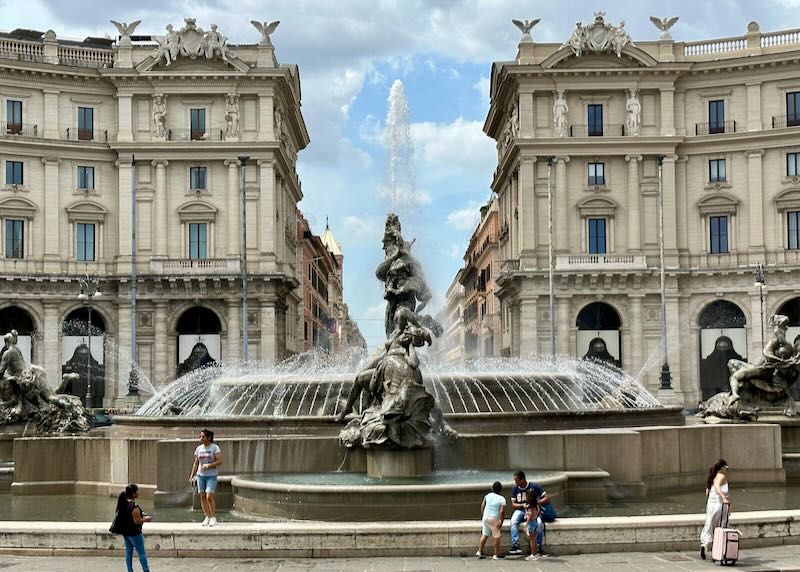
The Fountain of the Naiads at the Piazza della Repubblica near Termini Station.
To the west, discover a collection of majestic baroque palaces, including Palazzo del Quirinale, Italy’s presidential palace (accessible by guided tour only). Nightlife in the area is concentrated in two areas east of Termini: youthful San Lorenzo and Pigneto, a shabby-chic quarter full of bars and trendy restaurants.
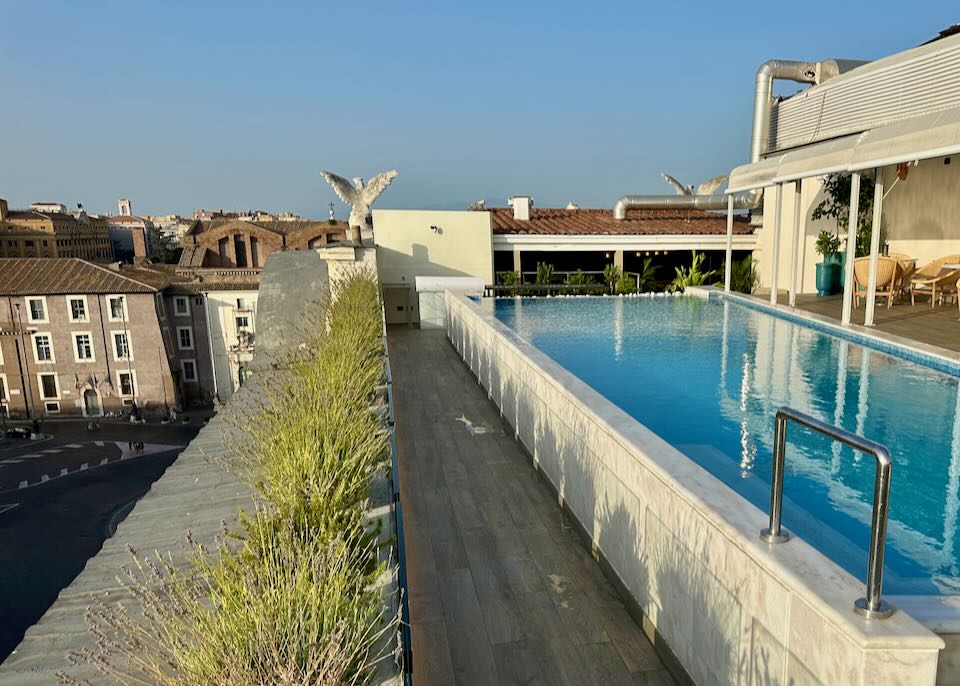
Despite being a long walk or ride from the Historic Center, this is a massive tourist hub – and can be very convenient if traveling by subway or train. Though much of the budget accommodation here is of poor quality, we’ve listed the exceptions below. There are also some big five-stars in the area, notably the St Regis.
- Best Hotels near Termini Station
Anantara Palazzo Naiadi • Hotel phone: +39 06 489381
Hotel Artemide • Hotel phone: +39 06 489911
Palazzo Montemartini • Hotel phone: +39 06 45661
St. Regis • Hotel phone: +39 06 47091- Best Cheap/Midrange Hotels
Diocleziano • Hotel phone: +39 06 4890 0767
Hotel Canada • Hotel phone: +39 06 445 7770
Hotel Cellini • Hotel phone: +39 06 4782 5204
Hotel Des Artistes • Hotel phone: +39 06 445 4365
iQ Hotel • Hotel phone: +39 06 488 0465
Vanella Rome Domus • Hotel phone: +39 320 461 6436
The RomeHello • Hotel phone: +39 06 9686 0070
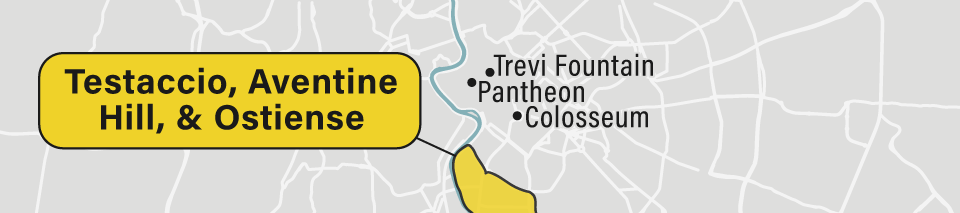
7. Testaccio, Aventine Hill (Aventino), and Ostiense
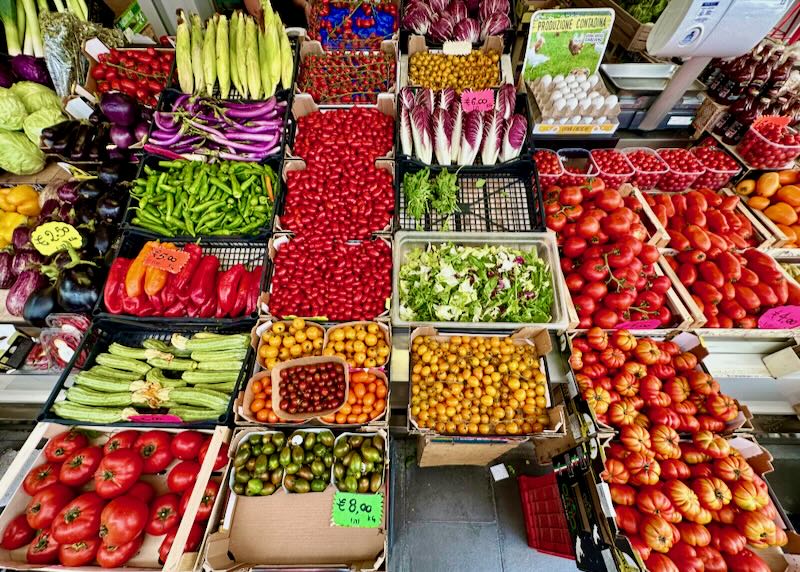
Located south of the city center and off the tourist radar, Testaccio is a former working-class neighborhood on the rise. It features intriguing sites such as the church of Santa Maria Liberatrice and the Mattatoio art museum, housed in a repurposed slaughterhouse. Nearby, you’ll find the Non-Catholic Cemetery, the final resting place of Romantic poets Percy Bysshe Shelley and John Keats, as well as the striking Pyramid of Caius Cestius. Testaccio is best known as a culinary hotspot, boasting authentic trattorias, traditional Roman cuisine, and food stalls within the indoor Mercato di Testaccio. The area is also home to popular clubs and discos that attract a youthful weekend crowd.
Testaccio Market
While accommodations are limited in Testaccio, the neighboring Aventine Hill offers several romantic retreats. Here, you can stroll along Via Santa Sabina to experience the famous “keyhole” view of St. Peter’s through the gate of the Priory of the Knights of Malta, or visit the ancient Basilica di Santa Sabina all’Aventino, the Municipal Rose Garden, or the Orange Garden, boasting stunning views of the city. To the southeast, explore the expansive Roman Baths of Caracalla, set amid picturesque parkland.
Further south, the unassuming Ostiense neighborhood is home to Centrale Montemartini, a former power plant converted into a classical art showcase for the Capitoline Museums.
Though metro connections are good down here, accommodation choices are few, making for a far less touristy experience. The best hotels tend to be scattered around the Aventine Hill, while Testaccio is the domain of small guesthouses and apartment rentals.
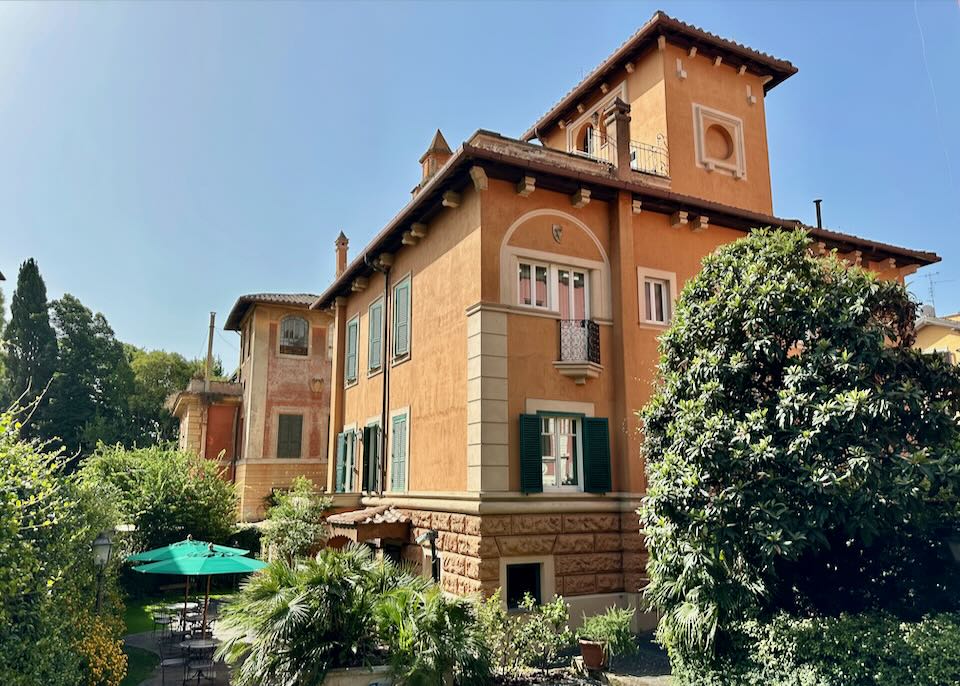
Villa San Pio is ideal for couples and honeymooners.
- Best Hotels in Aventine Hill, Testaccio, and Ostiense
Villa San Pio • Hotel phone: +39 06 570057
San Anselmo • Hotel phone: +39 06 570057
Seven Suites • Hotel phone: +39 06 574 8106
8. Vatican and Prati
On the left bank of the Tiber, Vatican City is home to some of Rome’s greatest sights. Throughout the day, crowds flock to St Peter’s Basilica, Bernini’s Piazza San Pietro, and the vast Vatican Museums; home to the Raphael Rooms, Sistine Chapel, and a mesmerizing cache of art treasures. It’s essential to reserve ahead for the museums and to arrive as early as possible at St Peter’s (which is free but has long lines for security checks).
St. Peter’s Basilica
Though small in size, the Vatican captivates visitors with its rich history and cultural significance. As there are no accommodations within its walls, most travelers opt to stay in the adjacent Prati district. Characterized by its modern, grid-planned layout and elegant Art Nouveau architecture, Prati emerged as an upscale residential area in the early 20th century. This neighborhood offers excellent shopping opportunities, particularly along Via Cola di Rienzo, as well as a plethora of dining options that include restaurants, trattorias, and takeout establishments. While Prati bustles with activity during the day, it settles into a more tranquil atmosphere at night. However, lively pockets remain, including Rome’s oldest jazz club, Alexanderplatz. Other noteworthy attractions include the family-friendly Leonardo Da Vinci Experience and the imposing Castel Sant’Angelo, a grand, circular fortress built atop Emperor Hadrian’s mausoleum by medieval popes, which now houses a fascinating museum.
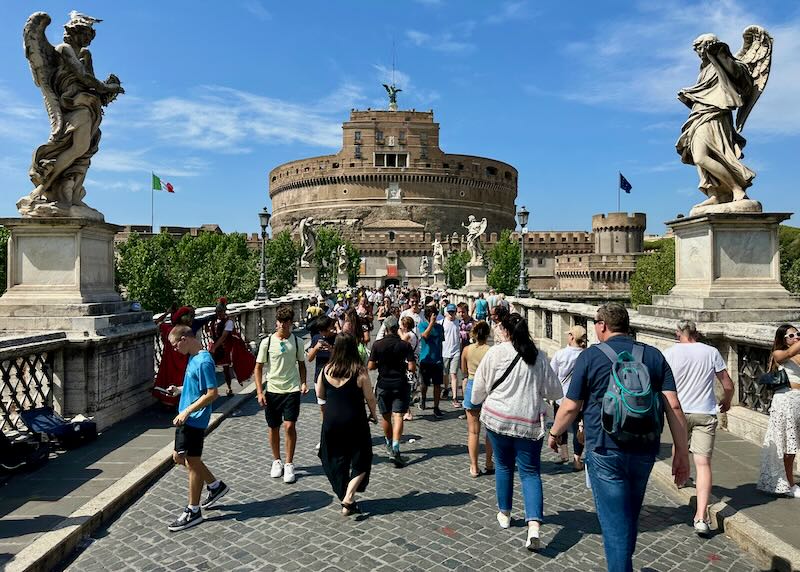
Castel Sant’Angelo
There’s a huge stock of hotels in Prati to the north and east of the Vatican; most of it is affordable and pretty good value, comprising numerous B&Bs and small hotels. You’ll find even cheaper options to the south and to the west (Aurelio) – stay here if looking to save money.
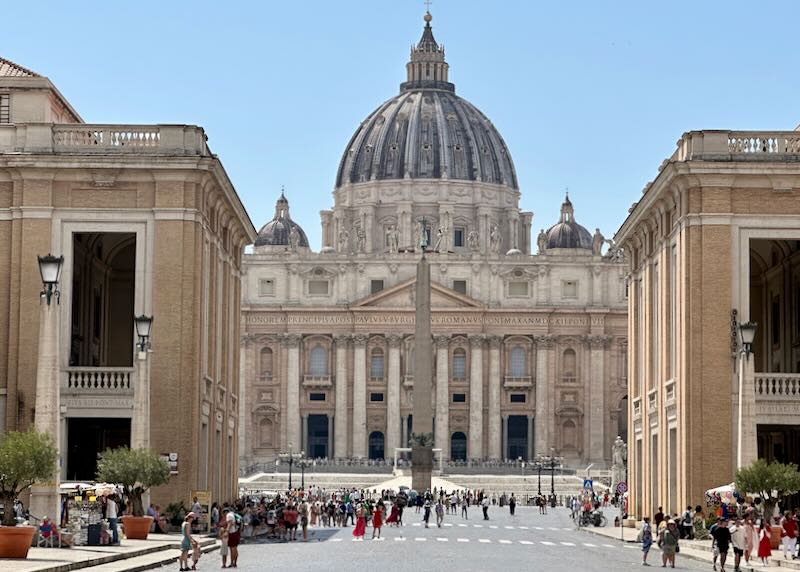

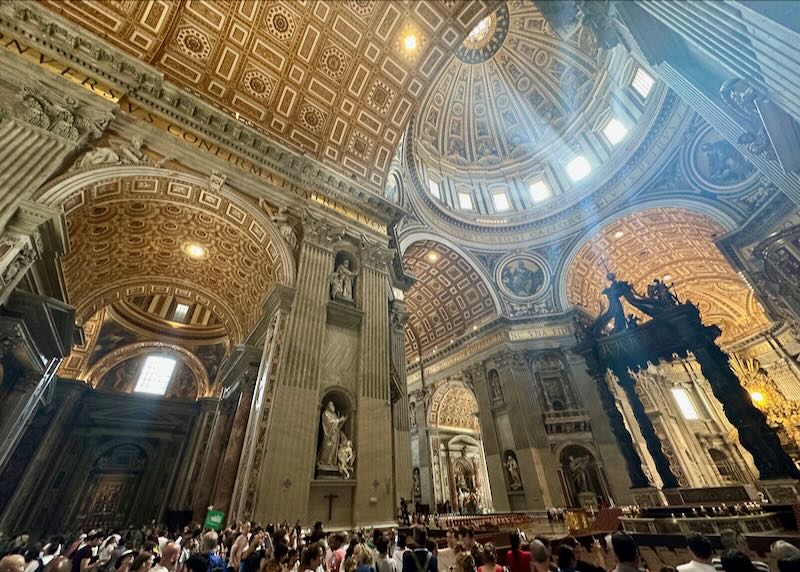
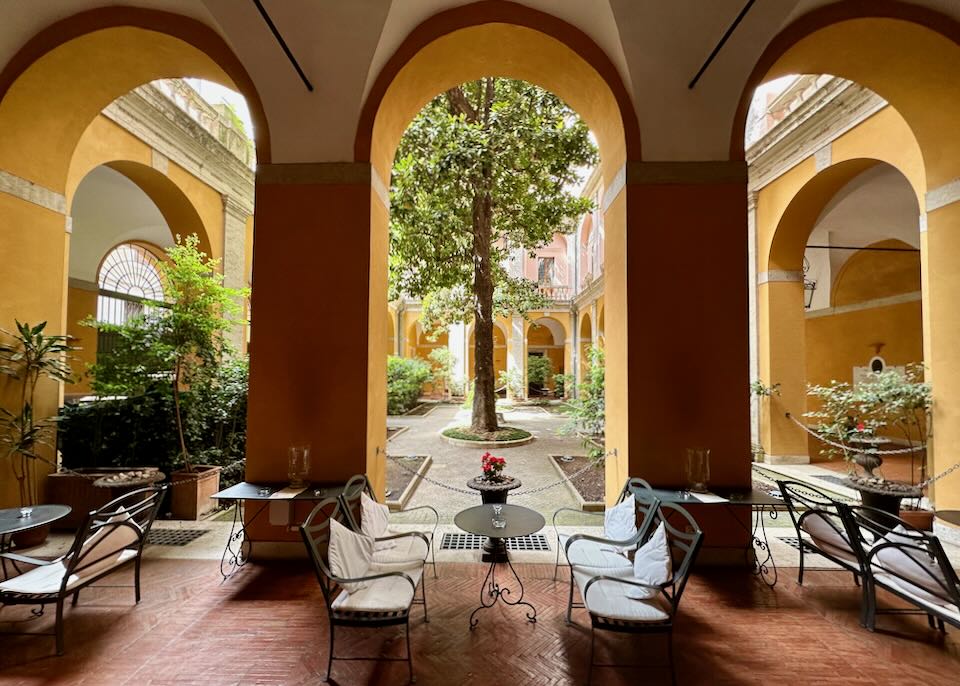
Palazzo Cardinal Cesi is a beautiful historic hotel just a 2-minute walk to St. Peter’s Square.
- Best Hotels near the Vatican and Prati
Dei Mellini • Hotel phone: +39 06 324771
Orazio Palace • Hotel phone: +39 06 8401 0010
Palazzo Cardinal Cesi • Hotel phone: +39 06 684 0390
Villa Agrippina Gran Meliá • Hotel phone: +39 06 925901
Villa Laetitia • Hotel phone: +39 06 322 6776- Best Cheap/Midrange Hotels
B&B Annette • Hotel phone: +39 06 9727 5930
B&B Roma Borgo91 • Hotel phone: +39 06 9259 2658
Domus Alberico • Hotel phone: +39 320 557 6354
Domus Terenzio • Hotel phone: +39 345 087 0337
Folia Guesthouse • Hotel phone: +39 347 000 8387
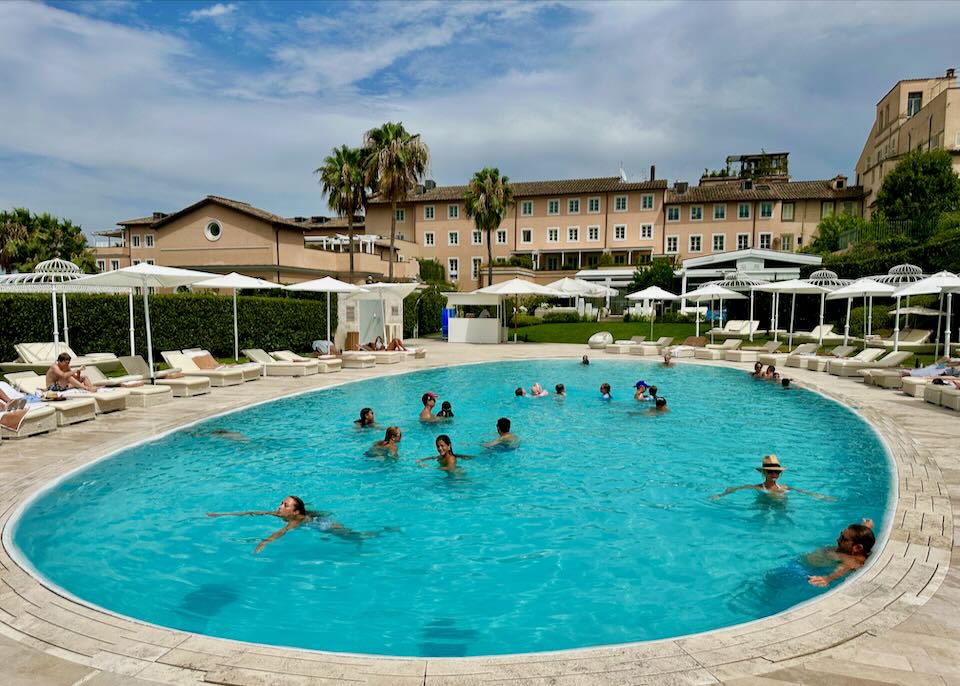
Villa Agrippina Gran Meliá has a relaxed vibe while being within an easy walk to the Vatican.
More Rome Neighborhoods
We’ve covered our favorite neighborhoods to visit and stay in more detail above, but with more time the following districts are also worth checking out:
- Flaminio: North of the Historic Center and accessible by tram or bus, Flaminio is home to the futuristic Auditorium Parco della Musica, a concert hall designed by Renzo Piano, and the equally mind-bending MAXXI, the National Museum of Contemporary Art by Zaha Hadid. Just across the river you can watch some of the best European football at Stadio Olimpico, home of Italian Serie A teams AS Roma and Lazio. Great hotels here include Maison Flaminio, Guest House Vignola, and B&B Casa Cimabue.
- Appio Latino (San Giovanni): Situated opposite the Scala Santa (Holy Stairs) and Sancta Sanctorum (the Pope’s chapel), the imposing Basilica di San Giovanni in Laterano, also known as Rome’s cathedral, commands the northern section of this district. The area also encompasses the expansive Parco dell’Appia Antica, situated along the historic Appian Way. This vast green space is ideal for hiking and biking while also housing the city’s renowned catacombs, subterranean burial grounds that served as the final resting place for Rome’s early Christian communities – most notably at the churches of San Sebastiano and San Callisto. Other highlights include the Mausoleum of Cecilia Metella, the Villa of the Quintili, and the medieval Church of San Nicola (Castrum Caetani). You’ll find plenty of cheap guesthouses in the northern section, including Domus Appia 154 and King Plaza B&B, both convenient for the metro (Re di Roma station).
- EUR (Esposizione Universale Roma): Constructed under the reign of dictator Benito Mussolini in the 1930s and largely completed for the 1960 Olympics, this southern business district features an array of parks, lakes, and monumental Fascist-era architecture. But it is the assortment of museums that captivates visitors, including the National Museum of the Middle Ages, National Museum of Prehistory and Ethnography, National Museum of Arts and Popular Traditions, and the city’s Planetarium. EUR is an easy daytrip via metro from the city center and not worth staying overnight – the hotels down here are nothing special.
- Tivoli: For those with extra time, a highly recommended day trip is to Tivoli, situated in the Simbruini Hills approximately 18 miles northeast of Rome and accessible by a 50-minute local train ride. Tivoli’s highlights include the ancient Roman Villa Adriana (Emperor Hadrian’s grand palace ruins) and the Renaissance-era Villa d’Este, both of which are UNESCO World Heritage Sites. Additionally, Tivoli boasts an impressive array of monuments, Roman ruins, palaces, and churches to explore. Those opting to spend the night will find Antica Villa di Bruto to be an excellent, romantic option.
- There’s not much point in staying near Rome–Fiumicino International Airport unless you have a very early flight. If you do need to stay here, the most convenient option is the in-terminal HelloSky, but the upmarket QC Termeroma just outside the airport is much better quality and the Sleep’n go Hotel is much cheaper.
Summary: My Favorite Hotels in Rome
• 5-Star: Hassler
• 4-Star: Artemide • Singer Palace
• 3-Star: Palm Gallery • HT6 Hotel
• For families: Internazionale Domus
• For couples: Inn at Roman Forum
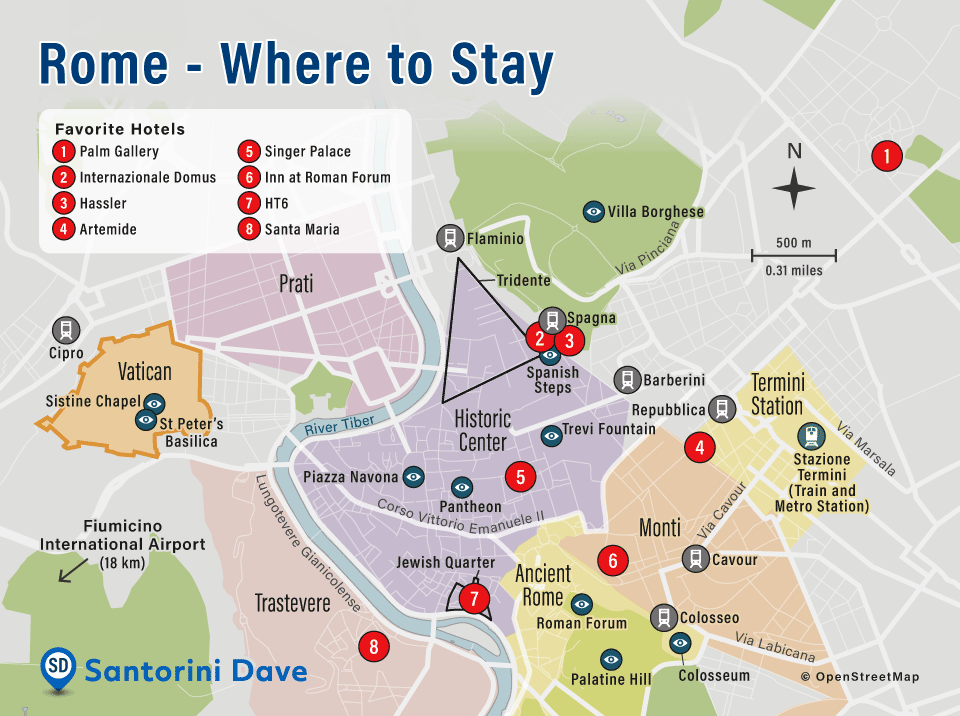
1. Palm Gallery • 2. Internazionale Domus • 3. Hassler • 4. Artemide • 5. Singer Palace • 6. Inn at Roman Forum • 7. HT6 • 8. Santa Maria
 Santorini Dave was started in 2011 when I posted a short guide to visiting Santorini with kids. Now, my site publishes regularly updated guides to
I’m trying to find a hotel that is within walking distance of the main sights. But the Colosseum and the Vatican seem really far apart on the map. Is there a central location that makes it easy to walk to most places?
The main sights are in two distinct clusters that are far apart.
• Cluster 1 (Ancient Rome): The Colosseum, Roman Forum, Palatine Hill.
• Cluster 2 (Vatican City): St. Peter’s Basilica, Vatican Museums, Sistine Chapel.
The walk between the Colosseum and St. Peter’s Square is about 45 minutes to an hour. That said, Rome is an incredibly walkable city. The key is to stay in a central “sweet spot.” By staying in the Centro Storico (look for hotels near the Pantheon or Piazza Navona), you position yourself directly between these two major poles. From there, you can easily walk to each cluster in about 20-25 minutes, and most other key sights like the Trevi Fountain and Spanish Steps will be less than a 15-minute walk away.
We are planning a trip for late June and I know it will be hot. I also have a bad knee, so climbing a lot of stairs is difficult. Are air conditioning and elevators common in hotels in the historic center, or are these things I need to specifically look for?
No. In the ancient buildings of Rome, air conditioning (aria condizionata) and elevators (ascensore) are luxury amenities, not standard features. You must specifically verify that your hotel has both.
• Air Conditioning: For a trip from late May through September, A/C is absolutely mandatory. Rome can be oppressively hot and humid in the summer. A hotel without A/C will a tough slog. Make this your top priority filter when searching.
• Elevators: Many historic buildings do not have elevators. If they do, they are often tiny, old, and require you to close multiple doors manually. If you have mobility issues or especially heavy luggage, email the hotel directly to confirm the presence and functionality of an elevator. I wouldn’t book a room on an upper floor without this confirmation.
Is there one Rome neighborhood or street that is best for foodies? Looking for the highest density for local wonderful restaurants. Thank you, B.B.
South of the city center, Testaccio is a foodie hotspot. The neighborhood, which once housed the city abattoir, is considered the home of traditional Roman cuisine and there are several restaurants and trattorias specialising in old-school city cooking. It also boasts a hugely popular no-frills pizzeria (Da Remo) and a fabulous deli (Volpetti), reckoned by many one of the best in town. For street food, there’s Trapizzino, a cult takeaway selling chunky wraps made with pizza bases and a choice of fillings, and a number of food stalls at the neighborhood market. A few years back, one of Rome’s top chefs, Cristina Bowerman, opened a hip multi-functional food space in the district. Called Romeo e Giulietta (Romeo and Juliet), it features a pizzeria, restaurant, cocktail bar and deli.
We have 10 days in Rome and looking for a non-touristy area with good local restaurants, markets, etc. Would still like to be close to central sites and attractions (say, within 20 minutes by public transportation). What areas of Rome should we consider? Thanks!
Don
The obvious place that springs to mind is Testaccio. This is a former working class neighbourhood that’s now one of Rome’s top foodie hotspots. Its weekday market has some great food stalls and there are a number of trattorias and restaurants specialising in traditional Roman cuisine. It’s also famous for its nightlife with several popular clubs on Via di Monte Testaccio. Accommodation wise, there are a few top hotels nearby on the Aventine hill. As far as position goes, it’s two metro stops from the Colosseum and within walking distance of Trastevere, another lively and good-looking area. Alternatively, consider Prati near the Vatican. This is a smarter, more upmarket area with lots of good accommodation. It’s well positioned for St Peter’s Basilica and is an easy metro ride from Piazza del Popolo and the Spanish Steps. It’s also good for shopping and has some excellent eateries, ranging from trendy bars to neighbourhood pizzerias and fine dining restaurants.