Greece › Athens › Archaeological Sites › Acropolis Tours
Updated: September 27, 2026 • By Santorini Dave
See Also
• Athens Hotels
• Athens Family Hotels
• Where to Stay in Athens
• Best Tours and Things to Do in Athens
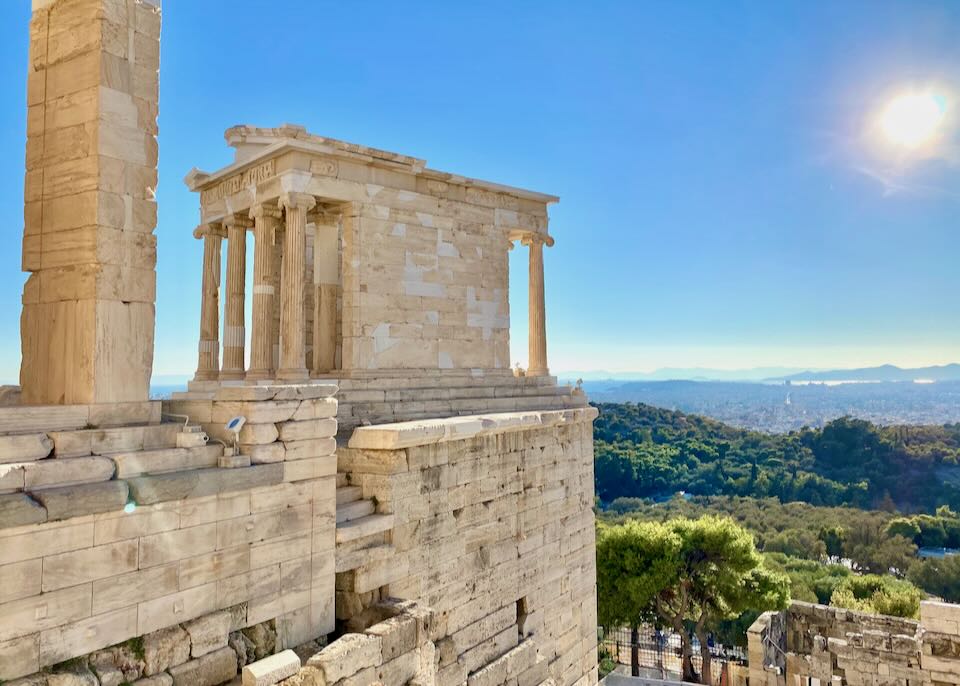
Temple of Athena Nike: A small Ionic temple on a bastion beside the Propylaea.
The Acropolis is worth visiting, and an Acropolis tour is worth paying for. Without a guide, many visitors spend an hour looking at impressive ruins without understanding much about what they are seeing. A good guide explains the Parthenon, Erechtheion, Temple of Athena Nike, Theater of Dionysus, and the history that connects them. If you book only one guided tour in Athens, make it this one.
Quick Picks: Best Acropolis Tours
- Best Overall Tour: Parthenon, Acropolis and Museum Small Group Tour. The tour I recommend for most visitors. It covers both the Acropolis and Acropolis Museum in a small group.
- Best Private Tour: Private Guided Tour of the Acropolis. Best for history lovers and anyone who wants more time for questions and a flexible pace.
- Best Family Tour: Private Acropolis Tour for Kids and Families. A private two-hour tour built around Greek mythology and kid-friendly storytelling.
- Best Acropolis and Ancient Agora Tour: Acropolis, Parthenon, and Ancient Agora Guided Walking Tour. A four-hour tour for travelers who want to go deeper into ancient Athens.
- Best Independent Visit: Acropolis Ticket with Audio Guide. Best if you do not want a live guide, though I strongly prefer taking a guided tour.
The Best Private Acropolis Tours
- Private Guided Tour of the Acropolis
This is the private tour I would book for serious history lovers. The guide can slow down at the monuments that interest you, answer detailed questions, and adjust the pace around crowds and heat. A private guide costs considerably more than joining a group, but this is one Athens experience where the upgrade makes a real difference.- Acropolis Private Tour
A good choice for couples, families, and anyone who wants to set their own pace. This is particularly useful in summer, when you may want to stop in the shade or spend less time at crowded viewpoints.- Private Acropolis Tour for Kids and Families
The best choice with children. The emphasis is on myths, gods, heroes, and stories rather than a long lecture about columns and construction dates. The tour lasts about two hours.- Acropolis and Museum Private Guided Tour
Best if you want a private guide for both the archaeological site and museum. Visit the Acropolis first, then see the original Caryatids, surviving Parthenon sculptures, and other finds from the hill inside the museum.- Two-Hour Private Acropolis Tour
A shorter Acropolis-only option for travelers who want their own guide but do not need a guided visit to the museum or other archaeological sites.The Best Small-Group Acropolis Tours
- Parthenon, Acropolis and Museum Small Group Tour
This is the tour I recommend for most visitors. You get a guided visit to both the Acropolis and Acropolis Museum without paying for a private guide. Seeing the museum after the archaeological site is the best way to do both.- Acropolis, Parthenon, and Acropolis Museum Guided Tour
Another good option if you want both the Acropolis and museum with a guide. Check the current tour options and ticket inclusions when booking.- Acropolis and Parthenon Guided Tour
The best straightforward tour for visitors who want the Acropolis but not the museum. It takes about two hours and covers the major monuments.- Acropolis, Parthenon, and Ancient Agora Guided Walking Tour
Book this when ancient Athens is one of the main reasons for your trip. The four-hour tour combines the religious center of ancient Athens on the Acropolis with the political and commercial center in the Agora. It is a lot of walking, so I would not choose it with young children or during a July afternoon.Best Acropolis Tour for Families
The Private Acropolis Tour for Kids and Families is the tour I would book with children. A standard archaeology tour can lose younger kids quickly. This one uses Greek myths and stories to explain the monuments and can be adapted to the family.
- Bring water: The Acropolis is exposed, especially around the summit.
- Skip the stroller: The slopes, steps, crowds, and polished marble make strollers impractical. Use a baby carrier instead.
- Do not overplan the day: After the Acropolis, have lunch in Plaka or visit the Acropolis Museum. Do not drag young children through three more archaeological sites.
Best Acropolis Tour for Cruise Passengers
Cruise ships dock at Piraeus, not in central Athens.
For cruise passengers, I prefer a private tour when the budget allows. The Acropolis Private Tour gives you more control over the start time and pace, and private transportation between Piraeus and Athens can be arranged around the ship’s schedule.
For a less expensive option, book the Parthenon, Acropolis and Museum Small Group Tour at a time that leaves plenty of room for delays.
Piraeus is about 12 kilometers from the Acropolis. Traffic varies greatly, so leave a generous buffer for the return to the ship.
Acropolis Tour Tickets
- Check whether admission is included. Some tours include Acropolis admission; others charge only for the guide and require you to buy your own timed-entry ticket. Read the booking details before paying.
- Buy direct when admission is not included. Hellenic Heritage is the official ticket platform for the Acropolis and other Greek archaeological sites.
- Acropolis admission is €30. Reduced admission is €15 for eligible visitors.
- The Acropolis Museum requires a separate ticket. General admission is €20. Reduced and free tickets are issued at the museum ticket desk with proof of eligibility.
- Match your ticket to the tour instructions. If the tour requires you to buy your own Acropolis ticket, use the entry time specified by the tour operator.
What “Skip the Line” Really Means
There is no tour entrance that bypasses every queue at the Acropolis. A pre-reserved ticket saves you from buying admission when you arrive, but everyone still has to enter through the controlled entrance. Book ahead during busy months, but do not expect to walk straight from the street to the Parthenon.
Best Time for an Acropolis Tour
Book an 8:00 AM tour whenever you can. It is cooler and the marble is less glaring. Midday is my last choice in summer.
Late afternoon is my second choice, but check the seasonal closing time before booking. In July and August, I strongly prefer the first tour of the morning.
The Acropolis can close temporarily during extreme heat or other disruptions. During severe weather or a heatwave, check the official site before leaving your hotel.
Practical Acropolis Advice
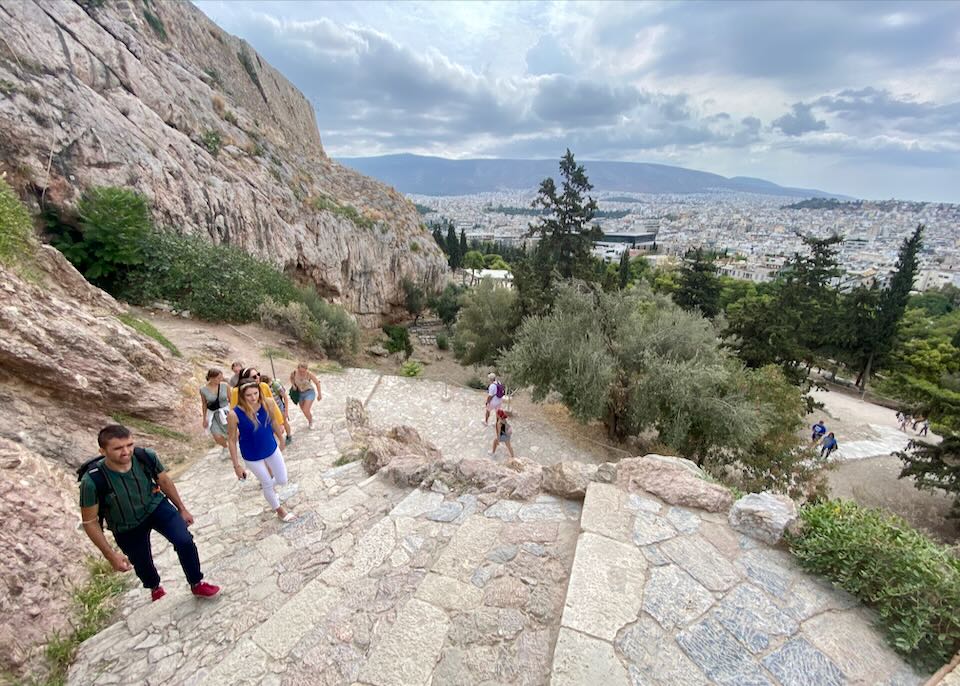
The marble steps are slippery even when dry. Wear sneakers or walking shoes with good rubber grip.
- Wear shoes with good grip. The polished marble is much more slippery than it looks. Sneakers or walking shoes are best. Avoid flip-flops, heels, and smooth leather soles.
- Bring water. The summit is exposed and has almost no natural shade.
- Use the restroom before entering. It is easier than looking for facilities halfway through a guided tour.
- Bring only a small bag. Leave suitcases and other large luggage at your hotel or a luggage-storage facility.
- Arrive early. Guided tours have a fixed meeting time, and catching the group after it enters the site can be difficult.
- Expect restoration work. Conservation of the Acropolis monuments is ongoing, so scaffolding and restoration equipment are normal.
- Head to Plaka afterward. With only one morning in Athens, combine the Acropolis with lunch and a walk through Plaka rather than rushing through several more archaeological sites.
Is the Acropolis Museum Worth Visiting?
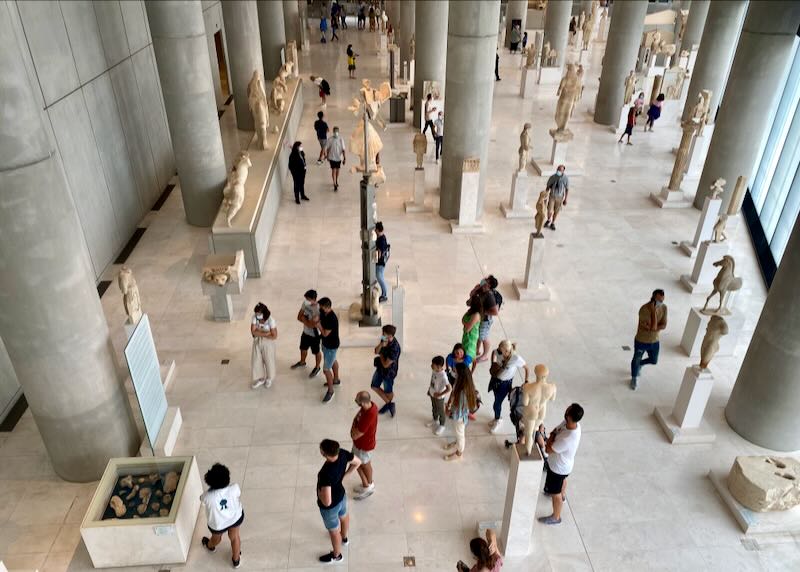
The Acropolis Museum displays the original Caryatids and many sculptures and objects found on the Acropolis.
Yes. The Acropolis Museum is excellent and makes the archaeological site easier to understand. Much of the original sculpture and decoration is no longer on the hill. Inside the museum you can see the original Caryatids, surviving Parthenon sculptures, and finds from the Acropolis and its slopes.
Visit the Acropolis first and the museum second. The museum is air-conditioned and has a good café and restaurant, so it also works well after a hot morning outside.
Acropolis Accessibility
The Acropolis has a lift for visitors with mobility difficulties, but the steep and uneven archaeological site is still more difficult to navigate than the Acropolis Museum. If you need the lift or other assistance, confirm the current access arrangements before your visit.
The Acropolis Museum has elevators, ramps, and accessible toilets.
Athens Acropolis FAQ
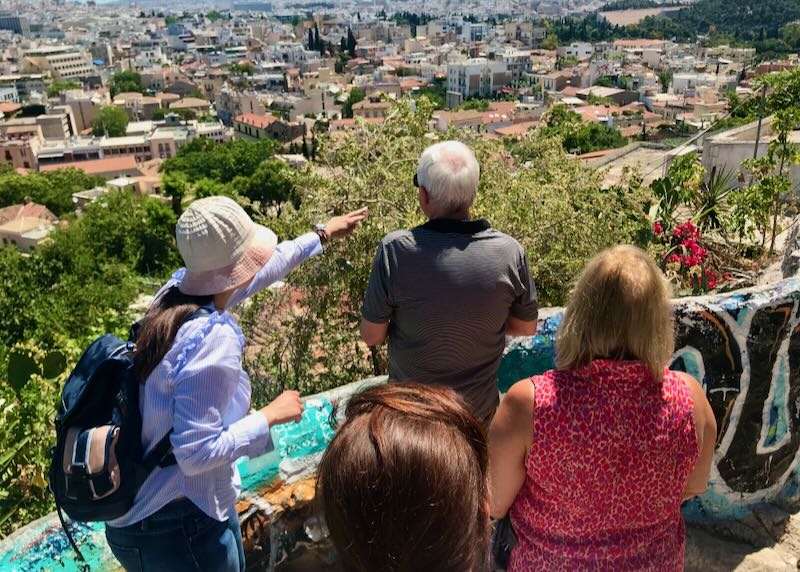
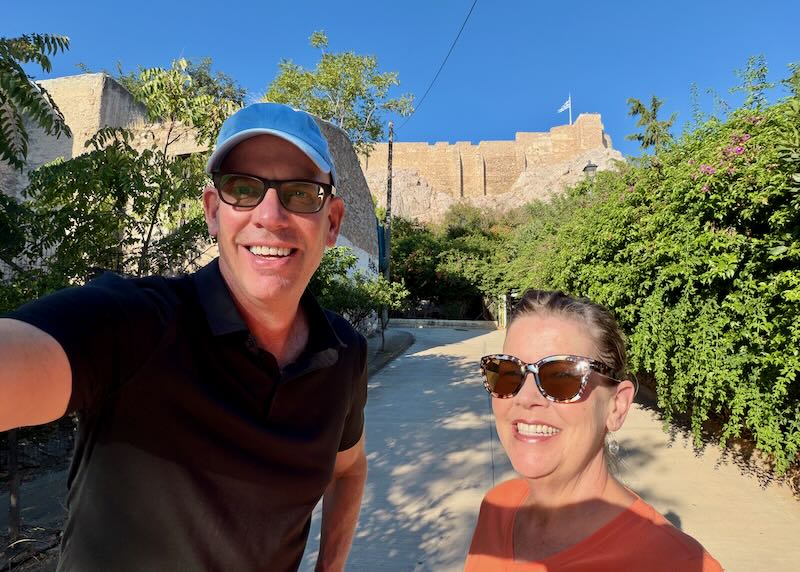
My wife and I in Plaka, with the Acropolis high above.
- What is the best Acropolis tour?
For most visitors, I recommend the Parthenon, Acropolis and Museum Small Group Tour. It includes guided visits to both the Acropolis and museum.- How long does an Acropolis tour take?
Most Acropolis-only tours take about two hours. Tours that add the museum or Ancient Agora take longer.- Are Acropolis tickets included with guided tours?
It depends on the tour. Check the inclusions before booking.- How much is an Acropolis ticket?
Full admission is €30. Reduced admission is €15 for eligible visitors.- Should I book the Acropolis in advance?
Yes, especially from spring through fall and if you want an early-morning entry.- What time should I visit the Acropolis?
8:00 AM is my first choice, especially in summer. Late afternoon is second best.- Can I enter the Parthenon?
No. Visitors walk around the outside but cannot enter the temple.- Is the climb difficult?
It is manageable for most visitors but is uphill, exposed to the sun, and includes uneven and slippery marble.- Is the Acropolis good for children?
Yes, especially with a family-focused guide who uses Greek mythology and stories rather than giving a standard archaeology lecture.- Is the Acropolis Museum included?
No. It is a separate attraction with its own ticket.- Can I bring a stroller?
You can bring one to the area, but it is impractical on the steep and crowded approaches. A baby carrier is much easier.- Where should I go after the tour?
Have lunch in Plaka, walk through Anafiotika, or visit the Acropolis Museum.
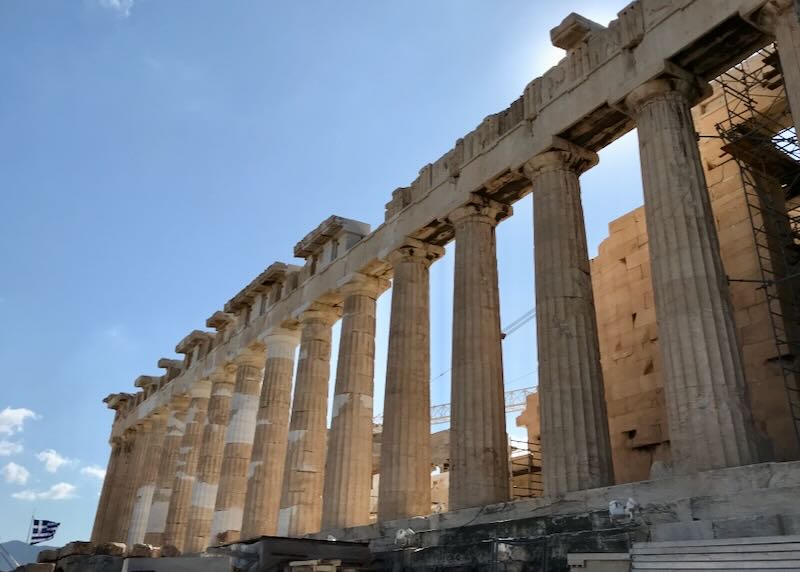

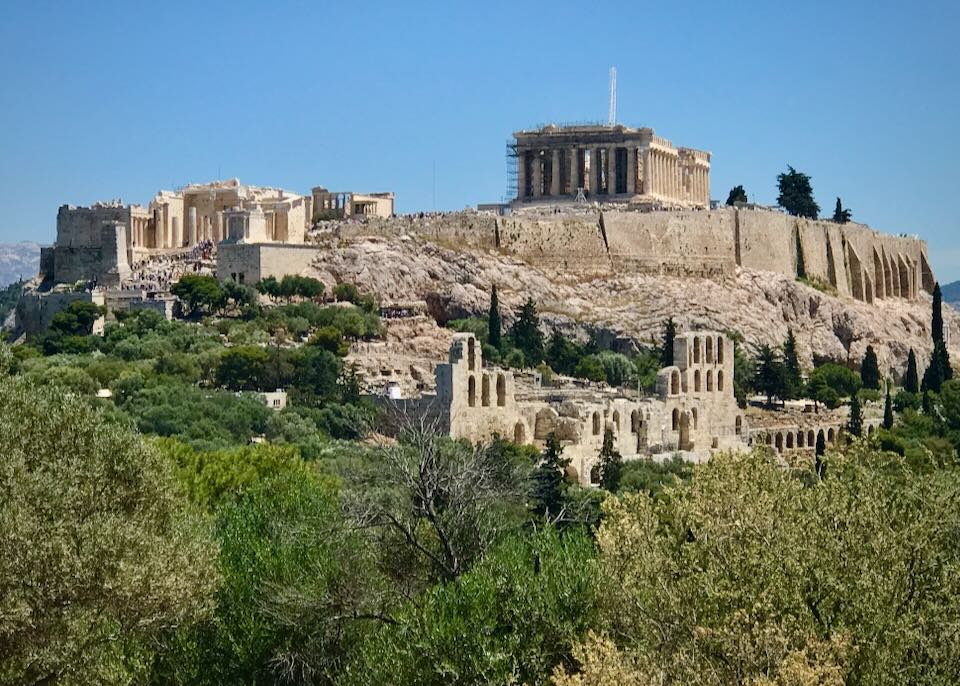
The Acropolis viewed from the southwest.
Acropolis Monuments You Will See
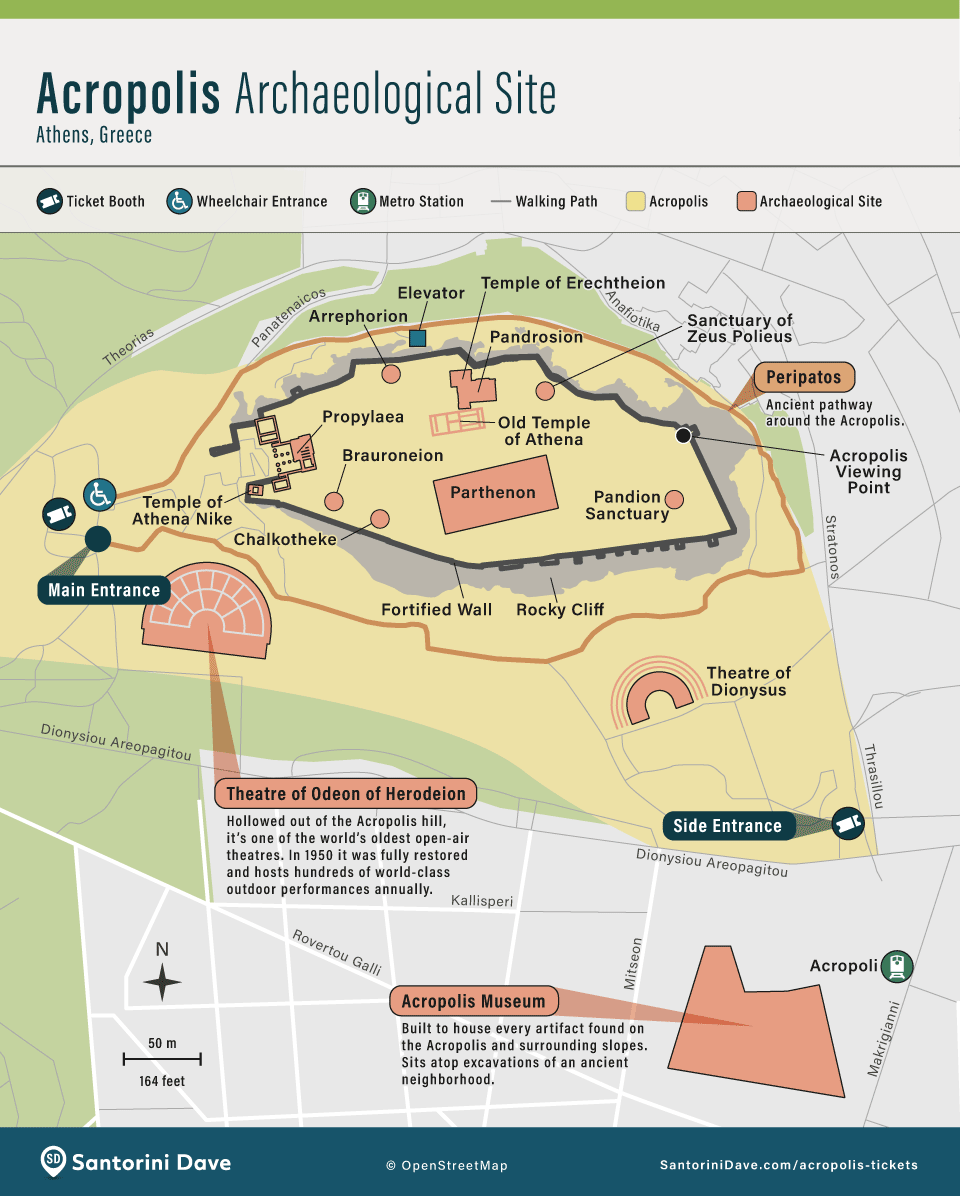
- Parthenon: The largest and most famous temple on the Acropolis, built in the fifth century BC and dedicated to Athena.
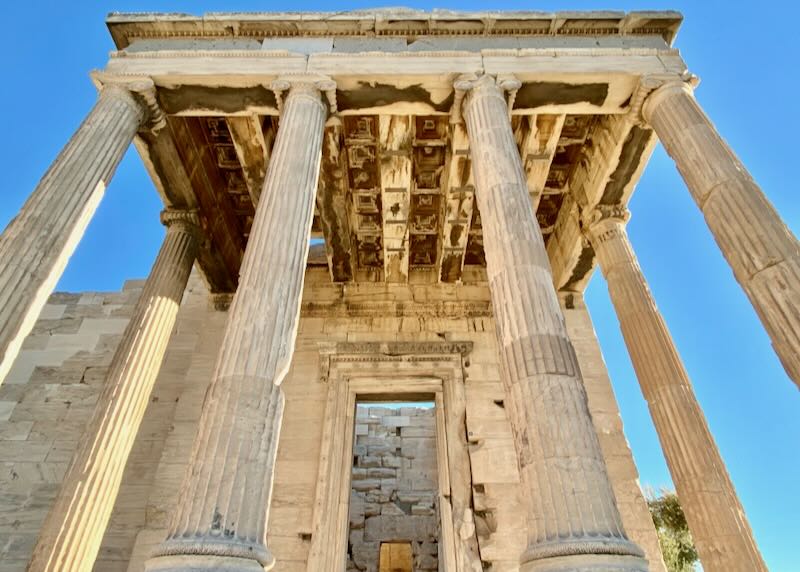
- Erechtheion: An asymmetrical temple best known for the Porch of the Caryatids. The figures on the Acropolis are replicas; five originals are displayed in the Acropolis Museum.
- Propylaea: The monumental gateway through which visitors enter the summit.
- Temple of Athena Nike: A small Ionic temple standing on a bastion beside the Propylaea.
- Theater of Dionysus: Located on the South Slope and closely associated with the development of classical Greek drama.
- Odeon of Herodes Atticus: A large Roman theater still used for performances during the Athens Epidaurus Festival.
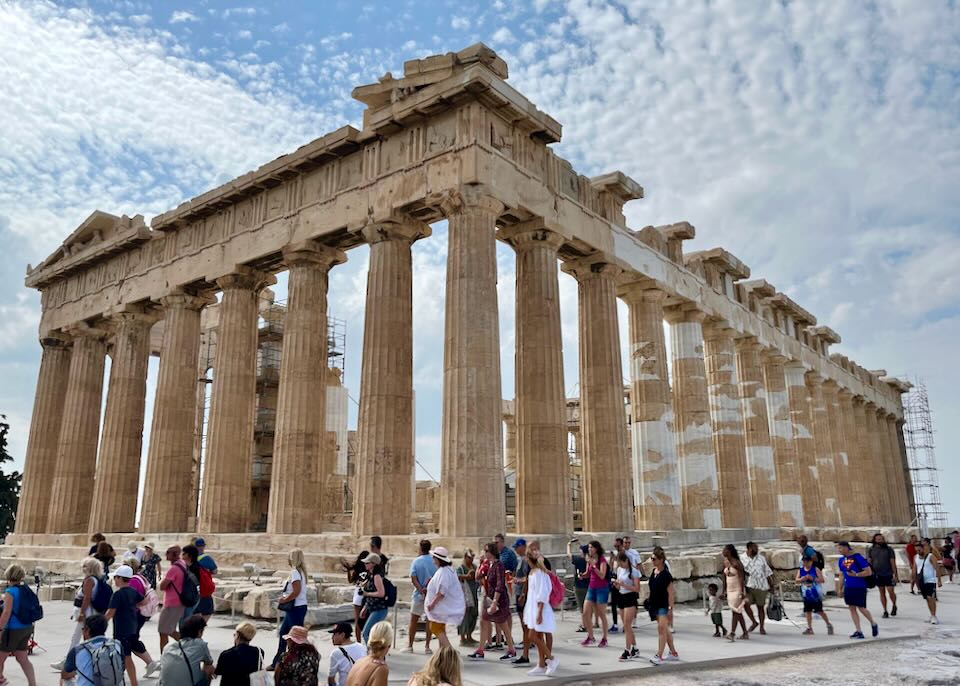
Visitors can walk around the Parthenon but cannot enter the temple itself.

About Santorini Dave