Greece › Athens › Food Tours & Cooking Classes
By Santorini Dave
Updated: September 27, 2026
See Also
• Athens – Best Hotels
• Athens – Family Hotels
• Athens – Best Places To Stay
• Athens – Best Tours
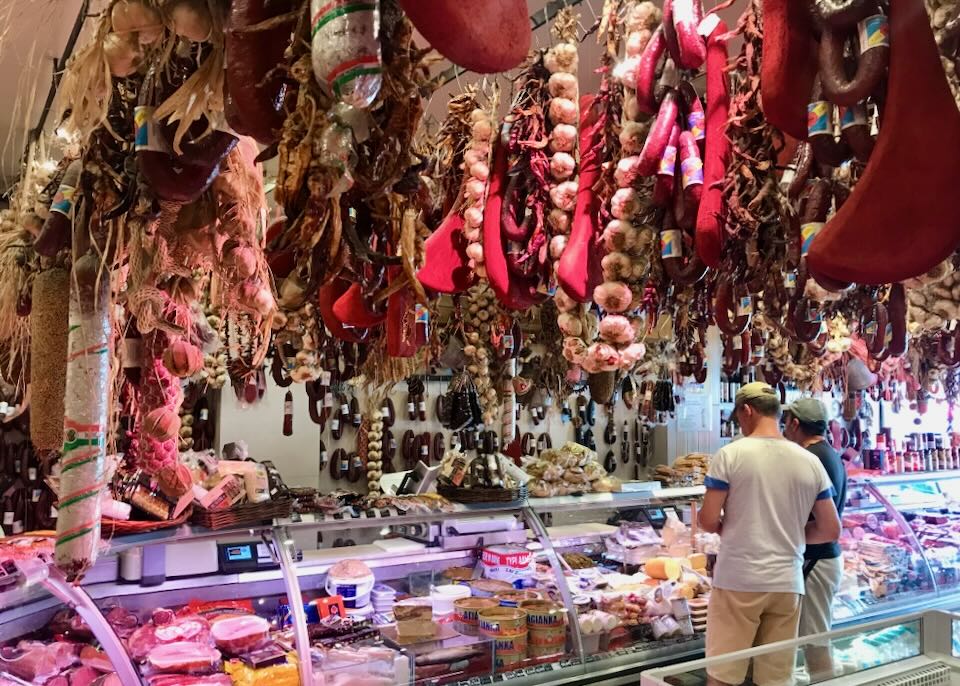
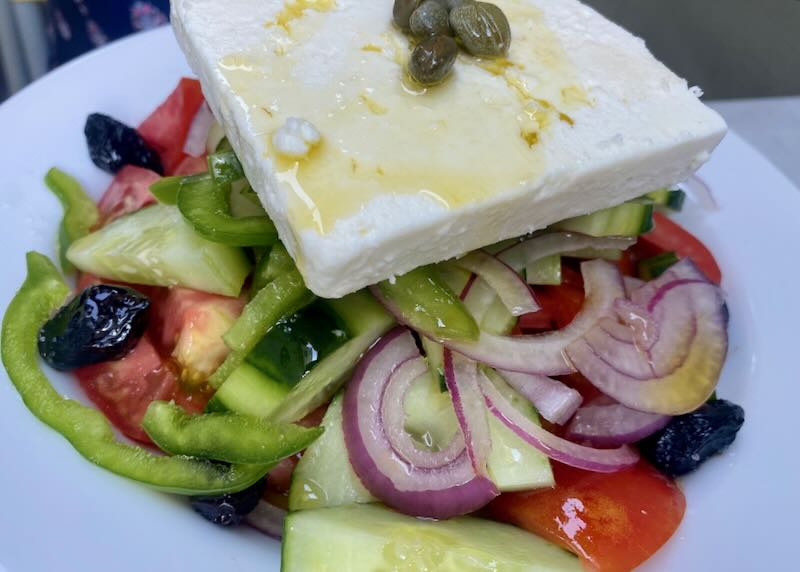
One of the stops on the Ultimate Food Walking Tour.
Athens is one of the best food-tour cities in Europe. The center is compact, the markets are busy, the bakeries are excellent, and many of the best places are easy to walk past without noticing.
If I could book only one Athens activity besides the Acropolis, I would probably choose a food tour.
Book it for your first full morning. You get a good introduction to central Athens and leave knowing what to order and which bakeries, tavernas, cheese shops, coffee bars, and market stalls you want to return to. If you have only two or three nights in Athens, I would choose a food tour over another generic sightseeing walk. It makes every meal afterward better.
Cooking classes are better for a relaxed evening, especially if you want a social meal rather than another walking tour.
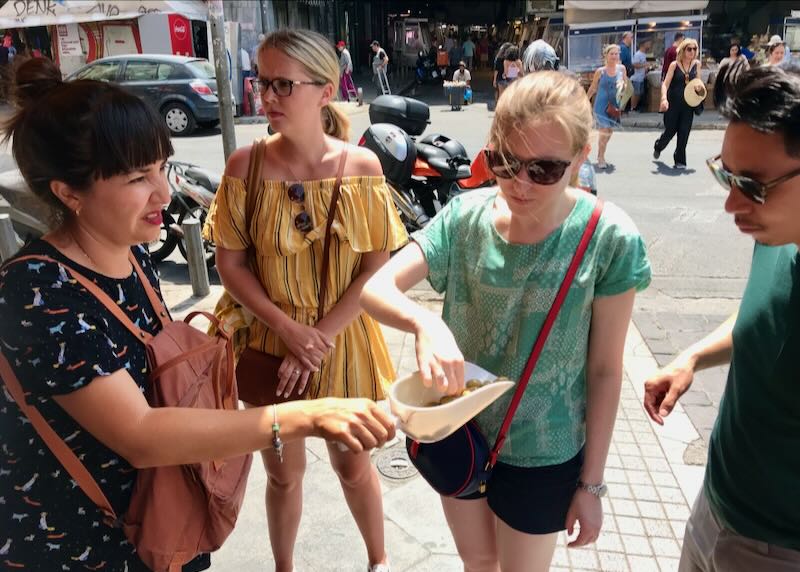
Sampling olives on an Athens food tour.
Athens Food Tours
What to Know Before Booking an Athens Food Tour
- Do it early in your trip: The real value is learning where to eat, what to order, and which neighborhoods you want to revisit.
- Do not eat a big breakfast first: The better tours include a lot of food. Coffee and a small bite beforehand is plenty for most people.
- Morning tours are best: The markets are busier, temperatures are cooler, and you finish with the afternoon free. In July and August, choose an early start.
- The Central Market is memorable but gritty: Varvakios Agora is loud, wet underfoot, and full of raw meat and fish. I love it, but it will not appeal to everyone.
- Wear real walking shoes: Athens sidewalks are uneven, market floors can be slippery, and most tours involve several hours on your feet. Skip flip-flops.
- Small groups are worth paying for: It is easier to hear the guide, ask questions, and get into small shops and food stalls.
- Ask about serious food allergies before booking: Tell the operator exactly what you cannot eat and ask whether the tour can accommodate it safely.
Best Athens Food Tours
Most Athens food tours stay in the walkable center, with stops around Monastiraki, Psiri, Plaka, Syntagma, and the market district.
- Ultimate Food Walking Tour: My top choice for most first-time visitors. This is a four-hour tour with around 15 tastings and a visit to the Central Market. There is plenty of food, and the mix of markets, shops, street food, and neighborhood stops gives a good introduction to eating in Athens.
- Athens: Evening Food Walking Tour: The best evening option and a smart choice if you want to avoid the daytime heat. The tour explores central Athens with food and drink tastings before finishing with a seated Greek dinner.
- Original Athens Food Tour: A small-group tour through central Athens with a mix of food stops, markets, and neighborhood history. Good if you want more explanation along the way rather than simply moving from tasting to tasting.
- Authentic Greek Food Walking Tour: A filling 3½-hour tour with around 15 tastings. Expect bakeries, street food, Greek staples, and plenty to eat.
- Greek Food Discovery Small Group Tour: A small-group walk through central Athens with stops at food shops and markets. A good alternative when the timing or availability of my top choices does not work.
What You Might Eat on an Athens Food Tour
The exact stops and tastings change by tour, day, and season, but these are common:
- Greek coffee and koulouri: The sesame-covered bread ring is a classic quick Athens breakfast.
- Fresh pastries: Tiropita, spanakopita, bougatsa, or another pie from a neighborhood bakery.
- Market foods: Olives, cheese, cured meats, spices, honey, olive oil, and other Greek products.
- Greek yogurt and sweets: Yogurt with honey, loukoumades, baklava, or another traditional dessert.
- Souvlaki, gyros, or meze: Most of the more substantial tours include street food or a seated savory stop.
Athens Cooking Classes
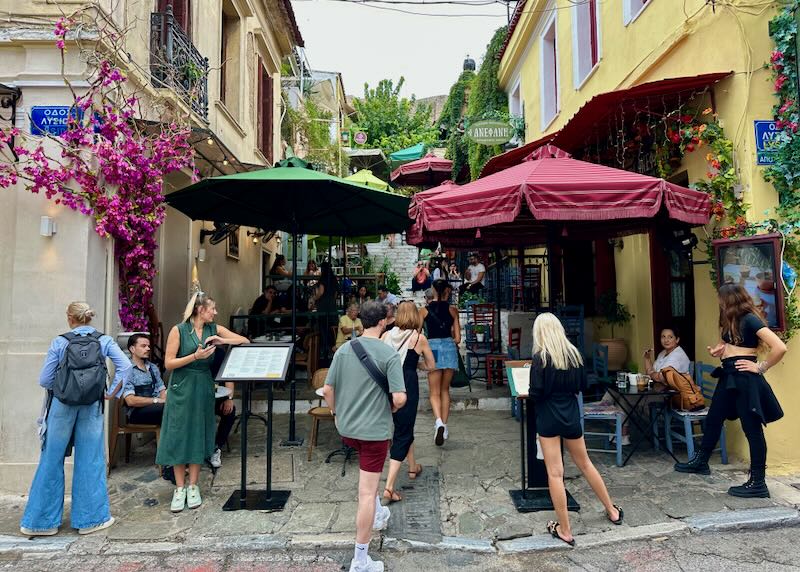
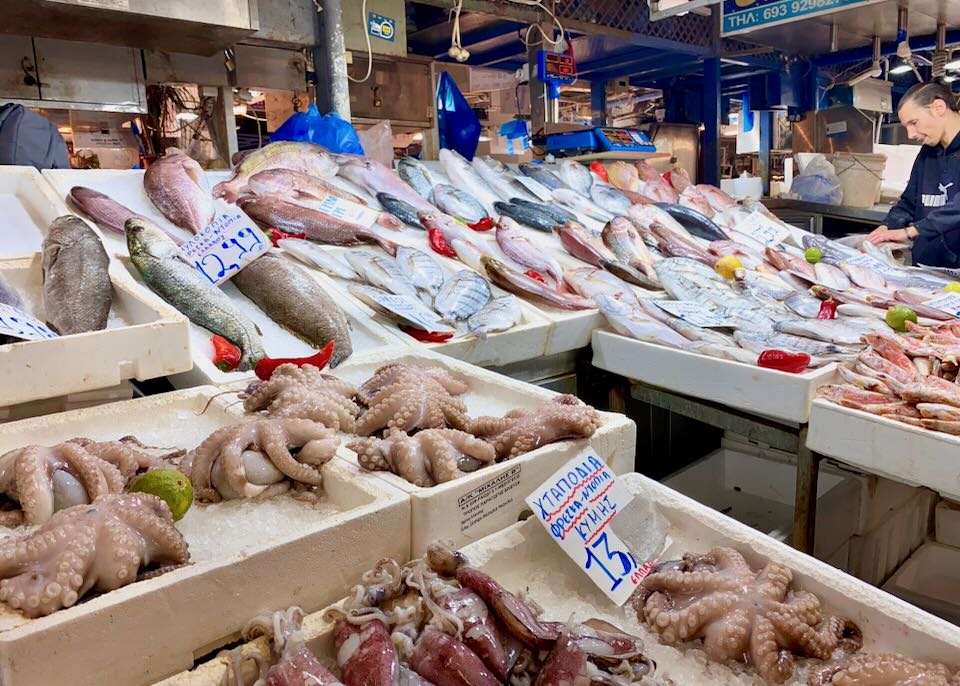
Athens Central Market during a morning food tour.
Cooking classes are better than food tours if you want a slower, more social experience. You will not see as much of the city, but you will learn how Greek dishes are made and finish with a full meal.
What to Know Before Booking an Athens Cooking Class
- Hands-on is better than demonstration-only: Choose a class where you actually chop, mix, season, and cook rather than watch someone else prepare dinner.
- Rooftop dinner does not always mean rooftop cooking: Many classes use an indoor kitchen and serve the finished meal on the roof. That is normal and often more comfortable.
- Vegetarians have plenty of options: Greek cooking includes pies, dips, salads, beans, stuffed vegetables, and fava. Vegans should choose a class that specifically offers a vegan menu.
- Wear comfortable clothes and shoes: You will be standing and working around flour, oil, and hot pans.
Best Athens Cooking Classes
A good cooking class should involve actual cooking, not just watching a demonstration.
- Greek Cooking Class & Rooftop Dinner: My top choice for most travelers. You prepare several Greek dishes with a local cook, then eat together on the rooftop. Choose this for the combination of hands-on cooking and a rooftop dinner.
- Greek Cooking Class with Acropolis View: Choose this when the setting matters as much as the cooking. The class covers a multi-course Greek menu, followed by dinner with an Acropolis view.
- Souvlaki, Pita & Gyros Cooking Class: The most casual and family-friendly option. You learn to make pita, fillings, sauces, and the other components of Greek souvlaki and gyros.
- Vegan Greek Cooking Class with Meal and Drinks: A small-group vegan class in Koukaki near the Acropolis. The class includes a shared meal, drinks, and a digital recipe book.
What You Might Make in an Athens Cooking Class
Menus vary by class, but common dishes include:
- Meze and dips: Tzatziki, fava, Greek salad, dakos, olives, or cheese-based starters.
- Pie or phyllo dishes: Spanakopita or another savory pie.
- Main dishes: Stuffed vegetables, moussaka, souvlaki, gyros, or another Greek main course.
- Desserts: Portokalopita, galatopita, loukoumades, or another Greek sweet.
Athens Food Tour & Cooking Class FAQ
Are Athens food tours worth it?
Yes. I would book one on a first visit, especially if you have only a few days in Athens.
Should I eat before an Athens food tour?
Do not eat a large breakfast before one of the substantial morning tours. The amount of food varies, so check the tour description when booking.
Is the Athens Central Market open on Sundays?
The main Varvakios Market halls are closed on Sundays. If the market is important to you, book a weekday or Saturday morning tour and confirm that it is included.
What should I wear on an Athens food tour?
Comfortable walking shoes. Athens sidewalks are uneven, and market floors can be wet or slippery. In summer, bring water, sunglasses, and a hat.
Are drinks included on Athens food tours?
It depends on the tour. Check the current inclusions when booking.
Are Athens food tours good for vegetarians?
Usually, but tell the operator when booking. Vegans and travelers with serious food allergies should confirm what can be accommodated before paying.
Are Athens cooking classes better than food tours?
They are different. Choose a food tour to explore neighborhoods and find places to eat. Choose a cooking class when you want to cook, sit down, and have a more relaxed meal.
Can kids do Athens food tours and cooking classes?
Yes. Older kids and teens enjoy both, and my kids always did. Cooking classes are usually easier for younger children because food tours involve more standing, walking, and listening.
When should I book a food tour in Athens?
I prefer the first full morning. You can use what you learn for the rest of the trip.

About Santorini Dave