Greece › Ferries › Athens to Paros
Updated: July 24, 2026 • By Santorini Dave
Questions? dave@santorinidave.com
See Also
Athens has frequent ferries to Paros. In summer, there are up to 10 departures a day: as many as 6 from Piraeus and 4 from Rafina. Use Piraeus when staying in central Athens (or traveling in winter when it’s the only service). Consider Rafina when traveling directly from Athens Airport, but compare total journey time because some Rafina ferries make several stops.
Large conventional ferries take about 4 to 5 hours and are cheaper, steadier, and more comfortable. High-speed ferries take roughly 2½ to 3½ hours but cost more and feel rougher in windy weather. If the schedules are equally convenient, I prefer a large conventional ferry.
Helpful Links
- Compare ferry schedules and buy tickets: Ferryhopper
- Pre-booked transfers in Athens: Welcome Pickups
- Pre-booked transfers in Paros: Welcome Pickups
Athens to Paros Ferry: Quick Guide
- Best port from central Athens: Piraeus. It has direct metro service and the widest choice of ferries.
- Best port from Athens Airport: Rafina when the schedule works. It is much closer to the airport than Piraeus.
- Best ferry for comfort: A large conventional ferry. It is steadier, cheaper, and better for children, luggage, strollers, and seasickness.
- Best ferry for speed: A high-speed ferry. The fastest Piraeus sailings take about 2½ to 3 hours.
- When to book: Book as soon as your dates are fixed for June through early September, especially for high-speed ferries, premium seats, and vehicles.
- Arrival: Ferries dock in Parikia, beside the town center and main bus station.
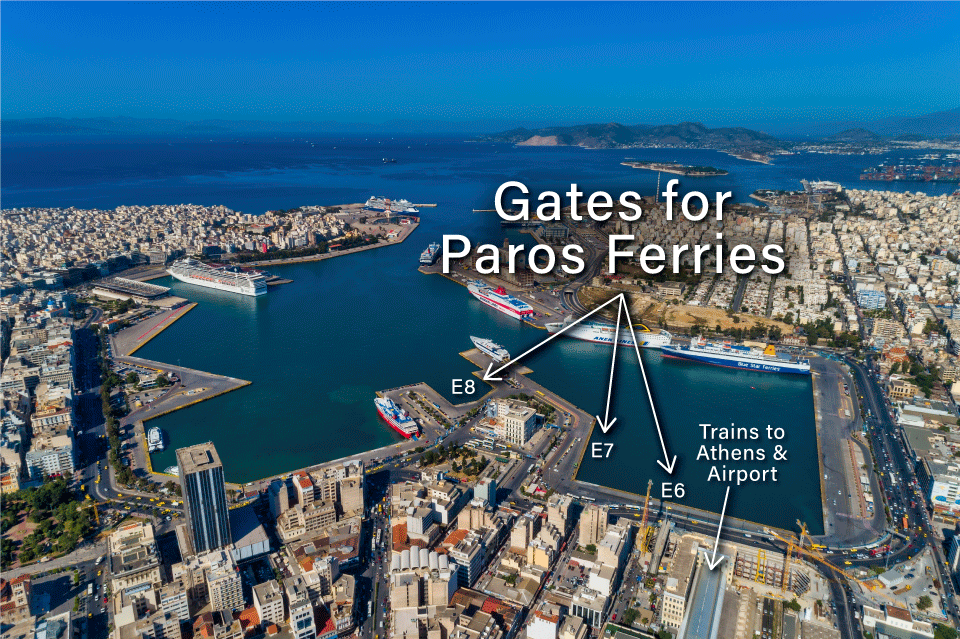
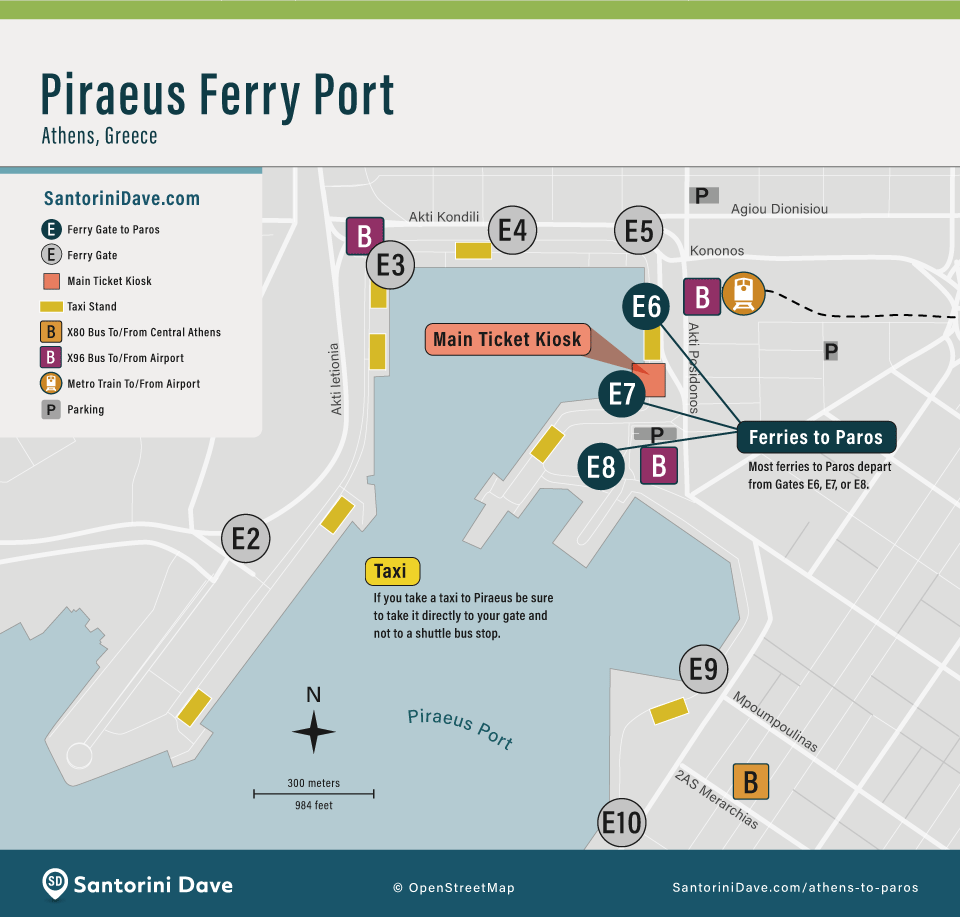
Piraeus is about 30 to 45 minutes from central Athens by metro or taxi. Paros ferries use several Cyclades gates, so check your ticket and the electronic port signs on the day of travel. I recommend buying ferry tickets in advance.
Which Athens to Paros Ferry Should You Take?
Large Conventional Ferry: Best for Comfort
Large conventional ferries are slower but cheaper, steadier, and more comfortable. They have indoor lounges, cafés, outdoor decks, and room to move around during the journey.
They are the best choice for families, travelers with substantial luggage, anyone prone to seasickness, and passengers who prefer a relaxed trip over the shortest possible crossing.
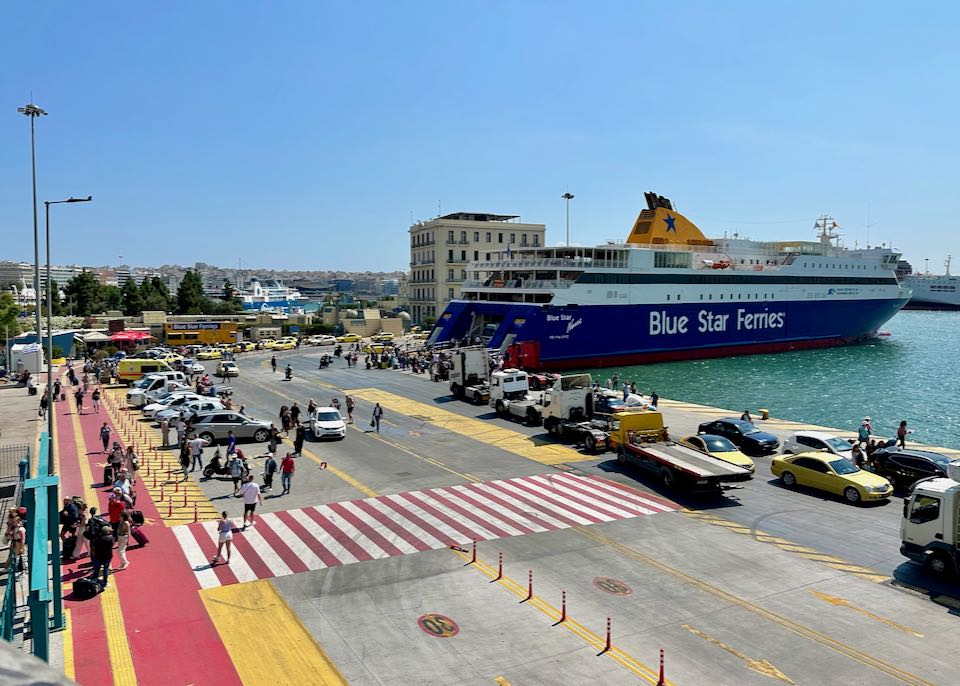
Large conventional ferries are the most comfortable option from Athens to Paros, especially in windy weather.
High-Speed Ferry: Best for Saving Time
High-speed ferries have assigned indoor seats and reduce the crossing to roughly 2½ to 3½ hours. They cost more, offer little or no outdoor access, and feel bumpier when the Aegean is windy.
Choose a high-speed ferry when the earlier arrival meaningfully improves the day. Compare the actual journey time and vessel size rather than booking solely because a ferry is labeled “high-speed.”
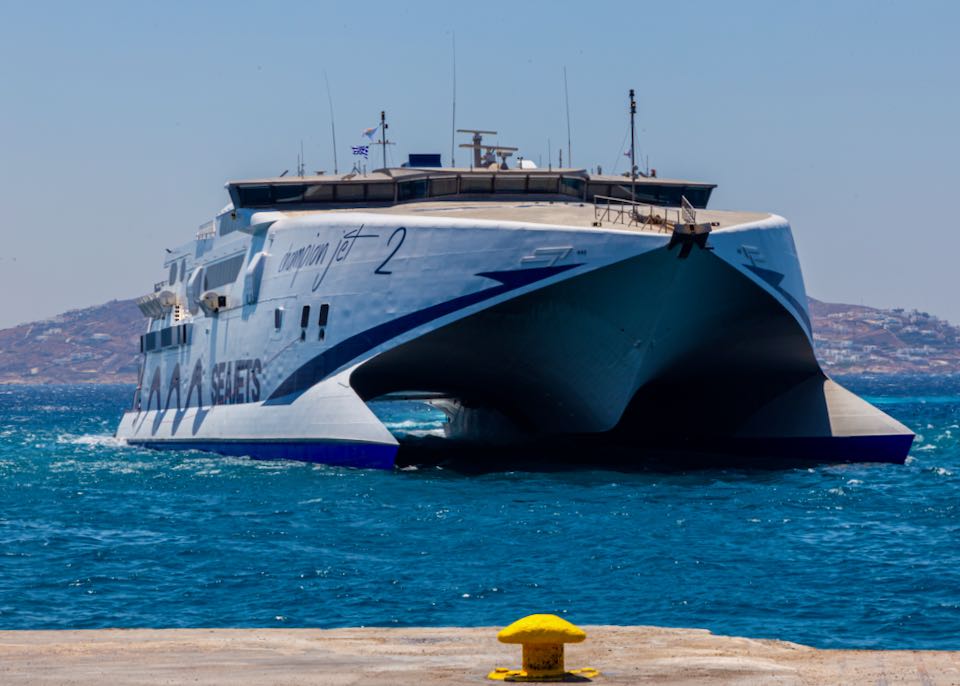
SeaJets operates some of the fastest ferries from Athens to Paros. Vessel assignments change by date and season.
Should You Use Piraeus or Rafina?
Choose the port based on where you begin the travel day, not simply on which ferry has the shortest crossing.
Piraeus: Best from Central Athens
Piraeus is the best port when staying in Plaka, Syntagma, Monastiraki, or elsewhere in central Athens. Metro Lines 1 and 3 run directly to the port, and Piraeus has the widest choice of departures.
- Ferry time: Roughly 2½ to 5 hours, depending on the vessel and route.
- From central Athens: About 30 to 45 minutes by metro or taxi in normal conditions.
- Best for: Travelers spending the previous night in Athens, winter travel, and anyone wanting the greatest choice of ferries.
- Main drawback: Piraeus is large and busy. Allow time to find the correct gate.
Piraeus is the stressful part, not the ferry ride. Arrive 45 to 60 minutes before departure, save your boarding pass in advance, and check the gate again when you reach the port.
Rafina: Best from Athens Airport
Rafina is useful when landing at Athens Airport and continuing directly to Paros. It is much closer to the airport than Piraeus, but its Paros ferries are less frequent and some make several intermediate stops.
- Ferry time: Roughly 3¼ to 6½ hours, depending on the vessel and stops.
- From Athens Airport: About 30 to 40 minutes by taxi or pre-booked transfer.
- Best for: Travelers going directly from the airport to Paros when the departure time and route are convenient.
- Main drawback: Rafina is less useful from central Athens and does not automatically provide the fastest total journey.
A slower Rafina ferry can still make sense from the airport because it avoids crossing Athens. From central Athens, Piraeus is almost always the better choice.
Athens to Paros Ferry Times and Frequency
Piraeus-to-Paros ferries operate throughout the year, with far more departures from late spring through early autumn. Summer schedules include several daily sailings. Winter service is reduced.
- Fastest Piraeus ferries: About 2½ to 3 hours.
- Large conventional ferries: About 4 to 5 hours.
- Rafina ferries: About 3¼ to 6½ hours, depending on stops.
Exact schedules change by date, vessel, route, and intermediate stops. Ferry companies release summer timetables in stages, so a limited selection far in advance does not mean the ferries are sold out.
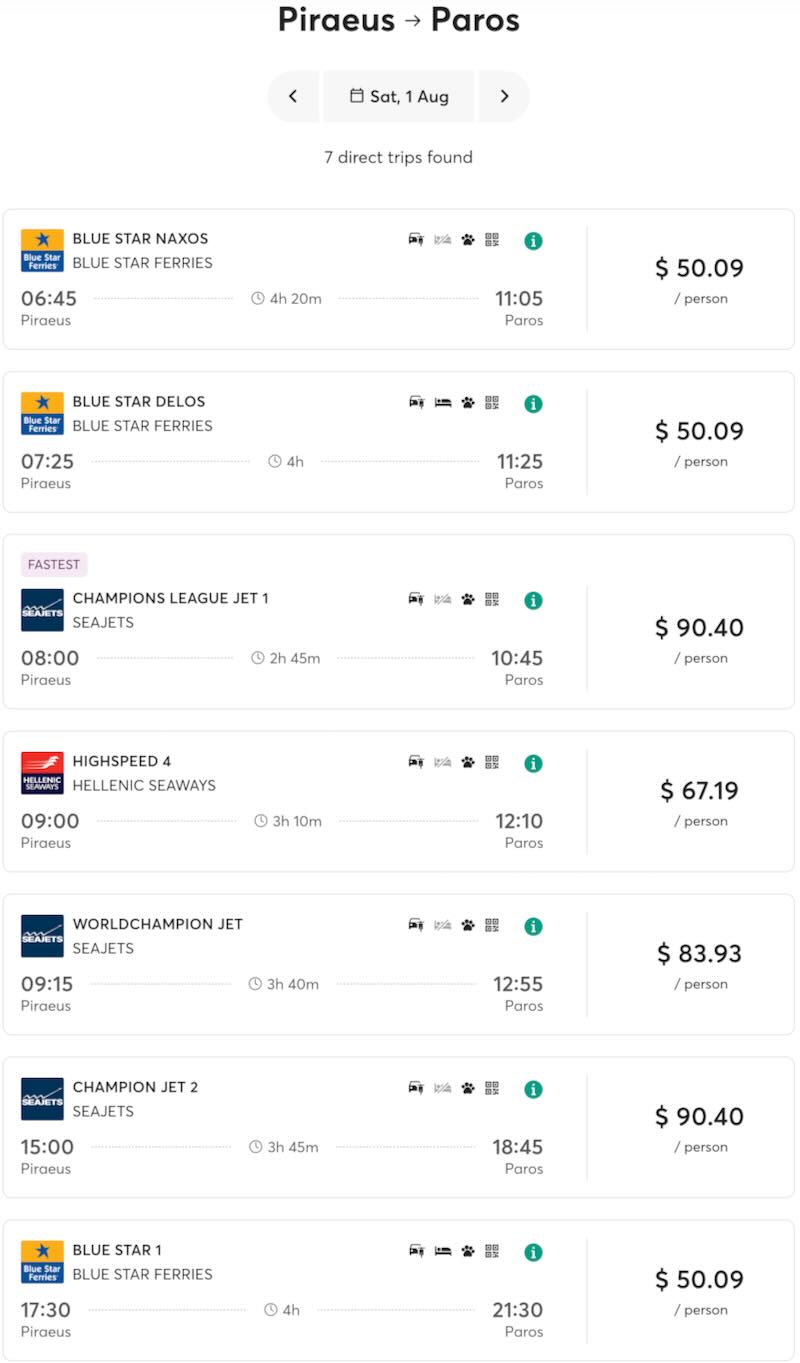
Example Athens-to-Paros sailings on Ferryhopper.com. Use this only as an example; times, vessels, and prices change by travel date.
How Much Do Athens to Paros Ferry Tickets Cost?
Standard Piraeus-to-Paros fares start at roughly €40 to €55. High-speed ferries start at €80 to €90. VIP, Business Class, cabins, and vehicle tickets are all extra.
- Conventional ferry: The cheapest option. Basic Economy gives access to public lounges and decks but does not reserve a seat.
- High-speed ferry: More expensive but includes an assigned indoor seat.
- Children: Infant and child discounts differ by ferry company. Enter each passenger’s correct age when booking.
- Vehicles: Car and motorcycle spaces can sell out before passenger seats.
Ferry fares are less dynamic than airline prices, but they differ by company, vessel, route, and seat class. Booking early is mainly about securing the departure and ticket category you want.
Buying Tickets, E-Tickets, and When to Book
I use Ferryhopper because it lets me compare ferry companies, journey times, vessel size, seat classes, and prices in one search.
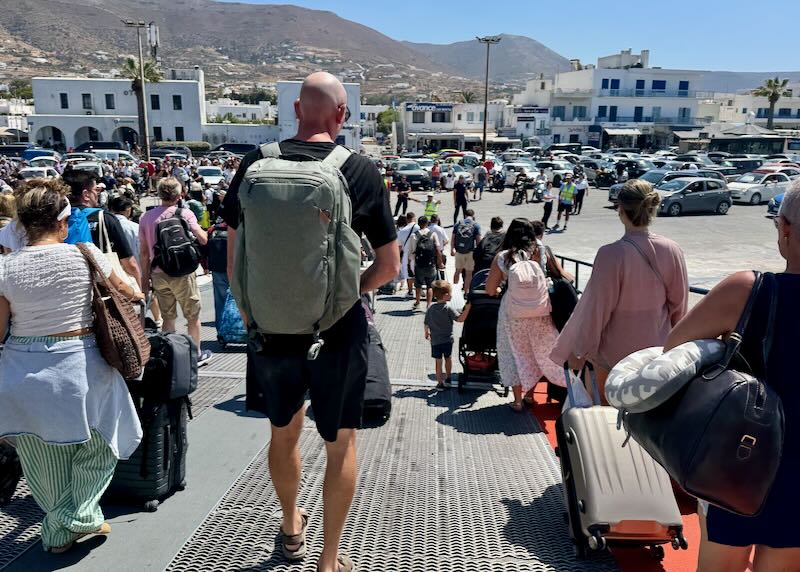
Disembarking with my backpack at the Paros ferry port in Parikia.
- Search both ports: Compare Piraeus and Rafina when traveling directly from Athens Airport. From central Athens, begin with Piraeus.
- Check the vessel: Larger conventional ferries provide the steadiest ride. High-speed ferries save time but keep passengers indoors.
- Follow the confirmation email: Some companies issue the boarding pass immediately; others open online check-in shortly before departure.
- Save the QR code: Download the boarding pass or take a screenshot before leaving your hotel. Do not rely on port Wi-Fi or mobile service.
- Bring identification: Carry the passport or identification used for the booking.
When to Book
- June through early September: Book as soon as your dates are fixed, especially for high-speed ferries, premium seats, and vehicles.
- May, late September, and October: Several weeks ahead is normally enough, but weekends and holiday dates deserve earlier booking.
- Winter: Availability is rarely the main problem. The schedule is simply less frequent.
Ticket Classes Explained
- Deck or Lounge: The cheapest conventional-ferry ticket. It gives access to public lounges, cafés, and outdoor decks but does not reserve a specific seat. It is good value outside peak season, but comfortable seats become harder to find on busy summer sailings.
- Reserved Air Seat: A numbered reclining seat in a dedicated indoor lounge on a conventional ferry. This is the best-value upgrade because you can move around without losing your seat.
- High-Speed Economy: Includes an assigned indoor seat. Passengers remain inside for most or all of the journey.
- Business or VIP: Provides larger seats, more space, and a quieter lounge. Food and drink service varies by vessel.
- Cabin: Available on some conventional ferries. A cabin is unnecessary for most daytime crossings but useful for privacy, rest, or travel with small children.
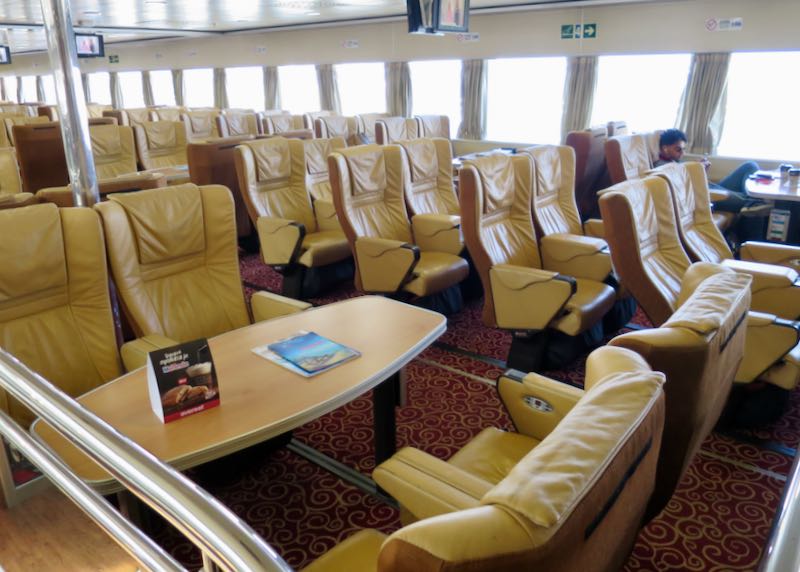
Business and VIP lounges provide more space and a quieter trip on busy summer ferries.
Luggage, Food, and Seasickness
Luggage
Ferry luggage allowances are generous and bags are rarely weighed, but they are not unlimited. Large suitcases go in the designated luggage racks near the ferry entrance or vehicle deck. Keep passports, medication, electronics, money, and valuables with you.
Blue Star publishes an allowance of up to 50 kg or one cubic meter per passenger. Most travelers with normal holiday luggage will not come close to the limit.
Food and Drink
Large conventional ferries have cafés, bars, and sometimes a self-service restaurant. High-speed ferries have a smaller café or snack bar. You can also bring your own food and water.
Seasickness
The route crosses open Aegean water and can be rough when the Meltemi blows, especially in July and August. Choose a large conventional ferry, sit near the middle of the vessel on a lower deck, and take motion-sickness medication before departure according to the package instructions or your doctor’s advice.
How to Get to Piraeus Port
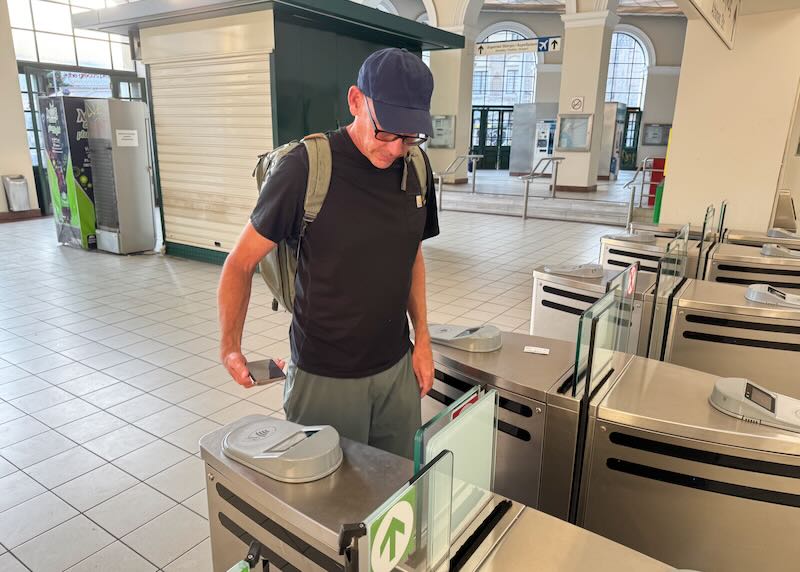
Metro Lines 1 and 3 connect central Athens with Piraeus ferry port.
From Central Athens
- Metro: Take Line 3 from Syntagma or Lines 1 or 3 from Monastiraki directly to Piraeus. Follow the port signs to your departure gate.
- Taxi: Allow 25 to 45 minutes in normal traffic. Uber in Athens dispatches licensed taxis.
- Private transfer: Best with young children, substantial luggage, or a very early ferry.
- Arrival time: Be at the port 45 to 60 minutes before departure and earlier with a vehicle.
From Athens Airport
- Metro Line 3: Direct service from Athens Airport to Piraeus. The train journey takes about an hour, plus waiting and walking time.
- Airport bus X96: Runs throughout the day and night and is useful when the metro is not operating.
- Taxi or transfer: Allow roughly 45 to 75 minutes depending on traffic.
- Alternative: Check Rafina when traveling directly from the airport. It is much closer, though the ferry itself may take longer.
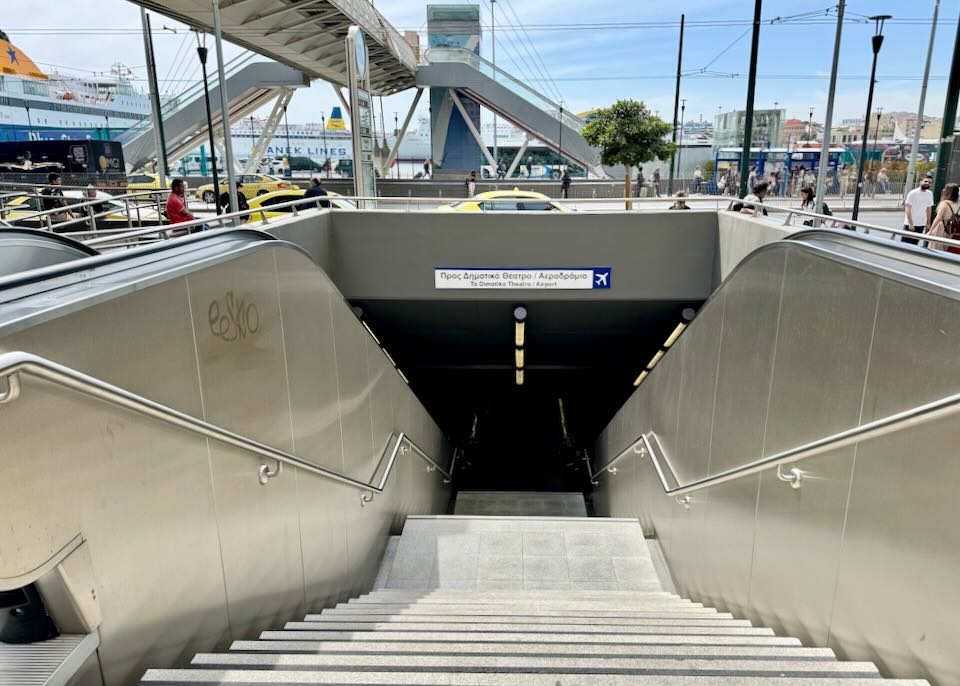
Metro Line 3 connects Athens Airport directly with Piraeus. Check your departure gate rather than assuming the ferry will leave beside the station.
Delays, Wind, and Connections
Ferry delays are more likely later in the day because they accumulate as a vessel completes earlier routes and island stops. Strong wind affects smaller high-speed ferries more than large conventional ships, but any ferry can be delayed, rerouted, or canceled.
- Track the vessel: Use the MarineTraffic website or app to see whether the ferry is approaching the port.
- Do not schedule a tight connection: Leave a generous buffer before flights, tours, restaurant reservations, or hotel transfers.
- If canceled: Follow the ferry company’s instructions for rebooking or a refund. Available alternatives depend on the operator and sailing schedule.
A morning ferry is the safest choice when you want the least stressful travel day and the most backup options.
How to Get from Paros Ferry Port to Your Hotel
All Athens ferries arrive in Parikia, the island’s capital and main transportation hub. The port becomes congested when a large ferry unloads, but the bus station, taxi stand, rental offices, and town center are close to the pier.
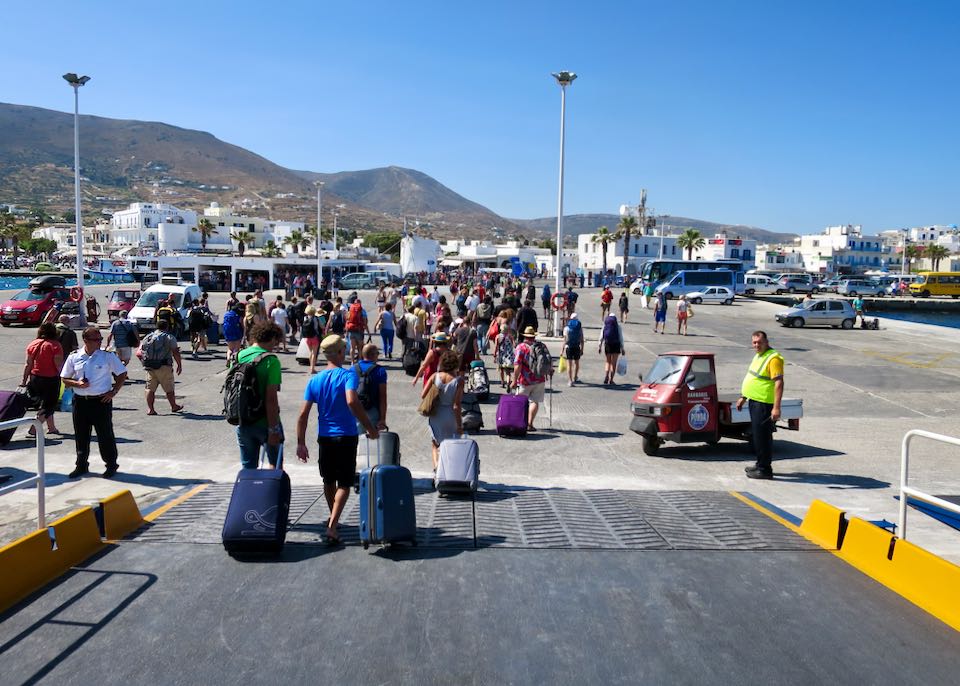
Arriving in Parikia from Athens. The taxi queue is ahead, and the bus station is a short walk to the right.
- Parikia hotels: Many are within a 5 to 15-minute walk. Check the exact route because some streets are uneven and difficult with heavy luggage.
- Bus: The main bus station is beside the port. Buses connect Parikia with Naoussa, Aliki, Golden Beach, Piso Livadi, and other main villages and beaches.
- Taxi: The taxi stand is near the port exit. Lines become long when a large ferry arrives in July or August.
- Private transfer: Best for Naoussa, remote beach hotels, families, late arrivals, and travelers with substantial luggage. Pre-book through your hotel or Welcome Pickups.
- Hotel shuttle: Many hotels offer complimentary or paid transfers. Arrange this before arrival and send the hotel your ferry company, vessel name, and scheduled arrival time.
- Rental car: Port pickup is convenient when the company meets you outside the congested arrival area. Reserve in advance for summer rather than expecting to find a good car after disembarking.
Paros is easier on arrival than Mykonos or Santorini. Parikia is directly beside the port, and onward buses leave from only a short walk away.
Should You Fly or Take the Ferry from Athens to Paros?
Take the ferry when staying in Athens first, island-hopping, carrying substantial luggage, bringing a vehicle, or wanting the scenic arrival in Parikia.
Fly when connecting through Athens Airport, traveling outside convenient ferry times, or very prone to seasickness.
From central Athens, the ferry is normally simpler than returning to the airport, checking in, passing security, and transferring from Paros Airport. From an Athens Airport hotel, flying may be faster when the schedule works.

About Santorini Dave