Greece › Athens › July Weather
Updated: October 14, 2026 • By Santorini Dave
Questions? dave@santorinidave.com
See Also
• Best Places to Stay in Athens
• Best Hotels in Athens
• Best Hotels on the Athens Riviera
• Best Hotels for Families
• Hotels with Acropolis Views
• Hotels with Rooftop Pools
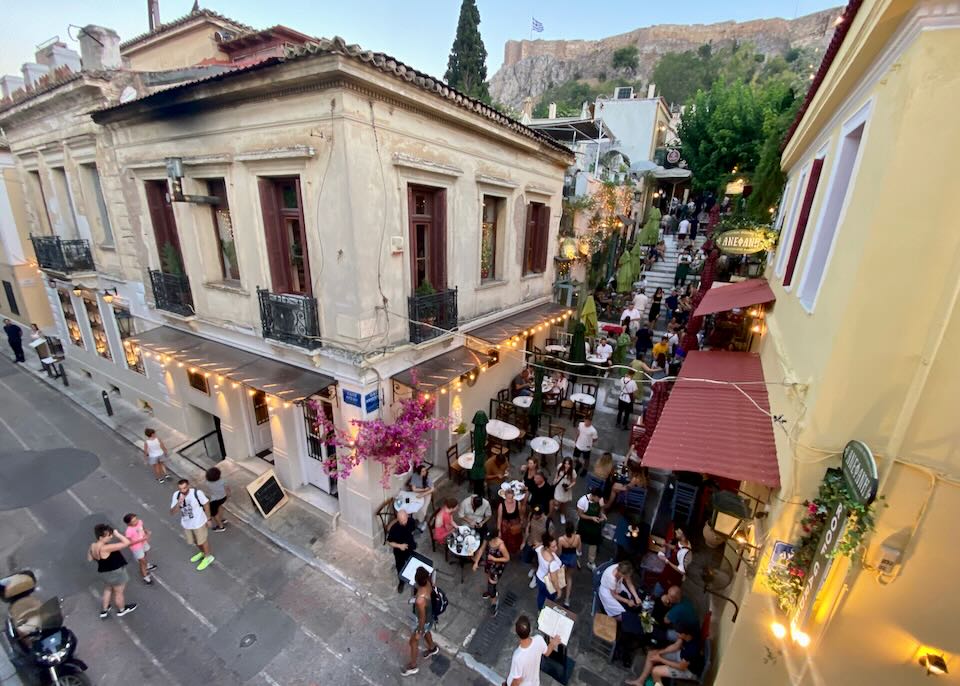
The streets of Plaka in July.
Is July a Good Time to Visit Athens?
Athens in July is hot, crowded, expensive, and energetic. It works best as a short city stay before or after the islands. Stay central, visit outdoor sights early, spend the afternoon in museums or at the hotel, and return outside for dinner and evening walks.
July is a difficult month for long sightseeing days, but a good month for nightlife, rooftop dining, swimming, and island connections. First-time visitors should plan two or three nights and choose a good central hotel with strong air conditioning.
Athens in July at a Glance
- Weather: Hot, sunny, and dry, with typical daytime highs around 33°C to 35°C (91°F to 95°F). Heatwaves can push temperatures above 40°C (104°F).
- Crowds: Peak season at the Acropolis, Plaka, Monastiraki, and other major sights.
- Prices: Popular central hotels can be expensive, especially rooms with Acropolis views or pools. July is not necessarily Athens’ most expensive month.
- Best for: Short Athens stays, nightlife, rooftop dining, beach time, and island connections.
- Main downside: Heat limits outdoor sightseeing after late morning.
- Planning priority: Book a central hotel, early Acropolis entry, popular rooftop restaurants, and fixed-date island connections ahead.
Where to Stay in Athens in July
Stay in the heart of Athens, close to the major sights. July heat makes long walks, uphill climbs, and hotels outside the center more inconvenient than they appear on a map.
- Plaka: Best for first-time visitors, atmosphere, and easy access to the Acropolis, Acropolis Museum, Anafiotika, Syntagma, and Monastiraki. It is touristy, and pedestrian streets complicate some luggage drop-offs.
- Syntagma: Best for airport access, metro connections, taxis, shopping, and short stays. It is the most practical central base, with a direct metro connection to Athens Airport.
- Monastiraki and Psiri: Best for restaurants, nightlife, rooftop bars, and evening energy. Expect noise near the busiest streets. Monastiraki also has a direct airport metro connection.
- Kolonaki: Best for upscale restaurants, boutiques, museums, and a quieter central stay. Much of the neighborhood is uphill.
- Koukaki and Makrygianni: Best for the Acropolis Museum, early Acropolis access, local restaurants, and a calmer atmosphere.
- Piraeus: Stay here only for an early ferry or late ferry arrival. It is practical for the port, not for sightseeing.
- Airport area: Useful only for a very late arrival, early flight, or one-night connection.
- Athens Riviera: Best for beach-focused stays, resort hotels, and travelers who plan to spend more time swimming than sightseeing. For a first visit focused on the Acropolis and historic center, stay in central Athens.
The best location is one that lets you return easily for an afternoon shower, nap, or pool break.
Weather, Heat, and Sightseeing Strategy
July in Athens is hot, dry, and sunny. Strong sun, exposed stone, and limited shade make archaeological sites feel hotter than the forecast. During severe heatwaves, the Acropolis and other archaeological sites can close temporarily around midday. Check opening hours and closure announcements before visiting.
The Acropolis normally opens at 8:00 AM in summer. Book the first entry if possible, carry plenty of water, wear a hat, and choose shoes with good grip. Some of the marble and stone surfaces are slippery even when dry.
A good July sightseeing schedule:
- Early morning: Acropolis, Ancient Agora, or another major outdoor archaeological site.
- Late morning: Finish outdoor sightseeing and head indoors before the worst heat.
- Midday and afternoon: Acropolis Museum, National Archaeological Museum, hotel pool, or a long lunch.
- Evening: Plaka, Monastiraki, Psiri, rooftop drinks, dinner, or an outdoor cinema.
One major outdoor attraction per morning is enough for most travelers.
What to Book Before You Arrive
- Hotel: Book early if you want a central hotel with a pool, family room, or Acropolis view. These rooms are popular and availability is limited.
- Acropolis ticket or tour: Reserve a timed-entry ticket or guided Acropolis tour. A good guide adds context to the ruins and helps you understand what you’re seeing.
- Restaurants: Reserve popular dinner spots and rooftop restaurants, especially if you want a table with an Acropolis view. See my Athens restaurant guide.
- Ferries and flights: Book fixed-date island connections ahead, especially high-speed ferries to Santorini, Mykonos, Naxos, Paros, Milos, and Crete. Ferry fares don’t necessarily increase as departure approaches, but popular sailings and cheaper ticket categories can sell out.
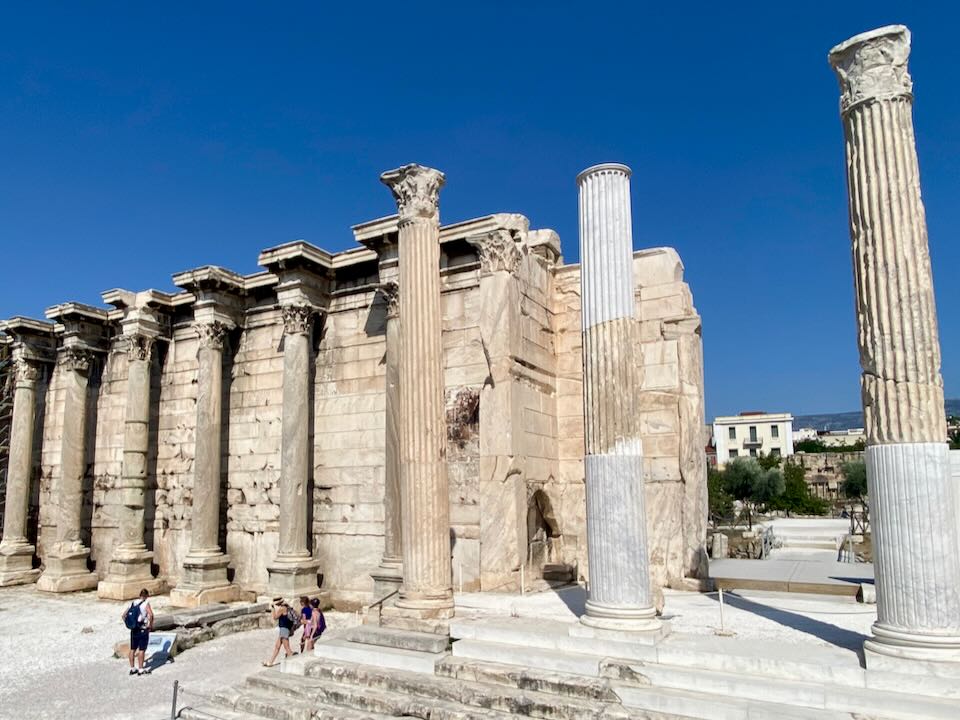
The ruins of the Megali Panagia in the courtyard of Hadrian’s Library in July.
Best Things to Do in Athens in July
- Acropolis and Acropolis Museum: The best combination for a first visit. See the ruins in the morning, then explore the air-conditioned Acropolis Museum.
- National Archaeological Museum: One of Athens’ best museums and a good choice for a hot afternoon. See my National Archaeological Museum guide.
- Rooftop dinner or drinks: Book a table overlooking the illuminated Acropolis. The best rooftop restaurants fill up quickly in July, especially around sunset.
- Athens nightlife: Psiri and Monastiraki are good starting points for bars and late nights. See my Athens nightlife guide.
- Outdoor cinema: Cine Paris in Plaka is a favorite for its rooftop setting and Acropolis views. Check the current schedule and book ahead for popular screenings.
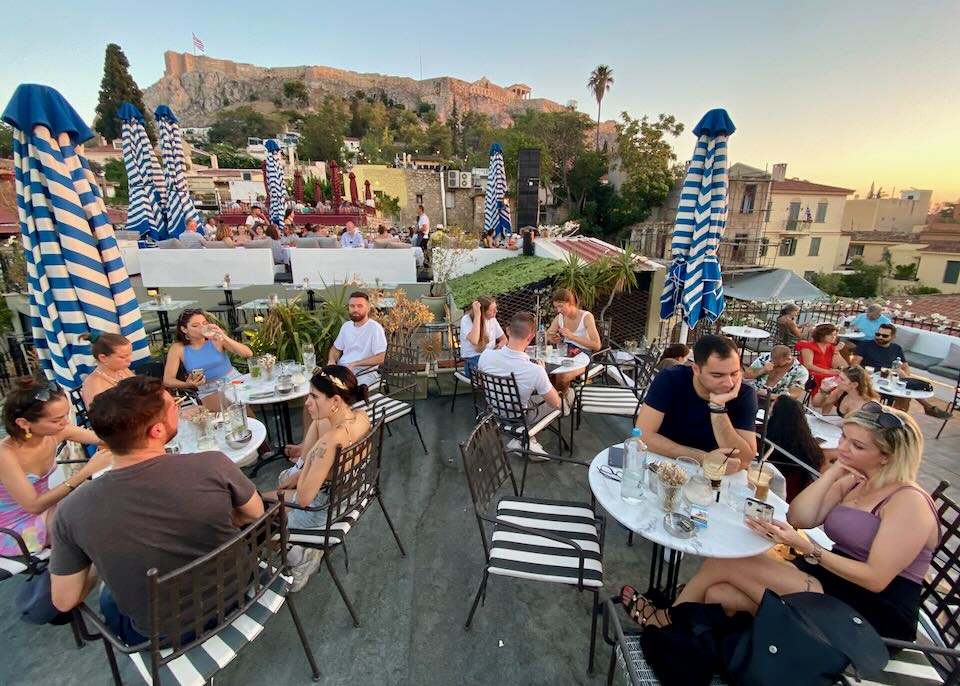
Restaurants and rooftop terraces in Plaka on a July evening.
The Athens Riviera in July
July is a good month for swimming along the Athens Riviera. Glyfada, Voula, and Vouliagmeni have organized beaches, restaurants, and beach clubs, though prices and weekend crowds are high. For most visitors staying in central Athens, an afternoon at the beach followed by dinner on the coast is enough.
- Vouliagmeni: My favorite area for a beach day, with excellent swimming, upscale restaurants, and resort hotels. Lake Vouliagmeni is a separate, paid swimming attraction with mineral-rich water.
- Voula: Good organized beaches and a quieter atmosphere than Glyfada. A good choice for families.
- Glyfada: Best for combining beach time with shopping, restaurants, bars, and nightlife.
- Getting there: The tram serves Glyfada and Voula but is slow from central Athens. It doesn’t reach Vouliagmeni. A taxi is usually the easiest option, especially for Vouliagmeni and Lake Vouliagmeni.
Stay on the Riviera only when beach time matters more than easy access to the Acropolis and historic center.
Ferries, Flights, and Island Connections in July
July has frequent ferry and flight connections between Athens and the Greek islands. Book ahead if your dates are fixed, particularly for high-speed ferries and weekend departures.
- Piraeus: The main Athens ferry port and the most common departure point for the Cyclades and Crete. Read my Piraeus Port guide before departure.
- Rafina: A smaller ferry port closer to Athens Airport, with summer connections to Mykonos, Andros, Tinos, and other islands. It can be more convenient than Piraeus if you’re arriving by air and heading straight to the islands.
- Popular routes: See Athens to Santorini, Athens to Mykonos, Athens to Naxos, Athens to Paros, Athens to Milos, and Athens to Crete.
- High-speed ferries: Faster but more expensive, with a rougher ride in windy conditions than large conventional ferries. Popular departures can sell out, while conventional ferries often have more availability.
- Flights: Flying usually saves considerable time to Crete and Santorini. For Mykonos, the advantage depends on ferry schedules and transfers. Compare total door-to-door time, not just time in the air.
- Airport-to-ferry connections: Avoid tight connections. Delayed flights, baggage claim, and traffic can turn a short transfer into a missed ferry. Check whether your ferry leaves from Piraeus or Rafina before arranging transportation.
- Final night: Spend your last night in Athens before an international flight. Do not rely on a same-day ferry connection.
For broader planning, see my Greek ferries guide and Greek island-hopping guide.
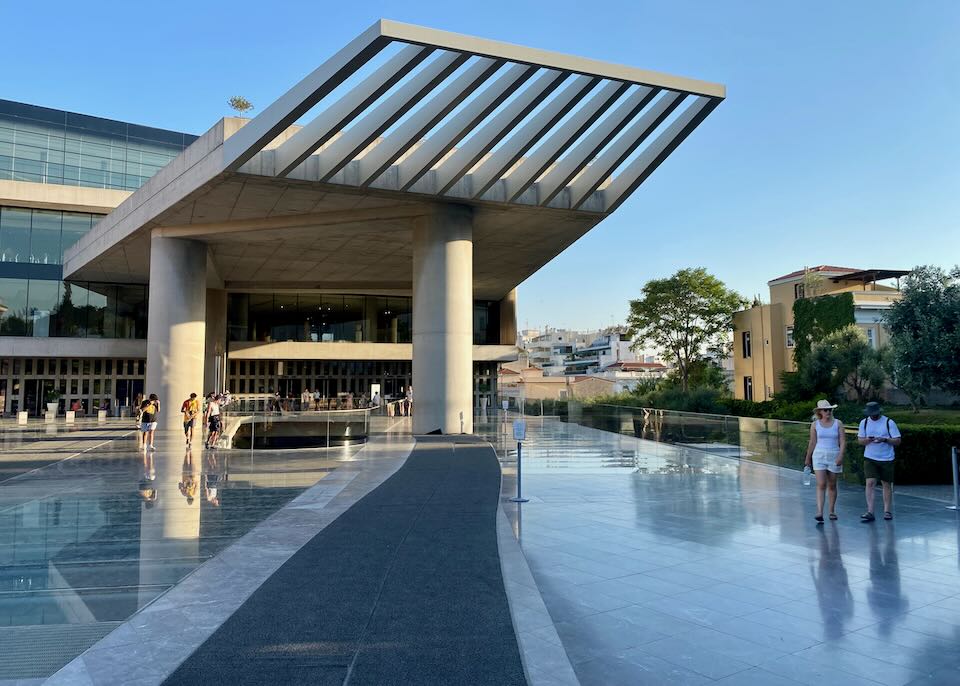
The Acropolis Museum on one of our July visits.
July Compared with Other Months
- July vs. June: June is warm and lively but easier for sightseeing. July is usually hotter, with more intense midday heat.
- July vs. August: Both are hot. July is busier with local activity, while August brings more holiday closures among independent shops and restaurants as Athenians leave the city. Major tourist sights and hotels remain open.
- July vs. September: September is better for sightseeing, with less intense heat, warm seawater, and excellent island connections. I’d choose September over July for most Athens trips.
- July vs. May or October: May and October are much better for walking, archaeological sites, and long sightseeing days. July is better for guaranteed summer heat, swimming, and the busiest island-hopping season.
Frequently Asked Questions
- Is Athens too hot in July? July can be difficult for travelers who struggle with heat, especially during heatwaves. Plan outdoor sightseeing for the morning and spend the hottest hours indoors.
- Is the Acropolis crowded in July? Yes. July is peak season, and the Acropolis gets very crowded. Book a timed-entry ticket or guided Acropolis tour in advance.
- Is July good for families? Yes, with a simple itinerary and a hotel with strong air conditioning, ideally with a pool. Families with toddlers or heat-sensitive children may prefer June or September.
- Do July ferries sell out? Yes, particularly popular high-speed departures and ferries on busy travel days. Large conventional ferries often have more space, but preferred seating and vehicle spaces can fill. Book ahead when your dates are fixed.
- Do I need a rental car in Athens in July? No. Use walking, the metro, and taxis. Rent a car only when leaving Athens for mainland Greece or the Peloponnese.

About Santorini Dave