Greece › Ferries › Athens to Naxos
Updated: July 26, 2026 • By Santorini Dave
Questions? dave@santorinidave.com
See Also
- Where to Stay in Athens
- Best Hotels in Athens
- Piraeus Ferry Port Guide
- Where to Stay in Naxos
- Best Hotels in Naxos
Helpful Links
- Compare ferry schedules and buy tickets: Ferryhopper
- Pre-booked transfers in Athens: Welcome Pickups
- Pre-booked transfers in Naxos: Welcome Pickups
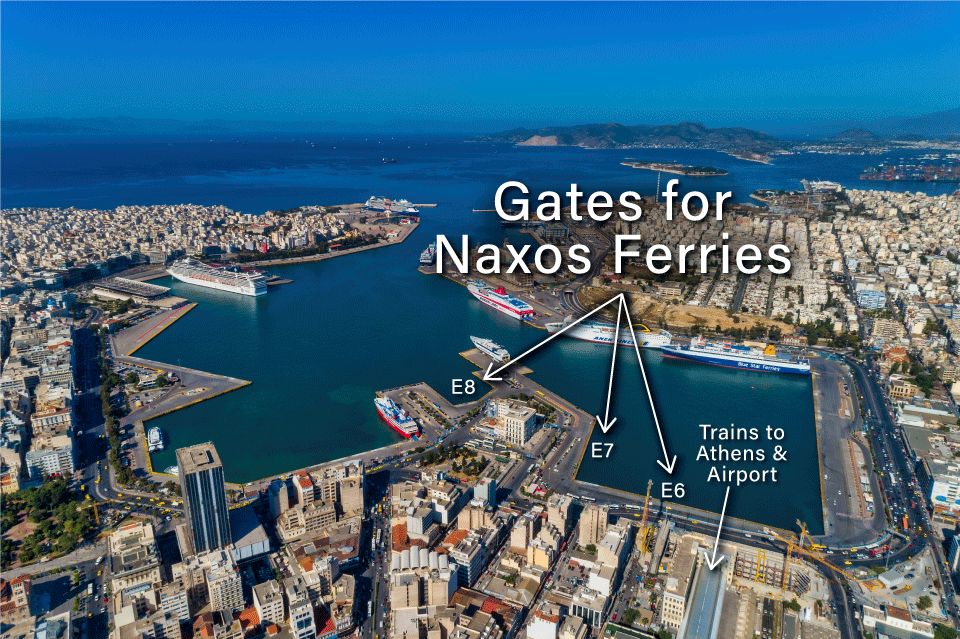
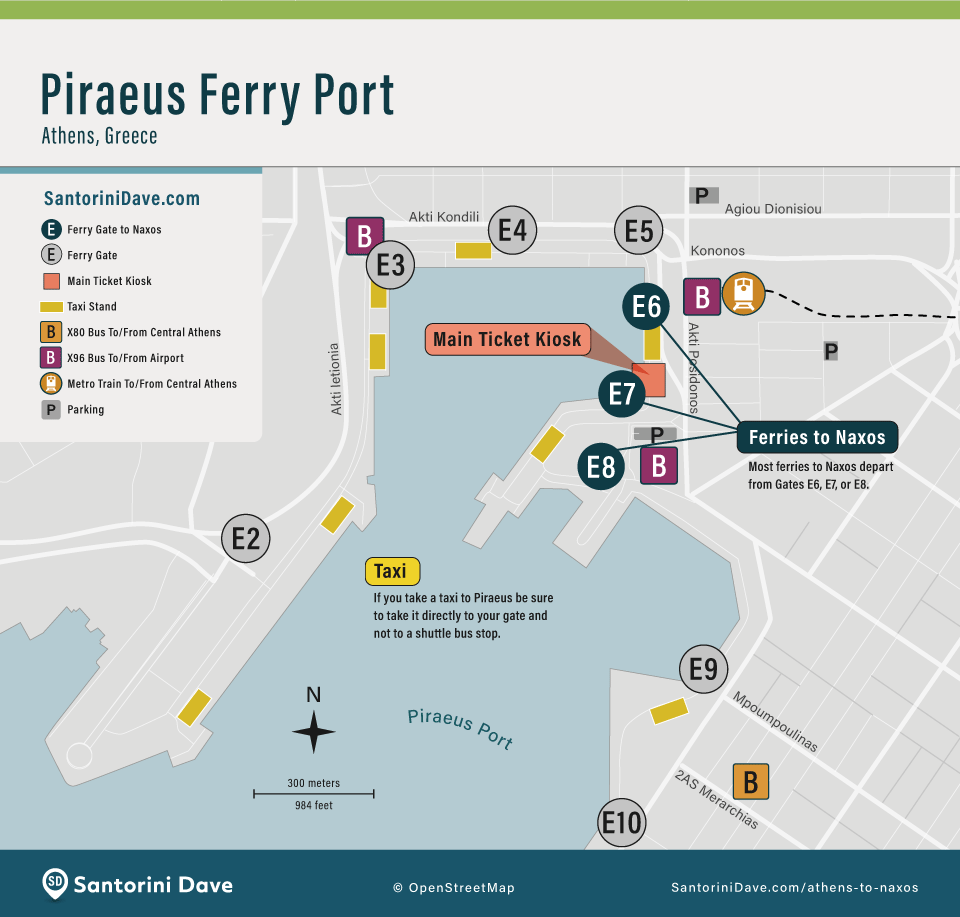
Piraeus is about 30 minutes from central Athens by metro or taxi without heavy traffic. Naxos ferries use several different gates, so check your ticket and the electronic port signs on the day of travel. I prefer to buy ferry tickets in advance.
Athens to Naxos Ferry: The Essentials
- Best ferry: I recommend a large conventional Blue Star ferry unless saving two hours matters more than comfort. It has open decks, more room to move around, and a smoother ride in rough seas.
- Fastest ferry: High-speed ferries take about 3 to 4 hours. Conventional ferries take roughly 5 to 6 hours.
- Departure ports: Use Piraeus when staying in central Athens. Rafina is more convenient when traveling directly from Athens Airport, but it has fewer and more seasonal sailings.
- Tickets: Standard passenger fares start at roughly €45 to €55 and rise with faster ferries and upgraded seating. Book early for July and August, especially for high-speed ferries, cabins, premium seats, and vehicles.
- Port arrival: Be at Piraeus 45 to 60 minutes before departure. Save your boarding pass to your phone and confirm the gate that morning.
Which Athens to Naxos Ferry Should You Take?
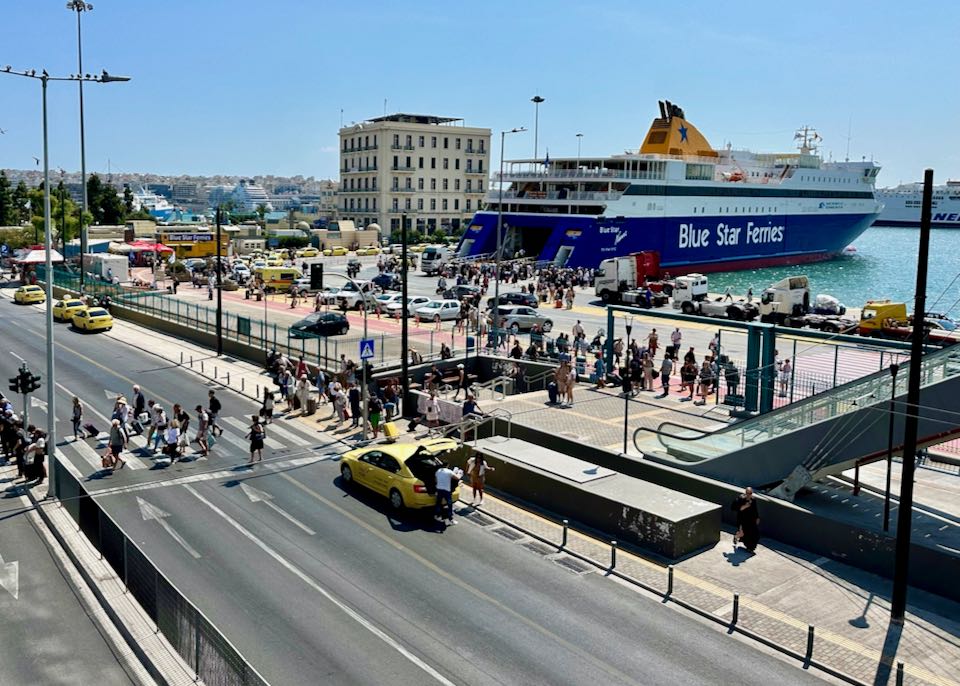
The large Blue Star ferry is my favorite way to travel from Athens to Naxos. It is slower than SeaJets but more comfortable and has outdoor decks.
- Blue Star Conventional Ferry: Best Overall
The large Blue Star ferries take about 5 to 6 hours. They have outdoor decks, indoor lounges, cafés, reserved seating, and more space to walk around. They also handle rough water better than smaller high-speed ferries. Choose Blue Star if comfort, scenery, or seasickness is a concern.- SeaJets High-Speed Ferry: Best for Saving Time
The fastest ferries take about 3 to 4 hours but cost more. Seating is assigned and passengers spend all of the journey indoors. Choose a high-speed ferry when reaching Naxos as early as possible is the priority.My recommendation: Take an early Blue Star ferry from Piraeus. The ride past the Cycladic islands and the arrival beside the Portara are part of the trip. I would choose SeaJets only when the faster arrival meaningfully improves the rest of the day.
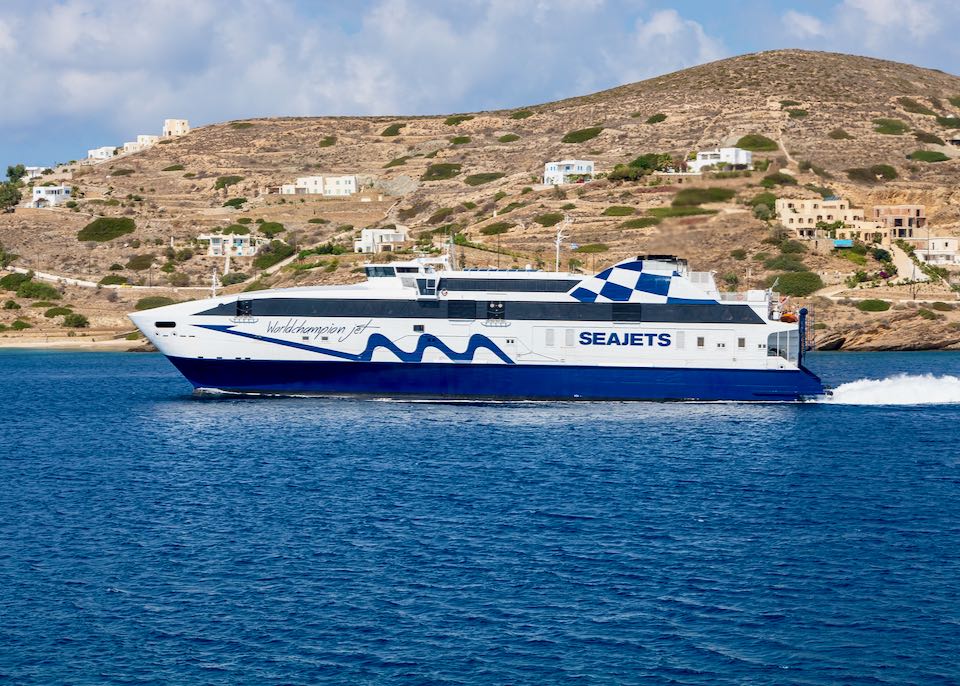
SeaJets operates the fastest ferries from Athens to Naxos. Vessel assignments change, so check the boat listed for your travel date.
Piraeus or Rafina?
- Piraeus: Best from Central Athens
Piraeus has the most ferries, operates throughout the year, and is the clear choice when staying in Plaka, Syntagma, Monastiraki, or elsewhere in central Athens. Metro Lines 1 and 3 run directly to Piraeus. The port is large, so allow time to find the correct gate.- Rafina: Best from Athens Airport
Rafina is about 20 to 30 minutes by taxi from Athens Airport, compared with roughly 45 to 75 minutes to Piraeus. Choose Rafina when landing at the airport and continuing directly to Naxos, but only if its more limited schedule fits your plans. Rafina ferries run mainly from spring through autumn.Athens to Naxos Ferry Times and Frequency
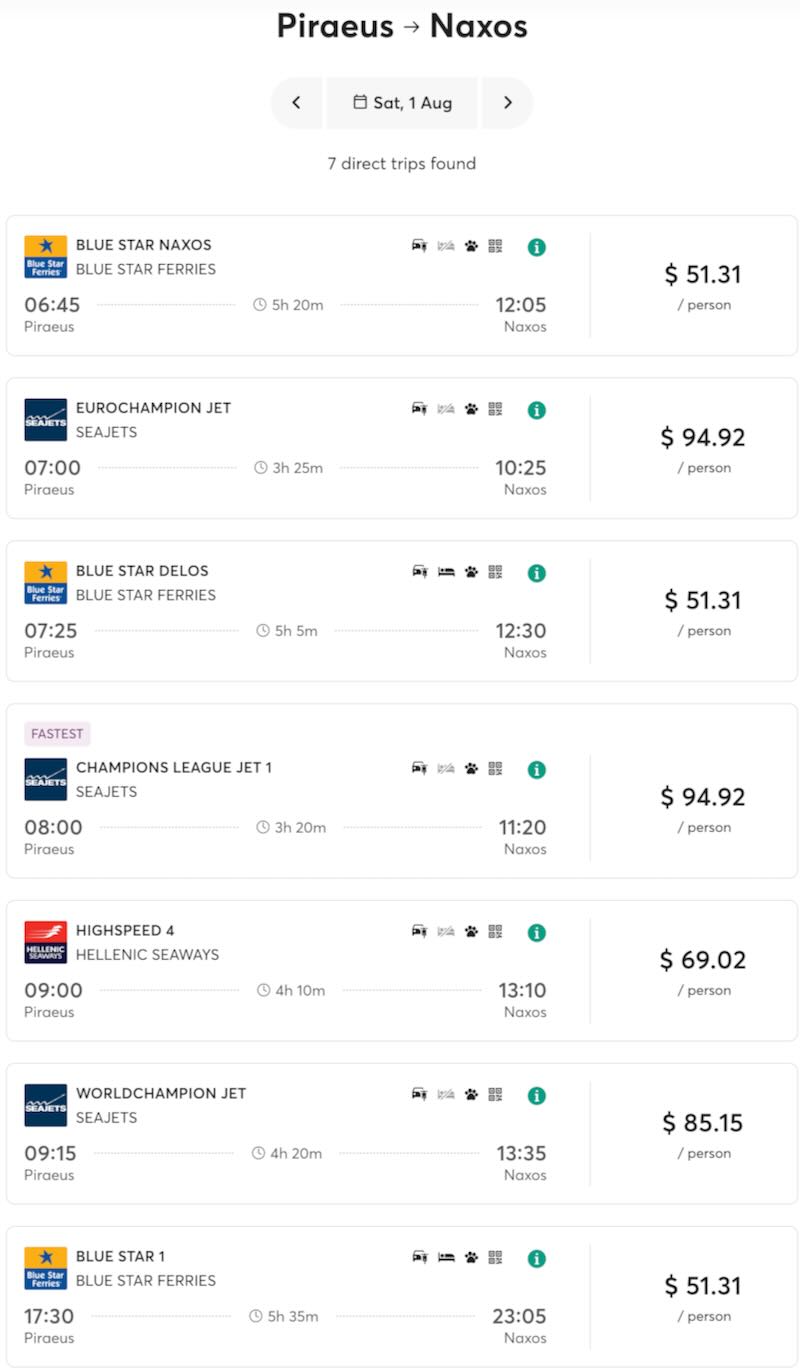
Piraeus has ferries to Naxos throughout the year, with the greatest choice from late spring through early autumn. Summer schedules include large conventional ferries and faster high-speed boats. Rafina service is more seasonal and less frequent. The fastest Piraeus sailings take about 3 hours and 15 minutes. Large conventional ferries take roughly 5 to 6 hours, depending on the vessel and intermediate stops.
An example Athens-to-Naxos schedule on Ferryhopper.com. Departure times, vessels, and prices change by date.
How Much Does the Athens to Naxos Ferry Cost?
As a planning estimate, standard passenger fares start at roughly €45 to €55. Faster ferries and upgraded seating cost more, with many high-speed tickets around €80 to €100.
- Conventional Ferry: Standard tickets are the cheapest. Reserved airplane-style seats, Business Class, and cabins cost extra.
- High-Speed Ferry: All passengers receive an assigned seat. Business and VIP categories cost more and provide a quieter lounge with larger seats.
- Children: Ferry companies offer infant and child discounts, but age limits and percentages differ. Enter each child’s correct age when booking to see the applicable fare.
- Vehicles: Car spaces are limited and sell out before passenger seats. Reserve as early as possible for July and August.
Ferry prices do not rise (or fall) minute by minute like airline fares, but they differ by company, vessel, seat class, and sailing. Booking early is mainly about securing the ferry and seat category you want.
How to Buy Tickets and Use E-Tickets
My wife and I arriving in Naxos by ferry.
- Where to buy: I use Ferryhopper.com to compare conventional and high-speed ferries in one search.
- Boarding pass: Follow the instructions in your confirmation email. Some companies issue the boarding pass immediately; others require online check-in shortly before departure.
- Before leaving your hotel: Download the boarding pass or QR code to your phone. Do not rely on having a good internet connection at the port.
- At the ferry: A crew member scans the QR code as you board. Printing is not required when you have a valid mobile boarding pass.
When Should You Book?
- July and August: Book 2 to 3 months ahead for high-speed ferries, premium seats, cabins, and vehicle spaces. Standard deck tickets on large ferries sell out less frequently, but I would still book in advance.
- May, June, September, and October: Several weeks ahead is normally enough, though popular weekend sailings deserve earlier booking.
- November through April: Availability is rarely the problem. The larger concern is choosing from a reduced winter schedule.
Ticket Classes Explained
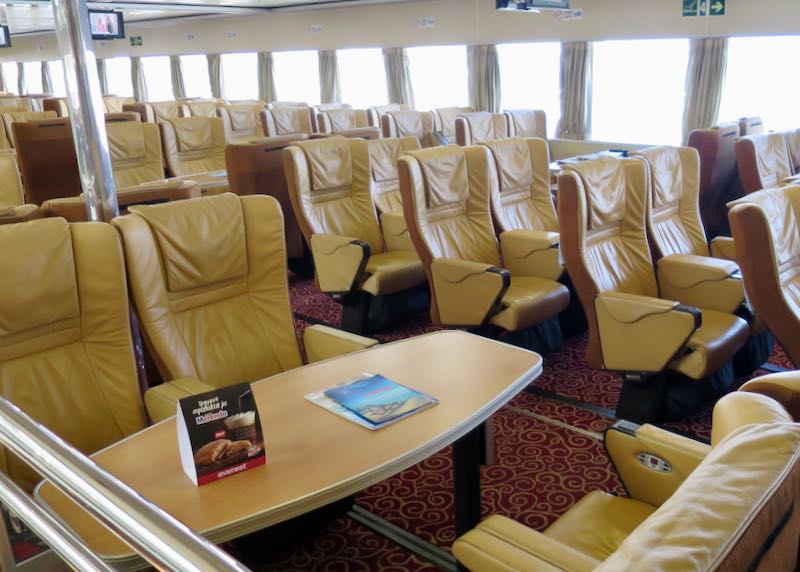
Business Class has more room and a quieter atmosphere than standard ferry seating.
- Deck or Lounge: The cheapest conventional-ferry ticket. It gives access to the public indoor lounges and outdoor decks but does not reserve a specific seat. Good value outside peak season, but finding a comfortable place can be difficult on busy summer ferries.
- Reserved Air Seat: A numbered reclining seat in a dedicated indoor lounge on a conventional ferry. This is the best-value upgrade and lets you walk around without losing your place.
- Business or VIP: A separate, quieter lounge with larger seats and more space. I recommend it for travelers who want to work, sleep, avoid crowds, or make the ferry ride feel easier.
- Cabin: Available on some conventional ferries. A cabin is unnecessary for most daytime trips to Naxos, but useful for families with small children, travelers who need privacy, or overnight departures.
- High-Speed Economy: High-speed ferry tickets include a numbered indoor seat. Premium categories provide larger seats and a quieter lounge, but the basic journey is the same.
How to Get to Piraeus Port
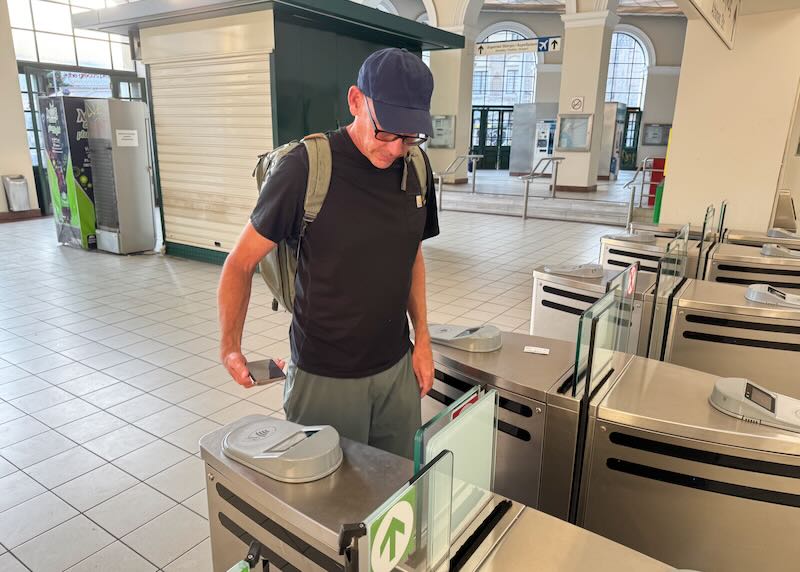
Entering the Athens Metro with contactless payment. Piraeus is about 20 to 30 minutes from central stations by train.
From Central Athens
- Metro: Take Line 1 from Monastiraki or Line 3 from Syntagma or Monastiraki directly to Piraeus. The fare is €1.20. Tap a contactless bank card, Apple Pay, or Google Pay at the gate.
- Taxi: Allow 25 to 45 minutes from central Athens, depending on traffic. Morning traffic and road closures can add time, so do not plan a tight arrival.
From Athens Airport
- Metro: Line 3 runs directly from Athens Airport to Piraeus. The trip takes about an hour and costs €9.
- X96 Bus: The airport bus runs directly to Piraeus and operates through the night. The fare is €5.50, and the journey takes roughly 60 to 90 minutes.
- Taxi or Pre-booked Transfer: Allow 45 to 75 minutes depending on traffic. This is the easiest option with children or substantial luggage.

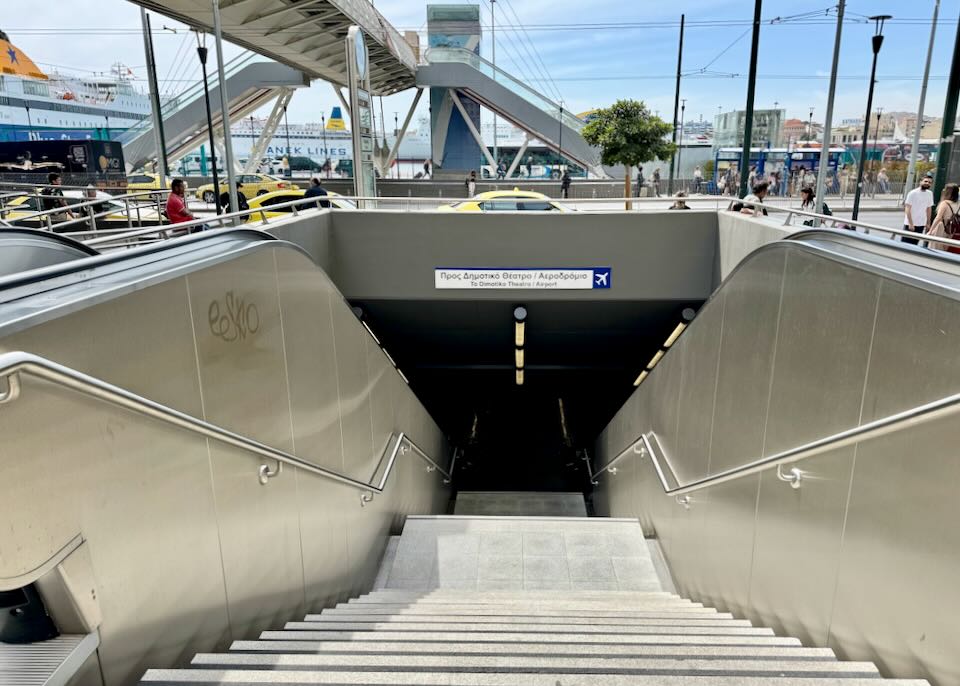
Metro Line 3 connects Athens Airport directly with Piraeus. The Piraeus station is close to the central ferry gates, but check your departure gate before deciding how much walking time to allow.
Arriving and Boarding at Piraeus
- Arrive 45 to 60 minutes early: This gives you time to confirm the gate, walk through the port, and board without rushing. Arrive earlier with a car.
- Check the gate that morning: Naxos ferries use several Piraeus gates, and assignments change. Trust your current ticket, ferry-company message, and the electronic port signs.
- Keep the ferry name: Several ships can be boarding close together. Match the company, vessel name, and destination before joining a line.
- Do not panic about boarding: Greek ferry boarding looks chaotic, but it moves quickly. Have your QR code open and follow the crew’s directions.
Luggage, Food, and Seasickness
Luggage
Ferry luggage rules are far more relaxed than airline rules. Blue Star’s published allowance is up to 50 kg or one cubic meter per passenger, but bags are rarely weighed. Leave large suitcases in the designated luggage area near the vehicle deck. Take passports, medication, electronics, money, and other valuables with you to your seat.
Food and Drink
High-speed ferries have a café or snack bar selling coffee, drinks, sandwiches, and snacks. Large conventional ferries have several cafés and bars, and some also have a self-service restaurant. Bringing your own food and water is allowed.
Seasickness
Choose a large conventional ferry when seasickness is a concern. Sit toward the middle and lower part of the ship, look at the horizon, avoid a heavy meal, and take seasickness medication before departure rather than after symptoms begin. High-speed ferries are faster but feel rougher in strong winds.
What Happens If the Ferry Is Delayed or Canceled?
- Delays: Delays are most common on high-speed ferries making several island stops before reaching Piraeus or Naxos. Morning departures that begin in Piraeus are less likely to have accumulated delays.
- Tracking the ferry: Use the ferry company’s updates or MarineTraffic to see where the vessel is.
- Strong winds: Smaller high-speed ferries are more susceptible to disruption than large conventional ships, but any ferry can be delayed or canceled.
- Connections: Do not book a flight from Athens immediately after a ferry from Naxos. Spend the final night in Athens before an important international flight.
How to Get from Naxos Ferry Port to Your Hotel
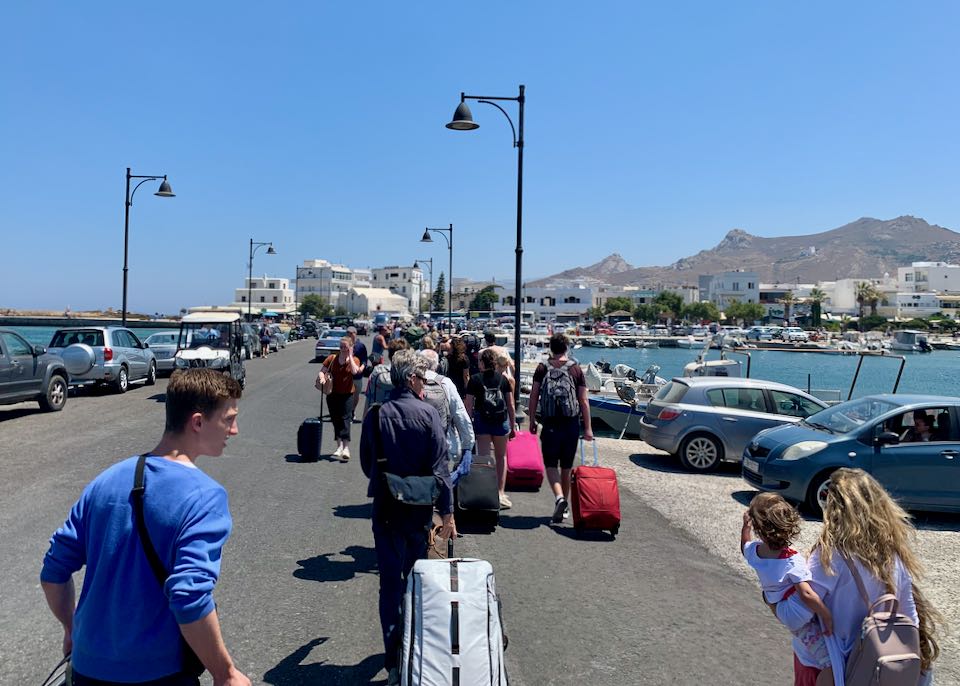
Walking from the ferry into Naxos Town. Taxis are to the right at the end of the pier, and buses are straight ahead.
Ferries arrive in Naxos Town. Walk the pier to the waterfront, where you will find the bus station and taxi stand.
- Walking: Most hotels in Naxos Town are within 5 to 15 minutes of the port. St. George Beach is about 10 to 15 minutes away on a mainly flat route. Hotels inside the Kastro can involve steep lanes, cobblestones, and stairs, making the walk difficult with rolling luggage.
- Bus: The KTEL bus station is at the end of the ferry pier. Buses run to Agios Prokopios, Agia Anna, Plaka, and other parts of the island. Buy a ticket from the kiosk before boarding. Summer buses can be crowded immediately after a ferry arrives.
- Taxi: Taxis wait beside the bus station, but Naxos has a limited number of vehicles. The queue can reach 30 minutes or longer when several ferries arrive close together in July and August.
- Private Transfer: Pre-book a transfer when staying outside Naxos Town, arriving with children, or carrying substantial luggage. Welcome Pickups meets passengers at the end of the pier.
- Hotel Transfer: Some hotels arrange paid or complimentary port pickup. Ask before booking another transfer and send the hotel your ferry company, vessel name, and arrival time.
- Rental Car: Do not count on collecting a car directly beside the ferry ramp unless the rental company has confirmed the meeting point. Port traffic is restricted and offices are spread around Naxos Town.
Ferry or Flight from Athens to Naxos?
Take the ferry when staying in central Athens, traveling with substantial luggage, bringing a vehicle, or wanting the sea journey and arrival into Naxos Town. The ferry is also easier than flying for many families because there is no airport security process or strict luggage allowance.
Fly when starting near Athens Airport and the flight schedule saves most of a day. The flight itself is short, but include airport travel, check-in, security, and transportation from Naxos Airport to your hotel when comparing total journey time. From central Athens, an early high-speed ferry can compete surprisingly well with flying door to door. From an airport hotel, the flight is faster.

About Santorini Dave