Greece › Crete › July Weather
Updated: October 14, 2026 • By Santorini Dave
Questions? dave@santorinidave.com
See Also
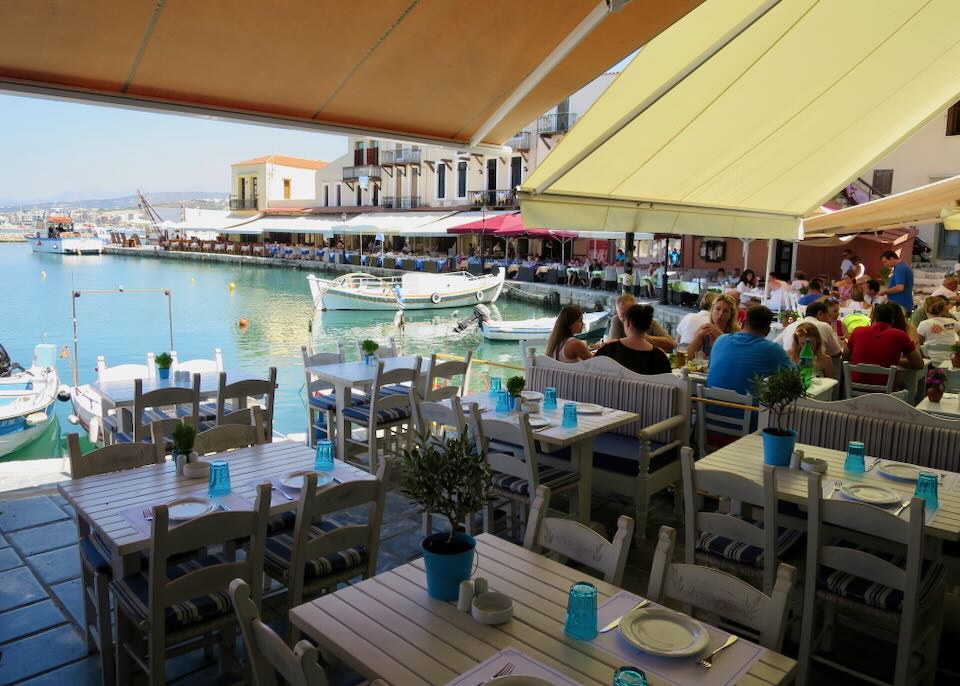
Rethymno, Crete in summer.
Crete in July: Weather, Beaches, Crowds, and Travel Tips
July is one of the best months for a beach holiday in Crete. The weather is hot and sunny, the sea is warm, and beach resorts are in full swing. It’s also one of the busiest and most expensive months, with crowded beaches, heavy traffic, and intense midday heat. For swimming, boat trips, and nightlife, July is excellent. For sightseeing, hiking, and fewer crowds, I prefer June or September. August has similar weather but is even busier, especially around the August 15 holiday.
July at a Glance
- Weather: Hot, sunny, and dry, with coastal highs around 29°C to 32°C (84°F to 90°F).
- Sea Temperature: Around 24°C to 26°C (75°F to 79°F).
- Crowds: Peak season at famous beaches, historic towns, and major attractions.
- Prices: High, especially for beachfront hotels, luxury resorts, and family rooms.
- Best For: Beaches, swimming, boat trips, nightlife, resorts, and family holidays.
- Not Ideal For: Budget travelers, avoiding crowds, or long hikes.
- Book Ahead: Hotels, rental cars (especially automatics), ferries, and popular boat trips.
Best Places to Stay in Crete in July
- Chania: Best for first-time visitors, restaurants, historic atmosphere, and exploring western Crete. Parking is difficult in the Old Town. If renting a car, choose a hotel with convenient parking nearby.
- Agia Marina and Platanias: Best for families, organized beaches, nightlife, and travelers who want restaurants and facilities within walking distance. Expect traffic, crowds, and music.
- Rethymno: My favorite combination of historic town, long sandy beach, and convenient location between Chania and Heraklion.
- Elounda: Best for luxury resorts, sheltered swimming, and relaxing by the hotel pool. It is a poor base for western Crete.
- Plakias or Paleochora: Best for a slower south-coast holiday with beaches and tavernas. Both are reached by winding mountain roads. Book accommodation early for July.
- Hersonissos or Malia: Best for large resorts, nightlife, and a busy package-holiday atmosphere. Avoid them for quiet evenings or traditional character.
- Heraklion: Best for Knossos, the Archaeological Museum, wineries, and ferry or airport logistics. It is not my first choice for a dedicated beach holiday.
More recommendations in my guide to where to stay in Crete.
Crete Weather in July
July is hot, sunny, and extremely dry. Daytime highs along the coast are around 29°C to 32°C (84°F to 90°F), with higher temperatures inland and during heatwaves. Temperatures can exceed 35°C (95°F), and evenings remain warm along the coast. Air conditioning is important.
Rain is rare. Plan outdoor sightseeing early in the morning or later in the afternoon. Between noon and 4:00 PM, swimming, lunch in the shade, museums, and hotel pools are more comfortable than Knossos, long old-town walks, or exposed trails.
Wind and Beach Conditions
Northerly summer winds can make exposed beaches along Crete’s north and west coasts rough. Agia Marina, Platanias, Falasarna, and other open beaches may have large waves even on clear, sunny days. Sheltered coves such as Agioi Apostoloi, Marathi, and Loutraki often have calmer water when nearby beaches are rough. Elounda and sheltered parts of Mirabello Bay are also good choices. The south coast is not automatically protected from wind. Plakias, for example, can become extremely windy. Check the local wind and wave forecast before driving across the island for one particular beach.
Is Crete Crowded in July?
Yes. Expect crowds in Chania Old Town, Rethymno, Knossos, Elafonisi, Balos, Falasarna, Hersonissos, Malia, and the beach resorts west of Chania. The busiest beaches fill by late morning, parking becomes difficult, and popular restaurants need reservations. For fewer crowds, head to eastern Crete, mountain villages, or less-developed parts of the south coast.

The beaches west of Chania are warm, lively, and fully organized in July.
Best Beaches in Crete in July
Elafonisi
Elafonisi is beautiful but crowded in July. Arrive before 9:00 AM or late in the afternoon. Stay on marked paths and never remove sand, shells, plants, or other material from the protected area.
Balos Lagoon
The boat from Kissamos is the easiest option for most visitors. Driving gives you the famous viewpoint and more control over timing, but the final road is rough and followed by a steep, exposed walk. Check your rental agreement before driving. Many contracts exclude damage caused on unpaved roads.
Falasarna
Falasarna’s size makes it easier to find space than at smaller beaches. It is one of the best places in western Crete for a late swim and sunset, but strong wind can produce rough water.
Agioi Apostoloi
These sheltered coves close to Chania are excellent for families and windy days. They have shallow swimming areas, some natural shade, and beach facilities. They’re much easier to reach than Elafonisi or Balos.
Marathi and Loutraki
These sheltered beaches east of Chania have calm water, tavernas, and good facilities. They are popular with local families and fill quickly, especially on weekends.
Agia Marina and Platanias
Choose these beaches for sunbeds, water sports, beach bars, and restaurants. They are convenient and lively rather than peaceful, and the water becomes rough when northerly winds strengthen.
Rethymno Beach
The long sandy beach begins near the Old Town and continues east through the resort area. It is busy but extremely convenient for travelers who want to combine swimming with restaurants and sightseeing without driving.
Preveli
Preveli has a palm-lined river flowing into the sea, with a sandy and pebbly beach at its mouth. The main route includes steep steps, and the climb back to the parking area is punishing in July heat. Arrive early and carry plenty of water. Boat trips from nearby south-coast towns offer an alternative to the steep walk.
Best Things to Do in Crete in July
Visit Knossos Early
Knossos normally opens at 8:00 AM in July. Arrive at opening to explore before the strongest heat and tour groups, then visit the Heraklion Archaeological Museum later in the day. There is limited shade at Knossos, and a midday visit is best avoided.
Explore Chania and Rethymno in the Evening
Chania and Rethymno are best explored in the evening, when temperatures drop and the old towns are lively. Walk the harbors before dinner, reserve restaurants ahead, and explore the quieter backstreets rather than staying entirely on the waterfront.
Take a Boat Trip
Popular excursions include Balos and Gramvousa from Kissamos, Spinalonga from the Elounda and Agios Nikolaos area, Dia from Heraklion, and Loutro and nearby beaches from the southwest coast. Book popular boat trips in advance. Strong winds can cause cancellations.
Drive Through the Mountain Villages
Village drives offer a break from the busiest resorts, but do not expect the mountains to be cool at midday. Start early or visit in the late afternoon and stay for dinner.
Samaria Gorge and Hiking in July
Samaria Gorge is normally open in July, but extreme heat, wind, fire danger, trail conditions, or other safety concerns can force temporary closures. The full crossing starts from the Xyloskalo entrance at 7:00 AM, and hikers should begin as early as possible. Check the official opening status before traveling. The complete route is about 16 km and takes most visitors five to seven hours, followed by a ferry from Agia Roumeli. Wear proper hiking shoes, carry plenty of water, and allow a full day for the hike, ferry, and return transport.
July is not the month I would choose specifically for Samaria Gorge. May, June, and September offer more comfortable hiking weather, provided the gorge is open. Imbros Gorge is shorter and easier, but still hot in July. Start early.
Getting Around Crete in July
A rental car is the best way to reach remote beaches, mountain villages, wineries, and the south coast. Traffic is heavy around the main resorts, and parking can be difficult at popular beaches. Reserve an automatic car well ahead. Before leaving the rental office, photograph existing damage and confirm whether the contract restricts driving on unpaved roads.
Parking is difficult in Chania Old Town, Rethymno Old Town, Elafonisi, Balos, and the busiest resorts. If renting a car, confirm exactly where you can park. “Parking nearby” can mean a long walk from the hotel. If staying in Chania Old Town or a well-connected beach resort, consider renting a car for just a few days rather than your entire stay.
Buses work well between the main cities and established north-coast resorts. They are less useful for remote beaches or itineraries involving several stops in one day. Crete is too large for constant cross-island day trips. With a week or more, consider staying in two different parts of Crete rather than making long day trips across the island.
Ferries and Flights in July
July has frequent international flights to Chania and Heraklion, regular domestic flights to Athens, and ferry connections between Crete and Piraeus. Seasonal high-speed ferries connect Heraklion with Santorini and other Cycladic islands, but routes and departure days vary. Check ferry schedules before booking hotels on multiple islands.
Book ferry tickets in advance, especially cabins, vehicle spaces, and popular high-speed connections. Strong winds can delay or cancel ferries, particularly high-speed vessels. Do not schedule a ferry arrival shortly before an international flight or another expensive connection.
Heat and Wildfire Safety
July heat and dry vegetation create a serious wildfire risk. Keep government emergency alerts enabled on your phone, follow local instructions, and never drive toward smoke. Never discard cigarette butts, light fires, or park over dry vegetation.
What to Book in Advance
- Hotels: Book early for Chania Old Town, Elounda resorts, family hotels, and beachfront rooms.
- Rental Cars: Reserve as soon as travel dates are fixed, especially for automatic transmission and larger vehicles.
- Ferries: Book ahead for cabins, vehicle spaces, and popular Santorini connections.
- Restaurants: Reserve popular restaurants in Chania, Rethymno, and Elounda, especially for weekend dinners.
- Tours: Book popular boat trips and guided excursions in advance.
FAQ: Visiting Crete in July
Is July a good time to visit Crete?
Yes for beaches, swimming, nightlife, and boat trips. It is less appealing for budget travel, quiet sightseeing, or long hikes.
How hot is Crete in July?
Coastal daytime highs are around 29°C to 32°C (84°F to 90°F), with hotter conditions inland and during heatwaves.
Can you swim in Crete in July?
Yes. Sea temperatures are around 24°C to 26°C (75°F to 79°F), making July excellent for swimming.
Is July too hot for sightseeing?
It is too hot for long periods at exposed sites during the middle of the day. Visit Knossos and other outdoor attractions early, then spend the afternoon swimming or indoors.
Is Samaria Gorge open in July?
Normally, yes, but officials can close it because of extreme heat, wind, fire danger, or trail conditions. Check its status before leaving and start as early as possible.
Where should I stay to avoid wind?
For calmer swimming, I prefer Marathi, Loutraki, Agioi Apostoloi, and sheltered beaches around Elounda. These are better choices than exposed north- and west-coast beaches when northerly winds are strong.
Is July or August better?
I prefer July. The weather is nearly identical, but August is even busier, particularly around the August 15 holiday.

About Santorini Dave