Greece › Visiting in July
Updated: October 14, 2026 • By Santorini Dave
Questions? dave@santorinidave.com
See Also
- Where to Stay in Athens
- Where to Stay in Santorini
- Where to Stay in Mykonos
- Where to Stay in Naxos
- Where to Stay in Paros
- Where to Stay in Crete
- Where to Stay in Corfu
- Where to Stay in Rhodes
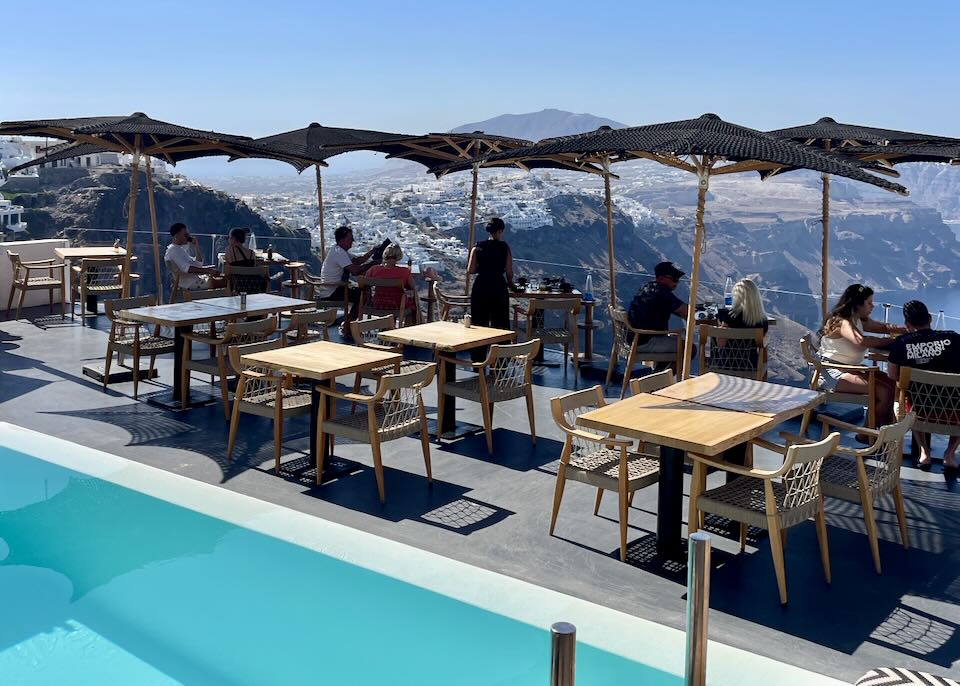
Santorini in July has reliable sunshine, warm evenings, and spectacular caldera views, but it is also hot, crowded, and expensive.
Is July a Good Time to Visit Greece?
July is an excellent month for Greek island hopping, swimming, beaches, boat tours, and nightlife. Almost every seasonal hotel, restaurant, and tour is operating, ferry schedules are extensive, and evenings stay warm well after sunset.
The downsides are serious heat, high prices, crowded ports, and busy destinations, especially Athens, Santorini, Mykonos, and Paros. July is not the best month for budget travel, long hikes, or sightseeing at archaeological sites. Book hotels, rental cars, and popular ferry routes well in advance.
Early July is my preference. The sea is warm, nightlife is fully active, and crowds are generally a little lighter than later in the month. Late July brings warmer water and heavier demand as more European families begin their summer holidays. Both halves of July are busy, and heatwaves can occur at any time.
For easier sightseeing and lower prices, choose June. For warm seas, fewer crowds, and a better balance of beach weather and sightseeing, September is my favorite month to visit Greece.
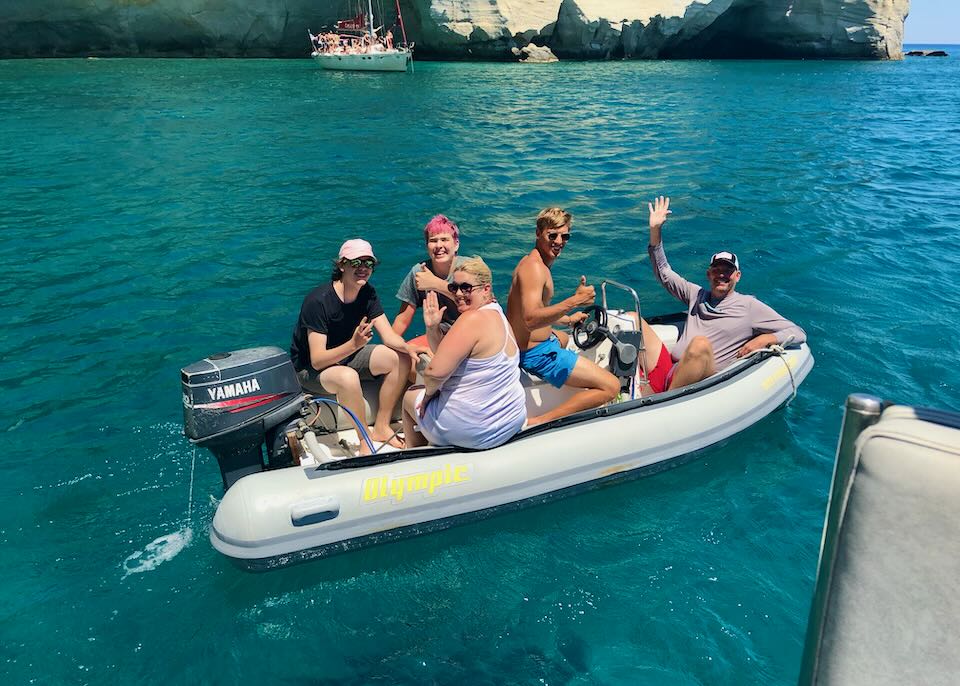
With my family on a July boat tour in Milos.
Greece in July at a Glance
- Best for: Beaches, swimming, boat trips, nightlife, and families traveling during school holidays.
- Less ideal for: Budget trips, spontaneous island hopping, long hikes, and travelers who struggle with heat.
- Best islands for families: Naxos and Crete.
- Best for nightlife: Mykonos, Paros, and Ios.
- Best for beaches: Naxos, Crete, Milos, Rhodes, and Corfu.
- Best for quieter holidays: Sifnos, Serifos, Amorgos, and less-developed parts of larger islands.
- Main complications: Heatwaves, Meltemi winds, wildfire risk, crowded ferries, and limited rental-car availability.
Best Places in Greece in July
Athens
Athens is worth visiting in July, but plan around the heat. Book the earliest Acropolis entry, carry water, wear a hat, and save museums, long lunches, and hotel breaks for the afternoon. Archaeological sites can close temporarily during extreme heat, so check official notices before visiting. Stay in Plaka, Syntagma, or Monastiraki to minimize walking and make afternoon hotel breaks easy. Koukaki is also excellent, especially near the Acropolis Museum. Two or three nights is enough for most July visits. See my guide to where to stay in Athens.

The streets of Plaka in Athens on a July evening. Start outdoor sightseeing early and save neighborhood walks for after sunset.
Santorini
Santorini is beautiful in July but crowded from morning through sunset. Stay in Imerovigli or Firostefani for caldera views and calmer evenings, Fira for restaurants and buses, or Oia if being in the village matters more than avoiding crowds. Start the Fira to Oia hike shortly after sunrise, carry plenty of water, and avoid hiking during midday heat. A caldera cruise is one of the best things to do in July, especially for swimming and time on the water. Santorini’s beaches are secondary to its views, so choose Naxos or Paros if sand and swimming are the priority. See my guide to where to stay in Santorini.
Crete
Crete handles July crowds better than smaller islands because it has multiple towns, beach regions, and inland villages. Chania is the best first-time base, Rethymno combines an attractive old town with a central north-coast location, Heraklion works best for Knossos and museums, and Agios Nikolaos or Elounda suits resort stays. Southern Crete has quieter villages and less-developed beaches, but distances are long and a rental car is usually essential. Allow at least five nights and focus on one region rather than trying to cover the whole island. Samaria Gorge is a demanding full-day hike, especially in July. Start early, carry plenty of water, and check that the trail is open before setting out. See my guide to where to stay in Crete.
Naxos
Naxos is one of the best July islands for families, long sandy beaches, local food, and better value than Mykonos or Santorini. Agios Georgios is the easiest family base because it has shallow water and is within walking distance of Chora. Agios Prokopios and Agia Anna have excellent beaches, restaurants, and regular buses to Naxos Town. Plaka is quieter and more spread out, with long stretches of sand and beachfront restaurants. Naxos gets busy in July, but its long beaches offer more space than those on Mykonos or Paros. See my guide to where to stay in Naxos.
Paros
July is one of the busiest and most expensive months on Paros. Naoussa has the island’s best restaurants, boutiques, and evening atmosphere, while Parikia offers easier ferry access, better bus connections, and more practical prices. Stay near a beach if swimming matters more than nightlife because July traffic and taxi shortages make repeated cross-island trips frustrating. Choose Paros over Naxos for polished restaurants and compact village atmosphere. Choose Naxos for longer beaches, family travel, and more space. See my guide to where to stay in Paros.
Mykonos
July is one of the best months for Mykonos nightlife, with beach clubs, restaurants, and bars operating at full speed. Stay in Mykonos Town for bars and restaurants, Ornos for a sheltered family beach and regular buses, or Platis Gialos for beach access and water taxis. Traffic is heavy, parking is difficult, and taxis are scarce, so staying near your main priority matters. Prices are among the highest in Greece, and popular hotels, beach clubs, and dinner reservations should be secured early. Paros offers a lively but less intense alternative. See my guide to where to stay in Mykonos.
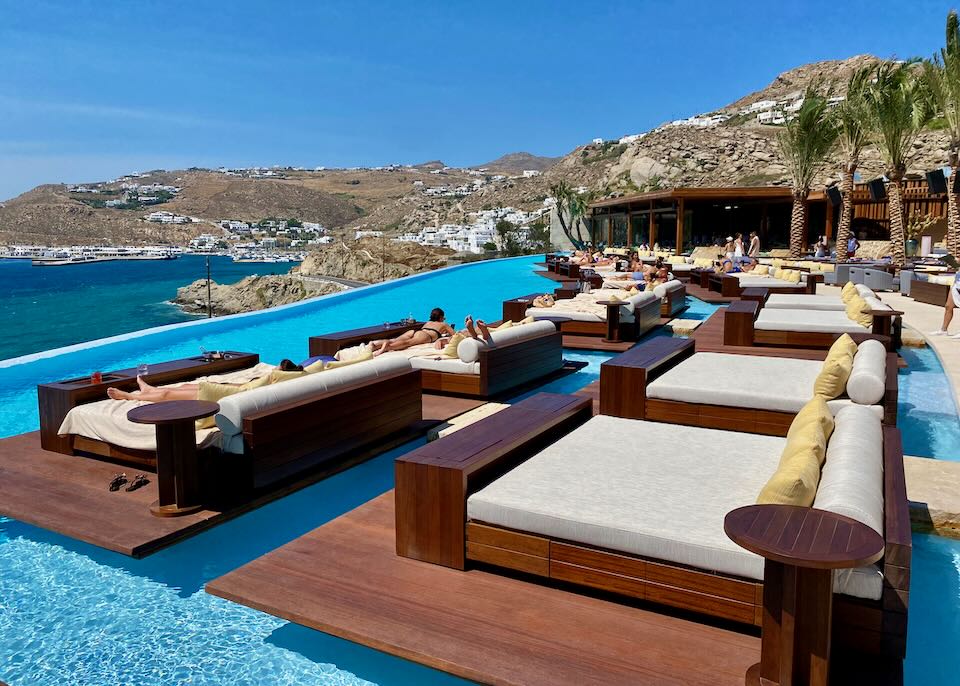
Zuma restaurant in Mykonos on a July afternoon. Reserve popular restaurants and beach clubs before arriving.
Rhodes
Rhodes is a strong July choice for warm sea, large beaches, and historic sightseeing. Rhodes Old Town is best explored early or after sunset, while Lindos becomes intensely hot by midday. Stay in Rhodes Town for history and restaurants, Lindos for a smaller village setting, or along the east coast for beach resorts and generally calmer water. The island is large enough for a full week and works better as a primary destination than as an addition to a short Cyclades itinerary. See my guide to where to stay in Rhodes.
Corfu
Corfu is greener and more humid than the Cyclades, with excellent beaches, sheltered coves, and boating along the northeast coast. Corfu Town is the best base for history, restaurants, and short stays, while the northeast coast suits villas, coves, and boat rentals. July is busy, and narrow roads can make driving slow, so choose a base close to the beaches and restaurants you expect to use most. Corfu is best treated as its own trip rather than combined with Santorini or Mykonos. See my guide to where to stay in Corfu.
Milos and Smaller Islands
Milos is excellent in July for beaches, boat trips, and its spectacular volcanic coastline, but rental cars and the best hotels book up early. Sifnos has excellent restaurants, beautiful villages, and good beaches without Santorini’s cruise crowds. Serifos and Amorgos are good choices for quieter evenings, hiking, and fewer large resorts, though July heat makes long hikes difficult. Folegandros is beautiful but small, so July crowds are noticeable in Chora. Koufonisia has superb swimming, but its small size and limited accommodation mean it gets crowded in July.
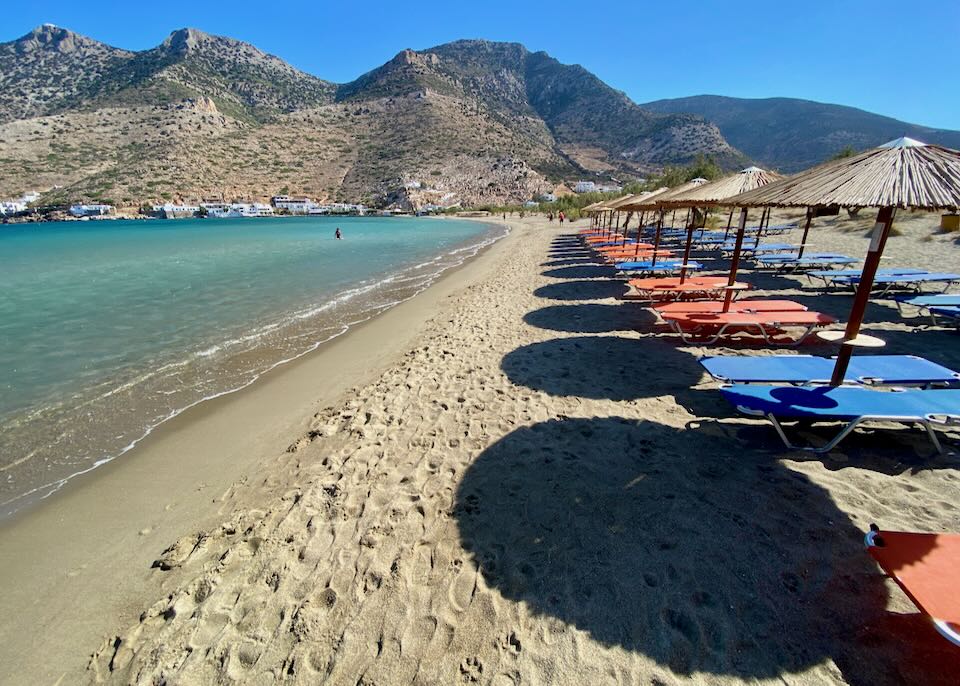
Kamares Beach in Sifnos in July. Smaller Cyclades islands are busy too, but they avoid the cruise-ship crowds of Santorini.
Mainland and Mountain Destinations
Mainland archaeological sites can be punishing in July, but mountain regions offer cooler evenings and fewer international visitors. Consider Zagori, Metsovo, Pelion, or the mountain villages of the Peloponnese for hiking, scenery, and cooler temperatures. Delphi, Olympia, Mycenae, and Meteora are best visited early in the morning. A mainland road trip works well for travelers who want Greek history and scenery without relying on ferries.
July Weather, Swimming, and Meltemi Winds
July is hot, dry, and sunny across most of Greece. Athens and inland mainland Greece face the greatest risk of extreme heat. Crete and Rhodes are hot and dry, the Cyclades are often cooled by wind, and Corfu and the Ionian islands are more humid.
The sea is warm enough for swimming almost everywhere, though the Cyclades can feel cooler than Crete, Rhodes, or the Ionian islands. Water temperatures continue to rise into August and early September. Sun protection matters even on windy islands because the breeze can hide how quickly skin is burning.
The Meltemi is a strong northerly summer wind that affects the Cyclades and other Aegean islands. It cools the air but can create rough seas, blowing sand, and uncomfortable conditions on north-facing beaches. A beach exposed to the wind can be unpleasant while a sheltered beach on the same island remains calm. On windy days, choose south-facing or sheltered beaches and keep boat plans flexible.
July is also wildfire season. Heatwaves can temporarily close archaeological sites, while high wildfire risk can restrict access to forests, gorges, and hiking trails. Follow Greece’s 112 emergency alerts and check local restrictions before hiking or driving into remote areas. During extreme heat, avoid strenuous outdoor activities in the afternoon.
Ferries, Hotels, and Rental Cars
July ferry schedules are extensive, but popular high-speed sailings and convenient departure times can sell out. Book preferred ferries once your itinerary is set, especially on weekends and routes with limited service. Arrive at busy ports early and allow extra time for traffic and boarding.
Do not schedule a tight same-day connection between an island ferry and an international flight. Spend the final night in Athens before an important flight whenever possible. Large conventional ferries are slower but steadier in wind, while high-speed ferries save time but offer rougher rides and are more vulnerable to weather-related cancellations.
Book early if you want a particular Santorini caldera suite, Mykonos luxury hotel, family room, or villa. Athens, Crete, Rhodes, and Corfu have more hotels and are generally easier to book at shorter notice. Automatic rental cars are limited on smaller islands, so reserve early if you need one.
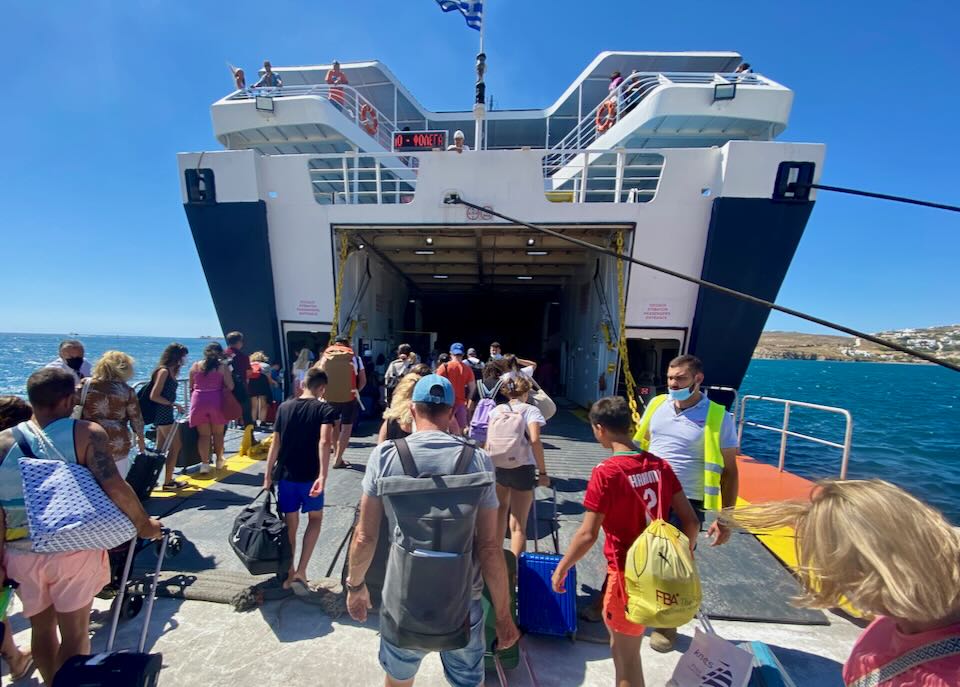
Boarding a Greek ferry during July high season. Arrive early because ports and boarding areas can be crowded.
July Compared with June and August
- June: Cooler, less crowded, and better for sightseeing. The sea is slightly cooler, especially early in the month, but hotels are generally cheaper and easier to book.
- July: Hotter weather, warmer swimming, and very busy islands. Early July is generally less crowded than late July.
- August: Similar heat and crowds, with warmer seas and especially heavy domestic travel around August 15. Strong Meltemi winds are common in both July and August.
What to Pack for Greece in July
Bring lightweight clothing, swimwear, sunscreen, a sun hat, sunglasses, comfortable shoes with good grip, and a refillable water bottle. A light layer is useful on windy ferry decks and in air-conditioned restaurants. Confirm your hotel has air conditioning, especially in Athens and older island properties.
Greece in July Frequently Asked Questions
Which Greek islands are best for families in July?
Naxos and Crete are my top choices. Naxos has long sandy beaches, shallow swimming areas, and a compact main town. Crete offers more resorts, activities, and room to spread out.
Which Greek islands are quieter in July?
Serifos, Amorgos, Sifnos, and less-developed parts of larger islands are generally calmer than Santorini, Mykonos, or Paros. Less-visited islands outside the main Cyclades routes can be quieter still. Even on smaller islands, book hotels and ferries ahead.
Is July a good month for island hopping?
Yes. Ferry schedules are extensive, making July one of the easiest months for combining several islands. The downside is that hotels and popular departures need advance booking. Stick to islands with convenient connections rather than building an itinerary around multiple long ferry journeys.

About Santorini Dave