Greece › Athens › Is Athens Safe?
Updated: August 30, 2026 • By Santorini Dave
Questions? dave@santorinidave.com
See Also
- Where to Stay in Athens
- Best Hotels in Athens
- Best Athens Airport Hotels
- Getting Around Athens
- Best Acropolis Tours
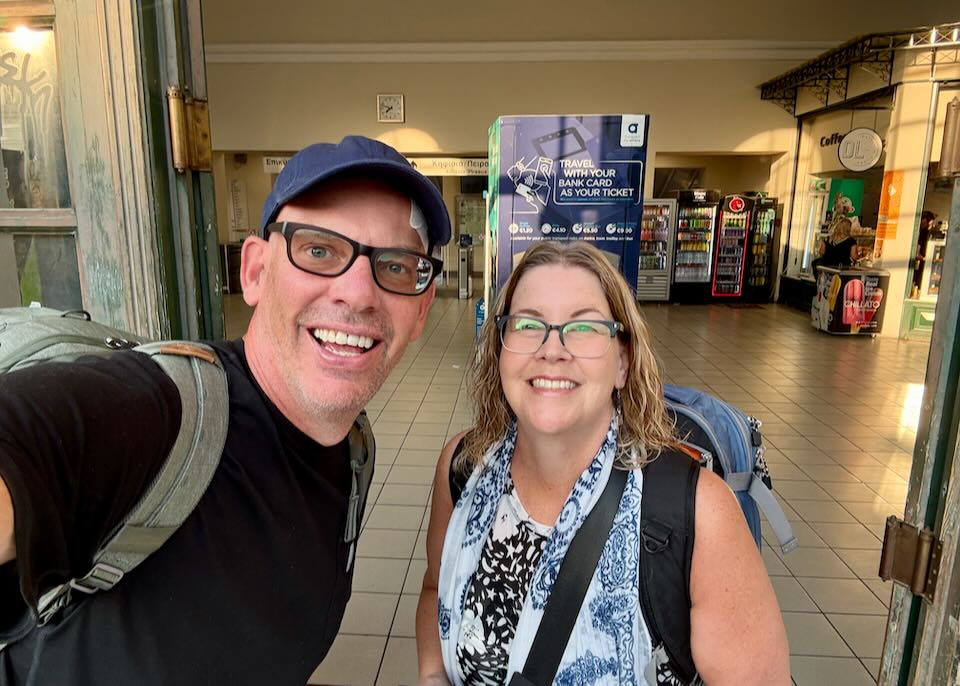
My wife and I entering a metro station in Athens. The Metro is safe, fast, and the easiest way to get around the city. (The bandage on my head? That’s from a tumble the night before.)
Yes, Athens is safe to visit. Violent crime involving tourists is rare, and the central neighborhoods of Plaka, Syntagma, Monastiraki, Psiri, Koukaki, and Kolonaki stay busy well into the evening.
The risks I take seriously are pickpocketing on the Metro, Athens traffic, and extreme summer heat. I worry far more about a phone disappearing from an open pocket than I do about violent crime.
Athens Safety Update: August 2026
- Athens is operating normally. The Acropolis, museums, hotels, restaurants, Metro, airport, and Piraeus ferry port are open.
- Travel advisory: The United States rates Greece Level 1: Exercise Normal Precautions.
- Wildfires: Attica is under the highest fire-risk level. Active fires are burning west and northwest of Athens, with evacuations in some communities and smoke reaching parts of the city. Lycabettus and Filopappou hills are temporarily closed as of this update. Central Athens itself is not directly threatened, but check local alerts if you are taking day trips outside the center.
- Main tourist risk: Pickpocketing on public transportation and in crowded central areas.
- Demonstrations and strikes: These occur periodically and can disrupt roads, Metro service, ferries, and flights.
- Summer heat: Extreme temperatures can close the Acropolis and other outdoor archaeological sites during the afternoon.
- Emergency number: 112.
- Bottom line: Athens remains safe to visit. Protect your valuables, avoid demonstrations, take traffic seriously, visit outdoor sights early in summer, and check wildfire alerts before day trips outside the city.
The Main Safety Risks in Athens
Pickpocketing on the Metro and in Tourist Areas
Pickpocketing is the Athens safety issue visitors are most likely to encounter. The only place where I consistently warn friends and family to watch every zipper is the Metro, especially when carrying luggage from the airport.
Thieves sometimes work in groups, targeting distracted travelers while they board trains or stand near the doors. One person creates the distraction while another goes for a phone, wallet, or bag.
Take extra care:
- On the Metro between Athens Airport and the city center
- At Syntagma, Monastiraki, and Omonia stations
- On crowded escalators, platforms, buses, and airport buses
- Around the Acropolis entrance, Ermou Street, and Monastiraki Flea Market
- At busy café terraces and Athens Central Market
Keep your phone and wallet in a zipped front pocket or crossbody bag. Keep backpacks in front of you on crowded trains. Leave passports, extra cards, and most of your cash in the hotel safe. I use the Athens Metro constantly and consider it safe, clean, and convenient. I’m just mindful about where I carry my phone and valuables.
Traffic and Crossing the Street
Athens traffic worries me more than Athens crime. Vehicles rarely yield for pedestrians the same way they do in the US, Canada, or Australia. Look both ways even on a one-way street and watch for turning cars even when the pedestrian signal is in your favor. Take extra care around Syntagma, Omonia, Syngrou Avenue, Vasilissis Sofias Avenue, and the large roads surrounding the historic center.
I do not recommend renting a car for sightseeing in central Athens. Traffic, confusing lanes, limited parking, and one-way streets make walking, the Metro, and taxis far easier. Rent a car when leaving Athens for the mainland, not when arriving at a central hotel.
Summer Heat and the Acropolis
Athens is intensely hot in July and August. Temperatures above 40°C (104°F) are possible, and the stone, concrete, crowds, hills, and lack of shade make it feel even hotter.
The Acropolis requires an uphill walk over uneven and sometimes slippery marble. During severe heat, authorities can close the site for part of the afternoon. Book the earliest entry you can. Bring water, a hat, sunscreen, and shoes with good grip. Do the Acropolis and other outdoor sights in the morning and save museums for the hottest part of the day.
Demonstrations and Strikes
Demonstrations are part of life in Athens. Most are peaceful, but they can lead to road closures, closed Metro stations, tear gas, and clashes with police. Syntagma Square, Parliament, Omonia, Panepistimiou, Stadiou Street, and Exarchia are common gathering areas. Do not stop to watch a protest. Walk in the opposite direction, even when it appears calm.
A strike is more likely to disrupt your trip than endanger you. Metro, bus, taxi, ferry, and air-traffic strikes can affect transportation for several hours or an entire day. Ask your hotel about planned disruptions before going to the airport or Piraeus and arrange a transfer early when needed.
Crime, Bars, and Nightlife
Violent crime involving tourists is uncommon. You’re much more likely to deal with a stolen phone, lost wallet, inflated bar bill, or a long trip back to your hotel after the Metro has stopped running. Psiri, Monastiraki, Gazi, and Kolonaki have busy nightlife and remain active late. Check prices before ordering in clubs or bars where staff aggressively invite customers inside, watch your drink, and plan how you are getting home. Use an official taxi or taxi app rather than making a long walk through unfamiliar streets.
Is Athens Safe at Night, and Which Areas Should You Avoid?
I have never felt unsafe walking through Plaka, Syntagma, or Monastiraki at night. I would not, however, book a first-time visitor on a quiet backstreet west or north of Omonia simply to save a little money. Omonia Square and its main roads are busy and have improved, but conditions change quickly from one block to the next. Some surrounding streets have visible drug use, little tourist activity, and a rougher atmosphere after dark. They are not forbidden zones, but most visitors will be happier elsewhere.
Parts of Metaxourgeio, Victoria, Vathis Square, and the streets near Larissa Station can also feel less comfortable late at night. These areas do offer low hotel rates, but the savings rarely outweigh the less convenient location for a first Athens trip. Exarchia has excellent restaurants and bars but also more demonstrations, police activity, graffiti, and late-night noise than the central tourist districts. I’ve stayed in the area often, but I would not choose it for families, cautious first-time visitors, or anyone wanting a quiet stay. For most travelers, Plaka, Syntagma, Monastiraki, Psiri, Koukaki, or Kolonaki are much easier bases.
Is Athens Safe for Solo Female Travelers?
Yes. Athens is a good city for women traveling alone. Dining alone is normal, the central neighborhoods stay busy late, and the Metro and taxis make it easy to avoid long walks after dark. Stay in Plaka, Syntagma, Monastiraki, Koukaki, Kolonaki, or central Psiri for the simplest experience. Protect your valuables on public transportation, watch your drink, and take a taxi when the route back feels dark or unfamiliar. I would pay more attention to the exact location of your hotel than worry about Athens as a city. A lively central street is a much better choice than saving money several blocks into an unfamiliar neighborhood.
Is Athens Safe for Families?
Yes. Athens is safe with children, but traffic, heat, crowded transportation, and uneven sidewalks are the things to watch. Plaka, Syntagma, and Koukaki are the easiest family bases because they reduce the need to repeatedly board crowded trains with a stroller. The Acropolis is not stroller-friendly. The approach is steep, surfaces are uneven, and the summit has slippery marble and exposed areas. Use a baby carrier for infants and toddlers. Athens sidewalks are narrow, broken, or blocked by parked motorcycles. A compact stroller works better than a large one, and in summer get outdoor sightseeing done early.
Is Athens Safe for LGBTQ+ Travelers?
Yes. Athens is welcoming to LGBTQ+ travelers. Same-sex couples are not unusual in central hotels, restaurants, bars, and tourist areas. Gazi has the city’s largest concentration of LGBTQ+ nightlife.
Are Athens Taxis Safe?
Yes. Athens taxis are safe. Use an official yellow taxi, Uber, or a hotel-arranged transfer. Confirm that the meter is running or that you have agreed to a fixed fare before leaving. Never accept an unsolicited ride from someone approaching you inside the airport, port, or train station. Uber is useful because you have a record of the driver and trip.
Is Piraeus Safe?
Yes. Piraeus is a busy working port and ferry passengers use it every day without problems. Watch your luggage, confirm the correct ferry gate, and allow more time than expected. The port is enormous, and your gate might be much farther from the Metro station than it looks on a map. For an early ferry, staying in Piraeus the night before is sensible but not mandatory.
Earthquakes and Wildfires
Greece is earthquake-prone, but earthquakes are not a reason to avoid Athens. If there is significant shaking, follow hotel staff and official instructions.
Wildfires are a more practical summer concern. They are rarely a direct threat to central Athens but can bring smoke, road closures, and disruptions to airport trips and day trips outside the city.
Medical Care and Travel Insurance
Athens has excellent hospitals, clinics, and pharmacies. Call 112 for a serious emergency. Travel medical insurance is worthwhile, especially if Athens is part of a longer Greece trip involving islands, driving, hiking, sailing, or scooters.
Athens Emergency Numbers
- European emergency number: 112 for police, ambulance, fire, and urgent emergencies
- Police: 100
- Ambulance: 166
- Fire service: 199
- Tourist Police assistance: 1571
My Athens Safety Checklist
- Keep your phone and wallet zipped away. Be especially careful on the airport Metro and at Syntagma, Monastiraki, and Omonia stations.
- Stay central. Plaka, Syntagma, Monastiraki, Psiri, Koukaki, and Kolonaki are the easiest bases.
- Walk away from demonstrations. Do not stop to watch.
- Look both ways. Athens traffic and scooters deserve constant attention.
- Visit the Acropolis early. Summer heat and crowds become far worse by late morning.
- Use official taxis. Choose a yellow taxi, Uber, or hotel-arranged transfer.
- Check for strikes. Confirm transportation before airport and ferry journeys.
- Know how you’re getting home. The Metro does not run all night.
Frequently Asked Questions
Is Athens safe right now?
Yes. Athens is operating normally and remains safe for tourism. Pickpocketing, traffic, summer heat, and occasional demonstrations are the main concerns.
Is Athens safe at night?
Yes. Plaka, Syntagma, Monastiraki, Psiri, Koukaki, and Kolonaki remain busy after dark. Take a taxi rather than walking through quiet or unfamiliar streets late at night.
Is downtown Athens safe?
Yes. The historic center around the Acropolis, Plaka, Syntagma, Monastiraki, and Koukaki is safe and heavily visited. Some streets north and west of Omonia feel rougher after dark.
Is the Athens Metro safe?
Yes, but pickpocketing is common enough to take seriously. Keep bags closed and in front of you, especially on the airport line and at Syntagma, Monastiraki, and Omonia stations.
Are Plaka and Monastiraki safe?
Yes. Both are excellent sightseeing bases and remain busy into the evening. Monastiraki is more crowded, so pay closer attention to phones and wallets.
Is Omonia safe?
Omonia Square and its main roads are busy and have improved, but some nearby streets feel rough after dark. First-time visitors will have a more comfortable stay closer to Syntagma, Plaka, Monastiraki, or Koukaki.
Do demonstrations make Athens unsafe?
No, but they can disrupt transportation and occasionally lead to clashes. Walk away from demonstrations rather than stopping to watch.
Bottom Line
Athens is very safe to visit. Keep your phone zipped away on the Metro, avoid demonstrations, look both ways before crossing any street, and do not climb the Acropolis at two in the afternoon in August. Your greatest risks are losing your wallet, underestimating the heat, and ordering too much food at dinner.

About Santorini Dave