Greece › Crete › August Weather
Updated: October 15, 2026 • By Santorini Dave
Questions? dave@santorinidave.com
See Also
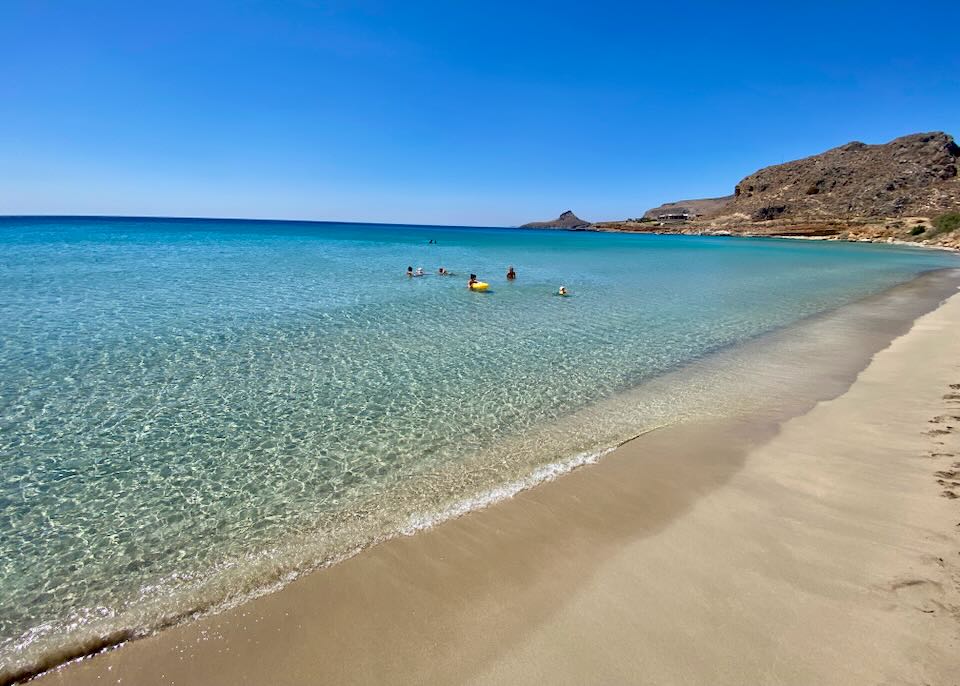
A beach in Crete during one of our August visits.
Crete in August: Hot, Busy, and Excellent for Beaches
August is Crete’s busiest month. Expect hot, sunny weather, warm seas, crowded beaches, busy roads, and the year’s highest demand for hotels and rental cars.
It’s an excellent month for swimming, beaches, nightlife, and family holidays. It’s a poor choice for anyone who dislikes heat, crowds, or high prices. I prefer June or September, but August is a good choice if beaches and swimming matter more than quiet sightseeing.
August at a Glance
- Weather: Hot, sunny, and very dry, with coastal highs around 29°C to 32°C (84°F to 90°F). Heatwaves can push temperatures above 35°C (95°F).
- Sea Temperature: About 25°C to 27°C (77°F to 81°F), among the warmest of the year. Excellent for swimming.
- Rain: Very unlikely. Heat, strong sun, and wind are the main weather concerns.
- Crowds: Peak season, especially around the August 15 holiday. The final week is generally a little quieter.
- Prices: Among the highest of the year for hotels, flights, and rental cars.
- Best For: Beaches, swimming, nightlife, families, and resorts.
- Not Ideal For: Quiet trips, budget travel, long hikes, or sightseeing-heavy itineraries.
- Book Ahead: Essential for hotels, automatic rental cars, popular boat trips, and standout restaurants.
What to Book in Advance
- Hotels: Several months ahead for Chania Old Town, Elounda resorts, family hotels, and stays around August 15.
- Rental Cars: As soon as travel dates are fixed, particularly for automatic transmission and larger family cars.
- Ferries: Book early for overnight cabins, vehicle spaces, and popular Santorini connections.
- Restaurants: Reserve standout restaurants in Chania, Rethymno, and Elounda a few days ahead.
- Tours: Book popular boat trips and small-group excursions before arriving.
Best Places to Stay in Crete in August
- Chania: Best for first-time visitors, restaurants, historic atmosphere, and access to western Crete. The Old Town is crowded and parking is difficult, so choose accommodation carefully if renting a car.
- Agia Marina and Platanias: Best for lively beach resorts, nightlife, families, and travelers who want restaurants and beach facilities within walking distance. Expect crowded beaches, traffic, and busy evenings.
- Rethymno: A good balance of old-town atmosphere and sandy beach access. Its central location makes day trips to both western and central Crete easier.
- Elounda: Best for luxury resorts, sheltered swimming, and travelers who prefer spending most of their time at the hotel. It is poorly placed for day trips to western Crete.
- Plakias or Paleochora: Good for a slower south-coast holiday with beaches and tavernas. Both involve winding mountain roads and are still busy in August.
- Hersonissos or Malia: Best for nightlife, large resorts, and a busy package-holiday atmosphere. Avoid them if you want traditional village character or quiet evenings.
- Heraklion: Useful for Knossos, the Archaeological Museum, wineries, and ferry or airport logistics, but not my first choice for a beach-centered stay.
See my full guide to where to stay in Crete for a detailed comparison of towns, beach resorts, and practical tradeoffs.
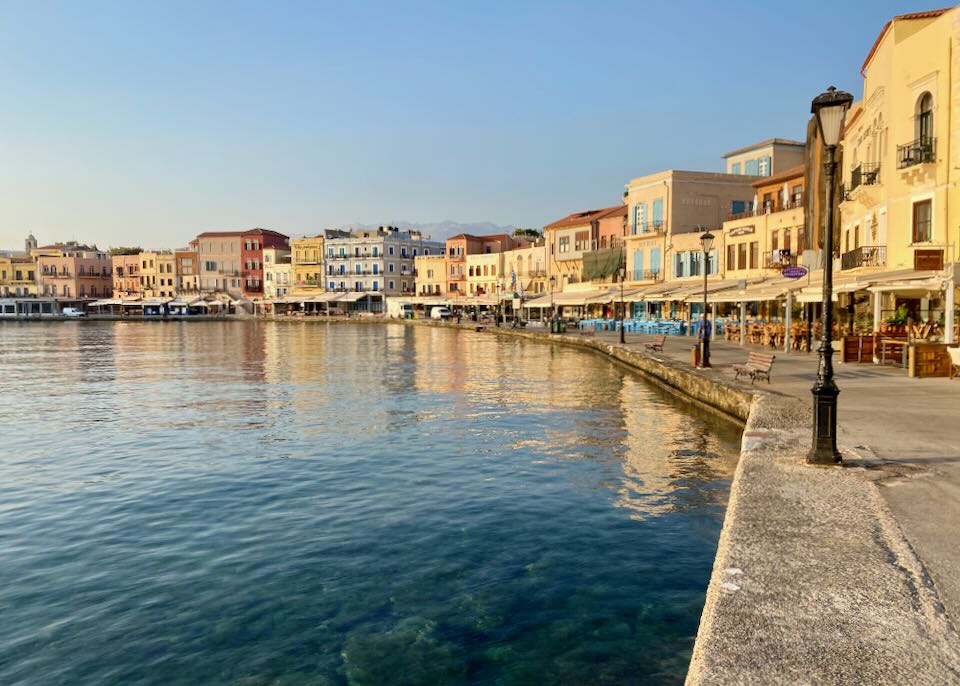
Chania on an August morning.
Crete Weather in August
August is hot, sunny, and dry across Crete. Coastal daytime temperatures are typically around 29°C to 32°C (84°F to 90°F), with hotter conditions inland and during heatwaves. Evenings remain warm along the coast, so air conditioning is important. Rain is rare.
Plan outdoor sightseeing for early morning or late afternoon. Beaches, shaded lunches, museums, and hotel pools make more sense between noon and 4:00 PM than Knossos, old-town walks, or exposed hikes.
Wind and Beach Conditions
Northerly summer winds can create rough water along exposed north- and west-coast beaches. Platanias, Agia Marina, Falasarna, and other open stretches may have large waves even when the weather is clear and sunny. Sheltered beaches such as Agioi Apostoloi, Marathi, Loutraki, and parts of Mirabello Bay are often better for swimming on windy days. South-coast beaches are not automatically calm, so check the local forecast before driving across the island.
Best Beaches in Crete in August
Elafonisi
Elafonisi is beautiful but exceptionally crowded in August. Leave Chania around 7:00 AM if you want to arrive before the tour buses and parking congestion. Stay on marked paths and never remove sand, shells, or plants from the protected area.
Balos Lagoon
The boat from Kissamos is the easiest option for most visitors. Driving lets you visit the viewpoint above the lagoon and choose your own arrival time, but the final road is rough and followed by a steep, exposed walk. Many rental agreements exclude damage caused on unpaved roads, so read the contract before driving.
Falasarna
Falasarna’s size makes it feel less cramped than smaller beaches, even in August. It is excellent for a late-afternoon swim and sunset, but exposed conditions can produce strong waves.
Agioi Apostoloi and Iguana Beach
These sheltered coves near Chania are excellent for families on windy days, with shallow swimming areas, organized facilities, and easy access.
Marathi and Loutraki
These sheltered beaches east of Chania usually have calm water, tavernas, and good facilities. They become busy with local families in August, so arrive early.
Agia Marina and Platanias
Choose these beaches for sunbeds, water sports, beach bars, restaurants, and nightlife. They are convenient rather than peaceful, and the sea can become rough when northerly winds strengthen.
Plakias and Damnoni
These south-coast beaches are good alternatives to the crowded beaches around Chania. Plakias can be very windy, so check conditions before making the drive.
Is Crete Crowded in August?
Yes. August is Crete’s busiest month, especially around the August 15 holiday. Chania Old Town, Rethymno, Knossos, Elafonisi, Balos, Falasarna, Malia, Hersonissos, and the major beach resorts attract large crowds. Roads into popular beaches can back up, parking fills early, and dinner tables in the old towns become harder to secure.
For fewer crowds, consider eastern Crete, smaller mountain villages, or beaches away from the major resorts. Paleochora and Plakias are also good alternatives, though both are busy in August.
Arrive early at major sights and beaches. For Elafonisi, Knossos, and Samaria Gorge, early means close to opening time, not 10:30 AM.
Best Things to Do in Crete in August
Visit Knossos Early
Knossos normally opens at 8:00 AM in August. Arrive at opening to explore before the tour groups and strongest heat, then visit the air-conditioned Heraklion Archaeological Museum later in the day.
Explore Chania and Rethymno After Sunset
Both old towns are packed during August evenings, but they are also at their liveliest. Walk around the harbors after sunset and book dinner away from the busiest waterfront restaurants.
Take a Boat Trip
August has an excellent selection of boat trips, including excursions to Balos, Gramvousa, Spinalonga, Dia, and south-coast beaches. Book popular trips ahead, as strong winds can affect schedules.
Samaria Gorge and Hiking in August
Samaria Gorge is normally open in August, but extreme heat, strong winds, fire risk, or other unsafe conditions can force temporary closures. Start as early as permitted and check the official opening hours and gorge status before leaving.
The full walk to Agia Roumeli is about 16 km and typically takes five to eight hours, followed by a ferry from the village. Ferry departure times are important when planning the day. It is a demanding hike, not a casual scenic walk. Wear proper footwear and bring plenty of water and sun protection.
I wouldn’t choose August for a hiking-focused trip. September, May, and early June are more comfortable. Imbros Gorge is shorter than Samaria, but still requires an early start in August.
August 15 in Crete
August 15, the Feast of the Dormition of the Virgin Mary, is one of Greece’s most important holidays. The surrounding week is particularly busy as Greek travelers join international visitors on the island.
Many villages hold panigiria with live music, traditional dancing, food, and wine. If you’re visiting around August 15, ask locally which villages are holding festivals. Some are excellent, but parking and road access can be difficult in smaller villages.
August 15 is a national holiday. Banks, government offices, and many non-tourist shops close, but restaurants, beach clubs, and most businesses serving visitors remain open. Allow extra time for driving and parking.
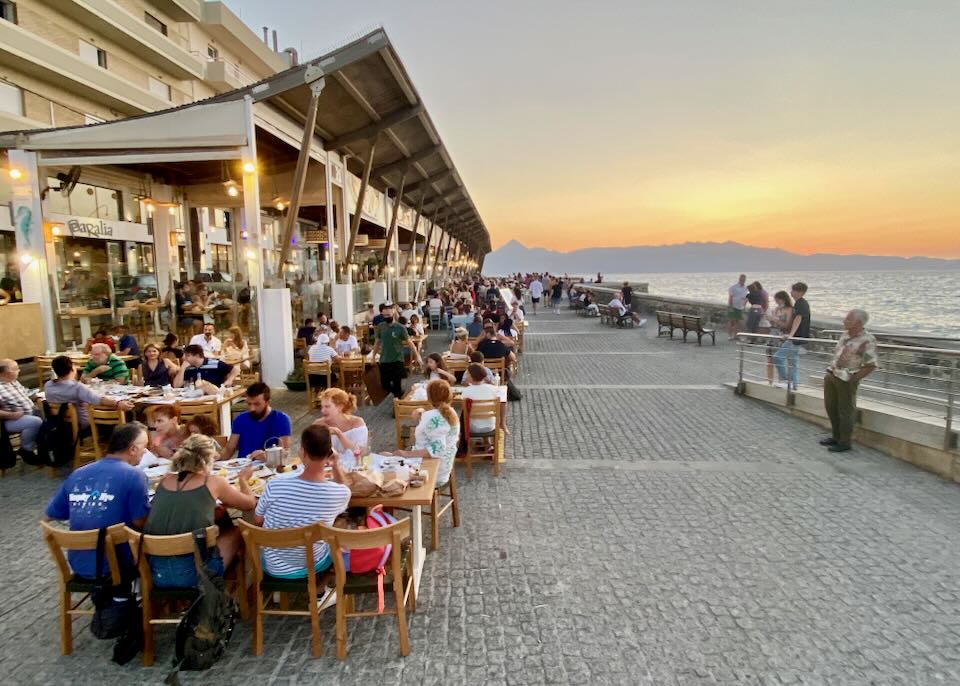
The Heraklion waterfront in August.
Getting Around Crete in August
A rental car is the best way to reach remote beaches, villages, wineries, and the south coast, but August traffic and parking make driving less relaxing than it looks on a map. Before accepting the car, photograph existing damage and confirm whether the contract restricts driving on unpaved roads.
Parking is hardest around Chania Old Town, Rethymno Old Town, Elafonisi, Balos, and the busiest beach resorts. Choose a hotel with a realistic parking plan rather than relying on vague claims that parking is available nearby.
You don’t necessarily need a car for your entire stay. If you’re staying in Chania, Rethymno, Agia Marina, Platanias, or Hersonissos and mainly want beaches, restaurants, and organized excursions, you can manage without one.
Buses work well between the main cities and established north-coast resorts. They are less useful for exploring remote beaches or combining several stops in one day.
Ferries and Flights in August
August has an excellent selection of flights and ferries, but also very high demand. Direct international flights serve both Chania and Heraklion, while domestic flights connect Crete with Athens and Thessaloniki.
Overnight ferries connect Crete with Piraeus. Seasonal high-speed ferries run from Heraklion to Santorini, with some services continuing to other Cycladic islands. Check schedules before booking hotels on multiple islands.
Strong winds can delay or cancel ferries, especially high-speed vessels. Do not schedule a ferry arrival shortly before an international flight or another expensive connection. If flying home from Athens, I recommend arriving in Athens the previous day rather than relying on a same-day ferry.
Heat and Wildfire Safety
August heat, dry vegetation, and strong winds create a serious wildfire risk. Follow local warnings and avoid hiking during extreme heat or high fire danger. Air conditioning is important, especially for families with young children and older travelers. Carry water, use sunscreen, and plan a midday break on very hot days.
August Compared with July and September
- July: Similar heat, slightly cooler sea temperatures, and generally fewer domestic holiday crowds than mid-August.
- August: Warmer seas, peak-season crowds, and some of the year’s highest hotel prices. Late August is generally preferable to the middle of the month.
- September: My preferred choice. The sea remains warm, but temperatures, crowds, traffic, and hotel rates ease as the month progresses.

About Santorini Dave