London › July Guide
Updated: October 10, 2026 • By Santorini Dave
See Also
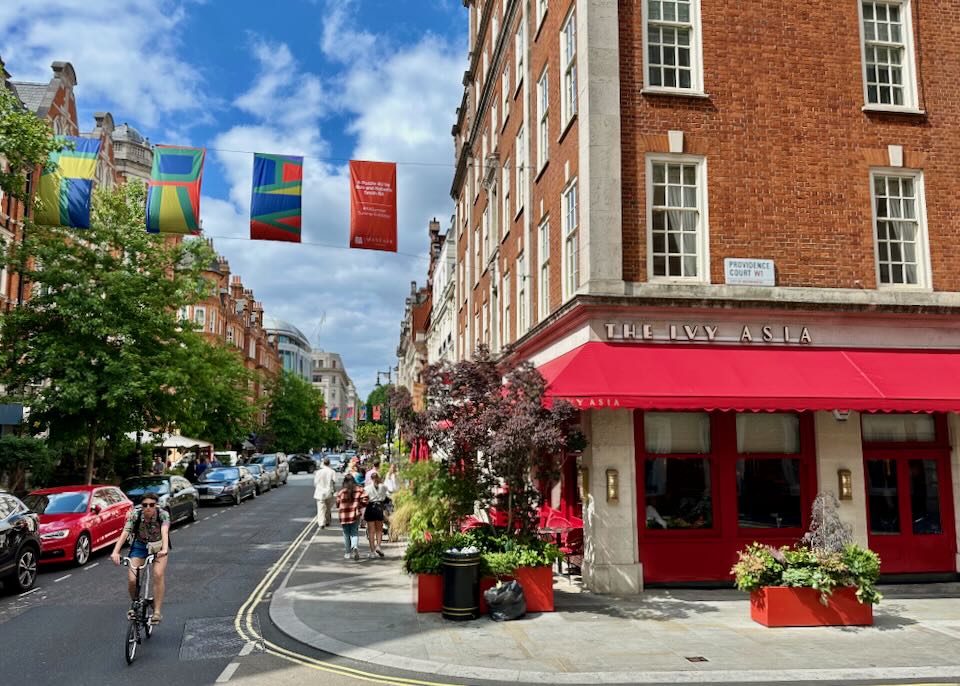
The Mayfair neighborhood of London in July during one of our many visits.
July is one of London’s warmest, busiest, and most expensive months. It’s a great time to visit for Wimbledon, the BBC Proms, outdoor theater, long evenings, and Buckingham Palace’s summer opening. The main drawbacks are expensive hotels, crowded attractions, and potentially uncomfortable heat on public transport.
Wimbledon runs from June 28 to July 11 in 2027. Early July is generally better for adults traveling without children, while late July gets busier when English schools break for summer. If your dates are flexible, I prefer June for slightly cooler weather, longer daylight, and fewer school-holiday crowds. I strongly recommend booking a hotel with air conditioning in July. During a heatwave, an unairconditioned room can be miserable, particularly on an upper floor.
London in July: At a Glance
- Weather: Typical afternoon highs of 22°C to 24°C (72°F to 75°F), with occasional heatwaves above 30°C (86°F).
- Rain: A mix of sunshine, clouds, and occasional showers. Thunderstorms are possible during hot spells.
- Daylight: Sunset is around 9:20 PM in early July and 8:50 PM at the end of the month.
- Crowds: Very busy, especially at major attractions and after English schools break for summer in late July.
- Hotel Prices: Among the highest of the year.
- Best For: Wimbledon, BBC Proms, outdoor theater, parks, river trips, and long evenings.
- Main Drawbacks: High prices, crowds, hot Underground trains, and popular attractions selling out.
- Best Time to Visit: Early July for Wimbledon and fewer school-holiday families.
- Book Ahead: Hotels, Wimbledon tickets, Buckingham Palace, Warner Bros. Studio Tour, major concerts, and popular theater performances.
Quick Hotel Picks for July
- Best for First-Time Visitors: NoMad London in Covent Garden.
- Best Luxury Hotel: The Savoy on the Strand.
- Best for Parks and Luxury: Mandarin Oriental Hyde Park in Knightsbridge.
- Best for Families: Park Plaza Westminster Bridge on the South Bank.
- Best for Eurostar: St. Pancras Renaissance Hotel.
- Best for the River and South Bank: The Hoxton Southwark.
- Best Value: Motel One Tower Hill.
Early, Mid, and Late July
Early July: Best for Wimbledon and Fewer Family Crowds
Wimbledon runs from June 28 to July 11 in 2027, making early July particularly appealing for tennis fans. Most English schools are still in session, so family attractions are generally less crowded on weekdays than later in the month. This is my favorite part of July for adults traveling without school-age children. Major sights are still busy, but you’ll avoid much of the late-July family travel rush. Buckingham Palace’s State Rooms usually open in July, though the exact 2027 opening date has not yet been confirmed.
Mid-July: Best for Summer Events
Wimbledon finishes on July 11 in 2027. The BBC Proms traditionally begin in July, while outdoor concerts, theater, and festivals are underway. Buckingham Palace’s summer opening is also expected during the month, subject to the official schedule.
Late July: Busiest for Family Attractions
Most English schools begin their summer holidays around the third week of July. Expect noticeably more families at the Natural History Museum, Science Museum, Tower of London, London Eye, SEA LIFE London Aquarium, and Warner Bros. Studio Tour. Families should book popular attractions and hotels with family rooms well ahead. Adults who can travel earlier in the month will generally have an easier time.
London Weather and Daylight in July
July is warm by London standards, with typical afternoon temperatures around 22°C to 24°C (72°F to 75°F) and overnight lows near 14°C to 16°C (57°F to 61°F). Heatwaves can push temperatures above 30°C (86°F), while cooler, cloudy days sometimes stay below 20°C (68°F). Rain is possible throughout the month, usually as showers rather than continuous wet weather. Pack light clothing, comfortable walking shoes, sunscreen, and a waterproof jacket. Bring a sweater for cooler evenings.
- Early July: Sunset around 9:20 PM.
- Mid-July: Sunset shortly after 9:10 PM.
- Late July: Sunset around 8:50 PM.
Heat, Air Conditioning, and Staying Comfortable
Many modern hotels have air conditioning, but some older hotels, guesthouses, and converted townhouses rely on fans. Top-floor rooms can become particularly hot during a heatwave. London’s Underground is another problem in hot weather. The Central, Northern, and Bakerloo lines can be particularly uncomfortable, while the Elizabeth line and air-conditioned trains on the Circle, District, Hammersmith & City, and Metropolitan lines are generally cooler. New air-conditioned Piccadilly line trains are scheduled to begin entering service between late 2026 and mid-2027, but older trains will remain in use during the transition. During a heatwave, visit exposed attractions such as the Tower of London early, spend the hottest afternoon hours in museums or other air-conditioned buildings, and avoid the deepest Underground lines during rush hour. Carry water, particularly when queuing outdoors.
Wimbledon 2027
Dates: June 28 to July 11, 2027.
Wimbledon is one of the best reasons to visit London in early July. You don’t need Centre Court tickets to enjoy it. A Grounds Pass provides access to the grounds, the large outdoor screen area, and unreserved seating on outside courts, subject to capacity. The first week is best for a Grounds Pass. There are more singles matches on outside courts, and you can spend the day moving between matches. During the second week, there are fewer matches on the outside courts and more of the remaining singles action takes place on the main show courts.
How to Get Wimbledon Tickets
Advance tickets are available through official ticketing arrangements, including the Wimbledon Public Ballot, hospitality, and other authorized channels. The traditional public Queue also offers same-day Grounds Passes and a limited number of show-court tickets.
- Arrive early: Expect a long wait, especially for show-court tickets. Some visitors queue overnight for the most sought-after tickets. Check the current Queue rules before traveling.
- Come prepared: Bring water, food, sunscreen, rain protection, and a portable charger. You could spend several hours outdoors.
- Allow the entire day: Do not schedule an evening show or dinner you cannot miss.
The Queue is not ideal for families with small children or visitors who cannot comfortably wait outdoors for long periods. A Grounds Pass is excellent during the opening days, but arriving early does not guarantee entry or a particular ticket.
Buckingham Palace Summer Opening
Buckingham Palace’s State Rooms usually open to visitors from July into September. The exact 2027 opening dates have not yet been confirmed. If you’re visiting in early July, check the schedule before making plans. Allow approximately two to three hours for a standard visit. Book timed tickets through the Royal Collection Trust. Special tours, including East Wing experiences when offered, have separate availability and may require additional tickets. The Palace is close to St. James’s Park, Westminster Abbey, and Mayfair, making it easy to combine with other central sights. One useful detail: the standard tour exits through the garden, some distance from the main visitor entrance, so plan your next stop accordingly.
BBC Proms
The BBC Proms traditionally begin in July and continue into September, with most major concerts at the Royal Albert Hall. The 2027 program and dates have not yet been announced. One of the best features is Promming, which offers inexpensive tickets for standing areas at many concerts. Book popular performances ahead, but don’t overlook less famous programs. Formal clothing is not required. South Kensington, the Victoria and Albert Museum, Kensington Gardens, and Hyde Park are all convenient places to visit before an evening concert.
Outdoor Concerts and Festivals
BST Hyde Park is one of London’s biggest summer concert series, usually bringing major international performers to Hyde Park in late June and July. The 2027 lineup and dates should be checked before planning around a particular show. Large concerts can affect transport and accommodation around Hyde Park, particularly near Marble Arch and Hyde Park Corner.
The RHS Hampton Court Palace Garden Festival is another major July event, with show gardens, floral displays, and gardening exhibits in the grounds of Hampton Court Palace. It’s an excellent choice for garden enthusiasts and worth a full day when combined with the palace. Confirm the 2027 dates before booking.
Best Things to Do in London in July
Take a Thames Boat to Greenwich
A boat trip to Greenwich is one of my favorite summer outings in London. The Uber Boat by Thames Clippers service connects central London with Greenwich, with excellent views of the Tower of London, Tower Bridge, Canary Wharf, and the riverfront along the way. Sit outside when the weather is good. In Greenwich, visit the Old Royal Naval College, National Maritime Museum, market, and park. The climb to the viewpoint near the Royal Observatory is steep and exposed, so avoid midday during a heatwave. Allow at least half a day, preferably longer.
Walk the South Bank in the Evening
The walk from Westminster Bridge to Borough Market passes the London Eye, Southbank Centre, National Theatre, Tate Modern, and Shakespeare’s Globe. It’s roughly 2 miles and takes about 45 to 60 minutes without stops. Allow two to four hours if visiting attractions or stopping for food. Late afternoon and evening are particularly good in July, when there’s still plenty of daylight but the strongest heat has passed.
See an Outdoor Performance
Regent’s Park Open Air Theatre stages productions in an outdoor amphitheater surrounded by parkland. Shakespeare’s Globe offers performances in a reconstruction of an Elizabethan theater beside the Thames. The Globe’s standing area is exposed to sun and rain. Bring suitable clothing and wear comfortable shoes. Open-air performances generally continue through light rain but may be delayed or cancelled in severe weather.
Visit a Rooftop or Viewpoint
- Sky Garden: Free indoor garden and viewpoint. Book ahead.
- Horizon 22: Free indoor viewing gallery with excellent views from one of London’s tallest buildings. Advance reservations recommended.
- The Garden at 120: Free outdoor rooftop garden with views of the City.
- The View from The Shard: Expensive, but the height and panoramic views are impressive. A useful paid alternative when free viewpoints are fully booked.
Sunset reservations are particularly popular in July, when sunset is close to 9 PM.
Explore Hyde Park and Kensington Gardens
Families should consider the Diana Memorial Playground in Kensington Gardens. Entry can be restricted when the playground reaches capacity. The Serpentine Lido offers seasonal outdoor swimming. Check opening dates, admission arrangements, and swimming hours before visiting.
Swim at Hampstead Heath
Hampstead Heath has separate men’s and women’s swimming ponds, a mixed swimming pond, and Parliament Hill Lido. The ponds have natural water that can remain cold even during hot weather. Each facility has its own admission arrangements, age restrictions, and booking rules. Arrive early on warm weekends, and check the current requirements before traveling. Combine swimming with Hampstead village and a pub rather than planning a quick stop between central attractions.
Visit Borough Market
Borough Market is busy throughout July and exceptionally crowded at lunchtime and on Saturdays. Visit in the morning, ideally close to opening, for the best combination of available food stalls and manageable crowds. Later afternoons can be quieter, but some traders may have finished for the day. Combine the market with Southwark Cathedral, Tate Modern, Shakespeare’s Globe, or Tower Bridge.
See a West End Show
Book popular musicals, limited-run productions, and family shows before arriving, especially for Friday and Saturday evenings. Weekday matinees can offer better availability and sometimes lower prices. Covent Garden, Soho, and the Strand are the easiest areas for combining theater with dinner.
Take a Day Trip
- Windsor: Windsor Castle, the town center, and riverside walks. An easy half-day or full-day trip.
- Oxford: Direct trains from London Paddington take around an hour on faster services. Allow a full day.
- Hampton Court Palace: Direct trains from Waterloo take around 35 to 40 minutes. Combine the palace with its gardens.
- Bath: Fast trains from Paddington take around 80 minutes. Best as a full-day trip.
- Cotswolds: Beautiful countryside and villages, but visiting several places is much easier with a rental car or guided tour.
Windsor and Hampton Court are the easiest choices for shorter outings. Book longer-distance trains ahead when discounted Advance fares are available.
What to Book Ahead for July
- Hotels: Book early for the best choice of central rooms with air conditioning. I prefer a refundable reservation so you can check prices again closer to arrival.
- Wimbledon: Understand the official ticket options and Queue rules before traveling.
- Buckingham Palace: Book timed entry once the summer opening dates are confirmed.
- Warner Bros. Studio Tour: Reserve well ahead. Popular summer dates can sell out months in advance.
- BBC Proms and Major Concerts: Book headline performances and major outdoor concerts when tickets become available.
For attractions such as the Tower of London, advance tickets are useful but generally less urgent than Buckingham Palace or Warner Bros. Studio Tour.
Where to Stay in London in July
See my full guide to the best places to stay in London and use the London hotel map to compare neighborhoods.
Covent Garden and Soho: Best for First-Time Visitors
Covent Garden and Soho put theaters, restaurants, Trafalgar Square, the National Gallery, and much of the West End within a 5 to 25-minute walk. NoMad London is my favorite upscale choice. Ham Yard Hotel has an attractive courtyard and excellent public spaces. Expect high prices, busy streets, and some nightlife noise.
South Bank and Waterloo: Best for Families
The South Bank is close to the London Eye, SEA LIFE London Aquarium, Southbank Centre, National Theatre, Westminster, and river boats. Park Plaza Westminster Bridge has family rooms, air conditioning, and an indoor pool. The riverside is flat and stroller-friendly, but Westminster Bridge and the London Eye area become extremely crowded after school holidays begin.
Mayfair and Knightsbridge: Best for Parks and Luxury
Mayfair and Knightsbridge provide easy access to Hyde Park, Green Park, luxury shopping, restaurants, and central landmarks. Mandarin Oriental Hyde Park sits directly beside Hyde Park and is one of London’s best luxury hotels. This is among London’s most expensive areas and less convenient for East London nightlife.
Southwark and Bankside: Best for the River
Southwark and Bankside are good bases for Tate Modern, Borough Market, Shakespeare’s Globe, restaurants, and walks along the Thames. The Hoxton Southwark is a modern, air-conditioned hotel on Blackfriars Road, within walking distance of the river. Westminster and Buckingham Palace require a longer walk or public transport.
Tower Hill and the City: Best Value
The City often has better weekend hotel prices than the West End, with easy access to the Tower of London, Tower Bridge, Spitalfields, and Thames boats. Motel One Tower Hill offers a strong combination of air conditioning, transport connections, and price. The neighborhood becomes quieter after office hours. Stay in Soho or Covent Garden when nightlife matters more than value.
King’s Cross and St Pancras: Best for Eurostar and Rail Trips
King’s Cross and St Pancras are excellent for Eurostar services, trains to northern England, and connections across London. St. Pancras Renaissance Hotel occupies part of the historic St Pancras station complex, with Eurostar services and excellent Underground connections nearby. The area is exceptionally well connected but less useful for walking to Westminster, the South Bank, or the Tower of London.
Best Budget Hotels
Motel One Tower Hill is my favorite for value, air conditioning, and transport connections. Z Hotel Soho and The Z Hotel Covent Garden are more central but have extremely small rooms, some without exterior windows.
Public Transport in July
Contactless bank cards, Apple Pay, Google Pay, and Oyster cards are the easiest ways to pay for London transport. Use the same physical card or the same phone or watch throughout your trip so daily and weekly fare caps are calculated correctly. A physical card and the same card stored on a phone may be treated as separate payment methods. Touch in and out on the Tube, Elizabeth line, DLR, London Overground, and National Rail services within the contactless payment area. On buses, touch in only.
The Elizabeth line is particularly comfortable in summer because its trains are air-conditioned. The Circle, District, Hammersmith & City, and Metropolitan lines also have air-conditioned trains. Cooling varies across London Overground services, while older deep-level Underground trains can become very hot. The Piccadilly line is introducing new air-conditioned trains, but the transition will take time. Avoid rush hour when possible. Trains and platforms are busiest from roughly 8:00 AM to 9:30 AM and 4:30 PM to 6:30 PM. Uber Boat by Thames Clippers offers a more scenic alternative for journeys along the river, though fares are generally higher than standard Underground travel.
London in July vs June and August
- June: Longer daylight, slightly cooler weather, and fewer school-holiday families. My favorite of the three months for sightseeing and walking.
- July: Warmer weather, Wimbledon, Buckingham Palace’s summer opening, and the BBC Proms. Early July is generally easier than late July.
- August: Full school-holiday crowds, warm weather, and major summer events. Some business districts are quieter, but family attractions remain busy.

About Santorini Dave