Greece › Greece Map
Updated: August 9, 2026 • By Santorini Dave
Questions? dave@santorinidave.com
See Also
- Greece Travel Guide
- Best Greek Islands
- Greek Island Hopping
- Mainland Greece
- Where to Stay in Athens
- Where to Stay in Santorini
- Where to Stay in Mykonos
- Where to Stay in Crete
Greece Maps – My Tips
- 1. Understand the Island Groups
The main Greek island regions are the Cyclades, Dodecanese, Ionian Islands, Sporades, Saronic Islands, and North Aegean Islands, with Crete and Evia usually treated separately. The Cyclades (Santorini, Mykonos, Naxos, Paros) are the easiest group for most first-time island-hopping trips. The Ionian Islands (Corfu, Kefalonia, Zakynthos) are west of mainland Greece and do not combine conveniently by ferry with the Aegean islands.- 2. Athens is the Main Travel Hub
Athens has Greece’s largest airport and Piraeus, its busiest ferry port. Most first-time trips combining Athens with the Cyclades or Saronic Islands start or finish here. But you do not need to return to Athens after every island trip: Crete, Rhodes, Corfu, Mykonos, Santorini, and several other islands have direct international flights during the tourist season.- 3. Don’t Ignore the Mainland
The islands get most of the attention, but mainland Greece has Delphi, Meteora, Thessaloniki, Halkidiki, and the Peloponnese, including Nafplio, Mycenae, Epidaurus, and Olympia. For a longer trip, combining Athens and the islands with a few days on the mainland gives you a much better sense of Greece.- 4. Use Open-Jaw Flights to Save Time
To avoid backtracking, look for a multicity ticket. Fly into Athens and home from Crete, Santorini, Mykonos, Rhodes, or Corfu, or do the trip in reverse. Even when there is no nonstop flight home, connecting through a European hub can be quicker than taking a ferry back to Athens.- 5. Plan by Travel Time, Not Distance
Greece is mountainous and ferry routes are not always direct. A short distance on the mainland or Crete can mean a slow drive on winding roads, while two islands that look close on a map might have inconvenient ferry connections. Check actual driving times and ferry routes before building an itinerary.

Greece is divided between the mountainous mainland and hundreds of islands spread across the Aegean and Ionian seas. Athens and the Peloponnese are in southern Greece; the Cyclades, including Santorini, Mykonos, Naxos, and Paros, lie southeast of Athens; Crete is far to the south; Rhodes and the Dodecanese are close to the Turkish coast; and Corfu and the Ionian Islands are west of the mainland. The maps below show Greece’s main cities, islands, island groups, mainland destinations, ancient sites, climate, direct flights to Athens, and ferry connections with Italy.
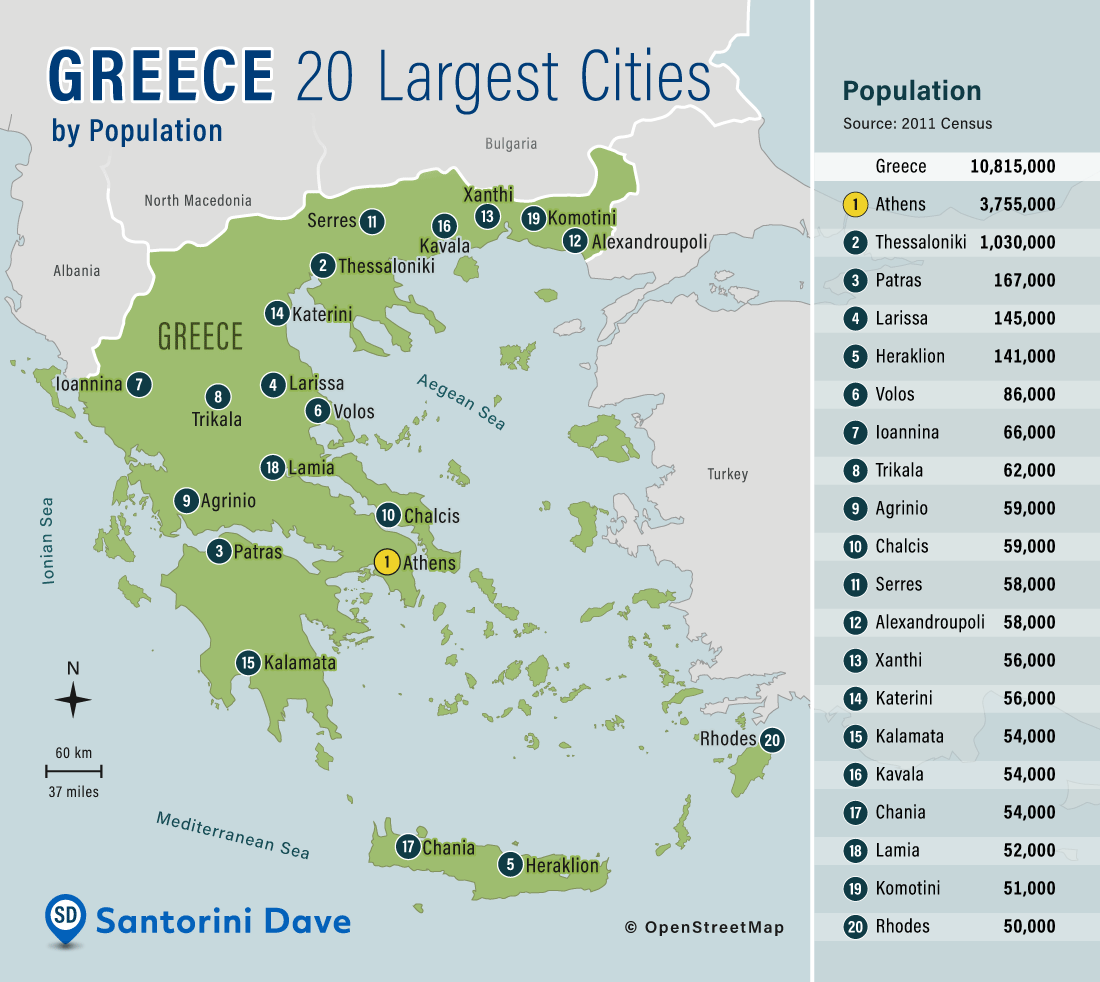
Map of Greece with Cities
Athens is the capital and largest city, on the Attica peninsula in southeastern mainland Greece. Thessaloniki is the main city of northern Greece. Other important cities and travel hubs include Patras and Kalamata in the Peloponnese, Ioannina in northwest Greece, and Heraklion and Chania on Crete.
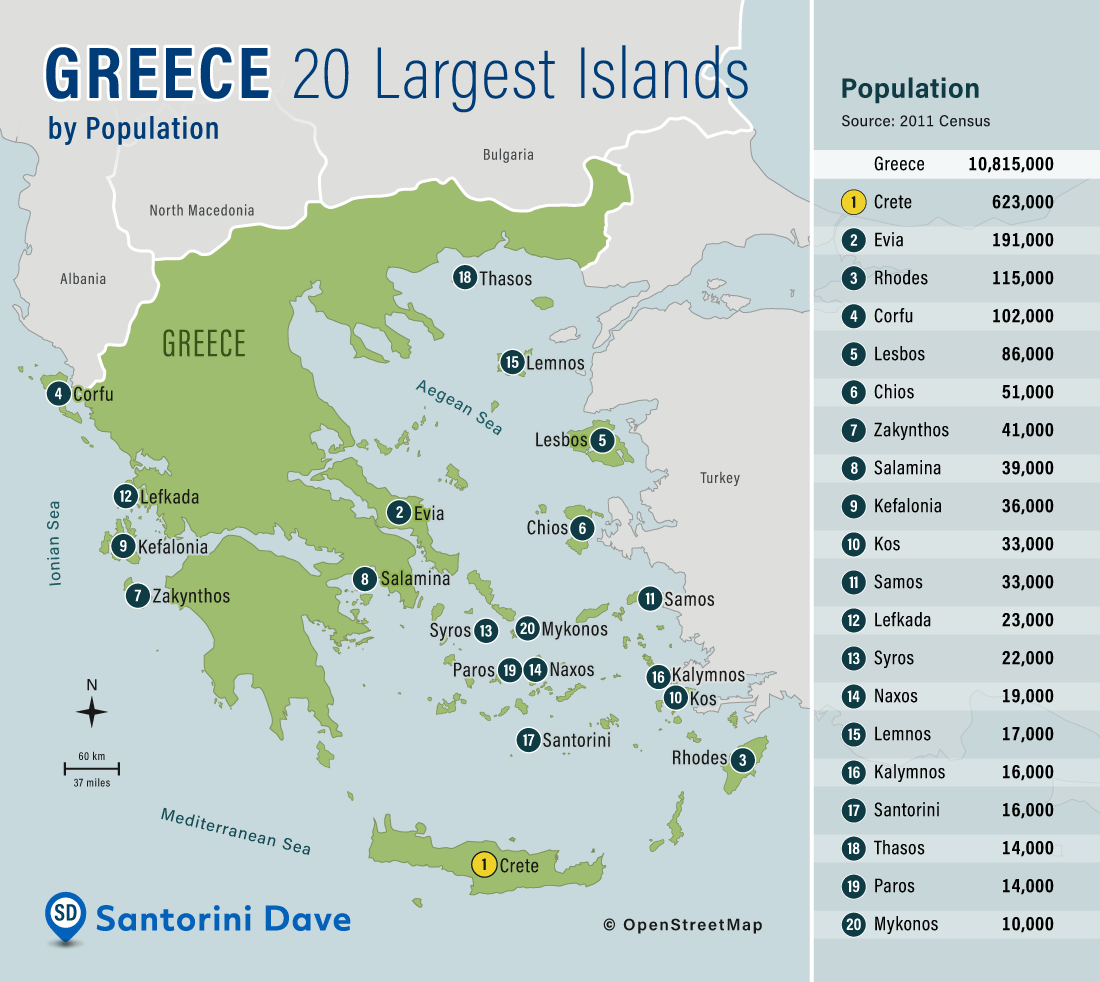
Map of Greece with Islands
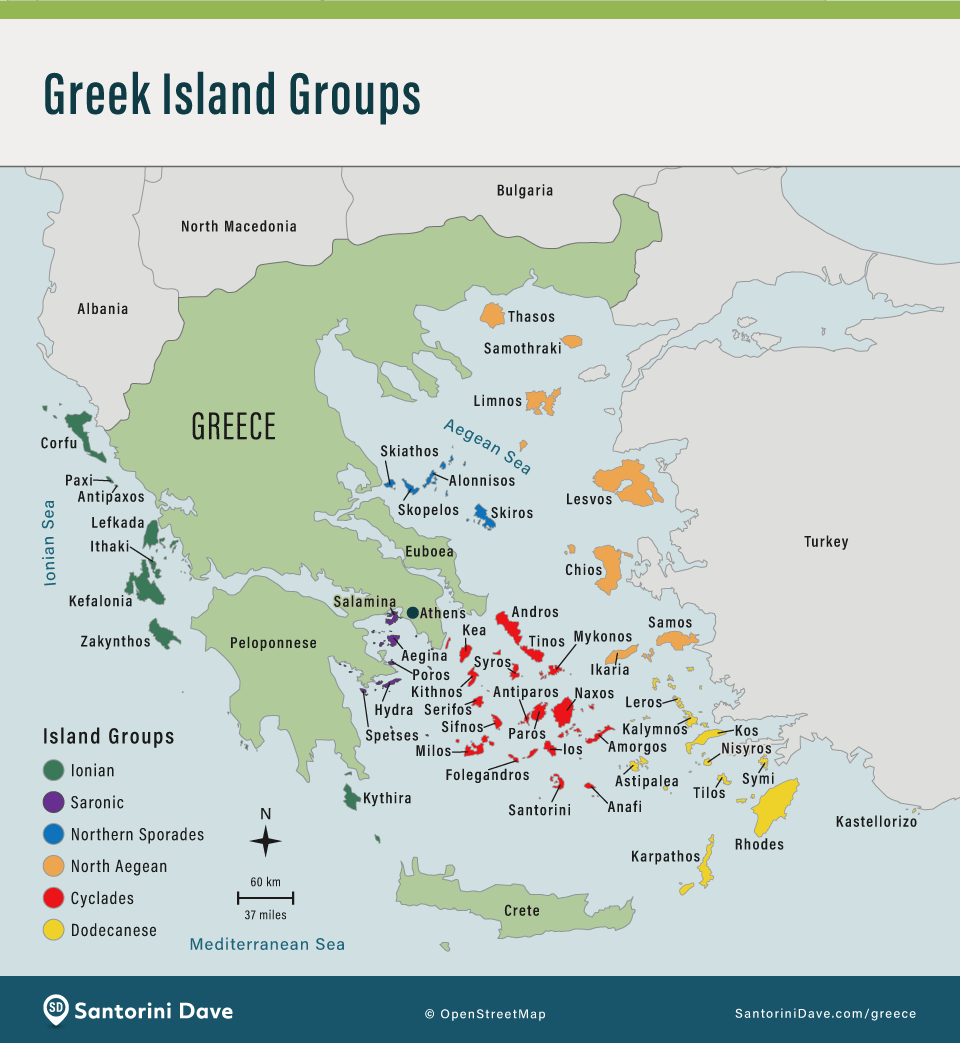
Greece has islands throughout the Aegean and Ionian seas, but they are not one continuous island-hopping network. The Cyclades are southeast of Athens, Crete is far to the south, the Dodecanese run along the eastern Aegean near Turkey, and the Ionian Islands are west of mainland Greece. Island groups matter more than straight-line distance when planning a trip.
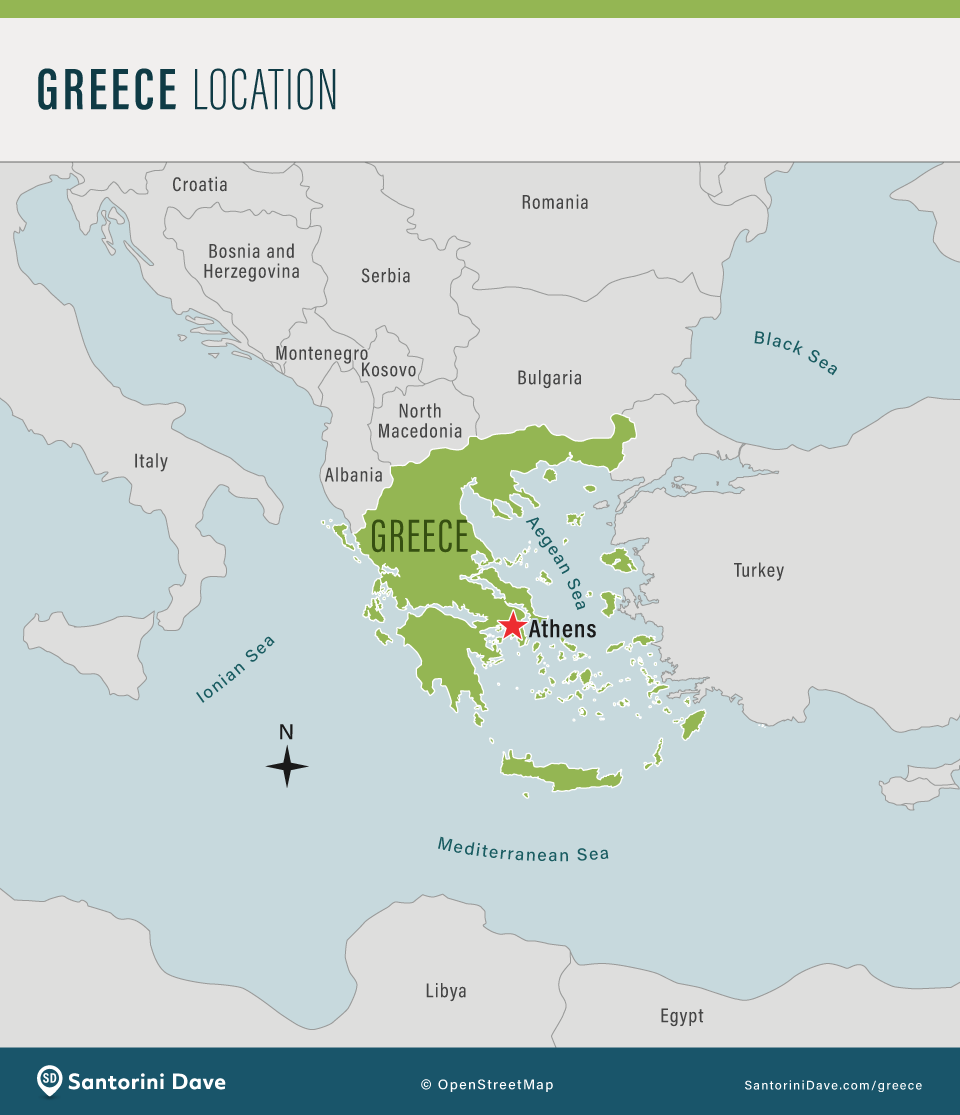
Where is Greece?
Greece is in southeastern Europe at the southern end of the Balkan Peninsula, with the Aegean Sea to the east, the Ionian Sea to the west, and the Mediterranean to the south. It shares land borders with Albania, North Macedonia, Bulgaria, and Turkey. Italy lies across the Ionian and Adriatic seas to the west.
Mainland Greece & Greek Island Groups
Greece is easiest to understand as the mainland plus several distinct island regions. Athens and Attica are in southeastern mainland Greece, with the Peloponnese immediately southwest. Thessaloniki and Halkidiki are in northern Greece. The Cyclades are southeast of Athens, the Dodecanese are farther east toward Turkey, the North Aegean Islands are northeast of the Cyclades, the Sporades are off the eastern mainland, and the Ionian Islands are west of the mainland. Crete, Greece’s largest island, stretches across the southern edge of the Aegean.
For Greek island hopping, geography matters. Santorini, Mykonos, Naxos, and Paros combine easily because they are all in the Cyclades. Rhodes and Kos are a natural pairing in the Dodecanese. Corfu and Zakynthos are on the opposite side of Greece and are poor additions to a Cyclades itinerary. Hydra, Aegina, and Poros in the Saronic Islands are among the easiest islands to reach from Athens.
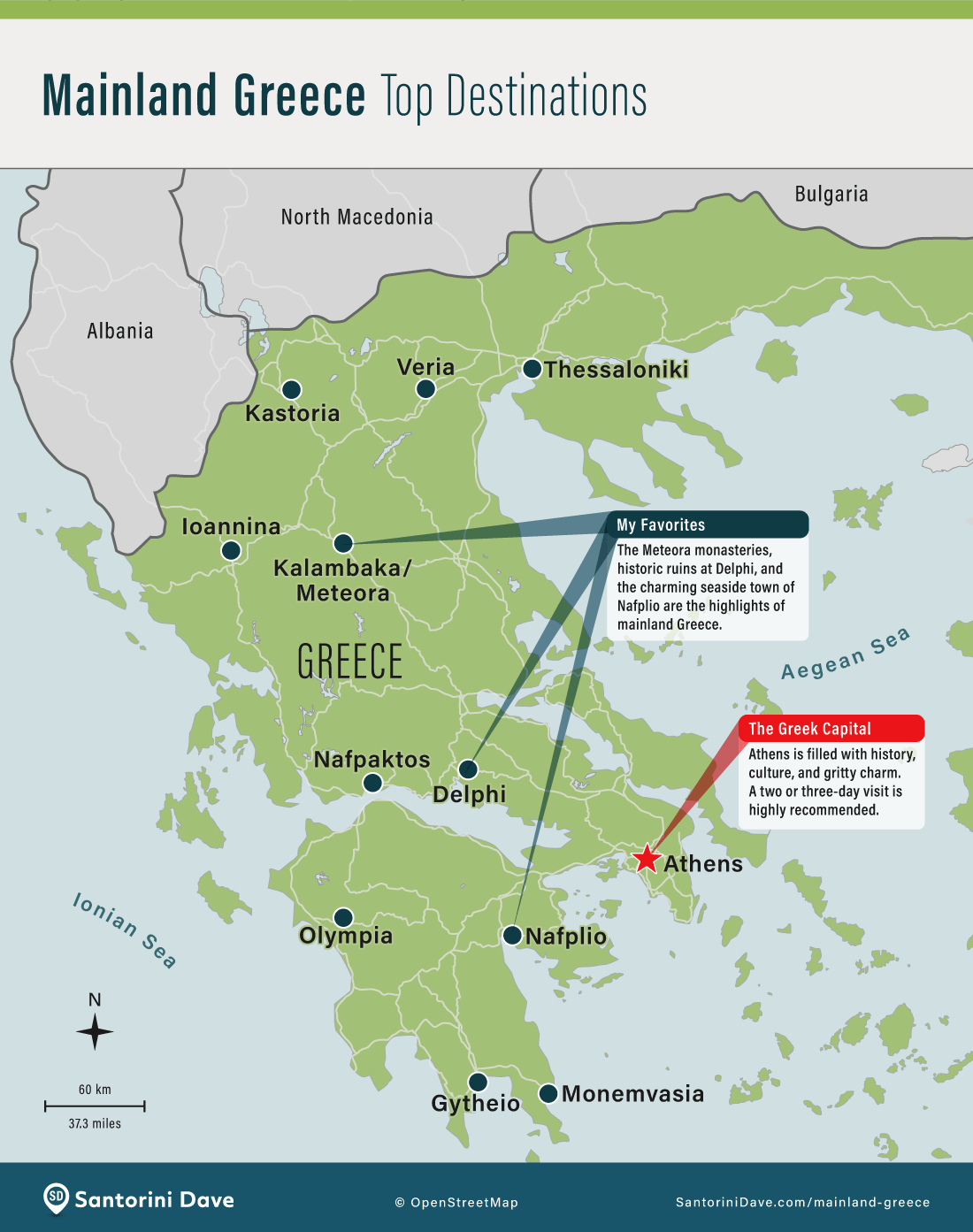
Map of Mainland Greece
For a first mainland trip beyond Athens, my favorite destinations are Delphi, Meteora, Nafplio and the Peloponnese, and Thessaloniki. Distances are manageable, but the mountains make some drives much slower than they look on a map. A rental car is the best way to explore the Peloponnese and most rural areas; Athens, Thessaloniki, Delphi, and Meteora are easier to visit without one.
Map of the Greek Island Groups
The Cyclades are the best-known island-hopping region and include Santorini, Mykonos, Naxos, Paros, Milos, and Sifnos. The Dodecanese include Rhodes and Kos; the Ionian Islands include Corfu, Kefalonia, and Zakynthos; and the Sporades include Skiathos and Skopelos. Choosing islands within the same group usually makes for a simpler itinerary with better ferry connections.
Map of Ancient Greece & Archaeological Sites
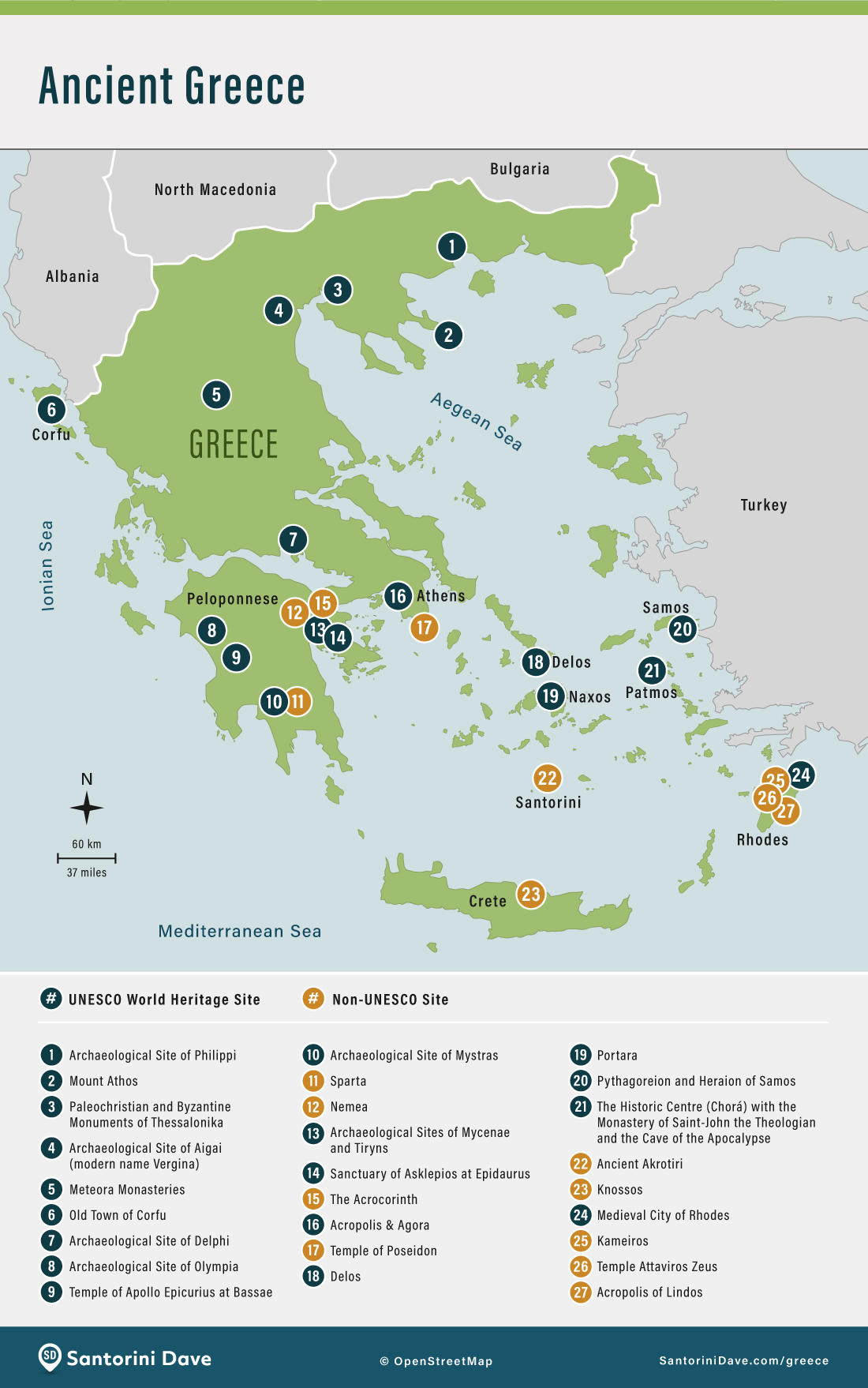
Many of Greece’s most important ancient sites are on the mainland. The Acropolis and Ancient Agora are in Athens; Delphi and the Meteora are northwest of Athens; Mycenae, Epidaurus, Ancient Corinth, and Olympia are in the Peloponnese. Important island sites include Delos near Mykonos, Akrotiri on Santorini, the Portara on Naxos, and Knossos on Crete.
Greece Climate Map & Best Time to Visit
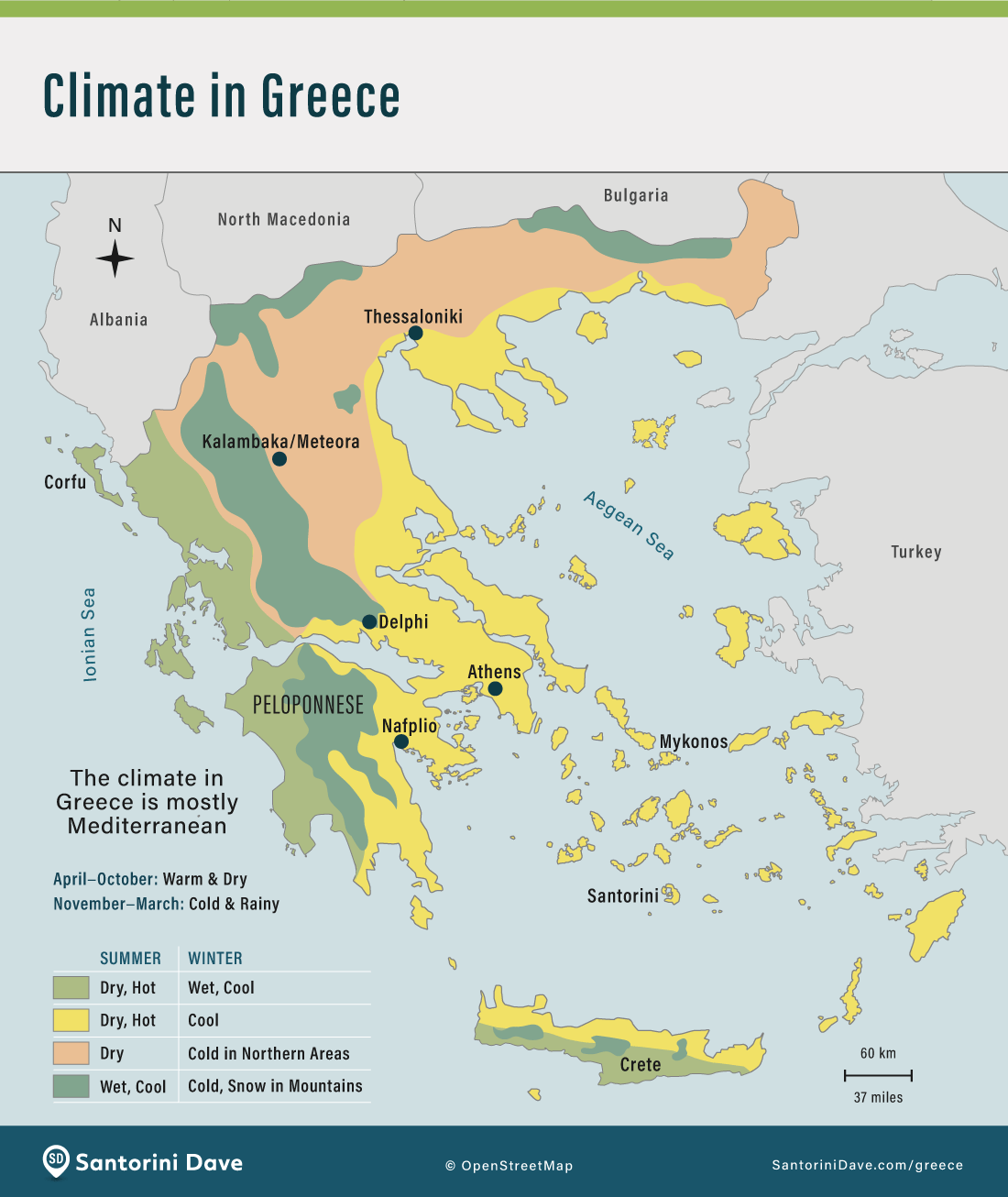
For beaches and island hopping, I like visiting late May through June and September through early October best. July and August have the hottest weather, warmest sea, most ferry service, and biggest crowds. Spring and fall are excellent for Athens, Delphi, Meteora, and the Peloponnese. Northern and mountainous Greece is cooler and wetter than Athens, the Cyclades, and Crete, especially outside summer.
Map of Direct Flights to Athens
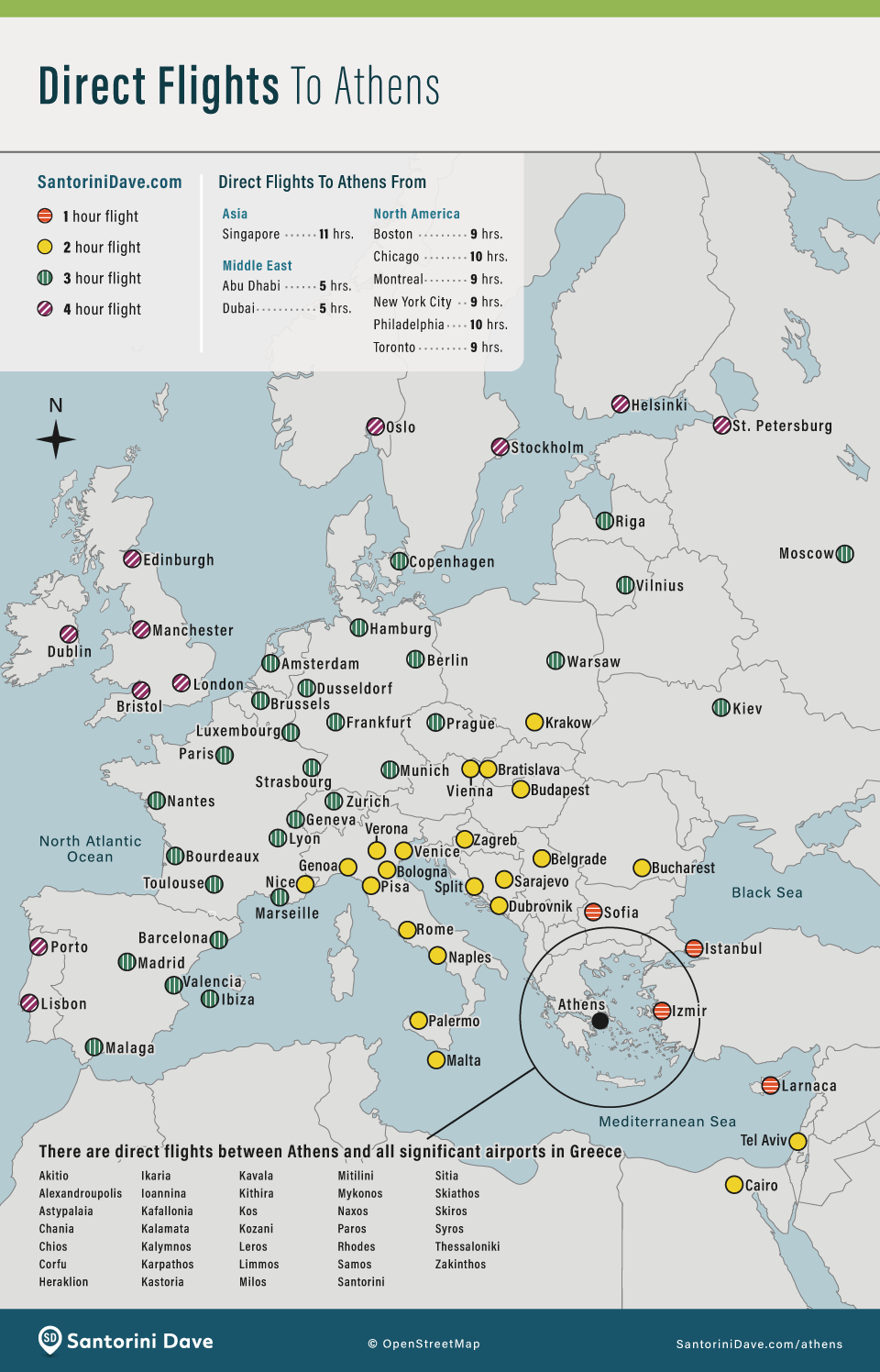
Athens International Airport (ATH) is Greece’s main international airport and the easiest entry point for Athens, the mainland, and most island-hopping trips. The map below gives an overview of direct routes to Athens, but from April to October there are also direct flights from European hubs to the islands of Santorini, Mykonos, Crete, Rhodes, Corfu, Kos, Zakynthos, and Kefalonia. London, Paris, Rome, and Amsterdam all make for excellent European stopover cities on the way to Greece.
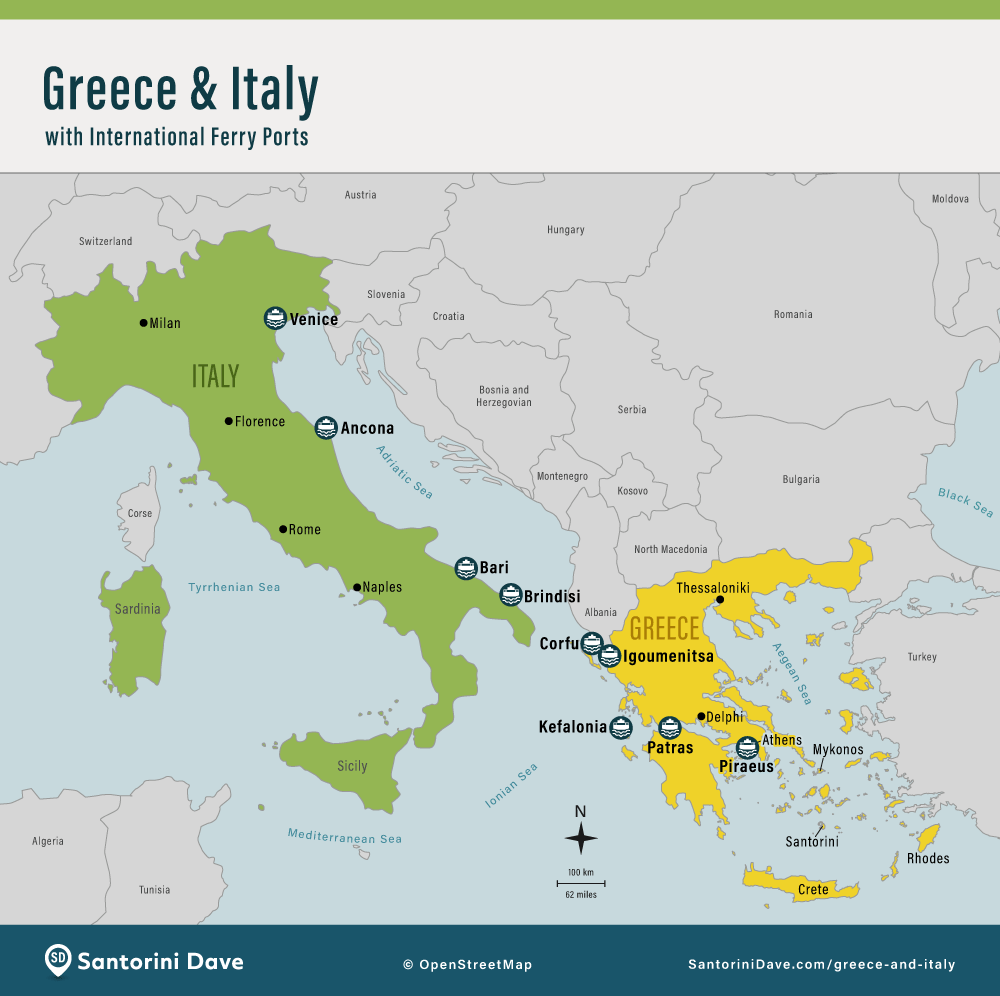
Map of Greece & Italy
Greece and Italy combine especially well if your trip includes western Greece or Corfu. Ferries cross the Adriatic between Italian ports and western Greek ports, while Corfu sits just off Greece’s northwest coast. For Athens and the Cyclades, flying between Greece and Italy is normally much faster than traveling overland and by ferry.

About Santorini Dave