Greece › Paros or Naxos
Updated: August 6, 2026 • By Santorini Dave
See Also
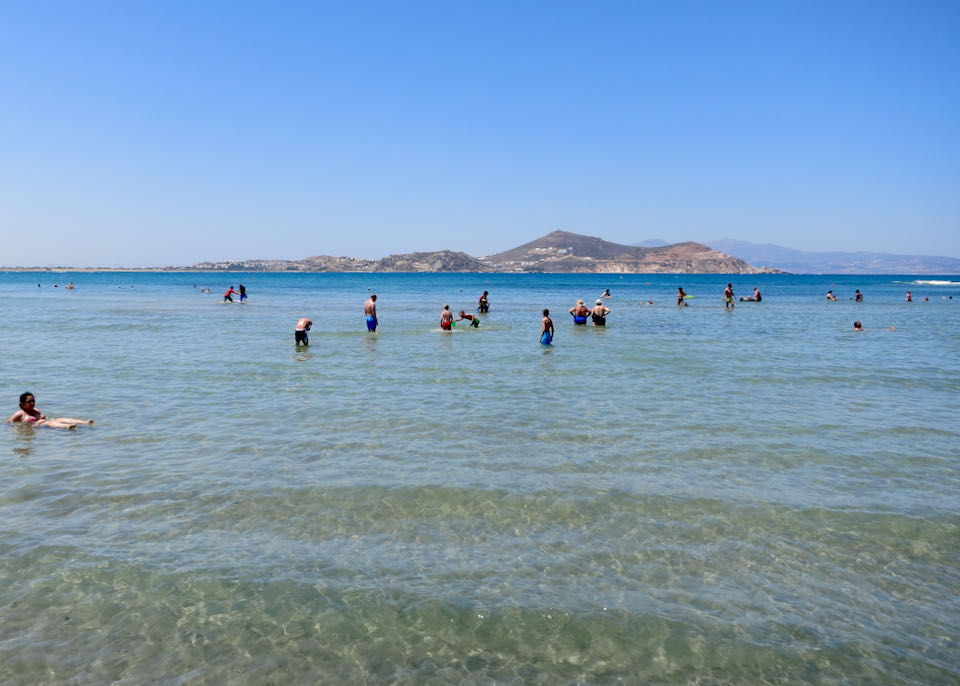
Agios Georgios Beach in Naxos is shallow, protected, and one of the best family beaches in Greece.
Paros and Naxos sit side by side in the Cyclades, have excellent ferry connections, attractive towns, sandy beaches, good hotels, and more than enough restaurants for a long stay. They are also different enough that most travelers should have a clear favorite.
Naxos is larger, beachier, more traditional, better value, and stronger for families, hiking, driving, and inland exploration.
Paros is smaller, more polished, easier to explore without a car, and better for romantic evenings, boutique hotels, stylish restaurants, shopping, and nightlife.
For families, beach lovers, active travelers, and anyone who wants the best all-around island vacation, I would choose Naxos.
For couples who care most about Naoussa, boutique hotels, restaurants, cocktails, and walkable evenings, I would choose Paros.
With six or seven nights, visiting both makes for an excellent trip.
Paros or Naxos: Quick Answer
- Best all-around island vacation: Naxos.
- Best beaches: Naxos.
- Best for families: Naxos.
- Best for romantic evenings and boutique hotels: Paros.
- Best choice of towns: Paros.
- Best nightlife and shopping: Paros.
- Best local food: Naxos.
- Best value: Naxos.
- Best hiking and inland exploring: Naxos.
- Best for seeing more without a car: Paros.
- Easiest single no-car base: Naxos Town and Agios Georgios.
- Best for a short stay: Paros.
- Six or seven nights: Visit both.
Which Island Should You Choose?
Choose Naxos for long sandy beaches, calm swimming, family-friendly hotels, traditional villages, hiking, local tavernas, better value, and a larger island that rewards exploring.
Choose Paros for romantic evenings, attractive towns, boutique hotels, shopping, cocktails, stylish restaurants, beach clubs, easy buses, and a more social atmosphere.
Choose both if you have at least six nights and do not mind changing hotels once. The ferry is short. Packing, checking out, reaching the port, and settling into another hotel take more time than the crossing.
Who Should Choose Naxos?
Naxos is the stronger choice for travelers who want a complete Greek-island vacation rather than a polished hotel-and-restaurant scene.
You can stay beside a sandy beach, walk into Naxos Town for dinner, drive into the mountains the next morning, hike between Byzantine churches, visit farms and villages, and finish the day at a quiet inland taverna.
Naxos is especially good for:
- Families with young children.
- Beach lovers.
- Travelers looking for better value.
- Couples who prefer relaxed tavernas to fashionable nightlife.
- Hikers and active travelers.
- Anyone planning to rent a car.
- Longer stays of five nights or more.
- Travelers who want a more traditional island.
Who Should Choose Paros?
Paros is the stronger choice for travelers who want an easy, attractive, and social island vacation.
Its two main towns give it a clear advantage. Parikia is practical, historic, lively, good value, and built around the ferry port. Naoussa is prettier, more romantic, and better for restaurants, bars, boutiques, and boutique hotels.
Paros is especially good for:
- Couples.
- Groups of friends.
- Travelers who enjoy restaurants and nightlife.
- Boutique hotel stays.
- Visitors who do not want to rent a car.
- Short trips of two to four nights.
- Travelers interested in Antiparos.
- Anyone who wants a more polished atmosphere.

Which Island Has Better Beaches?
Naxos.
Naxos has some of the best beaches in Greece. Its west coast is lined with long stretches of golden sand, clear water, and easy swimming. Agios Georgios is shallow, protected, and walkable from Naxos Town. Agios Prokopios and Agia Anna have excellent swimming, restaurants, hotels, and regular buses. Plaka is long and beautiful and more spacious and quieter as you move south.
Paros has good beaches, but they are more varied than consistently sandy. Kolymbithres is famous for sculpted rocks and small coves. Santa Maria is organized and lively. Golden Beach (Chrissi Akti) is wide and excellent for windsurfing. Aliki, Logaras, and Monastiri are good family choices.
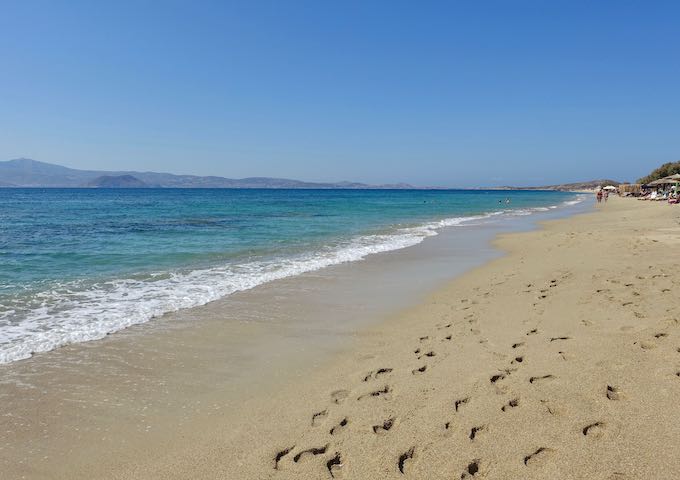
Plaka Beach in Naxos has long stretches of soft sand, excellent swimming, and plenty of room to spread out.
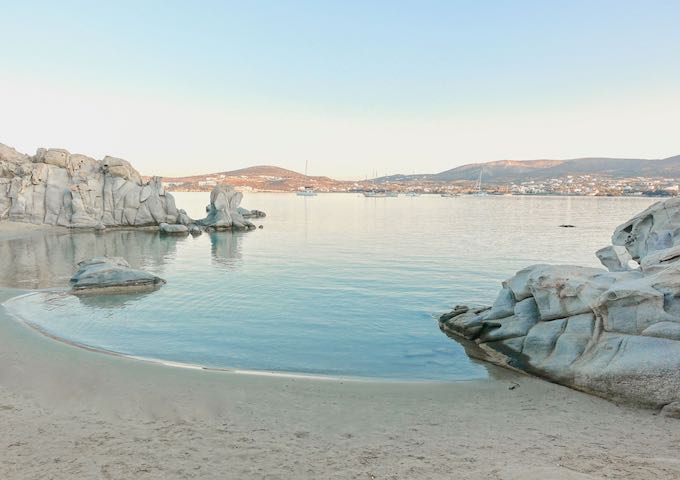
Kolymbithres in Paros is smaller and more unusual, with sculpted rocks and a series of little coves.
Which Island Has Better Towns?
Paros has the better choice of towns.
Parikia is historic, practical, lively, and less expensive than Naoussa. Its old town has narrow lanes, churches, shops, restaurants, sunset bars, and easy access to buses and ferries. Naoussa has the more romantic setting. The old fishing harbor, Venetian ruins, whitewashed streets, restaurants, cocktail bars, and boutiques create one of the best evening atmospheres in the Cyclades.
Naxos Town is excellent and should not be underestimated. It has a waterfront, old market, Venetian castle, restaurants, bars, shops, the Portara, and Agios Georgios Beach within walking distance.
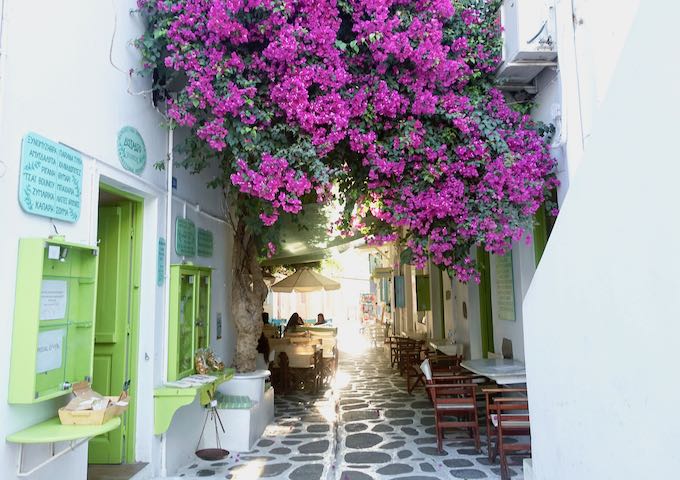
Parikia has historic churches, shaded lanes, shops, restaurants, and the island’s main ferry port.
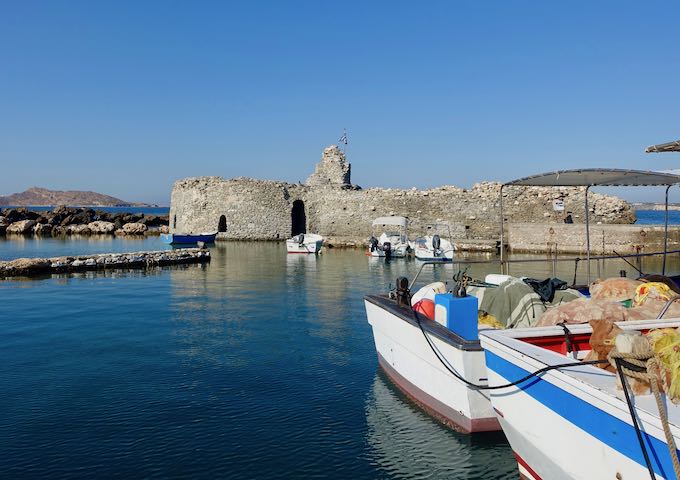
Naoussa has the prettier harbor, stronger nightlife, better boutique shopping, and a more romantic evening atmosphere.
Which Island Is Better for Families?
Naxos.
Naxos beaches are longer, sandier, and easier with children. Agios Georgios is especially good for younger kids because the water is shallow and protected, and the beach is a short walk from Naxos Town. Agios Prokopios, Agia Anna, and Plaka work well for families who want a classic beach vacation. Naxos also offers larger rooms and better hotel value.
Paros is still a good family island, especially around Aliki, Piso Livadi, Logaras, Santa Maria, and Parikia. But families who prioritize calm water, soft sand, space, and value will be happier on Naxos.
Which Island Is Better for Couples?
Paros for most couples. Naoussa gives Paros the edge for romantic hotels, attractive streets, waterfront dinners, cocktails, shopping, and evening atmosphere. Couples who enjoy dressing up for dinner, walking around town after dark, and staying in a stylish boutique hotel will prefer Paros.
Naxos is better for couples who want beaches, hiking, quiet villages, relaxed tavernas, and a less fashionable atmosphere.
Which Island Has Better Hotels?
Paros has the stronger luxury and boutique hotel scene. Naoussa and the surrounding coast have stylish adults-only hotels, design-focused properties, romantic suites, and high-end resorts. Parikia offers better value and easier ferry access.
Naxos has stronger family value and more practical beach hotels. Naxos Town and Agios Georgios are excellent for travelers who want restaurants, sightseeing, and a beach without a car. Agios Prokopios, Agia Anna, and Plaka are better for a dedicated beach stay.
- Best luxury and boutique hotels: Paros.
- Best family hotel value: Naxos.
- Best romantic hotel area: Naoussa.
- Best easy no-car base: Naxos Town and Agios Georgios.
- Best classic beach hotel areas: Agios Prokopios, Agia Anna, and Plaka on Naxos.
See my guides to the best hotels in Paros and best hotels in Naxos.
Which Island Has Better Food and Nightlife?
Naxos has the stronger local food culture. Naxos is one of the Cyclades’ most productive agricultural islands. Potatoes, cheeses, meat, vegetables, olive oil, honey, and kitron are central to the island’s identity. The best meals are often in simple village tavernas rather than fashionable restaurants.
Paros has the stronger restaurant and nightlife scene. Naoussa has more stylish dining, seafood restaurants, cocktail bars, and places built around a full evening out. Parikia is less polished but has good restaurants and better value. Piso Livadi is excellent for traditional seafood.
Do You Need a Car in Paros or Naxos?
Paros is better for seeing more of the island without driving. Buses connect Parikia, Naoussa, Lefkes, Piso Livadi, Golden Beach, Aliki, Pounta for Antiparos, and several beach areas. Paros is also worth exploring by car, especially Lefkes, Marpissa, Piso Livadi, Aliki, Kalogeros, Golden Beach, and the east coast. But buses cover more of the places most visitors want to see.
Naxos has the easiest single no-car base. Stay in Naxos Town or Agios Georgios and you can walk to restaurants, shops, nightlife, sightseeing, the port, and the beach. Summer buses also run frequently to Agios Prokopios, Agia Anna, and Plaka. A car adds more value on Naxos. It gives you access to Chalki, Filoti, Apeiranthos, the Temple of Demeter, Byzantine churches, mountain trails, farms, small tavernas, and quieter beaches farther south.
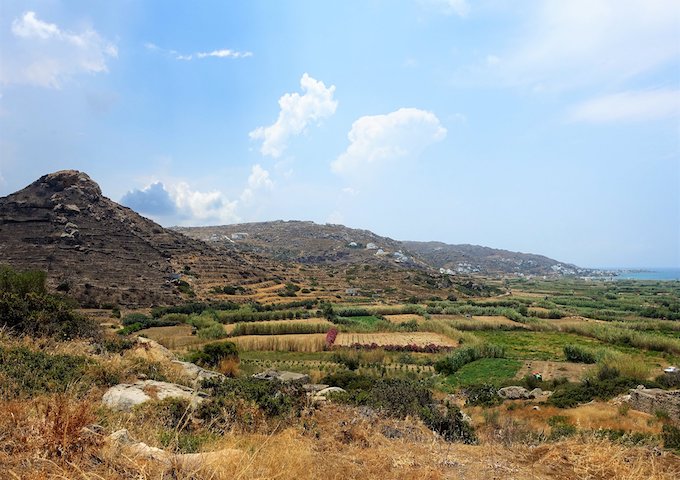
Naxos has farms, olive groves, vineyards, mountain villages, churches, and a much more substantial interior than most Cycladic islands.

Lefkes is Paros’ prettiest inland village and one of the island’s best stops away from the coast.
Which Island Has Better Hiking?
Naxos.
Naxos has higher mountains, more varied inland scenery, longer routes, and a much stronger network of village and church walks. Popular options include Mount Zas, Zas Cave, the trails around Chalki and Moni, and routes through the Tragea Valley.
Paros has worthwhile walking, especially the Byzantine Road between Lefkes and Prodromos and the trails in Paros Park. Serious hikers should choose Naxos.

Naxos has better hiking, including the trail to Zas Cave and routes across the island’s mountainous interior.
Which Island Is More Expensive?
Paros is more expensive, especially around Naoussa. Boutique hotels, fashionable restaurants, cocktails, taxis, and high summer demand make Naoussa one of the pricier places in the Cyclades. Parikia is more affordable and represents better value.
Naxos offers better hotel value, less expensive dining, and more affordable beach stays. Prime beachfront rooms and luxury hotels still cost plenty, but the island is easier to enjoy on a moderate budget. For families and longer stays, Naxos gives you more for your money.
Which Island Feels More Crowded?
Paros feels more crowded in its popular towns. Naoussa becomes extremely busy in July and August, especially in the evening. Restaurant reservations become important, parking is difficult, and the harbor streets can feel packed.
Naxos Town and the main west-coast beaches are also busy in summer, but Naxos is larger and gives visitors more room to spread out. If avoiding crowds is a major concern, choose Naxos and stay outside the busiest section of Naxos Town or the most developed beach areas.
Which Island Is Better in Spring or Fall?
Paros and Naxos have nearly identical weather because they sit so close together. The best beach season runs from June through September. Late May and early October can also be excellent, though the sea is cooler and seasonal businesses operate on reduced schedules.
Paros works well in the shoulder season if you stay in Parikia or Naoussa and care more about villages, food, walking, and sightseeing than swimming. Naxos has the advantage for hiking, driving, and inland exploration when beach weather is uncertain.
I would not choose between them based on weather.
How Long Should You Stay?
Paros
- 2 nights: Enough for one town and a quick look around.
- 3 nights: Good for Parikia, Naoussa, and one beach day.
- 4 nights: Ideal for most first visits.
- 5 nights: Worthwhile if adding Antiparos or several beaches.
Naxos
- 3 nights: Enough for Naxos Town and the west-coast beaches.
- 4 nights: Good for one inland driving day.
- 5 nights: Ideal for most visitors.
- 7 nights: Excellent for beaches, villages, hiking, and a relaxed pace.
Paros is the better short-stay island because it is easier to understand and enjoy in two or three nights. Naxos needs four or five nights before its beaches, town, and interior start to come together.
Does Antiparos Make Paros the Better Choice?
Antiparos is a genuine advantage for Paros. The short local ferry makes it easy to add another attractive town, beaches, restaurants, and a change of atmosphere without moving hotels. A day on Antiparos fits easily into a four- or five-night Paros stay. Spend time in Antiparos Town, add a beach or boat trip, and return to Paros in the evening.
Should You Visit Both Paros and Naxos?
Yes, with enough time.
The islands are linked by several seasonal ferries. The fastest crossings take around 30 minutes, while larger conventional ferries take closer to 45 minutes or an hour. The ferry ride is easy. Changing hotels is the part that costs time.
My recommendation:
- 3 or 4 nights: Choose one island.
- 5 to 7 nights: Visiting both starts to make sense.
- 8 nights or more: Split the stay or add Santorini or Mykonos.
A good seven-night split is:
- 3 nights in Paros.
- 4 nights in Naxos.
Which Island Pairs Better with Santorini?
I slightly prefer Naxos with Santorini. Santorini gives you dramatic scenery, cliffside hotels, wineries, and a compact sightseeing experience. Naxos adds long sandy beaches, family-friendly swimming, villages, hiking, and a more traditional atmosphere.
Paros also pairs well with Santorini, especially for couples who want boutique hotels, restaurants, shopping, and a livelier evening scene.
Which Island Pairs Better with Mykonos?
Naxos.
Paros, especially Naoussa, overlaps with Mykonos through boutique hotels, nightlife, shopping, fashionable dining, and a social atmosphere. Naxos feels more different. It offers better value, longer beaches, mountain villages, hiking, farms, and a more traditional character.
My Recommendation
If I were traveling with young children: Naxos.
If I wanted the best beaches: Naxos.
If I wanted restaurants, cocktails, and romantic evenings: Paros.
If I did not want to rent a car: Paros for exploring several areas, or Naxos Town and Agios Georgios for the simplest single base.
If I had four nights: Paros for couples and nightlife; Naxos for families and beaches.
If I had one week: Paros and Naxos.
If I had to recommend one island to the widest range of travelers: Naxos.
Naxos offers better beaches, better value, more depth, stronger family appeal, and a more traditional island experience. Paros is the better choice when the trip is built around Naoussa, boutique hotels, dining, shopping, nightlife, and walkable evenings.
The decision comes down to this: choose Paros for the easier, prettier, more social trip. Choose Naxos for the bigger, beachier, more rewarding island experience.
Frequently Asked Questions
Is Paros or Naxos better for a first visit?
Naxos is the better all-around choice for beaches, value, families, hiking, and traditional island life. Paros is better for couples, boutique hotels, restaurants, shopping, and nightlife.
Does Paros or Naxos have better beaches?
Naxos. Its west coast has longer sandy beaches, calmer water, and more space for swimming and relaxing.
Is Paros or Naxos better for couples?
Paros for most couples. Naoussa has the stronger combination of romantic hotels, restaurants, bars, boutiques, and evening atmosphere.
Is Naxos or Paros better for families?
Naxos. The beaches are sandier and more family-friendly, and hotels offer better value.
Can I visit Paros and Naxos without a car?
Yes. Paros has better buses for exploring different parts of the island. Naxos Town and Agios Georgios offer the easiest single no-car base.
Which island is cheaper?
Naxos. Paros, especially Naoussa, is more expensive for boutique hotels, restaurants, cocktails, and taxis.
Can I visit Paros and Naxos on the same trip?
Yes. With six or seven nights, spend three nights in Paros and three or four nights in Naxos.
Should I take a day trip between Paros and Naxos?
No. The crossing is short, but port logistics and ferry schedules leave too little time to appreciate either island properly. If you’re getting on the ferry you might as well bring your bags and switch hotels.
 Santorini Dave was started in 2011 when I posted a short guide to visiting Santorini with kids. Now, my site publishes regularly updated guides to
Hi Dave. Great website! Your information about Naxos and Paros is excellent! My problem is I like about 1/2 of each.
Which would you recommend for a couple of young 70+ year olds who backpack, easy hiking and ride bikes? We are big history buffs and love ruins, churches, archeological sites and natural formations, nature, animals, caves, good local food, wine and laid back bars to enjoy the sunset. Give me a good taverna any day!
Paros looks beautiful, convenient and is more couple friendly but we don’t care for loud bars or trendy restaurants. I like the look of Parikia. Naxos is bigger and has lots of the villages and sites but it’s also an extra ferry stop, has lots of families and sounds like it is mostly for beach combers? Naxos town looks wonderful and I want to try Kitron.
We will rent a car and will spend 4 nights but I don’t like splitting each island into two nights in order to visit both.
What do you recommend?
Thanks!
Katherine Malson
Hi Katherine. Based on your description – especially the emphasis on history, ruins, hiking, local food, and avoiding the “trendy” scene – this is an easy one for me. You are describing Naxos.
While your hesitation is understandable (Naxos does have great beaches and plenty of families), the notion that it is primarily for “beachcombers” is a misconception. Naxos is the agricultural heart of the Cyclades. It has the most impressive inland villages, the best hiking, and a depth of history that Paros generally lacks.
Here is why I think Naxos is the perfect fit for you two:
1. History & Ruins:
• If you love ruins and archeological sites, Naxos wins hands down.
• The Portara: You can’t miss the massive marble gate of the unfinished Temple of Apollo right at the port.
• The Kouros Statues: These are giant, unfinished ancient statues still lying in the quarries where they were carved. You can walk right up to them. They are in the countryside, surrounded by nature. Very cool.
• Temple of Demeter: A partially restored ancient temple sitting in the middle of quiet farmland. It feels sorta spiritual and connects you to the island’s agricultural past.
2. The Villages & Hiking:
• Paros has cute villages (Lefkes is lovely), but Naxos has living mountain villages.
• Since you are renting a car, driving up to Apeiranthos (the marble village) or Halki (the old capital) is easy and a joy.
• Halki is particularly special for you because it’s home to the Vallindras Kitron Distillery. You mentioned wanting to try Kitron – this is the place to do it. It’s an old-school, atmospheric experience, not a tourist trap.
• For hiking: You can hike Mount Zas (the highest peak in the Cyclades). There are also easier, beautiful trails connecting the villages that pass by old Byzantine churches and olive groves.
3. The Vibe: “Real” vs. “Trendy”
• Paros has become incredibly popular recently, and while Parikia (the main port) is more laid back than the glitzy Naoussa, the island overall is leaning much harder into “trendy luxury,” high-end boutiques, and crowded cocktail bars.
• Naxos still feels like a working island. The food is incredible because they grow everything there (the Naxian potatoes and cheeses are famous across Greece). The tavernas in the villages feel authentic – plastic chairs, paper tablecloths, excellent local wine, and grandmothers in the kitchen. That sounds exactly like what you’re looking for.
4. The Ferry Concern: Don’t worry about the extra stop. Naxos is usually the very next stop after Paros on the main ferry lines (Blue Star). It adds maybe 45 minutes to the trip. It is negligible in the grand scheme of a 4-night stay.
My Recommendation: Paros is beautiful and convenient, but it is polished. Naxos is rugged, historic, and delightful. Given that you are active and want to hike, explore ruins, and eat well without the pretense of a trendy scene, Naxos is the superior choice.
Spend your 4 nights in Naxos Town (Chora). St. George Beach area is great if you want to be close to town but near the water. You can walk to the Portara for sunset, drive the interior during the day, and drink your Kitron in the mountains. Good luck.
Hi Dave,
My husband and I are going to Greece from September 17 to October 4. Here is our itinerary:
Athens -2 nights
Mykonos 2 nights
Paros 2 nights
Naxos 3 nights
Milos 3 nights
Santorini 3 nights
Fly back to Athens, stay overnight, then fly out the next morning.
Zanthynos is an island I am fascinated with, and I thought about cutting one night out of Athens and skipping Mykonos to see it, back and forth by plane, then ferry from Athens to Paros, but I’m not sure if I should just stay with my current itinerary.
I just wanted to get your thoughts as I have used your website for other trips and they have worked out great!
Debbie
Do not add Zakynthos.
You already seem to understand the details but just to emphasize: Zakynthos is in the Ionian Sea (west of the mainland), while all your other islands are in the Cyclades (east of the mainland). There are no ferries connecting them. To make that work, you have to fly Athens -> Zakynthos, spend your time, fly Zakynthos -> Athens, and then take a ferry to Paros. You would burn an entire day of your vacation just sitting in airports and transit lounges.
Furthermore, the famous Shipwreck Beach (Navagio) currently has restricted access due to landslide risks, meaning you might travel all that way and only be able to see it from a distant cliff-top viewpoint. It’s simply not worth wrecking the flow of a smooth trip for one photo op.
Critique of Your Current Itinerary
• Even without Zakynthos, your current plan is too fast. You have 5 island stops in 13 days (excluding Athens).
• 2 nights = 1 day: When you factor in checking out, getting to the port, the ferry ride, getting to the new hotel, and checking in, a “travel day” is largely a lost day.
• The Blur: With 2 nights in Mykonos and 2 nights in Paros, you will barely unpack before you have to pack again. You won’t see the islands; you will just see the inside of ferries and hotel lobbies.
My Recommendation
• If you are willing to cut Mykonos (which is a smart move if you aren’t there specifically for the expensive nightlife or luxury shopping), do not replace it with Zakynthos. Replace it with time.
• Use those saved days to slow down and actually enjoy the other islands. Naxos and Paros are right next to each other, but moving between them still eats up a morning.
The Optimized Itinerary (Sept 17 – Oct 4) This route minimizes travel time and maximizes beach/hiking time.
• Athens: 2 Nights (Acropolis, Acropolis Museum, and Plaka)
• Milos: 3 Nights (Ferry or fly from Athens)
• Naxos: 3 Nights (Ferry from Milos)
• Paros: 3 Nights (Ferry from Naxos – only 45 mins)
• Santorini: 3 Nights (Ferry from Paros)
• Athens: 1 Night (Fly back from Santorini)
Why this works better:
• Better Pacing: You get 3 on each island. This allows you to rent a car and explore the remote beaches of Milos or the mountain villages of Naxos without watching the clock.
• Mykonos Drop: Mykonos is the most expensive and crowded stop. By late September, the party scene is winding down. Unless it is a specific “must-do,” you won’t miss it compared to the authenticity of Naxos or the beaches of Milos.
I hope that helps. Good luck.
Wow! You’re an AMAZING resource. Thanks for this. Important question. I’m taking my almost 18 year old daughter on a brief trip to Greece. She’s been to Europe before and we live in Florida so she’s no stranger to beautiful beaches. The current plan has us flying into Santorini on a Sunday afternoon and flying out of Athens on Thursday night. (I did say it was quick.)
I’m thinking of staying in Santorini until Wednesday morning. Grabbing an early morning ferry to Paros, spending the day there, and taking an overnight ferry to Athens. Finally, spending the day in Athens (mainly for the Acropolis) before flying out at night. FYI, my daughter is NOT a big fan of historical sites or museums. She’s pretty much into enjoying scenic views, watersports, dressing up, and heading out for a night on the town, taking scenic pictures, and appreciating beautiful views and crystal-clear beach water.
With all this in mind, I have a big question that I hope you can answer: Is Paros the more intelligent choice over Naxos?
Yes, between the two islands, Paros is absolutely the more intelligent choice for your daughter’s specific tastes. The decision comes down to one key location: the village of Naoussa. It is an incredibly beautiful and photogenic fishing port, and its whitewashed, labyrinthine alleys are filled with the exact atmosphere your daughter is looking for: chic boutiques, trendy cocktail bars, and excellent restaurants packed with a stylish crowd. Naoussa is the perfect place to dress up and have a memorable night on the town, while also providing endless opportunities for scenic photos. While Naxos is a fantastic island with superior beaches, its towns have a more traditional, relaxed, and family-focused vibe that does not align as well with a teenager’s interests.
However, there is a much more significant issue with your proposed itinerary than the choice of island. The plan to spend a single day in Paros before taking an overnight ferry to Athens is logistically flawed and will likely lead to an exhausting and unpleasant experience. It is important to know that direct overnight ferries between Paros and Athens are not as common as you might think (before any next steps, check the schedule for your specific travel dates) and are not a reliable service to build a tight itinerary around. They often involve very late-night departures, sometimes after midnight, as the ship is arriving from further islands. This leaves you in a difficult situation with no hotel room to rest or shower before boarding. You would arrive in Athens at dawn, probably sleep-deprived, with a full day to kill before your late-night flight home. This is not a practical or enjoyable way to travel.
I would strongly recommend a revised itinerary. Enjoy your time in Santorini from Sunday until Tuesday evening or Wednesday morning. It delivers on all the scenic views and unique atmosphere you could want. From there, instead of a ferry, book a cheap and quick 45-minute flight from Santorini directly to Athens. This flight saves you an entire day of stressful and tiring travel. You can then check into an Athens hotel on Wednesday, giving you a comfortable base to drop your luggage, relax, and freshen up. A hotel with a rooftop pool and an Acropolis view would be a fantastic touch.
This revised plan allows you to have a far better final two days. On Wednesday evening, your daughter can have her night on the town in Athens at one of the city’s incredible rooftop bars in Plaka or Monastiraki, enjoying the urban vibe and amazing views of the floodlit Parthenon. You can visit the Acropolis in the morning while your daughter sleeps in or enjoys the hotel pool. Then a Greek lunch and some shopping before heading to the airport. I hope this helps.
My husband & I are visiting Greece 1st time from Asia in Oct for 18 days. We are active people in our 50s who enjoy easy hiking, swimming, exploring, wine and food, and beautiful scenery (not so much into partying, art and history). This is our draft itinerary and I cannot decide between Naxos or Paros
Oct 1 – Arrive Athens 8am, ferry to Naxos or Paros, stay 4 nights
Oct 5 – Milos, 2 nights
Oct 7 – Santorini, 5 nights
Oct 12 – Santorini to Meteora (by flight) 2 nights
Oct15 – Meteora to Athens
Oct 19 – Athens morning & then Fly home
For your active interests, choose Naxos. It is the best Greek island for hiking, with ancient trails connecting mountain villages, and its farm-to-table food scene is superior to Paros. While Paros is wonderful and a bit more polished, Naxos offers more dramatic scenery and a more authentic, rugged experience that aligns perfectly with your preferences. Your itinerary is fast-paced, particularly the two nights in Milos, but it covers an excellent range of spectacular Greek destinations.
Your website has been super helpful on two previous trips to Greece!
Now I am looking for advice on another upcoming trip for our 30th wedding anniversary. We will be coming from the US in the 3rd/4th week of June & will have 9-10 days on the ground in Greece. We are considering starting our trip with a stay at Skinopi Lodge on Milos (hoping the days work out) & then possibly moving to stay on Paros or Antiparos but we are finding it a bit tricky to book the hotels we were hoping to book on Paros & Antiparos so now we are thinking about either Naxos or Sifnos instead for the last part of the trip. We considered Folegandros but are concerned it will be more challenging given the distance.
We do not want it to feel like a super hectic trip with moving around too much due to ferry transfers, so we are thinking about keeping it to 2 islands (unless you suggest some other islands as options where the ferry transfers are not as long as what we expect). We love to hike, excursions on the water – boat trip, windsurfing or paddle boarding, we love to explore local culture/restaurants. We do not care about a party scene. Any feedback, thoughts or suggestions would be greatly appreciated.
Milos, Naxos, and Sifnos are all on my short list of favorite islands. Starting at Milos (Skinopi Lodge is lovely) in late June is a good plan, offering unique beauty and great boat excursions that fit your interests perfectly. Given the booking challenges on Paros/Antiparos and your preference for easier travel, switching to either Naxos or Sifnos for your second island is an excellent idea. Naxos provides remarkable diversity with its stunning beaches (ideal for windsurfing/paddleboarding), mountain hiking, and traditional villages. At the same time, Sifnos shines with its renowned gastronomy, charming pottery villages, and extensive, well-marked hiking trails. It has an easy and short ferry connection from Milos. Both Naxos and Sifnos offer rich local culture and avoid the party scene, making either Milos-Sifnos (for easiest logistics) or Milos-Naxos (for beach/windsurfing) a superb and relaxed two-island combination for your 9-10 day celebration.
Hi Dave,
We are a couple who are traveling to Greece for 16 days. We will fly in and out from Athens, start with 2 days in Athens – and then want to visit 3 islands.
But we are a bit in doubt which to choose, as there a lot to choose from. We like to do a bit of hiking, snorkeling, relax at the beach and a bit of life (but not to party) We have considered:
– Mykonos, Santorini, Milos
– Mykonos, Naxos, Paros
– Naxos/Paros, Santorini, Milos
Do you have recommendations what will fit best to us – maybe other Islands?
Thanks a lot for your time.
Br Lone
All are great choices but for you, I would recommend Naxos, Milos, and Santorini.
Huge fan of your guide. I’m traveling solo to Greece for the first time. I have about 12 days in Greece how would you recommend spending them? I’m 31, female, not huge into partying, and I love beaches, architecture, history, museums, food, etc.
I would do a few days in Athens for the history and then split time between Naxos and Paros (two of my favorite islands) – both have amazing beaches, food, and some historical sites.
Hi Dave! What would be your itinerary advice? We arrive Saturday morning in Athens, fly out the next Sunday morning. I was thinking first night in Athens, spending the first day seeing all the major sights, then Paros, Santorini and Milos then back to Athens. Is that one too many islands? What order and how many nights on each island would you recommend? Thank you so much!
Diane
I recommend sticking to two islands. Paros and then either Santorini or Milos (and in that order).
Hi Dave,
Fantastic website. You have so much complete and thorough information that no one else really compares.
We are going to Greece for 2 weeks. I’m taking three teenagers (15,18,18) and we are flying into Athens. From there we will fly into Paros two days later. We will have 3-4 days before going to Santorini, where we will spend 5 days. Do you recommend Naxos or Mykonos as the second island for us to visit?
Thanks!
Scott
I find Naxos is much more convenient to get to and from Paros (and also onwards to Santorini) than Mykonos. Naxos is much quieter than Mykonos and has fantastic beaches, interesting inland villages, and great local food. As long as you’re ok missing the Mykonos nightlife (Naxos doesn’t have much nightlife) then I’d go with Naxos.
Hi, we are planning to spend the last two weeks of august in Greece, flying in and out of Athens. We will be travelling with our two kids, ages 6 and 8. We definitely want to spend a week on Naxos to enjoy the beaches and walking, and are thinking of staying at Agios Georgios area (maybe Galaxy hotel). We also want a day or two in Athens to show the kids the sights and then would like to add one more island for the remaining 5 days or so. Would Paros be a good combination, or too similar? Or would a smaller island like Koufonisia or Antiparos be a better contrast, or would we get bored too quickly? We like walking, exploring, swimming and nature as well as good food. We have been to Santorini, Sifnos and Milos before on a previous trip (pre kids). Thanks for your advice and for the great info on this site.
Paros is a wonderful choice. Milos would also be great – and you could do a boat tour around the island which kids tend to love. Both islands have great swimming spots.
Dave
I’m traveling to Greece in mid May. Starting in Santorini and heading to Milos. I’m torn between Naxos and Paros but would like to stay on one of those islands for three nights before heading to Mykonos. I’m going solo on this trip and do not want to rent a car, and would much rather walk or take public transportation or taxi. I’m interested to experience the culture, tour villages/town/historical sites, hike, sunsets, beaches, etc. I really want to soak up the beauty of the islands! I’m a foodie too! Can you please tell me which island you would recommend? What hotel on the island would you recommend?
Naxos, Sifnos, and Folegandros would be my recommendations.
Personally, I find Naxos more attractive due to the family-friendly atmosphere you mentioned. We visited it three times with my family and enjoyed it so much, that we decided to buy a house in Naxos just to have some constant place to go to. Now we go there at least three times a year. The main reason for loving this place for me is the best beaches even in comparison to Paros, whose beaches are also good.
I agree! Good luck with your new house.
Hi Dave,
Love your site. I have been following this for planning my vacation But need a suggestion.
We are visiting Greece in the first week of April. We are confused whether to visit Mykonos or Paros or any other place (for two days). We initially planned to visit Mykonos for the party scene but later learned that Mykonos will be quiet in April. So can you please give us recommendations for places to visit. Is it ok to visit Mykonos in April or Paros will be a better option? We would like a place which is not too quiet. Parties will be better in Mykonos or Paros in April?
We will be immediately visiting Santorini after this so any place closer to Santorini will be good.
I recommend Crete and Santorini for off-season Greek islands to visit. The first ferry of the year between the two islands runs in early April. Mykonos will be very quiet in April. (So will Naxos and Paros but both have a bit more of a local vibe that’s interesting.) Mykonos is wonderfully green in April which is great. The first ferry between Mykonos and Santorini runs March 19, so you’re fine in that regard. None of the islands will have any parties in April though the clubs in Fira will come closest to having a bit of nightlife.
Hi Dave,
Need your suggestion. Going to Greece July 20 – August 4. My husband and myself, 58 yr & 62 yr olds.
Here is what I have till now, 3 nights Crete, 3 nights Santorini at the beginning. At the end 3 nights Mykonos and 1 night Athens. Then this is what I’m confused about: would like to do 2 nights Milos and the other 2 nights on either Naxos or Paros. I’m leaning towards Naxos since I hear it has better beaches, what is your opinion? We are beach people for sure, nice diners at night, not looking for nightlife. Am I doing too much in 2 weeks? I just want to get the most in for the time we have, this is a lifelong dream of mine, don’t know if I will be able to go back. But I also don’t want to be hopping around and not really see anything. What is your honest opinion, really appreciate it.
Paros is a little trendier with good nightlife. Both have great beaches but I prefer the beaches on Naxos. So Naxos sounds like a better fit for you. You do have a busy two weeks. Doable, but busy. If you were to cut any island I’d make it Crete. It’s a great island but a difficult to experience in 3 days as it’s quite a bit bigger than the others.
Hi Dave,
Thank you for this fabulous site, so much invaluable information. My husband and I are flying into Santorini from Rome mid September for 3 nights then we have 14 more nights to island hop before needing to be in Athens October 2 for an October 3 flight. We’re thinking of splitting our time equally between Naxos and Paros with day trips to Mykonos and Antiparos. We were thinking of flying from Paros back to Athens the day before our international flight home but I read in one of your posts that you think it’s better to catch the ferry? Do you think there’s another island we should consider as well. Additionally what weather should we expect mid to late September and do we need to pre-book accommodation and ferries? This is the tale end of a six week trip that will have been full on so we were not wanting to arrive home totally exhausted!
Thanks so much for all your great advice.
Sounds almost perfect. Weather should be good to great. You could have some coolish non-beach days as you get into October but beautiful sunny weather is more likely. Only change I’d recommend is to add a night or two for Mykonos at the end of your island itinerary. A day trip to Mykonos is not worth the time or effort and it probably wouldn’t workout with ferry times anyways. Better to make an overnight trip and it’s on the route back to Athens so will shorten your final ferry leg as well. (Day trip to Antiparos is well worth it though.) And yes, I’d rather ferry than experience the hassle of another flight. And it’s quicker/easier to get from the ferry port to central Athens than from the airport to central Athens.
Hi Dave! I am really enjoying your website. I am writing for your advice. My husband and I are two active people who enjoy hiking, swimming, boating, wine and food, and beautiful scenery, and art and history. As far as Athens, my husband really just wants to see some of the archaeological sights. I want to take a photography tour on Santorini. I have been dreaming of going there for a long time. We tend to seek out the local restaurants when we travel to see what the people really eat in a location. We are arriving in Athens on May 7 and flying back out early May 20th. We are coming from Texas, so it will be a considerable travel distance. This is what I am considering:
May 7: continue travel with flight Athens to Santorini, arrive around 5pm local time
May 7-May 14: Santorini (7 days, 8 nights)
May 15: Leave in the morning and travel to Naxos (ferry or flight?)
May 15-17 Naxos (3 days, 3 nights)
May 18 Fly from Naxos to Athens in the morning
May 18, and 19 Athens (2 days, 2 nights)
May 20 fly out for home
My concern is with jamming too much into a trip. We don’t want to have a tight schedule and be super tired when we get home. We are considering just staying on Santorini and really exploring and spending one more day in Athens and cutting out the Naxos portion. Any advice you could provide would be greatly appreciated.
Kind Regards,
Alyse
That sounds like a great itinerary. The good news is that either way you do it (with Naxos or without) it will feel like the perfect decision. “Oh, I’m so glad we got to see Naxos – it was so different than Santorini,” or “I’m so glad we spent those extra days on Santorini – I wouldn’t have wanted an hour less.” That’s not much help, I know, but there’s no right answer. Naxos has some great beaches (better than Santorini) and amazing inland villages and hikes. You won’t be sorry if you go. Also, some really incredible local restaurants. One thing I would do if it were my trip is to ferry from Naxos to Athens instead of fly. It does cost you a few extra hours (depending on whether you go Blue Star or the smaller/faster/rougher Sea Jet) but to fly you have to taxi to the airport, lineup for baggage ticketing, lineup for security, wait some more, fly, taxi into the city when you get to Athens. Whereas if you’re staying in Naxos Town you can walk to the ferry port 10 minutes before your ferry is set to arrive. I find it much more relaxing.
Hi Dave, fabulous website! Do you have any restaurant recommendations in Naoussa, Paros?
Orso
Taverna Glafkos.
Hi, thank you for this very useful piece. We just came back from a week in Santorini and I’m planning to go again in October for school break, just two moms and a couple of kids. We’ll have a car. Which would be better in October, Naxos or Paros? I’m leaning towards Naxos but open to both. You mentioned that both islands are year-round ones. Thanks, Andrea
Perhaps a slight recommendation for Naxos but both would be great in October. (Early October should still have beach weather, late October will likely be too chilly to swim but fine for hikes and sightseeing.)
Hi Dave
Great guide to both islands. I’m staying in Naxos with family in late August. Our plan is to catch an early ferry from Rafina and get into Naxos by noon. It’s a fast ferry (Sea Jet), and I’m wondering if we’re better off taking a Blue Star ferry from Pireaus instead. I’ve read varying opinions about the ferries, with some saying the fast ferries are terrible, you can’t see anything, etc. I’d prefer to spend the night in Rafina and catch an early ferry as opposed to staying in Athens and rushing to get to Pireaus in the am. Any advice for a newcomer to Greece?
Thanks
Peter
The (SeaJet) Champion Jet1 that does the Rafina to Naxos route in August is a good ferry (better than the smaller SeaJet). Staying in Athens is far more interesting than staying in Rafina but the ferry itself from Rafina is a fine choice.
Hi Dave,
My husband and I have 3.5 days in Greece, quick getaway. We have never been and want to go on an island with the best sand beaches. We will be spending the day on the beach and night eating out. What is your suggestion? Thanks!
Galina
Both Paros and Naxos have great beaches. In Naxos the beaches are close to little beach towns with tavernas and restaurants. In Paros beaches are away from the towns. Both are wonderful islands.
Hi Dave
Very helpful thank you.
Many years ago we frequented Myconos and stayed on Ornos beach in the small studios which we loved.
My family of 4 and my mum who is well but elderly are travelling from afar back to Greece after many years.
I tried to book the same studios on Ornos but no luck and can’t seem to find anything close by that’s affordable.
I am thinking of going to Paros and I hope you can help us with which beach will be our Ornos. We need an organised family beach with preferably BnB studio or hotel on the beach or at least close easy access. I loved the bus from Ornos to town and the vibe after a day in the sun. Where would you recommend we will find something similar on Paros or any other close island? I’m struggling to work out the sandy organised less windy easy access beach and close accommodation. Also on a budget due to our sadly week currency. Thanks a mill spent hours searching!
Dimitra
The days when you could lodge economically are long gone, let alone sleep for free on a beach for two weeks as many who are old enough to remember Mykonos in the 70s did! With upwards of $300 for a night of sleep on what is undoubtedly an attractive island, a trip to Mykonos these days requires a sturdy and well-filled wallet. That said, Ornos Beach is still – in theory – offering reasonably priced lodgings but as you seem to have done the homework and calculations, it may be time to move on. That may be a good move as it can be hard to capture the memories of the past by coming back to try to relive them.
Paros is a good option and it shares with Mykonos that Cycladic style and look – rocks, sandy beaches, white walled houses and cosy tavernas that beckon you in invitingly. It is a larger island; it has an airport and a busy boat port so getting there is easy. So far so good. Now taking into account your age logistics – young and old and somewhere in between, it sounds as though you need a modicum of facilities, and you won’t want that dastardly Meltemi (northern) wind that can play havoc on many of the Cycladic islands.
Paros’ main tourism infrastructure is focussed in and around its two main towns: the port of Parikia and the former fishing village (and now traveller magnet) of Naoussa. They are both perceptibly bigger than Mykonos’s Ornos, so you may still be looking for that touch of coziness that you remembered from Ornos. A little smaller, but a village no less is Piso Livadi on Paros east coast you can rent a place literally on the beach if you desire. It’s compact yet cosy and has that ‘just for me’ atmosphere.
A little more out on a ledge but on a better (and more sheltered) beach is the rather scattered community of Chrysi Akti or Golden Beach. This is really patchwork of agricultural roads all leading to a beach that really does sparkle like gold on a sunny day with an equally scattered community of rooms, villas and apartments. This place comes into its own when the north wind blows with barely a ripple flecking its crystalline waters. The Golden Beach Hotel at the west end is more of family place with a restaurant attached from which you can literally step out and onto the sand. Louridis Golden Beach Hotel is a little more organised and has nice sea-facing studios for up to five persons.
Hi there,
Have read your site avidly – so much more helpful than anything I can find on the net or in guidebooks. My family of 4 are staying on Mykonos from 19th July to 2nd August. I’ve already booked us a ferry trip and short stay on Santorini as wanted to make sure we don’t miss out on tickets, but would really appreciate your advice on a day trip from Mykonos to Paros (would particularly like to see Naoussa if possible). Are there any boat excursions we can book from Mykonos (haven’t found any yet) or is doing it ourselves the best option? If the latter, 1) what ferry company is best, 2) is there any preferred day of the week to go on? 3) is it necessary to book ferry tickets this far in advance as I have for Santorini? Would really appreciate your expert advice as I want to make the most of the time we have on these beautiful islands. Thanks so much!!
It’s easy to take the regular ferries to get to Paros (and any day trip excursion that you bough would use the same ferries). On most days there are a couple boats that will get you to Paros by 10:30. The last ferry from Paros back to Mykonos leaves at 6pm – so that will give you 6+ hours on Paros. Plenty enough to wander around Parikia and then get to Naoussa for a look around and late lunch/early dinner. The bus from Parikia to Naoussa leaves from the “bus station” directly beside the ferry port, so it’s very convenient. No need to book these tickets in advance. Wait until after you arrive and retain your flexibility to change your dates or mind.
Thanks so much for the article! My sister and I are planning on visiting Greece in early October of this year. We are trying to figure out the cheapest options since we are traveling on a budget. Is there a big price difference between Paros and Naxos? Would we still be able to take a day trip to Santorini in October? Or would we need to plan an overnight in Santorini because it is off season? Thanks so much for your help!
Bonnie Smith
Paros and Naxos are both good for budget travelers – plenty of nice, family run hotels with small clean rooms. Many include some sort of free breakfast, though nothing elaborate. I’d definitely recommend staying overnight in Santorini for at least one night. In October you should be able to find some fairly inexpensive accommodations. A day trip to Santorini is hard to make work even in high season. (One reason for this is that the port at Santorini is a good distance from the main towns so just getting to and from the port can eat up one hour each way – and the bus returns to the ferry port well in advance of departing ferries so that’s more like 90 minutes.)
Hi Dave,
Thank you for this very helpful guide. I was hoping to get your advice on what you think of this following itinerary: we’re arriving in Greece on May 31st and will leave in mid-June. We are planning 5 nights in Santorini, 4 nights in Sifnos, 4 nights in Naxos, and 2 nights in Athens. Do you think 4 nights in Sifnos is too long? What do you think of the island? If we were to reduce it to 3 nights in Sifnos, we would extend our # of nights in Athens to 3 instead of 2. Thanks so much for your help!
Carolyn
Sifnos has great beaches and a slower pace than both Santorini and Naxos. With that much island time, yeah, I’d probably trade another island day for a day in Athens but I wouldn’t say 4 nights on Sifnos was “too much”.
Hi Dave,
Really useful post, thanks a mill. My wife and I have done a good bit of travelling around the Greek Isles back in our ‘youth’, working in Paros as university students for a few summers, travelling latter years when gainfully employed around Paros, Naxos, Santorini, Serifos, Sifnos, Milos and Amorgos (over the course of a few trips/years). We got engaged in 2007 in Santorini! We are looking this year for first two weeks in May to introduce our two kids (5 & 3) to the delights of the Greek Isles.
Paros feels like our spiritual home, I always loved Naxos too. I know both will be pretty quiet in early May. Just wondering if you have any thoughts on what might be a better fit for us/the kids? I presume weather wise, there is little to choose; it seems, given its bigger population that Naxos might have a bit more ‘buzz’ about it at that time. I’m all for a quiet holiday, but don’t want a ghost town/beach feel.. Santorini feels like a bridge too far as regards ferry times from Pireaus for the small ones and (as we are on a tight budget) beach time is our option, rather than somewhere swanky with a pool.
Any insight on this would be gratefully received!
ευχαριστώ!
Niall Manley
I think Naxos has a little more to see and explore, and a little more history and culture – so it makes a better fit for the quieter months. Since it is shoulder season you’ll want to stay in one of the larger towns so it’s not completely dead and Naxos Town has a better beach than either Parikia or Naoussa. But be prepared for weather that is not completely beach-friendly. And the sea is chilly (even with nice weather) until mid-June.
Hi Dave,
Thank you so much for providing all of this information. My husband and I are planning a trip arriving to Athens at 9 am 8/26. I was thinking to take a flight straight to Santorini stay for 3 nights in Oia then ferry to Naxos for 3 nights then ferry to Paros for 2 nights. From Paros we would go to Mykonos for 2 nights then ferry to Athens for 2 nights. Do you believe this possible. My husband and I love beaches and exploring towns do you believe this is a good mix? Should I cut an island out? Thanks so much!
Maria
Sounds busy but very doable and a great mix of islands. There always a trade off between days in one place and how many islands you see. Invariably, they’ll be something that in hindsight you’d tweak – I wish we stayed longer there and skipped that place – but you don’t know until after you’ve been there.
They’re all great islands.
Hi! My boyfriend and I are planning on visiting the start of Sept so far the plan is Santorini > Milos or Naxos by ferry > Mykonos by ferry > Athens by plane. I need help picking between Milos or Naxos? Or is there another island you would suggest? How many nights would you recommend on each island? We only have 10 days so don’t want to spend too much time travelling! Thanks!
Terri Smith
Both Milos and Naxos are great islands but Naxos has much better ferry connections with Mykonos. From Milos to Mykonos there are 6 ferries per week in early September and they take 5 to 6 hours. From Naxos to Mykonos there are several ferries per day and they take about 40 minutes. If you’re on a limited time frame the choice is clear.
Hi Dave!
I am planning a trip in mid-August with my boyfriend to Paros and we are staying on Golden Beach. I was wondering if you could tell me if this is a good location to stay and what are some fun activities to do in this area? We are in our mid-20’s so we are looking to do more than just bum at the beach!
Angie
Great beach and a good spot for learning how to windsurf. But there’s not much around here beyond a few hotels and restaurants. Certainly no nightlife. If you wanted shopping and a restaurant scene then stay closer to Parikia or Naoussa – or at the very least, rent a car.
Hi Dave.
My wife, my daughter and I are thinking of spending 7 nights in Paros in late June visiting Naxos on a day trip. Is this ok or should I spend 3 nights in Naxos and 4 in Paros? I have already visited Santorini and Mykonos.
Robert Raniti
It’s much better to spend some time on Naxos than to do a day trip. When you do a day trip you don’t get to enjoy the towns in the early morning or evening – the two times when the island is at its best.
Hey Dave,
Great site! Love all the info. QQ for you, I’m heading to the Greek islands next May 19-30th. My initial itinerary looks like this, get into Athens morning of the 19th, head straight to Mykonos for 4 nights, then onto Santorini for 5 nights, then Athens for 2 nights and back to the States on the 30th. I’m going with my gf and we’re both in our late 20s. I’d really love to check out Naxos, but wasn’t sure if I had enough time. Do you think that I should cut out a day from both Mykonos and Santorini and do Naxos for a couple nights in between? Or stick to the original itinerary?
Thanks in advance!
Mike
It’s a tough call but yes I would probably make time for Naxos. You can even do Naxos for just one night. There’s an early morning ferry from Mykonos to Naxos which gets you there at 10:30. Then a late afternoon the next day at 15:25 or an evening ferry (but not on Fridays or Sundays) at 7:55pm so you could almost have 2 full days and only lose one night on Mykonos. (It’s nice to break up the trip from Mykonos to Santorini too as the only direct Myk-Santo ferry is a small high speed ferry that can be choppy.)
Awesome! Thanks so much for the reply. Yeah, after some more research I think 4 nights in Mykonos is more than needed anyway. We definitely want to check out the party scene for one night, but that’s really it. I’m going to look into going to Naxos for two nights.
Such a helpful comparison! I’m heading to the greek islands next August for my Honeymoon and thought id decided on Paros, Santorini than Milos before heading back to Athens, however now im thinking both Paros and Naxos then Santorini? Or do you think I should skip one to include Milos? We just really want to relax and swim. Not big drinkers but like good food.
Candice
All are great islands so you can’t go wrong. Naxos and Paros are somewhat similar so if you wanted something different then Milos is a good candidate. To do Milos right you need to do a boat tour around the coast of the island – not sure if that’s appealing to you. Naxos and Paros are easier to explore on your own (either by bus or rented car) and they’re also easier to get to and from Santorini. Milos is a little out of the way (though in August there are so many ferries it should still be pretty easy to do Naxos – Milos – Santorini).
HI Dave,
Thanks for doing this site! I have booked an 18 day stay in Greece mid – January. I am 40-something solo woman traveling and this is the time off I had! It is my dream to travel to Greece and so I thought to do it right away. I am thinking of sailing with BLUE STAR to Santorini, Paros, Naxos and wish to walk the trails, eat in local taverns and stay in small family run places, perhaps AirBNB. Looking forward to a 3/4 nights in Athens as well and tour the street art and local food and wine scene. I really welcome any of your suggestions as I am a bit nervous about traveling off season. Thanks alot Dave!
Terra
I’m sure you know this but have a warm winter jacket. With the wind and rain it can be cold on the islands. That said, I’m sure you’ll have a great trip. The islands are great in the off season – especially if you get lucky with the weather. You’d be fine not booking accommodation in advance and waiting to find something on each island. If there’s no one at the boat to greet you ask around at the restaurants near the ferry port and they’ll invariably know someone who rents out there place.
Hi Dave,
Your site is great! I had no idea where to even start when thinking about visiting the islands but this is great!
My husband and I are looking to travel to Greece late May/Early June. We are looking for a mainly relaxing trip with some exploring (we love hiking) and of course a lot of eating, we also Won’t say no to a few nights of partying. Here is what we are thinking:
Saturday – Arrive Athens
Sunday – Ferry to Naxos, stay 4 nights
Thursday – Milos, 2 nights
Saturday – Ios, 2 nights
Monday – Santorini, 5 nights
Saturday – Santorini to Athens
Sunday – Fly home
I’m not too bothered with essentially spending no time in Athens as I am more interested in the Islands. It has always been a dream of mine to visit Santorini – but is 5 nights too many? I know the beaches aren’t the best there, but our first week will be mostly beaches so I’m not bothered about that. More so looking to end the trip with a lot of romance and relaxation in Santorini.
How does this itinerary look? Any advice is great! Thank you so much!!
Alison
This sounds great. Santorini is wonderful and deserves 5 nights. 4 nights in Naxos is good too – lots to see and great beaches. Ios and Milos are both deserving of visits. I’d get an early morning flight from Santorini to Athens which will give you almost a full day in the city. Athens has lots to see but most of it is fairly close together and many of the top sights are open until 8pm, so if you got there mid-morning you could see a fair bit.
Hi Dave,
Just looking for your advice please if possible.
We are a family of 6, looking at taking our 4 children aged between 2 and 6 to Naxos and Paros next August for 16 nights. We have found accommodation in Parikia and Agios Prokopios and flights via Athens both ways. Would you suggest we spend longer on one island than the other with us having young children? We just need a nice beach, possibly a local playground, a couple of excursions during our stay. We won’t be renting a car so will be relying on public transport/taxis.
Thanks so much, any advice you can give would be great, I haven’t been to Paros and Naxos in years!
Lindsay Cregan
Those are 2 great places and a nice mix. Agios Prokopios has a great beach and is a fun beach town. Parikia is much larger with more places to eat and shop, lanes and streets to wander about, but lacks a really good beach – for that you’ll have to take a bus or one of the small boats that depart from the port every 30 minutes or so (it makes a fun outing). And from Parikia it’s also easy to take the boat to Antiparos which has wonderful beaches. As I say, I think it’s a good mix of beach (where after a week you’ll probably want a little more to do) and town (where after a week you’ll probably want to be steps from a beach instead of a bus or boat ride away).