Greece › Greece Rental Cars
Updated: October 22, 2026 • By Santorini Dave
See Also
• Athens Airport Car Rental
• Heraklion Car Rental
• Mykonos Car Rental
• Santorini Car Rental
• I use Booking.com to compare and book rental cars in Greece.
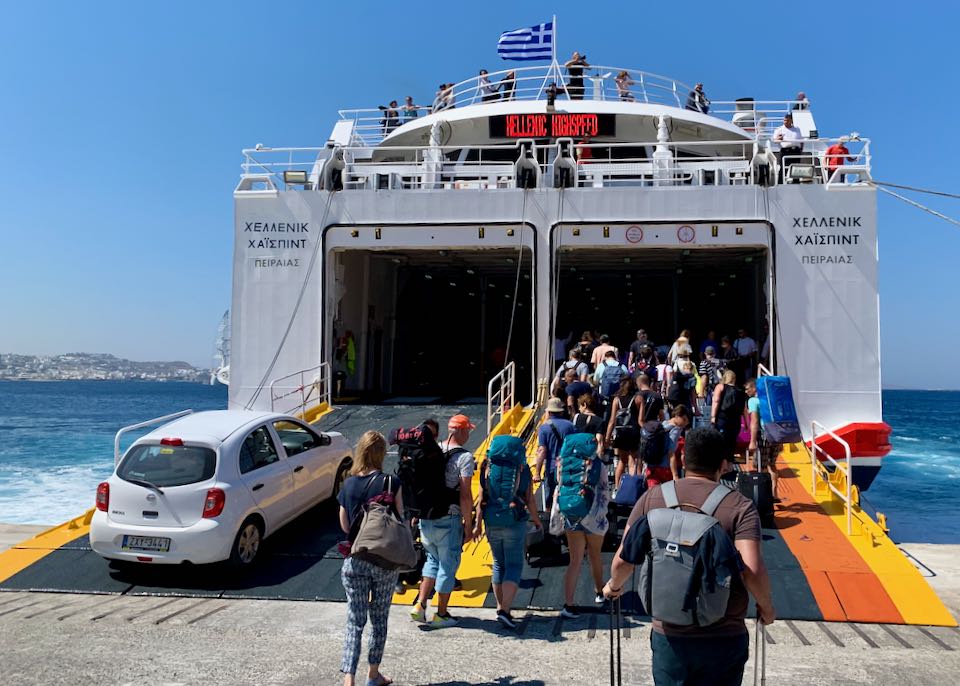
For most Greek island-hopping trips, it’s easier to rent separate cars on each island than take one rental car on multiple ferries.
Renting a Car in Greece: My Advice
Rent a car in Greece when it makes your trip easier, not for the entire vacation. You don’t need one for sightseeing in central Athens or for most short stays in Santorini and Mykonos. A car is much more useful for exploring Crete, Naxos, Milos, Rhodes, Corfu, Kefalonia, and the Greek mainland.
- Where to Book: I use Booking.com to compare rental companies and prices. Check the deposit, insurance excess, fuel policy, mileage allowance, and pickup location before booking. The cheapest advertised price isn’t always the best deal.
- Rent Separately on Each Island: Many rental companies restrict ferry travel or require written permission. Insurance coverage may also change when the car is on a ferry. For most island-hopping trips, return the car before boarding and rent another at your next destination.
- Book Automatic Cars Early: Manual transmission is common in Greece. Automatics are available but usually cost more and sell out earlier, especially on smaller islands in July and August.
- Rent a Small Car: Narrow village streets, tight parking spaces, and busy island roads make compact cars the best choice for most travelers. Book something larger only if you need the passenger or luggage space.
- Driver’s License: EU and UK licenses are accepted, and valid licenses from several other countries, including the United States, Canada, and Australia, are recognized under applicable rules. An International Driving Permit (IDP) may still be required for other licenses or by your rental company. Check the requirements for your license before booking.
- Pickup Location: Airports usually have the widest selection and longest opening hours. But if you’re arriving by ferry or staying in town, a port or downtown rental office may be easier. Some island companies also deliver cars to hotels.
- Credit Card and Deposit: Most rental companies require a credit card in the main driver’s name for the security deposit, even when the rental is prepaid. Some accept debit cards, but restrictions vary. Check before booking.
- Insurance: Check the excess (deductible), deposit, and exclusions for tires, glass, underbody damage, and unpaved roads. Full coverage purchased through a booking website may reimburse you after a claim rather than eliminate the rental company’s deposit or excess.
Check Rental Car Prices:
• Athens Airport
• Santorini Airport
• Mykonos Airport
• Rhodes Airport
• Kefalonia Airport
• Corfu Airport
• Heraklion Airport
• Chania Airport
• Thessaloniki Airport
Best Places to Rent a Car in Greece
The best pickup location depends on where you’re staying and whether you need a car for your entire visit or just a few days.

Picking up a car at the Athens Airport. Airports generally have the widest rental car selection and longest opening hours.
- Athens – Downtown
Don’t rent a car for sightseeing in central Athens. If you’re spending a few nights in the city before a mainland road trip, pick up your car on the day you leave. Several major rental companies have downtown offices. - Athens – Piraeus Ferry Port
Useful if you’re arriving by ferry and driving onto the mainland. Otherwise, central Athens and Piraeus are easy to explore without a car. Check the rental office’s exact location, as some are a considerable distance from the ferry gates. - Athens International Airport
The best choice if you’re arriving by plane and immediately driving to Delphi, Meteora, the Peloponnese, or another mainland destination. Good selection, long opening hours, and easier access to major roads than central Athens. - Santorini
A car is useful for beaches, wineries, Akrotiri, and inland villages, but unnecessary for many short stays on the caldera. Santorini Airport is convenient for pickup, though hotel delivery or a town rental office may be better if you only want a car for a day or two. - Mykonos
A car is useful for exploring beaches away from the main bus routes, but parking around Mykonos Town and popular beaches is difficult in summer. Mykonos Airport has convenient pickup options. Town and port rentals can also work well. - Naxos
One of my favorite islands for renting a car. You can manage without one in Naxos Town and the nearby beach resorts, but a car makes visiting Halki, Apiranthos, mountain villages, and quieter beaches much easier. Naxos Town has plenty of rental offices. - Paros
A car is useful for beaches, Lefkes, and exploring the island, but not essential if you’re staying in Parikia or Naoussa and using buses or taxis. Both towns have rental offices, and airport pickup is convenient if you’re arriving by plane. - Rhodes
A car makes exploring Lindos, beaches, villages, and the island’s interior much easier. Rhodes Airport is convenient for a full-stay rental. If you’re staying in Rhodes Town, consider renting only for sightseeing days. - Kefalonia
I strongly recommend a car. The island is large and mountainous, with beaches and villages spread across long distances. Kefalonia Airport is convenient for pickup. - Corfu
A car is very useful for exploring beaches, villages, and the northern and western coasts. Skip it while sightseeing in Corfu Town, where parking is difficult. Corfu Airport is convenient for pickup. - Heraklion – Crete
A car is excellent for exploring central and eastern Crete, including beaches, villages, and archaeological sites. Heraklion Airport has a large selection of rental companies. - Chania – Crete
A car is useful for western Crete, especially Elafonisi, Falassarna, mountain villages, and smaller beaches. You don’t need one for exploring Chania Old Town. Chania Airport is convenient for pickup. - Thessaloniki
Skip the car for central Thessaloniki, but rent one for Halkidiki, Mount Olympus, northern Greece, or a longer mainland road trip. Thessaloniki Airport is usually the easiest pickup location if you’re driving directly out of the city.
Car Rental in Greece: Frequently Asked Questions
Do I need a rental car in Greece?
Not everywhere. For many trips, the best approach is to rent a car only for the days when it helps.
You don’t need a car for central Athens or most short stays in Santorini and Mykonos. Walking, buses, taxis, tours, and hotel transfers are usually sufficient.
A car is much more useful on larger islands such as Crete, Rhodes, Corfu, and Kefalonia, or when exploring beaches and villages on Naxos, Paros, and Milos. It’s also excellent for mainland road trips through the Peloponnese, Delphi, Meteora, and northern Greece.
My advice: Don’t rent a car because you think you should. Rent one when you have specific places you want to visit that are difficult to reach without one.
Should I rent a car in Athens?
No, not for sightseeing. Central Athens is walkable, the metro is excellent, and parking is difficult.
If you’re staying in Plaka, Monastiraki, Syntagma, Koukaki, or near the Acropolis, a rental car is more trouble than help.
For a mainland road trip, pick up your car when leaving Athens rather than paying to park it during your city stay. Athens Airport is convenient if you’re driving directly from a flight. Downtown pickup is often better if you’ve already spent several nights in Athens.
For a single day trip to Cape Sounion, Delphi, or Meteora, compare renting a car with taking a tour or hiring a driver.
Is driving in Greece difficult?
Driving is generally straightforward on major highways and between larger towns. The more difficult driving is on narrow island roads, mountain routes, and in busy resort towns.
Santorini and Mykonos can be stressful in summer because of traffic, scooters, and limited parking. Old village streets can be extremely narrow, and navigation apps sometimes suggest routes that are unsuitable for larger cars.
I recommend a small car, particularly on the islands. Avoid driving into old town centers, take your time on mountain roads, and be cautious about unpaved routes.
Mainland highways are generally good, though tolls are common.
Do I need an International Driving Permit in Greece?
It depends on where your driver’s license was issued.
EU and UK licenses are accepted in Greece. Valid licenses from the United States, Canada, Australia, and several other countries are also recognized under applicable Greek rules, so an IDP is not automatically required for every non-EU visitor.
However, rental companies can impose their own documentation requirements. Some still request an IDP, particularly for licenses issued outside Europe.
Check your rental company’s requirements before traveling. If an IDP is required, obtain it before leaving home. It must be carried with your original driver’s license and cannot be used on its own.
For U.S. travelers, an IDP can be obtained through AAA.
What documents do I need to rent a car in Greece?
- Driver’s license: A valid license, usually held for at least one year. Some companies require longer.
- Passport or national ID: Required for identification.
- Credit card: Usually required in the main driver’s name for the security deposit.
- International Driving Permit: If required for your license or by the rental company.
- Booking confirmation: Keep a copy on your phone.
Many companies require drivers to be at least 21, with higher minimum ages for some vehicle categories. Drivers under 25 may pay an additional fee. Maximum age restrictions can also apply.
If you plan to use a debit card, confirm acceptance before booking. Some companies accept them only with additional insurance or a larger deposit.
Should I rent an automatic or manual car?
If you can drive manual, you’ll generally have more choice and lower prices. Automatic cars are available throughout Greece but are less common, particularly on smaller islands.
Book an automatic early for July and August. They often sell out before manual cars.
I also recommend renting the smallest car that comfortably fits everyone and their luggage. A European economy car may technically seat five people but have very little room for suitcases.
What insurance do I need for a rental car in Greece?
Most rentals include basic required insurance, but that doesn’t mean every type of damage is covered.
The most important number is the excess (deductible), which is the amount you may have to pay if the car is damaged or stolen.
- Third-party liability: Covers your legal liability for injury or damage to others, subject to the policy terms.
- Collision Damage Waiver (CDW): Limits your responsibility for damage to the rental car, usually with an excess.
- Theft Protection: Limits your responsibility if the car is stolen, usually with an excess.
- Zero-excess coverage: Reduces or eliminates the excess for covered damage, but exclusions can still apply.
- Excess reimbursement insurance: Often sold by booking websites. You may still have to pay the rental company for damage and claim reimbursement afterward.
Check whether tires, glass, mirrors, underbody damage, and driving on unpaved roads are covered. These exclusions matter on Greek islands.
Before leaving the rental office, photograph the car’s exterior, wheels, windshield, interior, fuel gauge, and any existing damage. Make sure damage is recorded on the rental agreement.
Can I take a rental car on Greek ferries?
Sometimes, but only if your rental agreement permits it.
Many rental companies require written permission before taking a car on a ferry. Others prohibit ferry travel entirely or restrict insurance coverage while the vehicle is being transported.
The ferry company may sell you a vehicle ticket, but that doesn’t mean your rental company allows the journey.
Get written confirmation of ferry permission and insurance coverage before booking a vehicle ticket.
For most island-hopping trips, I recommend returning the car before boarding and renting another at your next destination.

The road down to Santorini’s ferry port is steep and busy when ferries arrive. For most visitors, it’s easier to pick up a rental car at the airport or arrange delivery to their hotel.
Can I pick up a rental car in Athens and return it somewhere else?
Yes, on some routes, but one-way rentals can be expensive.
Athens Airport to central Athens is usually straightforward. Returning a car in another mainland city, such as Thessaloniki or Kalamata, may also be possible, depending on the company.
Returning an Athens rental car on a Greek island is much more difficult. Many companies don’t permit it, and those that do may charge substantial fees.
Confirm the exact pickup and drop-off locations, one-way fee, and ferry permission before booking.
For most trips combining the mainland and islands, rent a car for the mainland portion, return it, then rent separately on the islands.
Which Greek islands are best for renting a car?
Crete, Kefalonia, Milos, and Rhodes are among the islands where I most strongly recommend renting a car. Distances can be long, and many of the best beaches and villages are inconvenient by public transport.
Naxos, Paros, and Corfu are also excellent islands for exploring by car, though you can manage without one if staying in the main towns or well-connected beach resorts.
Santorini and Mykonos are different. A car is useful for exploring beyond the main towns and beaches, but parking and traffic can make it more trouble than it’s worth, particularly in July and August.
You don’t necessarily need a car for your entire stay. On Santorini, for example, one or two days may be enough to visit wineries, Akrotiri, Pyrgos, and the beaches.

A rental car is useful for exploring Santorini’s wineries, beaches, and inland villages, though I recommend a tour or driver if you’ll be drinking wine.

Mykonos has relatively few taxis, especially during summer. Renting a car can be useful for exploring the island, but parking around Mykonos Town and popular beaches is difficult.
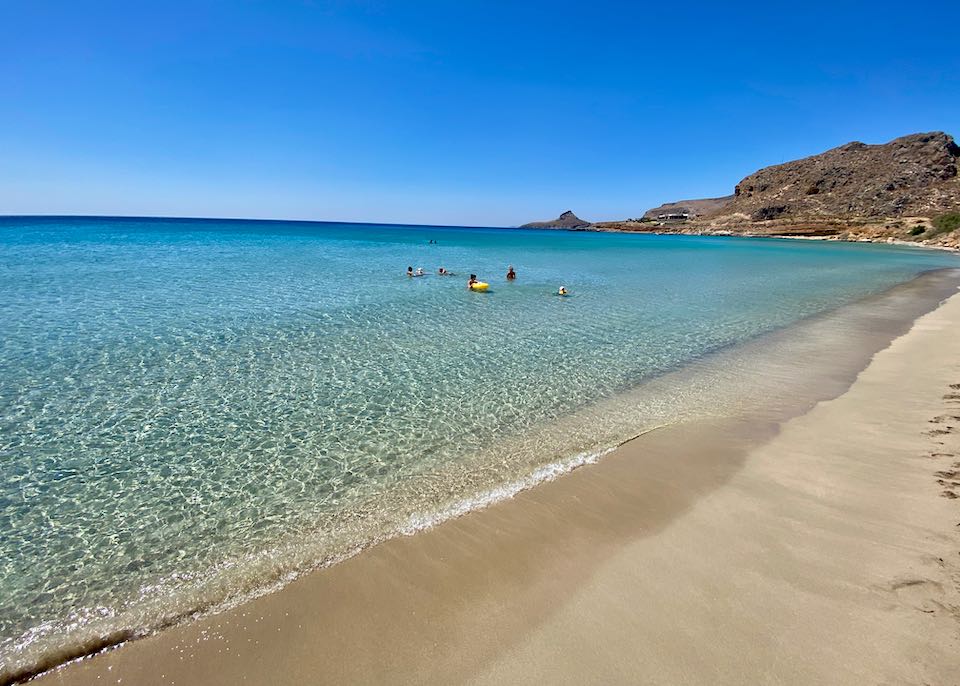
Crete is one of the best places in Greece to rent a car. Many beaches and villages are difficult or time-consuming to reach by bus.
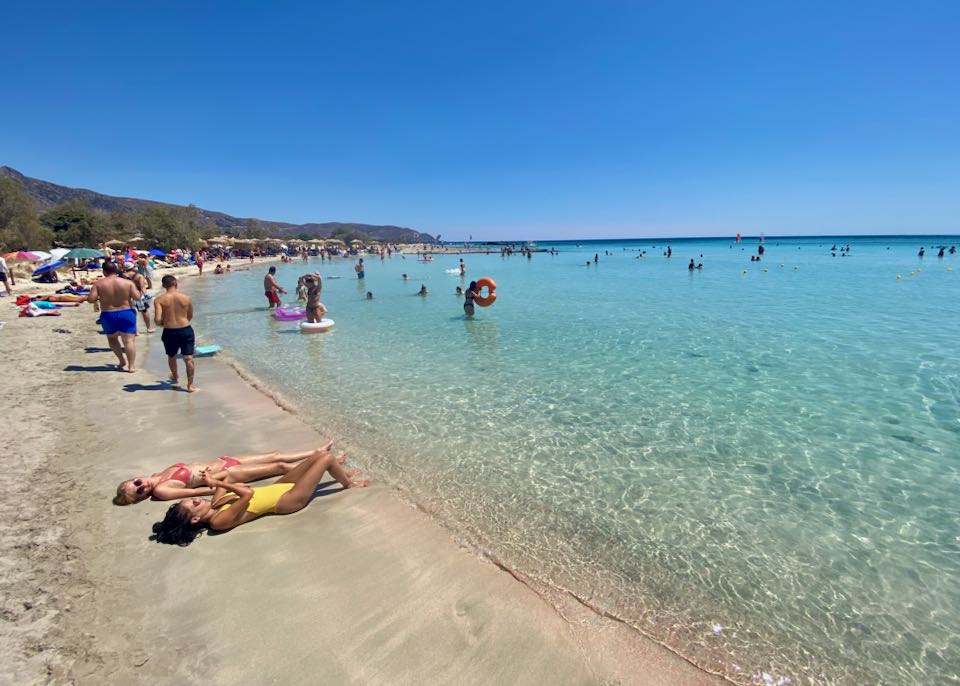
Elafonisi can be reached by bus or tour from Chania, but a rental car gives you more flexibility for arrival times and stops along the way.
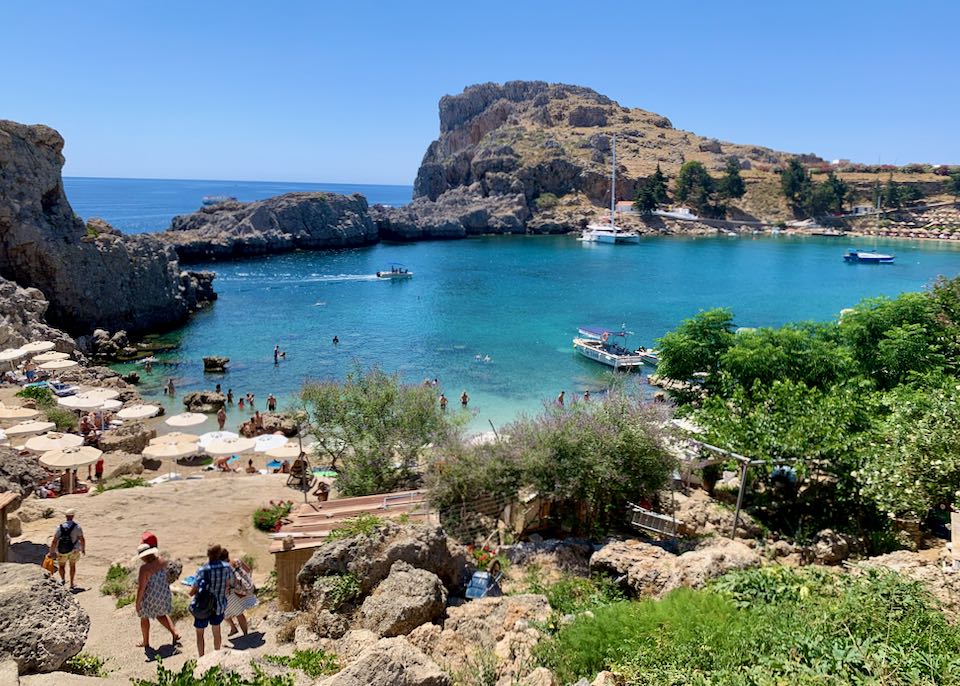
A rental car makes it much easier to visit Lindos, beaches, and villages across Rhodes.
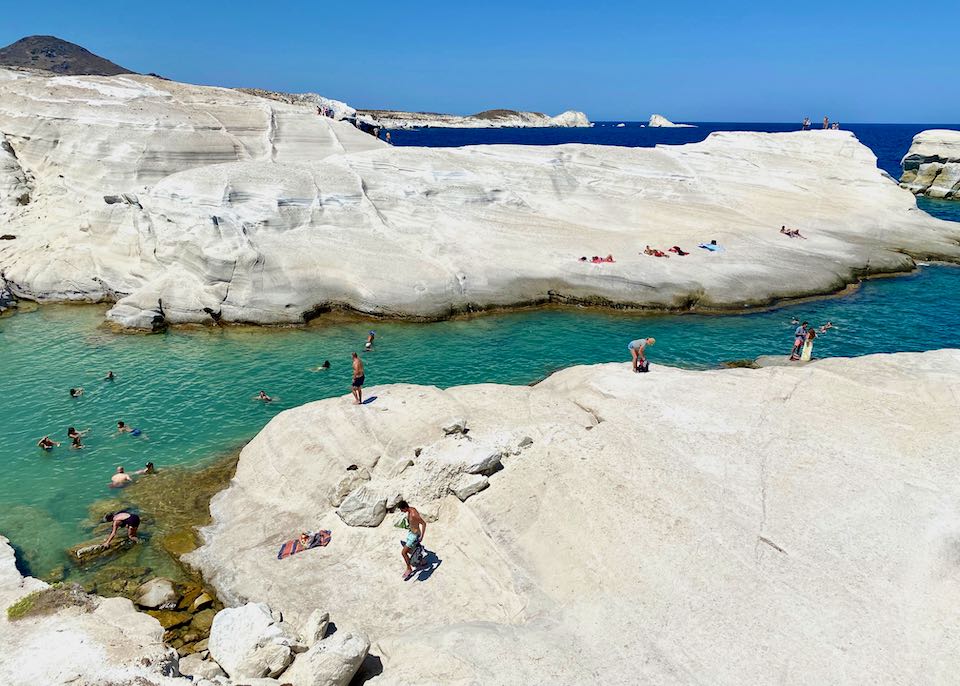
Milos is one of the islands where a rental car makes a big difference. Some remote beaches require driving on unpaved roads, which may be prohibited by your rental agreement.
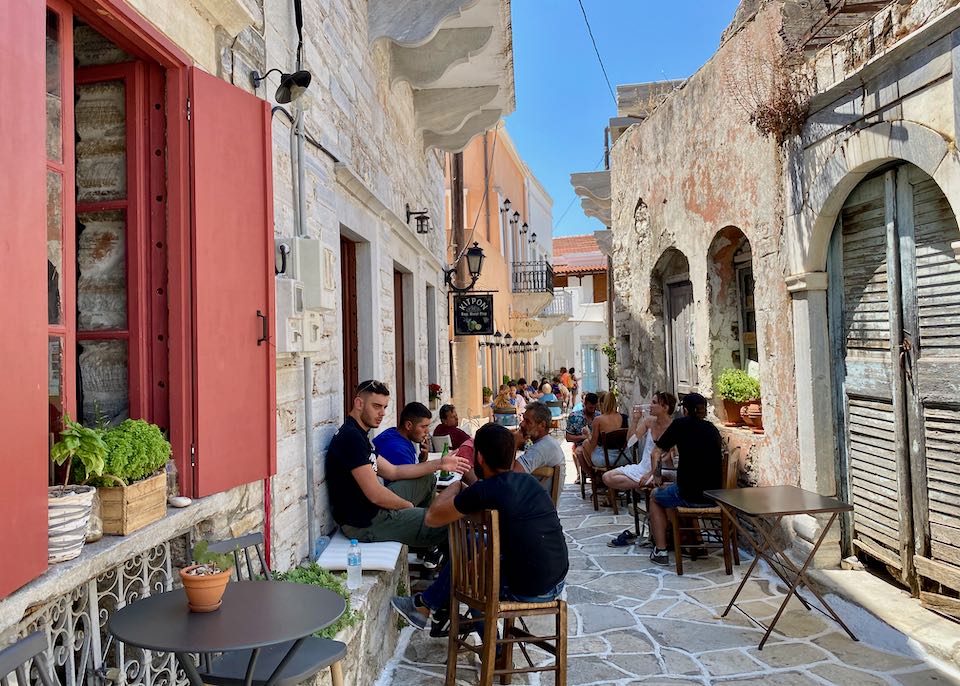
Naxos has good bus connections between the main towns and beaches, but a car makes visiting Halki, Apiranthos, and the mountain villages much easier.
What should I know about parking in Greece?
Parking is difficult in central Athens and the old towns of many popular islands.
Oia, Fira, Mykonos Town, Naoussa, Parikia, Chania Old Town, Rhodes Old Town, Lindos, and Corfu Town can all be challenging, particularly in July and August.
If you’re renting a car, ask your hotel exactly where guests park. Hotels in pedestrian areas may have parking several minutes away, and some require carrying luggage up stairs or along narrow streets.
Don’t assume that informal roadside parking is legal. Pay attention to signs, marked spaces, and restrictions.
My advice: Rent a small car, choose accommodation with convenient parking when possible, and avoid driving into historic centers unless you know where you’re going.
Are cheap rental cars in Greece reliable?
Yes, many inexpensive rentals are perfectly good. But compare the total cost and rental terms, not just the advertised daily rate.
Before booking, check:
- Pickup location: Airport terminal, shuttle, off-site office, or hotel delivery.
- Deposit: How much will be held on your credit card.
- Insurance excess: What you could owe for damage or theft.
- Fuel policy: Full-to-full is usually best.
- Mileage: Unlimited mileage is preferable for longer trips.
- Transmission: Confirm automatic if required.
- Extra charges: Additional drivers, child seats, late pickups, and one-way fees.
- Reviews: Read recent reviews for the specific rental office, not just the company.
I don’t mind booking an inexpensive car, but I avoid rentals with unclear insurance, unusually high deposits, or inconvenient pickup arrangements. Paying a little more for a straightforward rental is often worth it.
More Greece Car Rental Photos and Tips

Santorini Airport is convenient for picking up a rental car on arrival. If you’re staying on the caldera and only need a car for one or two days, hotel delivery or a town rental office may be easier.

Athens Airport has a large selection of rental companies and is a convenient starting point for mainland road trips.

You don’t need a rental car for sightseeing in central Athens. Most major sights are within walking distance of Plaka, Syntagma, Monastiraki, and Koukaki.
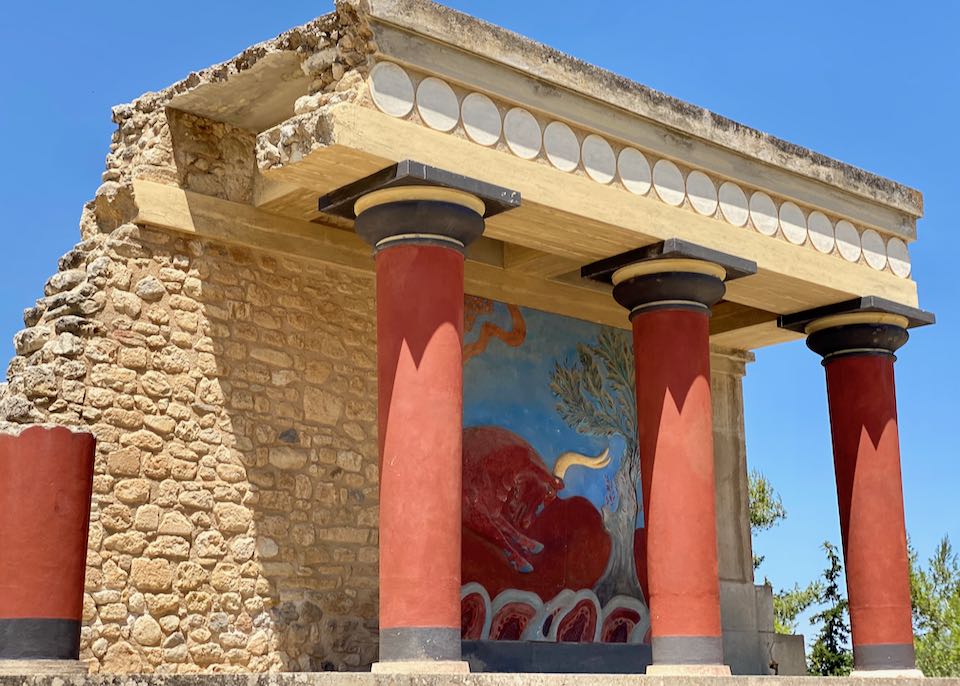
Knossos is easy to visit from Heraklion by bus, taxi, or tour. A rental car is more useful if you’re combining it with other sights in central Crete.

Chania Old Town is best explored on foot. Rent a car for beaches, villages, and drives around western Crete rather than for sightseeing in town.
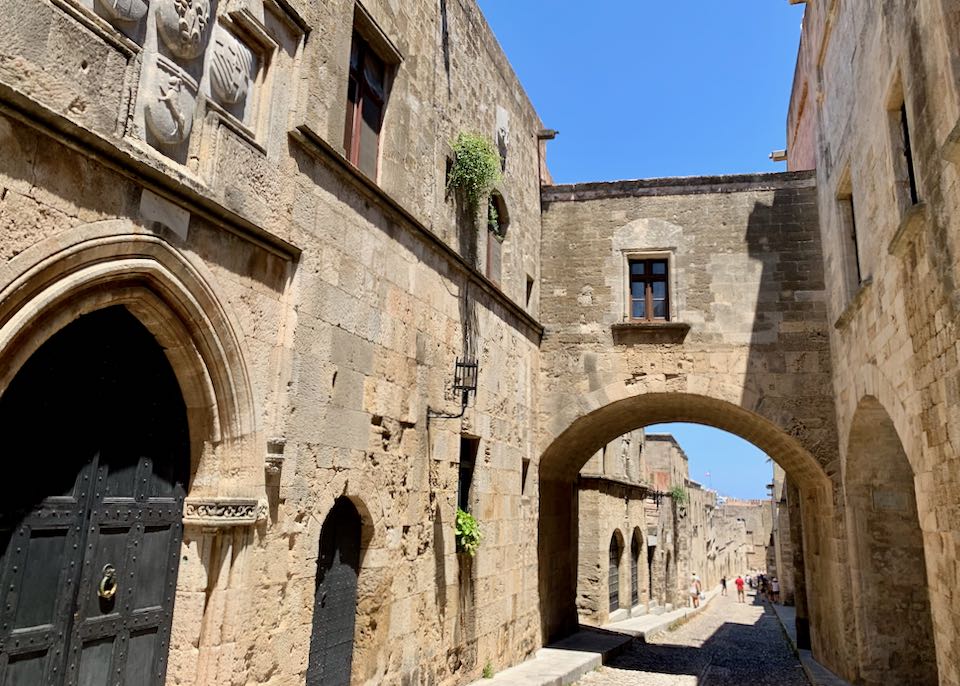
Rhodes Old Town is largely pedestrianized. A rental car is much more useful for exploring the rest of the island.
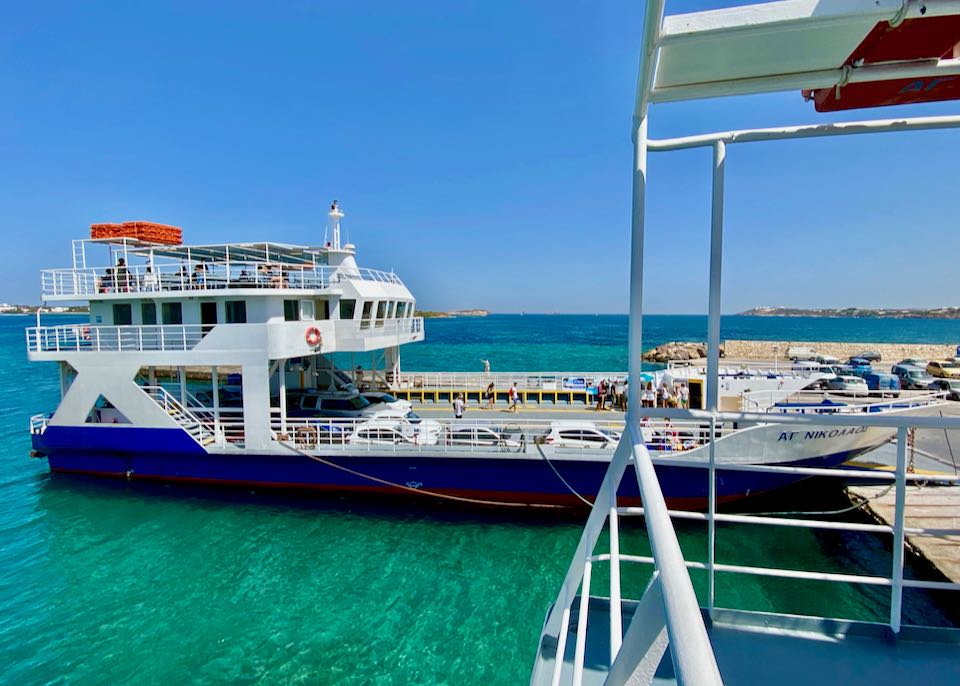
The short car ferry between Paros and Antiparos is convenient, but check whether your rental company allows the crossing before taking a rental car aboard.
Read More
• Where to Stay in Santorini
• Where to Stay in Mykonos
• Where to Stay in Naxos
• Where to Stay in Paros
• Where to Stay in Crete
• Where to Stay in Athens

About Santorini Dave