Greece › Visiting in August
Updated: October 14, 2026 • By Santorini Dave
Questions? dave@santorinidave.com
See Also
• Best Time to Visit Greece
• Greek Island Hopping
• Best Greek Islands
• Where to Stay in Athens
• Where to Stay in Santorini
• Where to Stay in Mykonos
• Where to Stay in Naxos
• Where to Stay in Paros
• Where to Stay in Crete
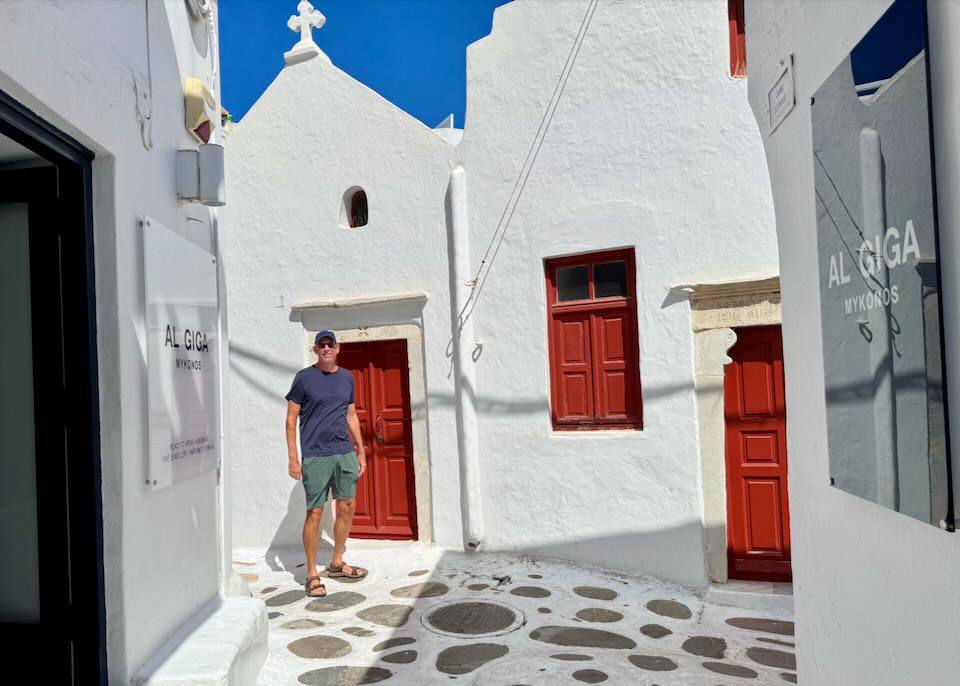
The Greek islands in August.
Is August a Good Time to Visit Greece?
August is excellent for hot weather, warm seas, beaches, nightlife, and island hopping. It’s also one of Greece’s busiest and most expensive months. All hotels, beach clubs, restaurants, and tours are operating, but popular resorts, ferries, rental cars, and beach clubs can and will sell out.
I would avoid August if you are sensitive to heat, traveling on a tight budget, hoping for quiet villages, or prefer making plans after arrival. For most first-time visitors with flexible dates, I prefer September. The sea is still warm, but sightseeing is easier and crowds begin to ease.
Greece in August: Quick Guide
- Best for: Beaches, swimming, nightlife, sailing, and resort stays.
- Best islands for families: Naxos, Crete, Rhodes, and Corfu.
- Best for nightlife: Mykonos, Paros, Ios, and Athens.
- Best for couples: Santorini, Milos, Sifnos, and Folegandros.
- Best value: Naxos, Crete, and mainland Greece are better value than Santorini or Mykonos.
- Busiest period: The days surrounding August 15, especially for domestic travel.
- Best strategy: Book early, sightsee in the morning, stay close to a beach or pool, and drink lots of beer.
Should You Visit Early, Mid, or Late August?
August 1 to 10
Early August is already peak season, but generally easier than mid-month. A good choice if you need to travel during school holidays but can avoid the August 15 holiday period.
August 11 to 18
One of the busiest travel periods of the Greek summer. August 15 is a major religious holiday and domestic travel date. Ferries, flights, roads, and popular destinations become especially crowded. Book well ahead and avoid tight connections.
August 19 to 31
Still hot and busy, but domestic holiday traffic gradually eases. The final week is often a little less hectic, though Santorini, Mykonos, Paros, and popular parts of Crete remain crowded and expensive.
August 15 in Greece
August 15 celebrates the Dormition of the Virgin Mary. Churches hold services and processions, while villages host panigiria with traditional music, dancing, and food. Tinos is especially busy because of its important pilgrimage celebrations. Banks, government offices, and many ordinary shops close, but hotels, restaurants, and tourist businesses in popular destinations generally remain open.
August Weather, Swimming, and Wind
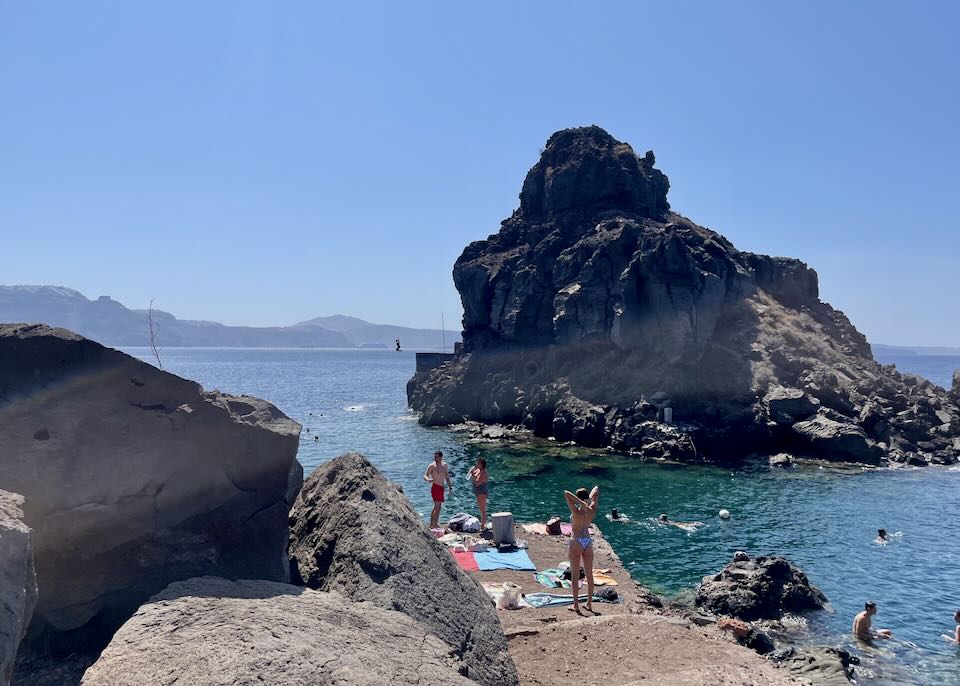
Swimming below Oia in August. A welcome break from Santorini’s heat and crowds.
August is hot, dry, and sunny across most of Greece. Athens and inland areas can exceed 35°C (95°F), especially during heatwaves, while the islands are often slightly cooler because of sea breezes. Visit archaeological sites early and avoid sightseeing during the hottest afternoon hours. A hotel with a pool or easy beach access makes August much more enjoyable, especially for families.
Sea temperatures are among the warmest of the year, and swimming is comfortable almost everywhere. The water is often particularly warm around Rhodes, the Dodecanese, and the Ionian Islands.
The main complication is the Meltemi, a dry northern wind that commonly affects the Aegean in July and August. It makes hot days more comfortable, but strong winds can cause rough seas, blowing sand, canceled boat tours, and uncomfortable ferry crossings. North-facing beaches are often the windiest, while south-facing beaches are usually more sheltered.
Large conventional ferries are generally more comfortable than smaller high-speed vessels during strong winds, especially for travelers prone to seasickness. Severe winds can delay or cancel either type.
Ferries, Island Hopping, and Booking
July and August have the most extensive ferry schedules, but popular departures can sell out, especially around August 15. Book all August ferries in advance. Check schedules before reserving nonrefundable hotels, since not every island connection operates daily.
For island hopping, stick to one island group. Santorini, Naxos, Paros, and Mykonos combine easily, but Rhodes, Corfu, and the Ionian Islands generally work better as separate trips.
- Avoid tight connections: Allow plenty of time between flights and ferries, especially when traveling between Athens Airport and Piraeus.
- Reserve rental cars and transfers: Smaller islands can run out of rental vehicles, and taxis are limited on Santorini and Mykonos.
- Book popular experiences: Reserve beach clubs, boat tours, and sought-after restaurants in advance.
- Protect your flight home: Return to Athens or your departure island at least one day before an international flight.
Spontaneous August travel is possible on larger islands and the mainland, but it usually means accepting less convenient hotels, higher prices, or whatever ferry times remain available.
Best Places in Greece in August
Naxos
Naxos is my top August recommendation for families, long sandy beaches, good food, and better value than Santorini or Mykonos. Agios Prokopios, Agia Anna, and Plaka have excellent beaches with generally shallow water and enough space to handle crowds better than many smaller Cycladic beaches. Stay in one of these beach areas for swimming and seaside restaurants, or in Naxos Town for shopping, nightlife, and easy ferry access. A car is useful for exploring Halki, Filoti, Apiranthos, and quieter beaches. My Where to Stay in Naxos guide compares the best beach areas and towns.
Crete
Crete handles August crowds better than smaller islands because it has numerous cities, beaches, villages, and resort areas, but famous places such as Chania, Balos, and Elafonisi still become extremely busy. Give the island at least five nights and focus on one region: choose Chania for the most attractive city and western beaches, Rethymno for an Old Town and beach combination, Heraklion for Knossos and museums, or Elounda and Agios Nikolaos for luxury resorts and swimming. A rental car is useful, but parking near Chania and Rethymno Old Town can be frustrating, and roads to popular beaches get congested. My Where to Stay in Crete guide compares the best bases and hotels.
Santorini
August is one of Santorini’s busiest and most expensive months. Oia at sunset, Fira, Athinios ferry port, and the narrow roads can feel overwhelmed when cruise ships, ferries, and island traffic overlap. Stay in Fira for buses and nightlife, Imerovigli for quieter caldera views, or Oia for its beautiful setting and sunset views. A hotel with a private terrace or plunge pool gives you somewhere peaceful to escape the crowds and heat. Book top hotels and popular restaurants well ahead, and consider a caldera boat tour for swimming and views away from the busiest villages. My Where to Stay in Santorini guide compares the towns and best hotels.
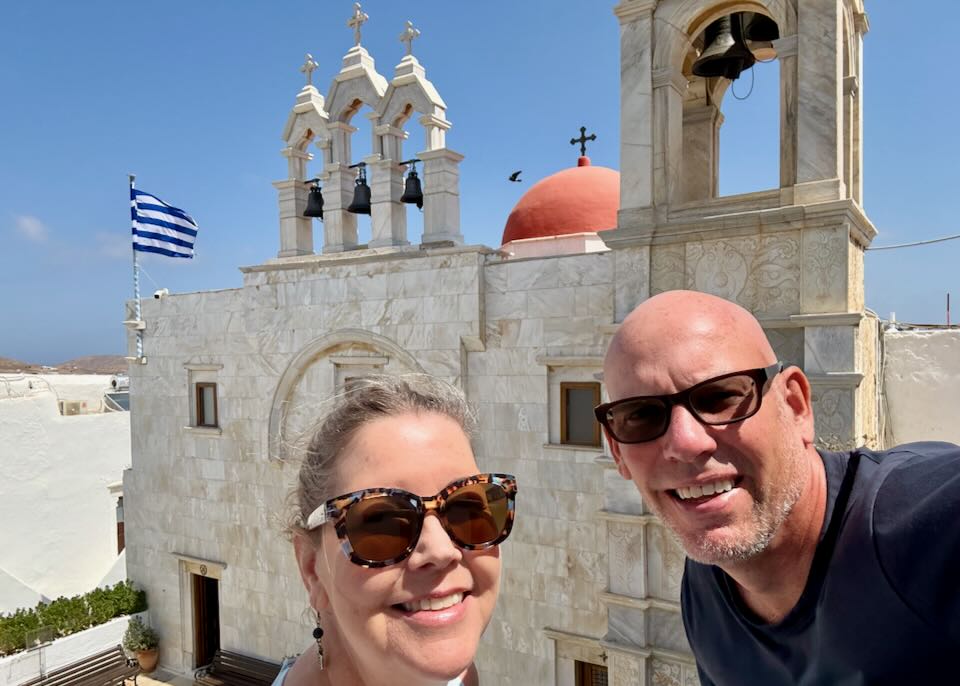
My wife and I in Mykonos in August.
Mykonos
August is the peak month for Mykonos nightlife, beach clubs, luxury hotels, and international DJs. It is the right choice for travelers who want the island at maximum intensity and the wrong choice for those seeking quiet beaches or good value. Stay in Mykonos Town for nightlife, restaurants, and bus connections, or near a southern beach for swimming and a resort atmosphere. Reserve hotel rooms, restaurant tables, beach beds, and major events well ahead, and do not rely on taxis because supply is limited. Northern beaches are generally quieter but more exposed to the Meltemi. My Where to Stay in Mykonos guide compares the best towns, beaches, and hotels.
Paros
Paros is extremely popular in August, especially around Naoussa. Naoussa is the prettiest and liveliest base but becomes crowded and expensive, with limited parking and restaurant reservations often required. Parikia is more practical for ferries, buses, and better-value accommodation. Paros is easier to explore on a short trip than Naxos, but Naxos has broader sandy beaches and usually works better for families. My Where to Stay in Paros guide compares Naoussa, Parikia, and the main beach areas.
Rhodes
Rhodes is excellent in August for beaches, warm water, and historic sightseeing. Stay in Rhodes Town for the medieval Old Town, restaurants, buses, and a trip without a car, or choose Lindos and the southeast coast for beaches and resort hotels. Rhodes is large, with approximately 1 to 1.5 hours between Rhodes Town and Lindos by car, and works better as a standalone five-to-seven-night destination than as part of a fast Cyclades itinerary.
Corfu and the Ionian Islands
Corfu is a good August choice for green scenery, beaches, villages, and a historic town that feels completely different from the Cyclades. It is more humid and usually less windy than Mykonos, Naxos, or Paros, so the heat can feel heavier. Stay in Corfu Town for restaurants and sightseeing without a car, or choose a coastal base if swimming is the main priority. Roads are narrow and slow, and parking near popular beaches can be difficult. Zakynthos, Kefalonia, and Lefkada also have excellent beaches, but August is their busiest month.
Sifnos, Milos, and Folegandros
Sifnos, Milos, and Folegandros are smaller and more relaxed than Mykonos or Paros, but none is quiet in August. Sifnos is best for food, villages, and couples; Milos is best for unusual beaches and boat tours; and Folegandros is best for a small-island atmosphere and beautiful Chora. Accommodation and rental vehicles are limited, so these islands can be harder to book at the last minute than larger destinations.
Athens and Mainland Greece in August
Athens
Athens is hot in August, but the Acropolis, Plaka, Monastiraki, and major museums remain busy even as many residents leave for summer holidays. Book an early Acropolis entry time in advance. The exposed site becomes extremely hot by late morning, and afternoon closures are possible during severe heatwaves. Spend the hottest hours in an air-conditioned museum or hotel pool. Two or three nights is enough for most first-time visitors. Stay near the historic center to minimize walking and transit in the heat, with Plaka and Monastiraki closest to the sights and Syntagma best for transportation. My Where to Stay in Athens guide compares the neighborhoods and hotels.
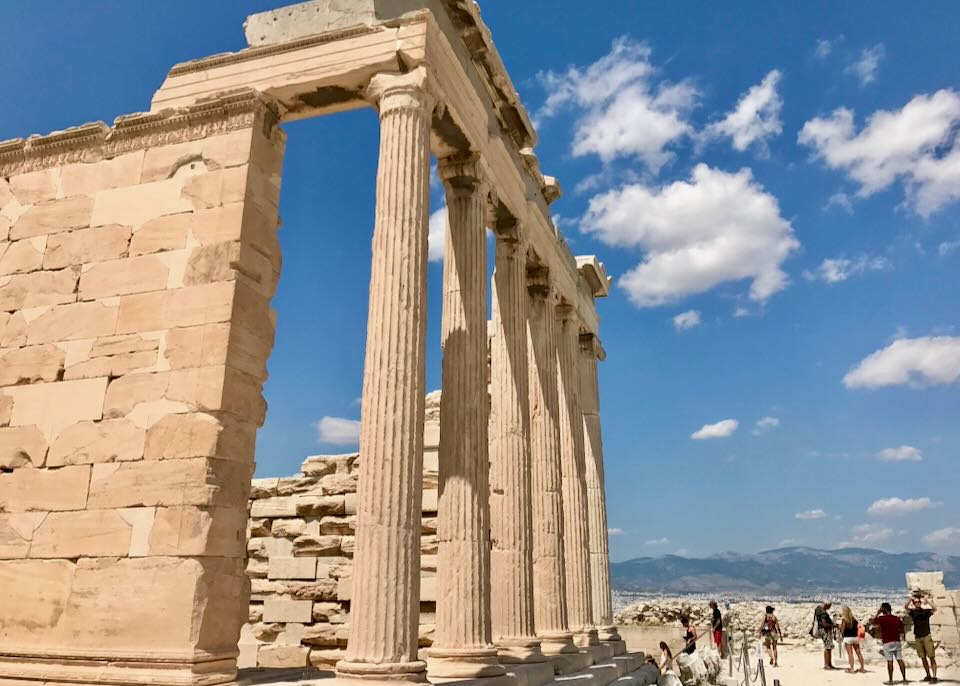
The Acropolis in Athens in August. The exposed archaeological site becomes intensely hot by midday, and heat-related schedule changes are possible.
The Peloponnese
The Peloponnese is excellent for a road trip, with beaches, historic towns, and major archaeological sites. Inland areas can be brutally hot in August, so stay near the coast and visit nearby sights early. Mycenae, Epidaurus, Olympia, and Ancient Corinth are worth visiting, but they’re too spread out to cover comfortably from one base. Nafplio, the Mani, and Monemvasia are beautiful but busy. August works best for a relaxed coastal itinerary rather than an aggressive sightseeing loop.
Northern and Mountain Greece
Mountain areas such as Zagori, Pelion, and Tzoumerka offer cooler evenings, hiking, rivers, and traditional villages, though exposed trails can still be very hot during the day. Thessaloniki is hot in August, and nearby Halkidiki’s beaches are extremely busy.
Wildfires and Travel Disruptions
Hot, dry, windy weather creates a serious wildfire risk in August. Fires may affect roads, beaches, ferries, flights, or hiking trails in one area without affecting the rest of Greece.
Follow Greek Civil Protection instructions, check conditions for your exact destination and route, and never enter a closed trail or drive past an emergency roadblock. Broad regional headlines do not necessarily mean your island or city is unsafe.
What to Pack for Greece in August
- Light clothing: Pack breathable clothes and swimwear that dry quickly.
- Sun protection: Bring sunscreen, sunglasses, and a secure hat for windy islands.
- Comfortable shoes: Archaeological sites, steep villages, cobblestones, and ferry ramps require better footwear than beach sandals.
- Water bottle: Carry water for archaeological sites, ferry waits, hikes, and long drives.
- Light layer and seasickness medication: Bring a light layer for windy ferry decks and seasickness medication if you’re prone to motion sickness.
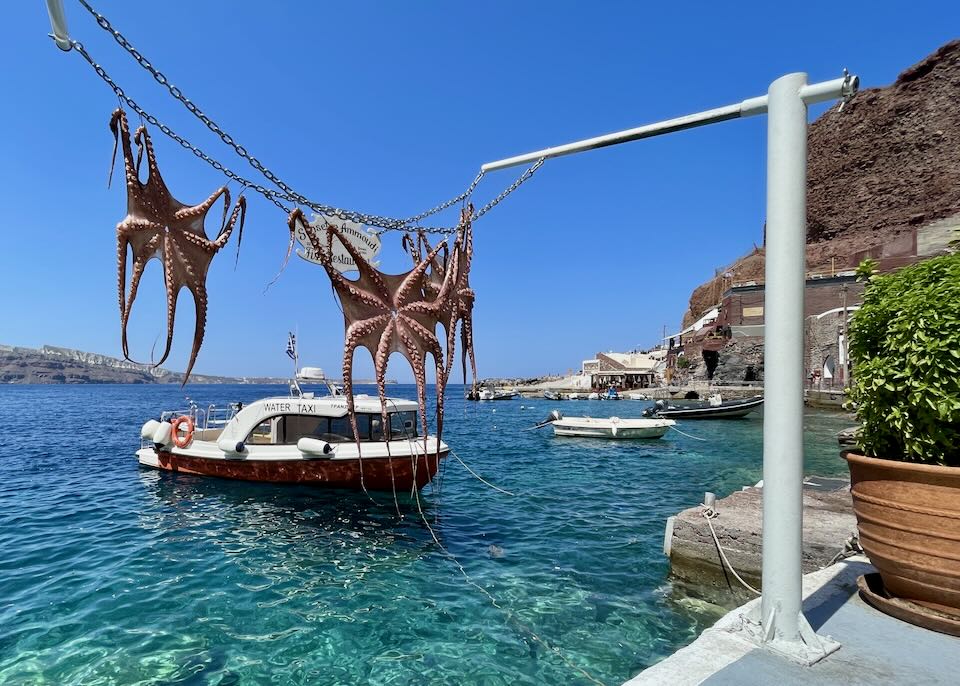
Octopus drying outside a traditional Greek island taverna on one of our August visits.
August Compared with July and September
• July: Just as hot, generally a little less crowded than August, and excellent for beaches and nightlife.
• August: Peak crowds and prices, very warm seawater, and the busiest beach clubs and nightlife.
• September: Cooler, calmer, and better value, with warm sea and dependable beach weather, especially early in the month.
Greece in August Frequently Asked Questions
Is August too hot for Greece?
It can be, especially in Athens, mainland archaeological sites, inland Crete, and the Peloponnese. I find the heat much easier to manage when I’m staying near a beach or pool.
Is Greece too crowded in August?
The most famous islands, beaches, ports, and archaeological sites are very crowded. Crete, Naxos, and Rhodes generally handle the crowds better than Santorini or Mykonos.
Which Greek island is best in August?
Naxos is my top all-around choice for families, beaches, food, and value. Crete is best for a longer and more varied trip, Mykonos for nightlife, Santorini for caldera views, and Rhodes for historic sightseeing.
Can I island-hop in August?
Yes, but popular ferry departures can sell out. Keep the itinerary manageable, book all ferries in advance, and avoid tight connections.
Is August too windy for ferries?
Usually not for large conventional ferries, but strong Meltemi winds can cause delays, cancellations, and rough crossings. Smaller high-speed ferries are generally less comfortable in rough seas.
Can I hike in Greece in August?
Yes, but start early, carry plenty of water, and avoid exposed trails during the hottest hours. Long hikes such as the Fira-to-Oia trail or Samaria Gorge are demanding in August heat. Samaria Gorge can close during extreme heat, so check its operating status before going.
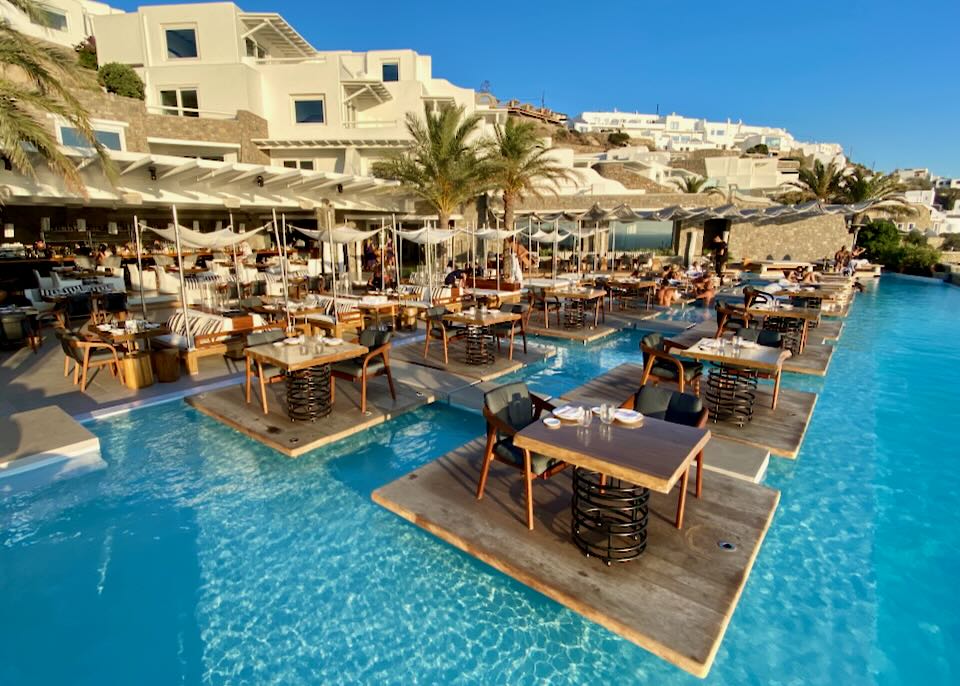
Cavo Tagoo is one of my favorite luxury hotels in Mykonos. Book early for August, especially if you want a room with a private pool.

About Santorini Dave