Greece › Visiting in September
Updated: July 19, 2026 • By Santorini Dave
Questions? dave@santorinidave.com
See Also
• Best Time to Visit Greece
• Greek Island Hopping
• Best Greek Islands
• Where to Stay in Athens
• Where to Stay in Santorini
• Where to Stay in Mykonos
• Where to Stay in Naxos
• Where to Stay in Crete
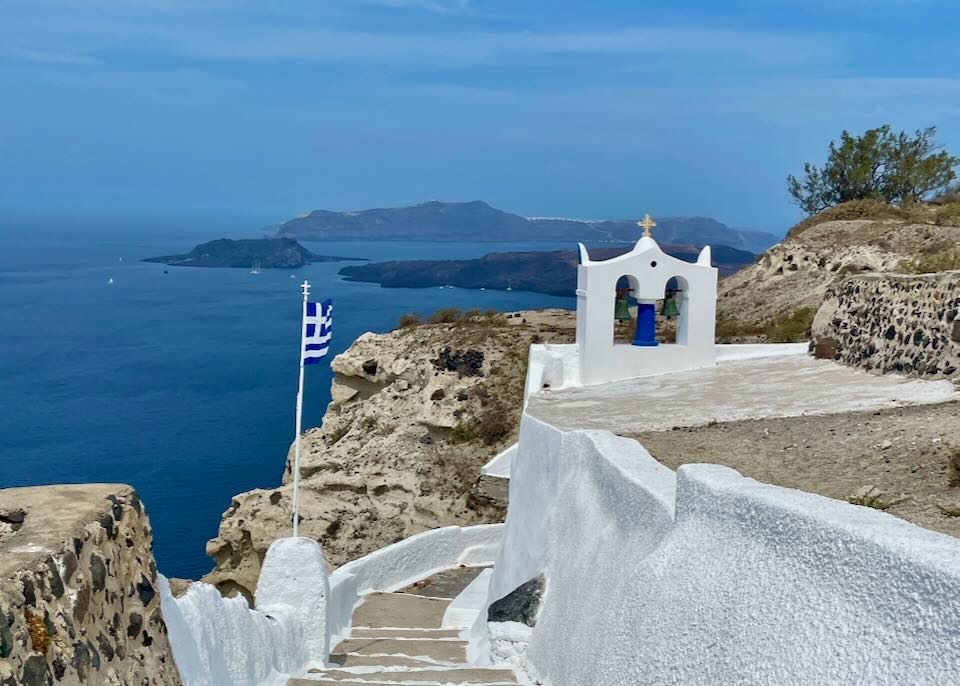
Santorini in September. This is my favorite month for the Greek islands. The weather is warm, the sea is excellent for swimming, and the worst summer heat begins to ease.
Is September a Good Time to Visit Greece?
September is one of the best months to visit Greece. The weather is still hot enough for beaches and swimming, ferries run frequently between the main islands, and almost all hotels, restaurants, tours, and beach clubs remain open. It is also much easier to explore Athens, archaeological sites, villages, and hiking trails than during the most intense heat of July and August.
Do not expect Greece to become quiet as soon as August ends. The first ten days of September still feel like high season on Santorini, Mykonos, Paros, and other popular islands. Hotels remain expensive, famous beaches are busy, and ports can be chaotic when several ferries arrive together.
My favorite period is roughly September 10 to 25. It is late enough for crowds and temperatures to ease, but early enough that island travel still feels fully in season. The sea has been warming all summer and is normally more comfortable for swimming than it is in May or June.
For the best chance of hot beach weather at the end of September, choose Crete, Rhodes, Kos, or Karpathos. For a first island-hopping trip, Santorini, Naxos, Paros, and Mykonos have the best combination of ferry connections, hotels, restaurants, beaches, and tours.
Greece in September: Quick Guide
- Best overall period: September 10 to 25.
- Best for swimming: The entire month, with the warmest and most dependable late-month conditions in Crete and the Dodecanese.
- Best islands for first-time visitors: Santorini, Naxos, Paros, Mykonos, Crete, and Rhodes.
- Best value: Naxos, Crete, the Peloponnese, and less famous islands without large international resort markets.
- Still crowded: Santorini, Mykonos, Paros, and the Acropolis, particularly during the first half of the month.
- Best for late September: Crete or Rhodes for beaches; Athens and the Peloponnese for sightseeing and road trips.
- Where rain becomes more likely: Corfu, the Ionian Islands, northern Greece, and mountainous mainland regions, especially near the end of the month.
- What closes: Very little on the major islands. Some seasonal restaurants, beach bars, tours, and minor ferry routes begin reducing service late in the month.
Should You Visit Early, Mid, or Late September?
September 1 to 10
Choose early September if you want the hottest weather, the strongest nightlife, and the widest choice of ferries and tours. It still feels like summer high season, especially on Santorini, Mykonos, and Paros. Beaches are busy, popular hotels remain expensive, and the main island ports can be hectic.
September 11 to 20
This is the best period for most first-time visitors. The sea is warm, restaurants and tours are fully operational, and ferry service between the major islands remains strong. Crowds begin to ease, but Santorini, Mykonos, and Paros are still lively rather than quiet.
September 21 to 30
Choose late September for fewer crowds, somewhat better hotel prices, and easier sightseeing. The southern islands remain warm, but cloudy days, rain, and cooler evenings become more likely. Crete and Rhodes are the best choices for a beach-focused trip during the final week.
Major islands remain open, but some minor ferry routes no longer run every day. Check transportation before booking hotels rather than choosing islands first and working out the connections later.
Greece Weather in September
September remains a summer month in most of Greece, especially during the first three weeks. Typical daytime temperatures range from the mid-20s to around 30°C, though Athens, Crete, and Rhodes can be hotter.
- Athens: Afternoon temperatures are commonly around 28°C to 31°C early in the month, with cooler conditions becoming more common later. The Acropolis and Ancient Agora can still feel very hot between late morning and mid-afternoon because there is little shade.
- Santorini, Mykonos, Naxos, and the Cyclades: Expect warm days in the mid-to-high 20s, cooler evenings, and more wind than in Athens or Crete. A windy 25°C day can feel surprisingly cool on a ferry deck or exposed restaurant terrace after sunset.
- Crete: Crete holds onto summer longer than the Cyclades. The north coast, including Chania, Rethymno, and Heraklion, stays warm, while the south coast can feel hotter and more sheltered.
- Rhodes, Kos, and the Dodecanese: These islands have some of the most dependable late-season heat in Greece. Warm beach weather often continues through the end of the month.
- Corfu and the Ionian Islands: September is warm, greener, and more humid than the Cyclades. Early September is an excellent time to visit, but rain becomes more likely as the month progresses.
- Thessaloniki and northern Greece: Days can remain hot, but nights cool more quickly than on the southern islands. Mountain areas such as Zagori and Meteora can require a proper jacket in the evening.
Swimming, Wind, and Ferry Conditions
September is one of the best months for swimming in Greece. The sea has absorbed heat throughout July and August and is commonly around 23°C to 26°C, depending on the island and local conditions. It is typically warmer than in June.
The air can feel cooler when you leave the water on windy Cycladic beaches, especially late in the month. Crete, Rhodes, Kos, and other southern islands provide the best odds of warm water combined with hot air temperatures.
The strong summer Meltemi wind normally becomes less persistent in September, but windy days remain common in the Cyclades. Wind can make north-facing beaches rough, ferry decks uncomfortable, and boat tours less predictable.
A windy forecast does not automatically mean ferries will be canceled. Large conventional ferries handle rough seas better than small high-speed vessels. Travelers prone to seasickness should choose a larger ferry where possible and avoid booking an international flight immediately after arriving by ferry.
Best Places in Greece in September
Santorini
September is my favorite month for Santorini, though the first half remains busy and expensive, with Oia’s sunset lanes, Fira, and Athinios ferry port still crowded. The second half is better for couples who want warm weather, active restaurants, and a lively atmosphere without August at full intensity. The sea is warm, and conditions are excellent for caldera and volcano boat tours, though strong wind can affect sailings. Stay in Fira for buses and nightlife, Imerovigli for quieter caldera views, or Oia for village atmosphere and sunset. My Santorini Where to Stay guide compares the towns and best hotels in detail. Top caldera-view hotels should still be booked months ahead.
Naxos
Naxos is my top September choice for families, beaches, good food, and better value than Santorini or Mykonos. Agios Prokopios, Agia Anna, and Plaka have long sandy beaches and warm water, while Naxos Town offers restaurants, shopping, and easy access to the ferry port. September is also much better than August for driving inland to Halki, Filoti, and Apiranthos. A car is useful for exploring, but not necessary if you stay in Naxos Town or along the main west-coast bus route. Naxos is larger and less polished than Paros, but it has better beaches, more traditional villages, and a stronger range of reasonably priced accommodations. See my Where to Stay in Naxos guide for the best beach areas and towns.
Paros
Choose Paros over Naxos for stylish restaurants, nightlife, Naoussa, and especially convenient ferry connections. Parikia is the practical base for ferries and buses, while Naoussa is prettier and better for evenings but more expensive and farther from the port. Early September remains busy, and popular Naoussa restaurants still require reservations; by the second half, the island feels calmer without becoming sleepy. Paros is easier to cover on a short trip than Naxos, but families and travelers focused mainly on sandy beaches may prefer Naxos. My Paros Where to Stay guide compares Naoussa, Parikia, and the main beach areas.
Mykonos
Choose early September if beach clubs, nightlife, and a busy social scene matter. Major clubs and restaurants remain open, but headline DJ schedules and large parties thin out as the month progresses. The second half is better for travelers who want Mykonos Town, good restaurants, and beaches without quite as much pressure, though the island is not suddenly cheap or empty: hotels remain expensive, buses can still be crowded, and taxis remain limited. Stay in Mykonos Town for nightlife, dining, and the easiest bus connections, or at a beach if swimming and a resort atmosphere matter more. See my Where to Stay in Mykonos guide for the best towns, beaches, and hotels.
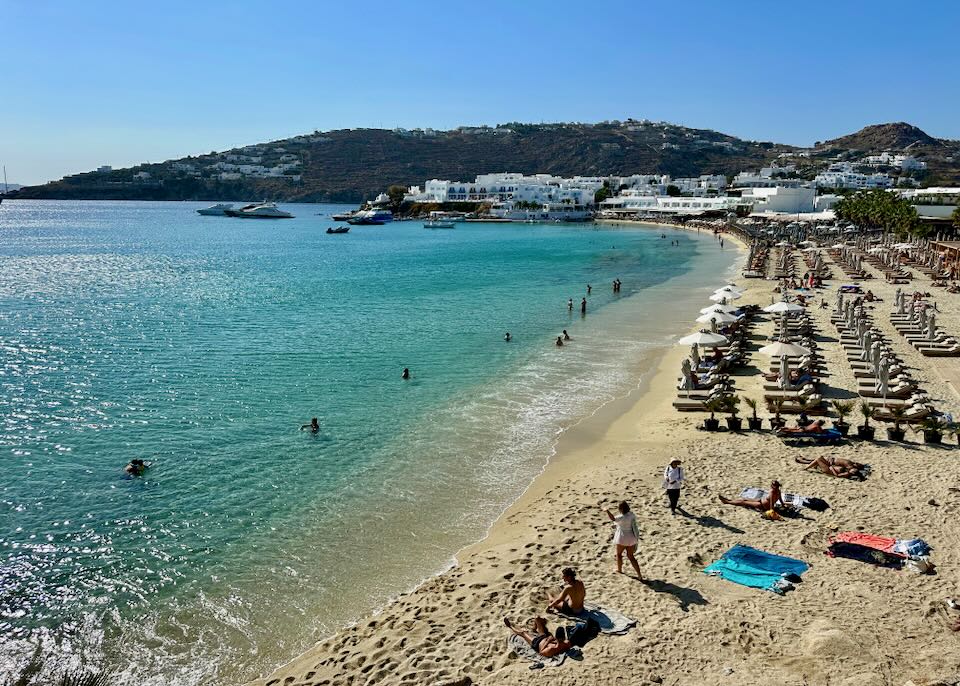
Early September in Mykonos still has a busy summer atmosphere, with beach clubs, restaurants, and nightlife running close to peak-season intensity.
Crete
Crete is the best large-island choice for late September, combining warm weather and beaches with ancient sites, mountain villages, cities, and excellent food. Give it at least five nights and concentrate on one region: stay near Chania for the most attractive city and access to western beaches, Rethymno for a good balance of beach and Old Town, or Heraklion for Knossos, museums, and ferry connections. A rental car is useful for beaches and villages, though parking near Chania and Rethymno Old Town can be frustrating; travelers who do not want to drive should stay centrally and use organized tours. September can also be excellent for the Samaria Gorge, but it remains a long, demanding hike, especially during the hotter first half of the month. My Where to Stay in Crete guide explains the best bases in more detail.
Rhodes
Rhodes is one of the safest choices for sunshine and beach weather at the end of September. Stay in Rhodes Town for history, restaurants, and a trip without a car, or choose Lindos and the southeast coast for beaches and resorts. The island is large: Rhodes Town to Lindos takes roughly one hour by car, and many southeast-coast hotels require a long airport transfer. Rhodes works best as a standalone five-to-seven-night destination rather than as part of a fast Cyclades itinerary.
Corfu and the Ionian Islands
Corfu is an excellent early-September choice for green scenery, beaches, villages, and one of Greece’s most interesting old towns. It feels very different from the dry, whitewashed Cyclades, but the tradeoff is weather: rain becomes more likely here earlier than on Crete, Rhodes, or the Cyclades. I would happily visit during the first half of September, while travelers planning a beach-focused trip for the final week should accept a greater risk of unsettled weather. A car is useful outside Corfu Town, though roads can be narrow and slow; staying in Corfu Town without a car works well for restaurants, sightseeing, and boat or bus day trips.
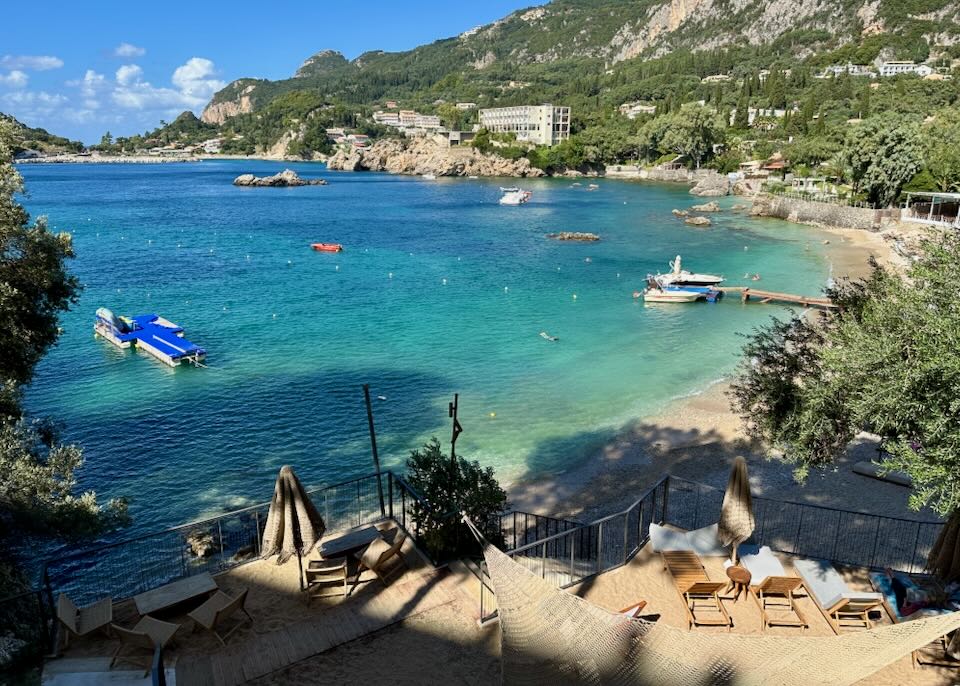
Corfu is warm and green in September, but late-month rain is more likely here than on Crete, Rhodes, or the Cyclades.
Athens
September is much better than July or August for visiting Athens, though it can still be hot. Visit the Acropolis at opening time or later in the afternoon, and save air-conditioned museums for the hottest part of the day. Two or three nights is enough for most first-time visitors, and staying near the historic center makes sightseeing easiest, though hotel demand remains strong because of cruises, conferences, and city-break travelers. Athens also works well at the end of the trip, since returning to the mainland at least one night before departure protects against ferry delays. My Where to Stay in Athens guide compares the best neighborhoods and hotels.
Mainland Greece
September is one of the best months for a road trip through the Peloponnese, where Nafplio, Mycenae, Epidaurus, Monemvasia, Olympia, and the Mani are easier to explore without midsummer heat while beaches remain warm enough for swimming. Delphi and Meteora are also excellent, though mountain evenings can be cool. The Athens Riviera is a good choice for combining Athens sightseeing with one or two beach days without taking a ferry.
Best Greek Islands for Late September
If your trip begins after September 20, I would prioritize:
- Crete: Best overall for warm weather, beaches, cities, food, and plenty to do if one day is cloudy.
- Rhodes: Best for dependable resort weather, beaches, and a mix of medieval history and island sightseeing.
- Kos: Good for beaches, resorts, cycling, and easy day trips, though it has less variety than Crete or Rhodes.
- Santorini: Excellent for caldera views, restaurants, and couples, but not the best choice if beaches are the main priority.
- Naxos: My top late-September choice in the Cyclades for beaches, families, good food, and traditional villages.
Corfu can still be wonderful, but I would not make it my first recommendation for someone whose only priority is hot, dry beach weather during the final week of September.
Ferries and Island Hopping in September
September is not too late for Greek island hopping. The main routes between Athens, Mykonos, Paros, Naxos, Santorini, and Crete remain active, with the widest choice of sailings during the first half of the month.
- Do not assume every island pair has a daily direct ferry. Popular routes may have several sailings a day, while smaller-island routes can operate only on selected days.
- Check transportation before booking hotels. An itinerary that looks logical on a map may require returning to Athens or changing ferries.
- Book important crossings in advance. Early September ferries can sell out, especially high-speed services and sailings at convenient times.
- Choose larger ferries for comfort. Conventional ships are slower but are normally more comfortable in rough seas than smaller high-speed ferries.
- Return to Athens before your flight. I recommend arriving on the mainland at least one day before an international departure rather than relying on a same-day ferry connection.
The easiest combinations are Mykonos, Paros, and Naxos; Paros, Naxos, and Santorini; or Athens with one or two of those islands.
Crete can be combined with Santorini, but the connection is more seasonal and less flexible than travel within the central Cyclades. Check the exact sailing dates before building the trip around it.
Crowds, Hotel Prices, and What Stays Open
Early September is not a budget period on the most famous islands. Santorini and Mykonos hotels can cost nearly as much as they do in August, particularly for caldera views, private pools, beach access, and central locations.
Prices are more likely to drop after the middle of the month, but the best rooms do not necessarily become available. Small boutique hotels can remain full even when larger properties begin discounting.
Major destinations remain active throughout September:
- Hotels, restaurants, tours, and beach clubs remain open on Santorini, Mykonos, Naxos, Paros, Crete, Rhodes, and Corfu.
- Major ferry routes continue operating, though minor routes may run less frequently late in the month.
- Archaeological sites, museums, and city attractions operate normally.
- Beach clubs may reduce party schedules or stop hosting major DJs as the month progresses.
- Small seasonal businesses on minor islands may shorten their hours or close near the end of September.
There is no single date when Greece shuts down. A small beach resort can feel quiet in late September while Santorini, Rhodes Town, Chania, and central Athens remain busy.
What to Pack for Greece in September
Pack mainly for summer, but bring one useful layer for ferries and cooler evenings.
- Light summer clothing: Shorts, dresses, T-shirts, and breathable shirts will suit most days.
- Light jacket or sweater: Useful on ferry decks, in the Cyclades after sunset, and in mainland mountain areas.
- Comfortable walking shoes: Greece’s cobblestones, archaeological sites, hotel stairs, and uneven paths are harder on your feet than many visitors expect.
- Sun and beach gear: Bring sunscreen, sunglasses, a hat, and swimwear. September sun remains strong.
- Rain and seasickness backup: A small umbrella or light rain jacket is useful in Corfu and northern Greece, while seasickness medication can help on windy ferry days.
September Compared with August and October
• August: Hotter, busier, more expensive, and better for peak nightlife and the maximum choice of ferries and flights.
• September: The best balance of warm sea, reliable beach weather, active islands, and easier sightseeing.
• October: Cheaper and quieter, but cooler, wetter, and less dependable for swimming and multi-island travel.
For a first trip built around beaches and island hopping, I prefer September. October works better for Athens, Crete, Rhodes, and mainland sightseeing than for an ambitious island itinerary.
Greece in September Frequently Asked Questions
Is September too late for Greek island hopping?
No. September is one of the best months for island hopping, particularly between the major Cycladic islands. Ferries remain frequent on popular routes, but minor connections may not operate every day, especially late in the month.
Which Greek islands are warmest in late September?
Crete, Rhodes, Kos, and Karpathos offer the best odds of sustained heat and beach weather. But most years, all the islands are still warm and sunny throughout the month. Don’t expect huge differences between any of the islands.
Is late September still good for swimming?
Yes. The sea is typically warmer in late September than in June. Air temperatures can become cooler after sunset, but daytime swimming remains comfortable.
Does Greece become quiet in September?
Not immediately. Early September is still high season on the most popular islands. Crowds become noticeably lighter after the middle of the month, though Oia, Mykonos Town, the Acropolis, and famous beaches remain busy.
Are hotels cheaper in September?
Sometimes, but not everywhere. Early September rates on Santorini and Mykonos will remain close to August levels. Better discounts are more common after midmonth, on larger islands such as Crete, and in less famous beach resorts.
Do beach clubs close in September?
Most major beach clubs on Mykonos, Santorini, Paros, and other popular islands remain open through September. Party calendars and headline DJ events begin thinning during the month, and smaller seasonal venues may close earlier.
Is September good for families?
Yes. The sea is warm, the heat is less punishing than in July and August, and beaches become less crowded after schools reopen. Naxos and Crete are my top choices for families.
Should I book September ferries in advance?
Yes, particularly during the first half of September and when using high-speed ferries. Later in the month, availability is less of a concern, but fewer sailings can make a sold-out ferry more disruptive.
Is September a good month for a honeymoon in Greece?
Yes. September has warm weather, excellent swimming, outdoor dining, and a slightly calmer atmosphere than August. Santorini is the obvious choice for caldera views, while Milos, Folegandros, Paros, and Crete offer more space and better beaches.

About Santorini Dave