Updated: April 18, 2026
By Santorini Dave • dave@santorinidave.com
Quick Tips
• If flying into Heathrow, stay in Paddington (for the Heathrow Express) or anywhere near a Piccadilly Line station. If arriving at Gatwick, a hotel near Victoria Station (for the Gatwick Express) will make your transfer effortless.
• Before you book a hotel, check its address on Google Maps and confirm it is no more than a 5-minute walk to the nearest Tube station. Even better is a hotel near a station served by multiple Tube lines (like Victoria, King’s Cross, South Kensington, or Waterloo), which reduces your travel time across the city.
• For first-time visitors to London the Covent Garden neighborhood is ideal.
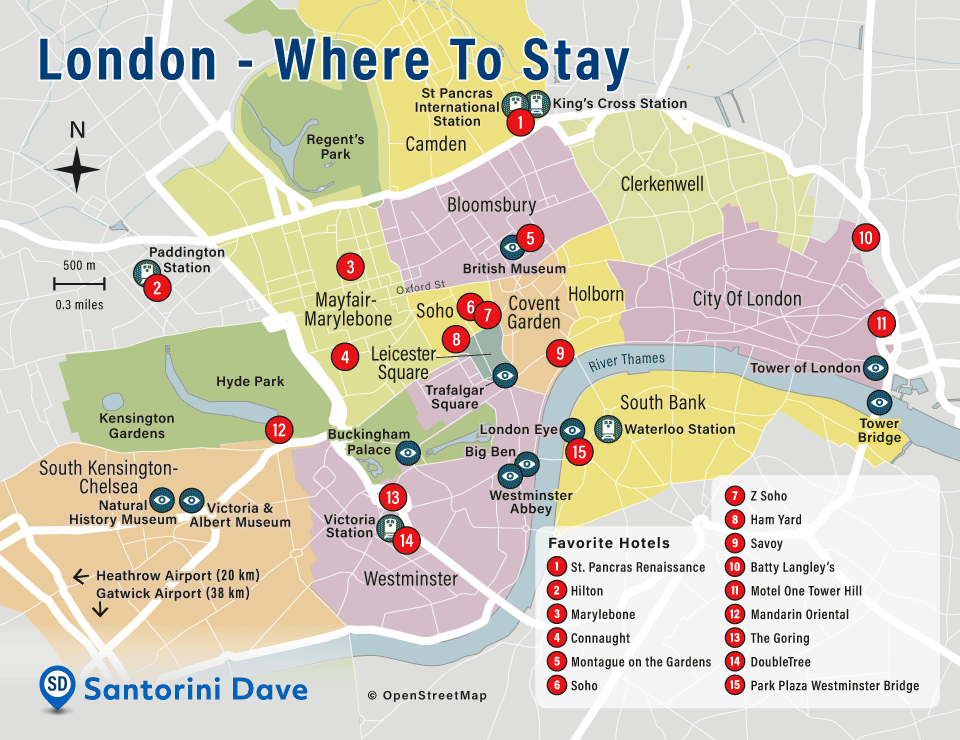
1. St. Pancras Renaissance • 2. Hilton • 3. Marylebone • 4. Connaught • 5. Montague on the Gardens • 6. Soho • 7. Z Soho • 8. Ham Yard • 9. Savoy • 10. Batty Langley’s • 11. Motel One • 12. Mandarin Oriental • 13. The Goring • 14. DoubleTree • 15. Park Plaza
The Essential Guide: Choosing Your London Base
Hotels: My Personal Favorites Hotels
- 5-Star: The Connaught • The Savoy
- 4-Star: Ham Yard Hotel
- Boutique: Batty Langley’s
- Budget: Motel One • Z Soho
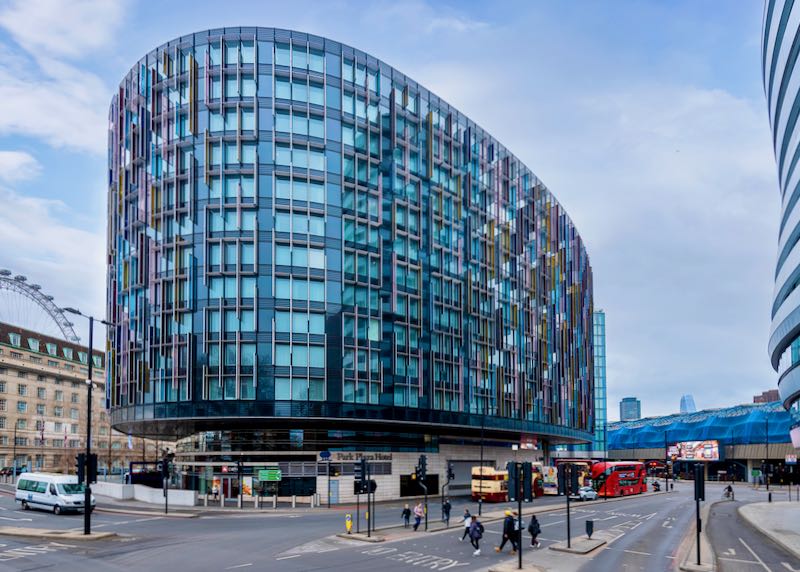
- For Families: Park Plaza Westminster
- For Couples: The Soho
- King’s Cross: St. Pancras Renaissance
- Victoria Station: DoubleTree Victoria
- Paddington: Hilton
- Airports: Sofitel Heathrow • Sofitel Gatwick
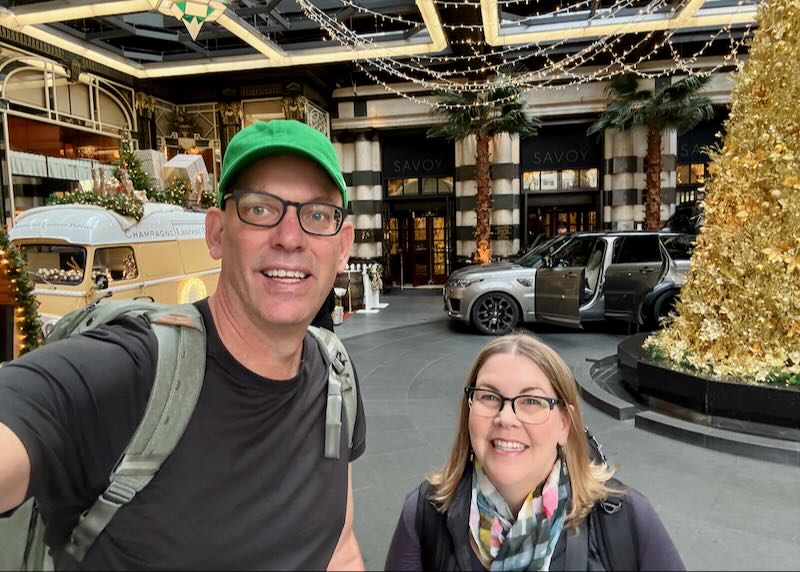
My wife and I at The Savoy in London.
London is not a city with a single “downtown” area. It is a massive, sprawling collection of distinct neighborhoods that feel like interconnected villages. Because the city’s top sights, from the Tower of London to the Victoria and Albert Museum, are miles apart, your choice of neighborhood will dictate your daily rhythm. I always tell travelers: don’t look for the center of the map; look for the neighborhood that matches your personality and travel style.
The Golden Rule: The 5-Minute Tube Walk
I have spent years navigating London, and if there is one piece of advice I give every traveler, it is this: Stay within a five-minute walk of a Tube station. London is a massive, sprawling city, and the Underground is its lifeblood. While most central hotels claim to be “close” to transport, there is a world of difference between a 12-minute trek with luggage and being able to step out of your lobby and into a station. The hotels I’ve selected below are not just near the Tube; they are practically on top of it.
Top London Hotels Within Steps of the Tube
- NoMad London (Covent Garden): This is one of the coolest hotels in the city, set in a stunning former courthouse. It is a mere 90-second walk from the Covent Garden Tube station. It’s my top pick for anyone who wants to be in the heart of the theater district without the long walk home after a show.
- The Clermont (Charing Cross): You literally cannot get closer. This grand Victorian hotel is built into the Charing Cross station building. It is perfect if you want a central hub that connects you to both the Tube and regional trains.
- Kimpton Fitzroy (Bloomsbury): This landmark building is a personal favorite for its architecture. It sits directly across from the Russell Square Tube station, providing a quick, direct link to Heathrow via the Piccadilly Line.
- The Cumberland (Marylebone): Located right at the corner of Oxford Street and Park Lane, this music-themed hotel is steps from the Marble Arch Tube. It’s an ideal base for shoppers who want to drop their bags quickly.
- Rosewood London (Holborn): One of the most sophisticated stays in the city. It’s a two-minute stroll from Holborn station, which serves both the Central and Piccadilly lines, making it arguably the most convenient transit spot in the West End.
- Hilton London Paddington: If you are arriving from Heathrow, stay here. It is connected to the station via a footbridge. You can go from the Heathrow Express or the high-speed Elizabeth Line to your room without ever stepping outside.
- St. Pancras Renaissance (King’s Cross): An architectural masterpiece. It is integrated into the St. Pancras station, which is the best-connected transport hub in London. If you’re taking the Eurostar to Paris, this is where you want to be.
- citizenM Tower of London: This smart, tech-forward hotel sits directly above the Tower Hill Tube station. The rooftop bar has some of the best views of the Tower of London and Tower Bridge in the city.
- Mandarin Oriental Hyde Park (Knightsbridge): Pure opulence. It is located right between the luxury of Harrods and the greenery of Hyde Park, with the Knightsbridge Tube station right at the entrance.
- DoubleTree Victoria: A very practical choice for travelers using the Gatwick Express. It is directly opposite the Victoria station entrance, saving you a lot of hassle with suitcases.
- Hilton Hyde Park (Bayswater): This Edwardian townhouse overlooks the park and sits directly across the street from the Queensway Tube station. It’s a great, slightly quieter alternative to the West End.
- Conrad St James (Westminster): Located directly opposite St. James’s Park station. It’s a sleek, modern choice if you want to be within walking distance of Big Ben and the Houses of Parliament.
- The Hoxton Southwark: A very stylish choice for a younger or design-conscious crowd. It is just a two-minute walk from the Southwark station on the Jubilee Line, which is the fastest way to get to London Bridge or Westminster.
- Andaz Liverpool Street (City of London): This hotel is physically integrated with Liverpool Street station. With the Elizabeth Line now running through here, you can reach the West End in minutes or Heathrow in under 45 minutes.
- The Ned (City of London): Housed in a massive former bank, this hotel is a destination in itself with nine restaurants. It is located right at the Bank Tube station interchange.
- Motel One Tower Hill: My favorite value-for-money option in the City. It is a two-minute walk from Aldgate station and offers a high-end feel for a budget price.
Neighborhood Guide by Travel Style
The West End: Heart of the Action
If you want to step out of your hotel and be surrounded by lights, theaters, and endless energy, stay in the West End. This includes Covent Garden, Leicester Square, Soho, and Mayfair. It is the city’s entertainment hub and the most walkable area for first-timers.
- Best for: First-time visitors, theater-goers, and shoppers.
- Highlights: Trafalgar Square, National Gallery, and the shopping of Oxford Street.
- Hotel Vibe: A mix of high-end luxury in Mayfair and boutique hotels in Soho.
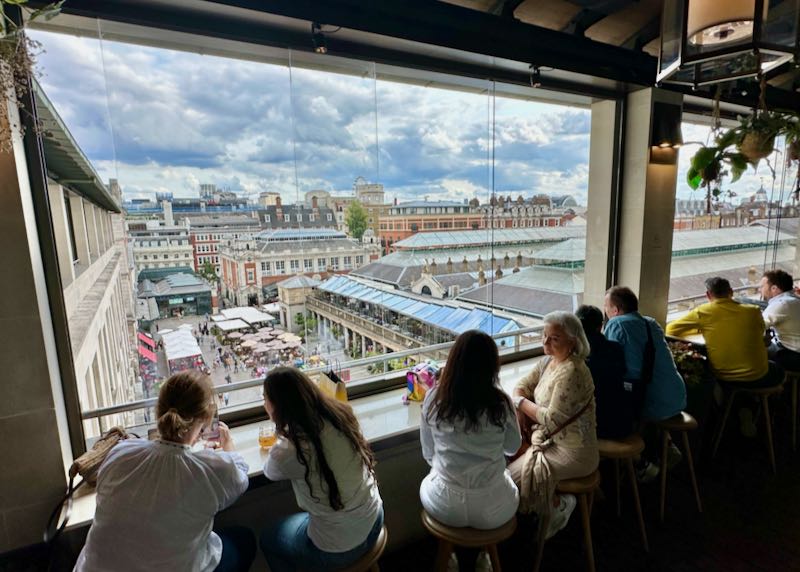
Charming Covent Garden in the West End is one of the best areas for first-time visitors to London.
Westminster & St. James’s: Royal & Political Grandeur
This is the area you see on postcards. It is home to the British government and the Royal Family. It is much quieter at night than the West End but puts you on the doorstep of history.
- Best for: Sightseeing purists and those seeking a dignified, quiet stay.
- Highlights: Big Ben, Westminster Abbey, and Buckingham Palace.
- Hotel Vibe: Westminster hotels are often grand and traditional, with fewer budget options.
The South Bank & Southwark: Best for Families
Stretching along the Thames, the South Bank is a pedestrian-friendly cultural corridor. It offers wide walkways, great views, and a constant rotation of festivals and markets. It is the premier choice for family-friendly options.
- Best for: Families, walkers, and culture seekers.
- Highlights: The London Eye, Tate Modern, Borough Market, and The Shard.
- Hotel Vibe: Modern, high-rise South Bank hotels often feature spectacular skyline views.
South Kensington & Marylebone: Upscale & Leafy
For a more residential, wealthy feel, look west. These areas are refined and elegant, with wide streets and world-class museums.
- Best for: Museum lovers and those who want a “posh” local experience.
- Highlights: The Natural History Museum, V&A, Harrods, and Hyde Park.
- Hotel Vibe: Kensington hotels range from stately 5-star properties to charming Victorian terrace boutiques.
Bloomsbury & Fitzrovia: Literary & Central
Located just north of the West End, this area feels academic and calm. It’s incredibly central but lacks the frantic pace of Leicester Square.
- Best for: Intellectuals, quiet seekers, and mid-range budgets.
- Highlights: The British Museum and numerous peaceful garden squares.
- Hotel Vibe: Bloomsbury hotels offer some of the best central London value.
The City of London: Historic & Financial
The oldest part of London is a mix of Roman walls and glass skyscrapers. It’s very busy during the work week but becomes wonderfully quiet on weekends.
- Best for: Business travelers and weekend bargain hunters.
- Highlights: St. Paul’s Cathedral and the Tower of London.
- Hotel Vibe: High-end City hotels often drop their prices significantly on Saturday and Sunday nights.
Transport Hubs & Trendy Neighborhoods
- King’s Cross & St. Pancras: Excellent for logistics. Stay in King’s Cross if you are taking the Eurostar or have an early flight from Heathrow (via the Piccadilly Line). The area is now a foodie destination.
- Shoreditch & The East End: The heart of London’s creative scene. Best for street art, nightlife, and independent markets like Spitalfields and Brick Lane.
- Camden: Best for those seeking an alternative vibe, live music, and the famous Camden Market.
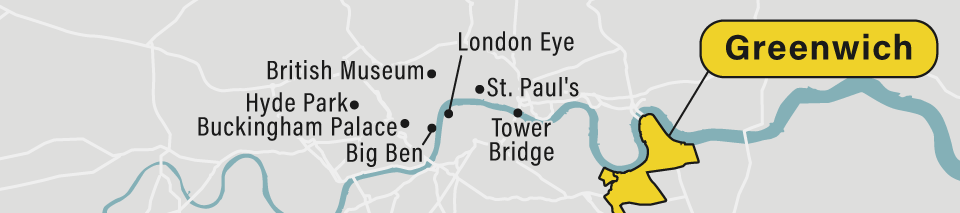
- Greenwich: A bit further out but feels like a seaside escape. Perfect for a day trip or a relaxed, maritime-themed stay.
Navigating London: The Local Way
London’s public transport is world-class, but it can be overwhelming the first time you look at a Tube map. I’ve found that the biggest mistake travelers make is overcomplicating how they pay for their rides. Navigating the city is actually very straightforward once you know the shortcuts and the “tap and go” system.
Understanding Travel Zones & Logistics
London is divided into concentric travel zones. Most tourists spend 90% of their time in Zone 1. While hotels in Zone 2 (like parts of Shoreditch or Hammersmith) are often cheaper, you must factor in the extra 15 to 20 minutes of travel time. If you choose Zone 2, ensure you are on a “fast” line like the Victoria, Jubilee, or Elizabeth Line to keep your commute under 20 minutes. As long as you can easily hop on the Tube, all of London is within your reach.
The Only Way to Pay: Contactless & Mobile
Forget about paper tickets or calculating fares. I recommend ignoring the ticket machines entirely. The easiest and cheapest way to travel is by using Contactless Payment.
- Use Your Phone or Card: Simply tap any contactless credit/debit card, or your phone via Apple Pay or Google Wallet, on the yellow readers at the station gates. You do not need to buy a special transport card.
- Tap On and Tap Off: On the Tube, Elizabeth Line, and trains, you must tap in at the start and tap out at the end so the system can calculate the correct fare.
- Buses are Different: For London’s iconic red buses, you only tap in once when you board. There is no need to tap out.
- Daily and Weekly Capping: This is the best part. The system automatically “caps” your spending. Once you reach a certain amount in a day (or a week from Monday to Sunday), all subsequent rides are free. It is significantly cheaper than buying individual tickets.
- Oyster Cards: If your bank charges high international transaction fees, you can still buy a plastic Oyster Card at any station, load it with cash, and use it exactly like a contactless card.
Choosing Your Mode of Transport
While the Tube is the backbone of the city, it isn’t always the best choice for every journey.
- The Underground (The Tube): Fastest for long distances across the city. Try to avoid the “deep” lines (like the Central or Northern lines) during peak rush hour if you dislike heat and crowds.
- The Elizabeth Line: This is the newest addition to the network. It features massive, air-conditioned trains and is the fastest way to get from Heathrow to Central London or to cross from West to East.
- The Red Bus: Slower than the Tube but much more scenic. If you are not in a rush, sit on the top deck for a “free” sightseeing tour of the city.
- Walking: I often see tourists take the Tube between stations like Leicester Square and Covent Garden. Don’t do it. That walk takes about 5 minutes, whereas the Tube journey (including elevators and tunnels) takes 15.
Should You Rent a Car in London?
No. Absolutely not. I cannot emphasize this enough: driving in London is a nightmare for visitors and a guaranteed way to ruin your day.
- The Congestion Charge: You will be charged a daily fee (currently £15) just for driving into the central zone.
- ULEZ Fees: Most older or high-emission vehicles face an additional daily “Ultra Low Emission Zone” charge.
- Traffic and Parking: London traffic is legendary for its gridlock, and parking is both near-impossible to find and eye-wateringly expensive.
- Speed: In almost every scenario, the Tube or a bicycle will get you to your destination faster than a car.
The Best Places to Stay in London
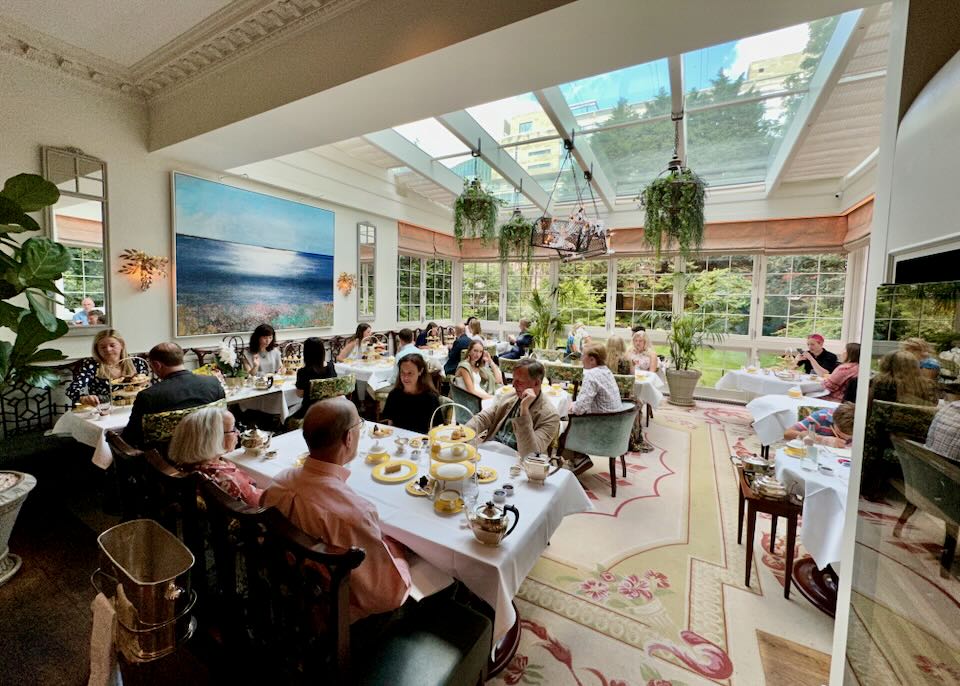
The historic Goring near Buckingham Palace. Everything from the doorman to afternoon tea is classy, refined, and quintessentially British.
- Best Luxury Hotels in London
The Connaught • The Goring • Rosewood London • The Savoy • Shangri-La The Shard • Mandarin Oriental Hyde Park- Best Boutique Hotels in London
The Mandrake • The Soho • Montague on the Gardens • Batty Langley’s • Ham Yard • Vintry and Mercer- Best Midrange Hotels in London
citizenM Tower of London • Motel One • Park Plaza County Hall • Park Plaza Westminster Bridge- Best London Hotels for Families
Taj 51 Buckingham Gate (luxury) • The Athenaeum (luxury) • Park Plaza Westminster Bridge (midrange) • DoubleTree (budget)- Best Cheap Hotels in London
London Visitors Hotel • The Z Soho • The Z Covent Garden- Best Hostels in London
Wombat’s City Hostel • YHA London Central
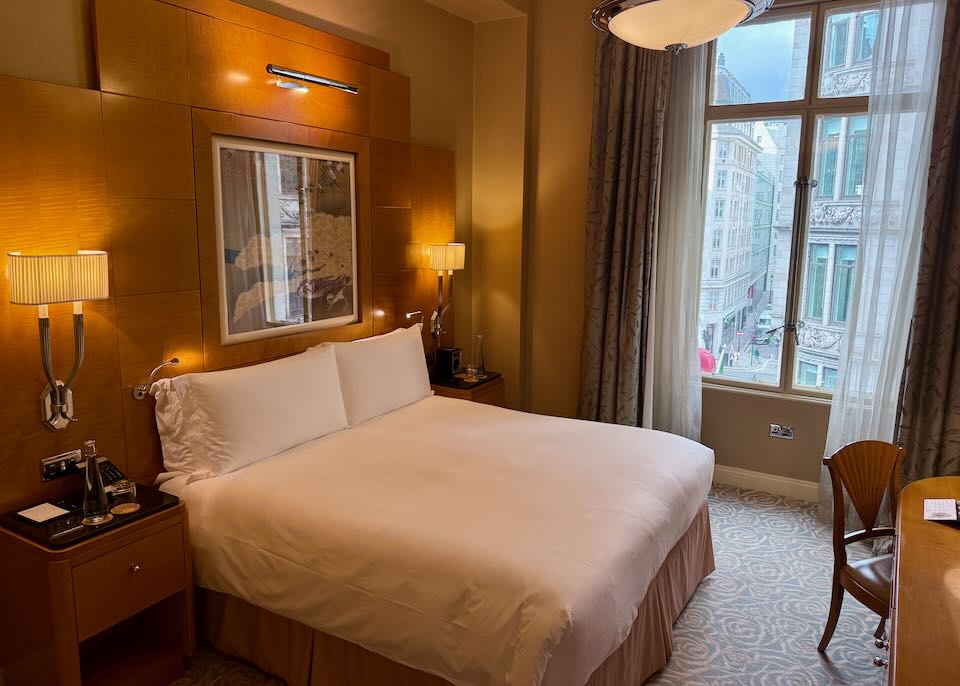
Our room at The Savoy in Covent Garden.
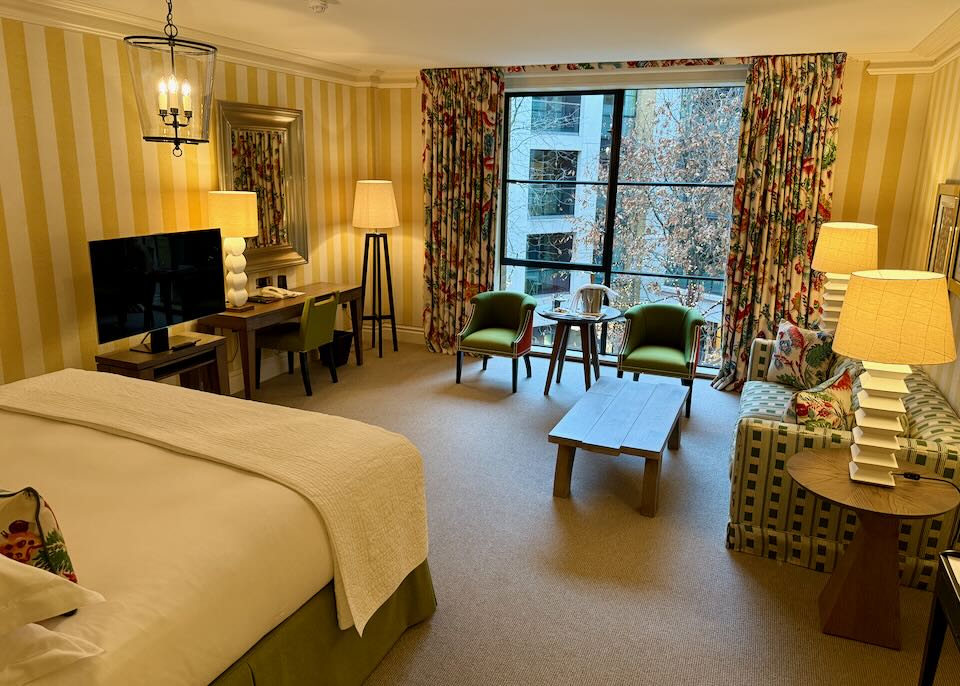
Our room at the Ham Yard in Soho.
More Notable London Hotels
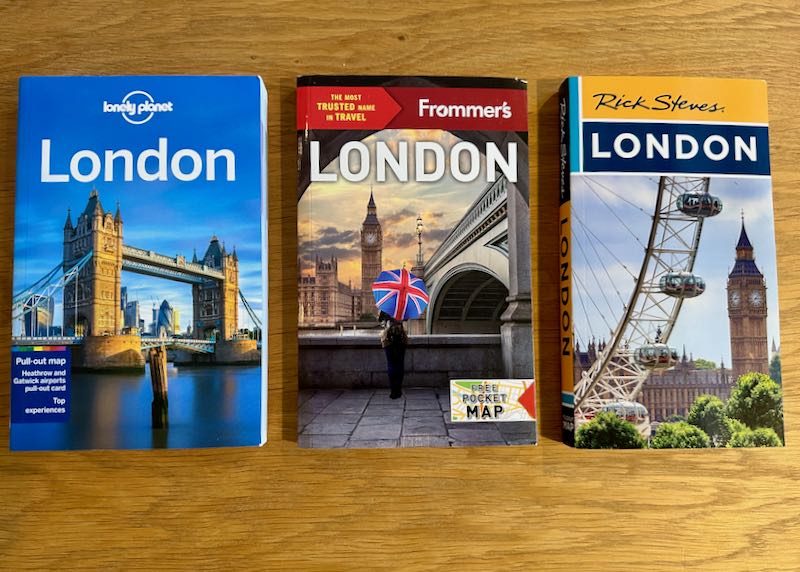
I bought, read, and highlighted-extensively the most recent London guidebooks from Lonely Planet, Frommer’s, and Rick Steves. Here are some of their most interesting hotel picks. (I highly recommend buying one of these books for when you’re in London.)Lonely Planet:
• Hazlitt’s ($$$, West End) – This Soho gem was built in 1718 and comprises four original Georgian houses.
• Lime Tree Hotel ($$, Westminster) – Beautiful 28-room Georgian town house hotel is all comfort, British design, and understated elegance.
• citizenM Tower of London ($, The City) – Compact and well-designed. Some rooms have extraordinary views of the Tower of London.Frommer’s:
• Dukes London ($$$, St James) – Cozy, clubby luxury but more affordable than it ought to be.
• Zetter Townhouse ($$, Marylebone) – Eccentric luxury hotel near Hyde Park and Oxford Street.
• Jesmond Hotel ($, Bloomsbury) – The Jesmond is a classic and has been a Frommer’s pick since rooms cost $3.20.Rick Steves
• Number Sixteen ($$$, Kensington) – Packs over-the-top class into 41 artfully imagined rooms. Perfect for an urban honeymoon.
• Vancouver Studios ($$, Notting Hill) – 48 modern, tastefully furnished rooms come with fully equipped kitchens.
• Seven Dials ($, Covent Garden) – 38 plain, clean, and incredibly well located rooms.Best Places in London for…
- Best Neighborhoods in London for Sightseeing: Covent Garden, Soho, South Bank
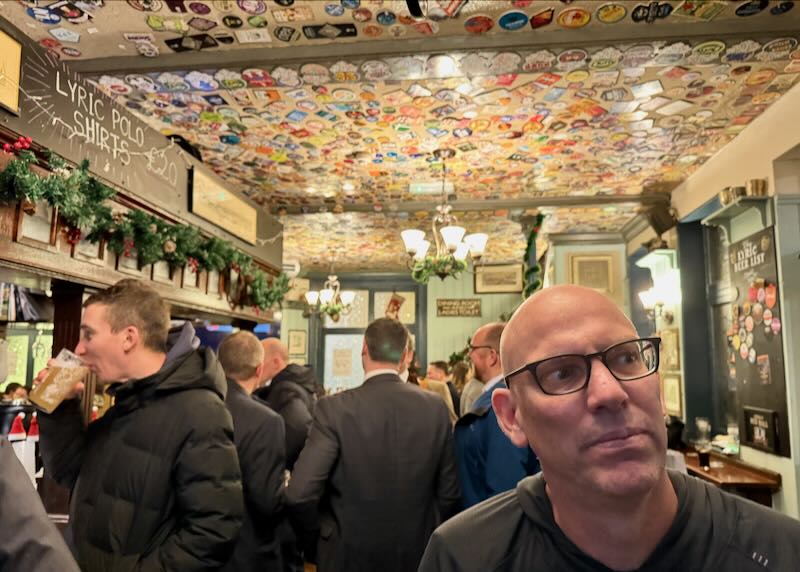
The South Bank is excellent for access to big attractions – London Eye, Tate Modern, the Shard – and it’s an easy stroll across several Thames footbridges to the City of London and the West End neighborhoods. Covent Garden and Soho are good all-rounders due to their proximity to the river, Westminster, and other top sights; ample accommodations are a boon. South Kensington is great for museums and shopping, but hotels tend to be pricey and it’s not quite as central.Having a pint at a Soho pub.
- Best Neighborhoods in London for Nightlife: Soho and Shoreditch/Hoxton
The best area in London for nightlife is Soho. The neighborhood is a good mix of trendy cocktail bars (many of which also do great food), traditional English pubs, theaters, and basement clubs with DJ nights, including a number of LGBTQA+ venues. Ronnie Scott’s is a legendary jazz club, while the French House is a popular bar, and Bar Italia is an old-school late-night café. Bar Termini is fabulous for cocktails. There are only a few hotels in Soho, slightly set back from the action. Other good areas for nightlife include Camden with its live music venues and Shoreditch/Hoxton in the East End, with its legendary clubs. Highlights include the Queen of Hoxton, with its rooftop, DJs, and ping pong tables, the Boundary Rooftop in Shoreditch, and Happiness Forgets for cocktails.- Best Neighborhoods in London for Food and Restaurants: Soho, Clerkenwell, Shoreditch
Soho is jam-packed with artisan coffee shops and global offerings. Highlights include the udon noodles at Koya, Thai food at Kiln, superb French restaurant Brasserie Zédel, and modern British champion Quo Vadis. There’s also old-school Bar Italia for espresso and Gelupo for ice cream. And Chinatown is still a great place to sample Chinese food and drinks, from dim sum to bubble tea and Beijing duck (the Food House is the current trendsetter).For something a bit more cutting-edge, look to Clerkenwell and Shoreditch on the fringes of The City: in the former, Prufrock Coffee is London’s most famous coffee shop, the Fryer’s Delight is for fish and chips, and Sushi Tetsu is uber-exclusive, while restaurants like St John and the Quality Chop House create lauded modern British cuisine. Shoreditch boasts the pasta at Burro e Salvia, London’s best barbecue at Smokestak, banh mi at Kêu Deli, and Michelin-starred Brat, Clove Club, Leroy and Lyle’s. Camden, the East End, and King’s Cross are great for street food, as is Borough Market and Bermondsey on the South Bank – 40 Maltby Street is one of the city’s best restaurants.
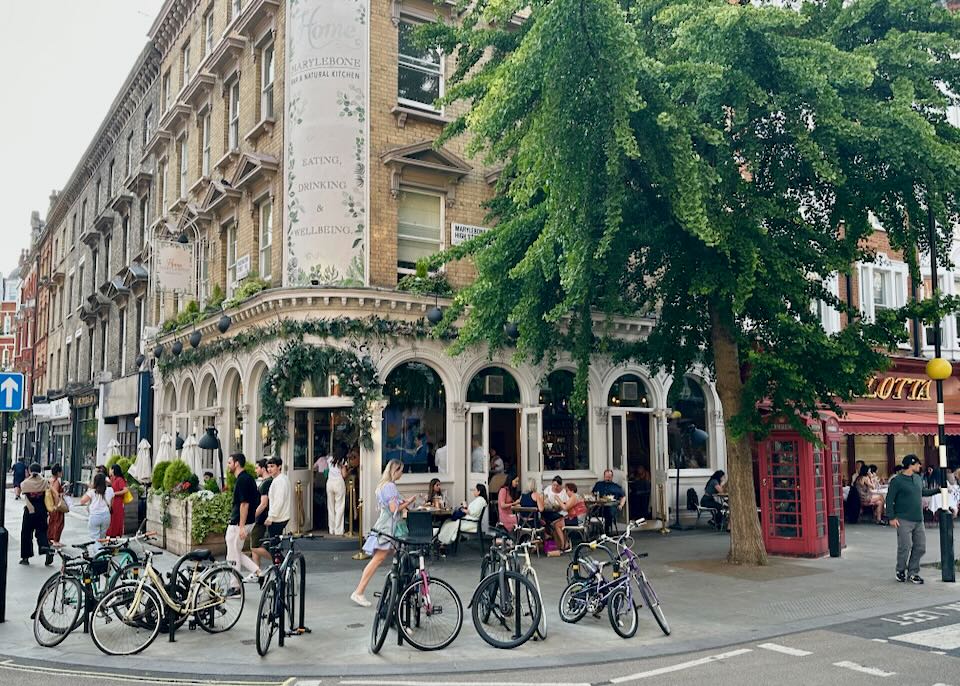
The charming village-like feel of Marylebone makes it perfect for families.
- Best Neighborhoods in London for Families: South Bank, South Kensington, and Marylebone
For families who want to be in the heart of the action, this is the place to be. It’s a vibrant, pedestrian-friendly stretch along the River Thames and an easy walk to major attractions like the London Eye, SEA LIFE Aquarium, and Borough Market. South Kensington is another fantastic option, where you are on the doorstep of three of the world’s best free museums: the Natural History Museum, the Science Museum, and the V&A. The area is beautiful and quiet (for central London), with the huge Hyde Park just north for playgrounds and open space. Marylebone is also a great choice, offering a wonderful, high-end village feel while still being completely central. It is perfectly located between Regent’s Park, home to the London Zoo, and Hyde Park, and is a short walk from attractions like Madame Tussauds.My son and I on the Classic Afternoon Tea Bus Tour in London. We loved it.
- Best Neighborhood in London to Stay for First Timers: Covent Garden
Covent Garden is the best neighborhood for first-time visitors. It’s centrally located, has a great dining and theater scene and is within easy walking distance of numerous big attractions, such as the National Gallery, Houses of Parliament, and the London Eye. There are excellent public transport connections to other parts of London and it’s easy to take a boat along the Thames to reach other places of interest. Accommodation tends to be pricey here, but there are a few bargains to be had.- Most Romantic Neighborhood in London: Hampstead
20 minutes on the Underground from Central London, beside the hilly green wedge of Hampstead Heath (London’s prettiest green space), this enchanting village-like community in North London is a blend of cozy pubs, cobbled streets, and posh boutiques. Plenty of celebrities and artists live here, but its wealth is far less ostentatious than in places like Mayfair or Belgravia. You can visit Keats House to see where the romantic poet wooed his “Bright Star” Fanny Brawne or 17th-century mansion Kenwood House, take a stroll (or a swim in summer) on the heath, and soak up the fabulous views of London from Parliament Hill. There’s also the Freud Museum, the final home of the famous Viennese psychotherapist. Nearby Highgate Cemetery is London’s most famous, ivy-strewn graveyard, with regular tours taking in the tombs of Karl Marx, Dante Gabriel Rossetti, and other luminaries. Though it’s an easy day-trip from anywhere in central London, there are some good bargains amongst the small selection of quiet and cozy inns in Hampstead; La Gaffe Hotel, Pax Lodge Hostel, and Primrose Guesthouse.- Best Neighborhoods for Shopping: Oxford Street and Covent Garden
You could spend days shopping in London, exploring the “tiara triangle” around Harrods and Harvey Nichols in Knightsbridge, or perusing the lively markets of Portobello Road, Greenwich, Brick Lane and Camden. Though Londoners tend to avoid it, it’s hard to beat Oxford Street for one-stop shopping: with over 300 shops, designers, high-street chains, and landmark departments stores like Selfridges, House of Fraser, and John Lewis, there’s little you can’t buy here. Adjacent Regent Street is home to Hamley’s, the UK’s most famous toy store, the quirky Liberty department store, Apple Store and more. In Mayfair, just south of Oxford Street, luxury boutiques line Bond Street (Burberry, Tiffany & Co) and South Molton Street (Browns and Boudi Fashion).Covent Garden is touristy but still a great place to seek souvenirs and arts and crafts, plus specialty stores such as Whittard of Chelsea (tea), Deciem (skincare), Charlotte Tilbury (cosmetics), and Bucherer (watches). Nearby Neal Street is best for urban streetwear, cosmetics, and footwear. Nearby Seven Dials is a hub for over 90 independent stores, like Tatty Devine (jewelry), Nudie Jeans, and Choosing Keeping (stationery).If you’re looking for US-style malls, hit the Westfield shopping centers in Shepherd’s Bush (West London), and Stratford (East London).

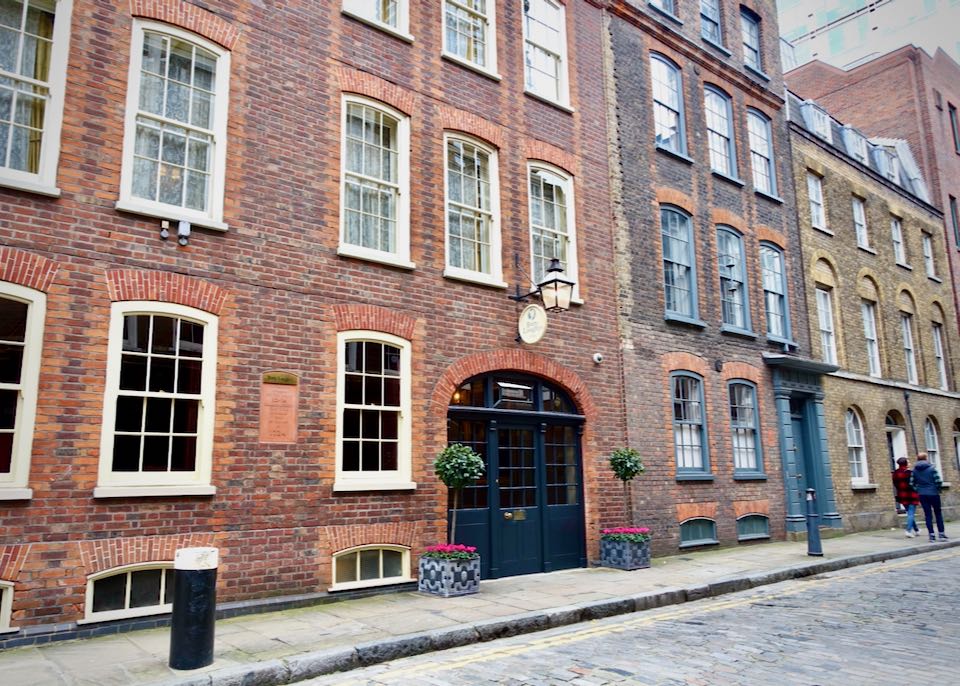
Batty Langley’s in East London is one of our very favorite boutique hotels.
- Best Neighborhood in London for a Local Vibe: Camden, Shoreditch/East End
It’s hard to get more ‘local’ than Camden. The graffiti-tagged, gritty streets still resist gentrification and, Camden Market and the tour narrow boats on Regent’s Canal aside, this is still a working-class neighborhood. Stop by Black Heart, Underworld, or another local pub and you might catch the next big thing in alternative rock. In the East End, Brick Lane is ‘Banglatown’; like other parts of east London, it retains a strong immigrant feel, with curry houses, Bangladeshi cafes, and sari shops. Though neighboring Shoreditch has been undergoing gentrification for some time now, it remains one of London’s cutting-edge neighborhoods, with a dynamic nightlife, street food, street art, and few tourists.- Best Neighborhood in London for Walking: Covent Garden/Leicester Square/Soho
The Covent Garden/Leicester Square/Soho area is easy to get around on foot. The area is crisscrossed with numerous small streets packed with restaurants, bars, and shops. There’s little traffic and very central, right in the heart of London’s West End. Trafalgar Square, the National Gallery, and the National Portrait Gallery are nearby and you can easily walk to the Houses of Parliament, the London Eye, the London Dungeon (just across the river), and Westminster Abbey. Buckingham Palace is a 15-minute walk west of Westminster – most of it away from traffic, through St James’ Park. The British Museum is a 10 to 12-minute walk north of Covent Garden.- London Without a Car
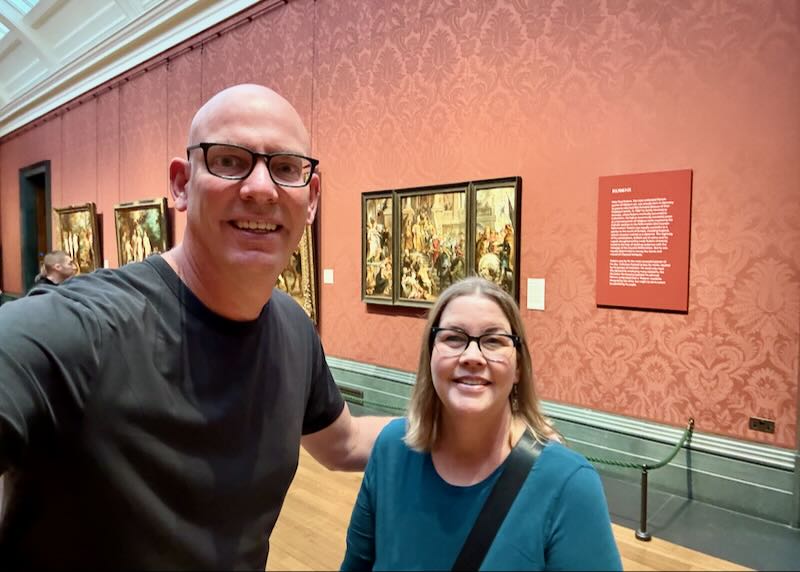
Traveling in London without a car is not only feasible, but recommended. London’s public transportation system is excellent. It includes the London underground (known as the Tube), buses, the Docklands Light Railway (DLR), overground trains, and river services. Walking is a great way to experience London’s rich history and diverse architecture. Iconic landmarks such as the Houses of Parliament, Buckingham Palace, the London Eye, and the Tower of London are within relatively short distances of each other. For longer journeys, London’s bike-sharing scheme, Santander Cycles, is a viable option. London’s famous black taxis and rideshare services like Uber are readily available, although they are often slower than the tube.My wife and I at the National Gallery.
- Safest Areas of London
London’s safest and quietest neighborhoods are typically the most affluent. Mayfair, South Kensington, Knightsbridge, Belgravia, and Chelsea are largely residential and very safe to walk around at any hour. Bloomsbury and Fitzrovia are also excellent, peaceful choices. While these areas have a very low crime rate, you should still take standard precautions after dark.- Safety & Awareness in London
Central London is generally very safe, but like any major city, it requires common sense. In areas like Camden, Shoreditch, and the South Bank, the atmosphere is vibrant and safe during the day, but can feel more chaotic late at night when the bars and clubs close. While King’s Cross and Stratford have undergone massive redevelopment and are home to excellent hotels, the immediate areas around major train stations can still attract loiterers late at night. Stick to well-lit main streets and keep an eye on your belongings in crowded areas like Leicester Square or Oxford Street, where pickpocketing is more common than anywhere else in the city.The 11 Best Areas in London for Tourists
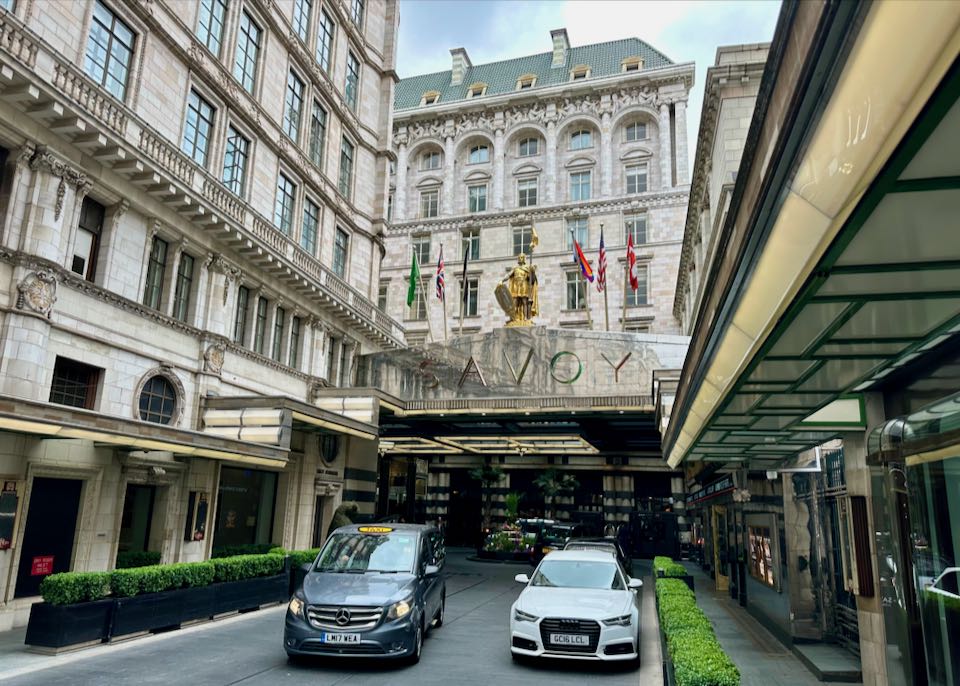
The luxurious and magical Savoy Hotel in Covent Garden.
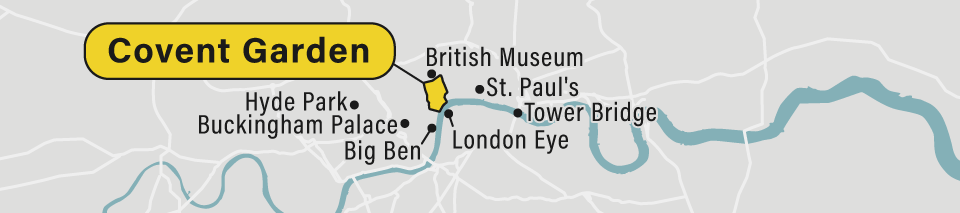
1. Covent Garden
Covent Garden’s central feature is its cobbled piazza and restored 19th-century market, with quirky (and increasingly high-end) shops, the London Transport Museum, and a supporting cast of buskers and other street entertainment. There are plenty of restaurant bars, cafés, and pubs in the surrounding tangle of streets and several major attractions lie within easy walking distance: the Royal Opera House, Courtauld Gallery in Somerset House (which has an ice rink in winter), Leicester Square, Trafalgar Square, and the Strand. The shows and musicals of Theatreland (London’s main theatre district) form a large share of the neighborhood’s entertainment.• Hotels here tend to be expensive, though there are a handful of affordable options. Covent Garden makes an excellent base, but it is very touristy.
- Best Hotels in Covent Garden
Covent Garden Hotel • Hotel phone: +44 20 7806 1000
ME London • Hotel phone: +44 20 3499 8651
NoMad London • Hotel phone: +44 20 390 61600
One Aldwych • Hotel phone: +44 20 7300 1000
The Resident Covent Garden • Hotel phone: +44 20 3146 1790
The Savoy • Hotel phone: +44 20 7836 4343- Best Cheap/Midrange Hotels
The Fielding • Hotel phone: +44 20 7836 8305
The Z Covent Garden • Hotel phone: +44 20 3837 6304
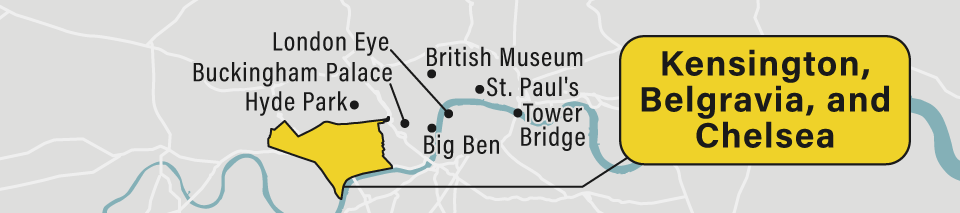
Hotel AMANO Covent Garden • Hotel phone: +44 20 3739 89002. Kensington, Belgravia, and Chelsea
Bordered by the vast Hyde Park and Kensington Gardens to the north and Green Park to the east, these three moneyed neighborhoods are primarily known for their superb museums: the Victoria and Albert Museum, Science Museum, and Natural History Museum, the latter housing its famous dinosaur collection. There’s also Apsley House, the Duke of Wellington’s London residence, the Gothic Albert Memorial across from Royal Albert Hall, and Kensington Palace, formerly the London home of Princess Diana and now William and Kate’s residence (much of it is open to the public, however).Further west is the striking Design Museum and far less busy Leighton House Museum, a memorial to 19th-century painter Lord Leighton and his Pre-Raphaelite friends. The Knightsbridge neighborhood contains London’s most upmarket department stores – Harrods and Harvey Nichols – and if you’re serious about fashion, Elizabeth Street in Belgravia is lined with powerhouse designer outlets. Over in Chelsea, the Kings Road was hip in the 1960s and punk in the 1970s (it’s much tamer today), while the Saatchi Gallery, Royal Hospital (home of the Chelsea flower showgrounds), and National Army Museum provide added interest. The dining scene includes some of London’s finest restaurants.
• As you’d expect these areas contain some of the most luxurious and expensive hotels in the city, getting cheaper the further west you go (especially along Cromwell Road into Earl’s Court and West Brompton). Staying out here is generally quieter than Central London, but it’s easy to visit thanks to excellent public transport.
- Best Hotels in Kensington, Belgravia, and Chelsea
Ampersand Hotel • Hotel phone: +44 20 7589 5895
The Berkeley • Hotel phone: +44 20 7235 6000
Bulgari Hotel London • Hotel phone: +44 20 7151 1010
The Cadogan • Hotel phone: +44 20 7048 7141
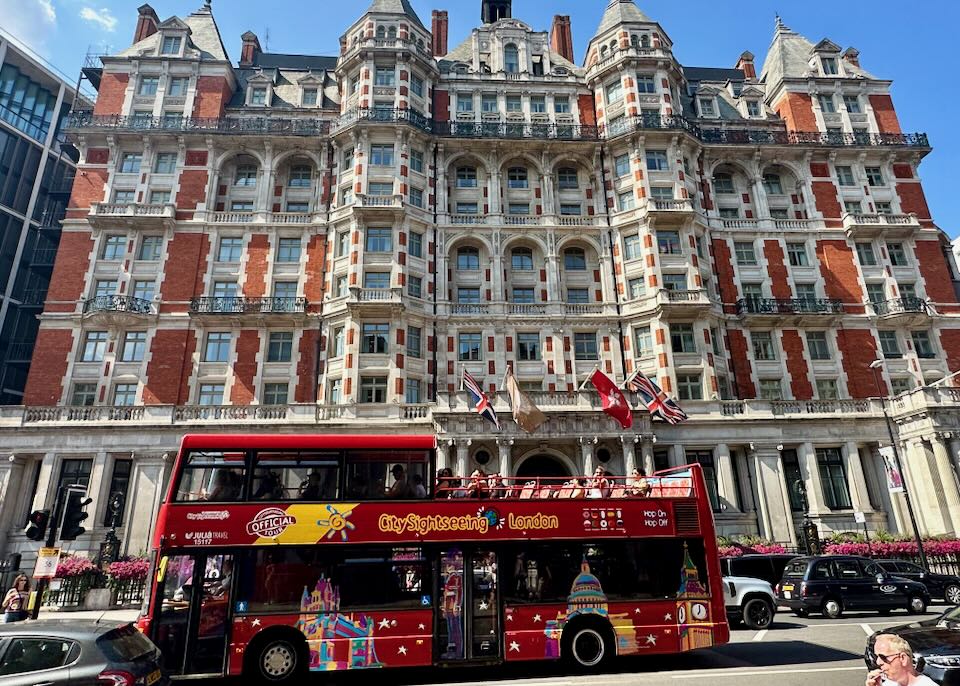
Mandarin Oriental Hyde Park • Hotel phone: +44 20 7235 2000
San Domenico House • Hotel phone: +44 20 7581 5757- Best Cheap/Midrange Hotels
Ashburn Hotel • Hotel phone: +44 20 7244 1999
London Visitors Hotel • Hotel phone: +44 77 7850 5544
The Queen’s Gate • Hotel phone: +44 20 7584 7222
Sydney House Chelsea • Hotel phone: +44 20 7376 7711- Best Hostels
Barmy Badger Backpackers • Hotel phone: +44 20 7370 5213
Safestay Kensington Holland Park • Hotel phone: +44 20 7870 9629
YHA Earl’s Court • Hotel phone: +44 345 371 9114
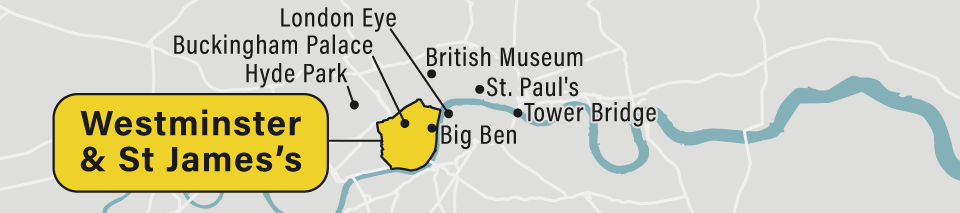
3. Westminster and St James’s
Sandwiched between the River Thames, Mayfair, Belgravia, and Soho, Westminster is Britain’s seat of power. Restaurants and accommodations here are few, but London’s biggest attractions are concentrated in this central part of the city, including the Houses of Parliament and Big Ben, the Tate Britain art gallery, and Trafalgar Square – home to Nelson’s Column, iconic St Martin-in-the-Fields church, National Portrait Gallery and the National Gallery. Connecting Trafalgar Square with Parliament Square is elegant Whitehall, a broad avenue lined with imposing statues and monuments, including the Cenotaph, a memorial to the nation’s war dead. Just off here is No.10 Downing Street, the home of the British Prime Minister, and the Churchill War Rooms (where Winston Churchill directed operations in World War II). There’s a strong royal connection as well: Buckingham Palace in St James’s Park is His Majesty’s home and office, while Westminster Abbey is the coronation and burial place of British monarchy.• This is where to view “Changing the Guard” ceremonies: the Foot Guards at Buckingham Palace, and the Household Cavalry at Horse Guards on Whitehall (Mon–Sat 11am, Sun 10am).
• Cheap hotels lie south and east of Victoria Station (Belgrave Rd), otherwise it’s very expensive to stay in Westminster and St James themselves.
- Best Hotels in Westminster and St James’s
Conrad St. James • Hotel phone: +44 20 3301 8080
Corinthia London • Hotel phone: +44 20 7930 8181
The Goring • Hotel phone: +44 20 7396 9000
The Guardsman • Hotel phone: +44 20 7309 9200
Hotel 41 • Hotel phone: +44 20 7300 0041
The Ritz • Hotel phone: +44 20 7493 8181
The Stafford • Hotel phone: +44 20 7493 0111
Taj 51 Buckingham Gate • Hotel phone: +44 20 7769 7766
The Trafalgar • Hotel phone: +44 20 7870 2900- Best Cheap/Midrange Hotel
Citadines Trafalgar Square • Hotel phone: +44 20 7766 3700
hub Westminster Abbey • Hotel phone: +44 333 321 3104
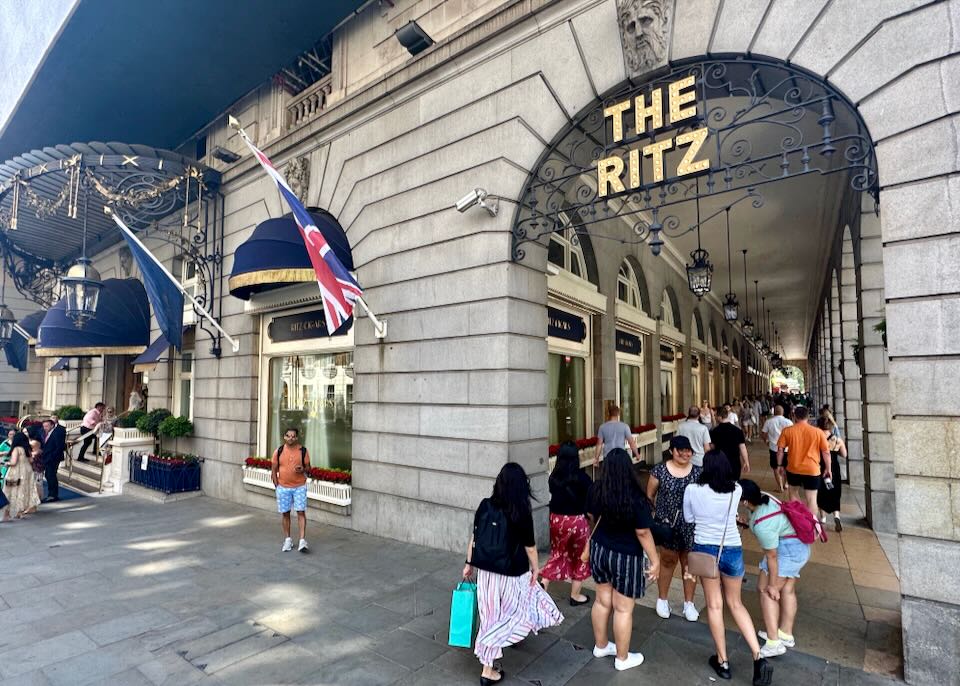
The legendary Ritz Hotel on Piccadilly, an enduring symbol of elegance and British tradition. Staying here is a truly opulent experience, from the white-gloved doormen to the famed afternoon tea in the Palm Court. It’s not just a hotel; it’s a London institution.
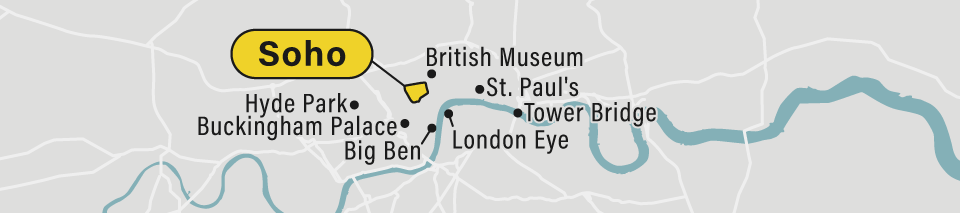
4. Soho
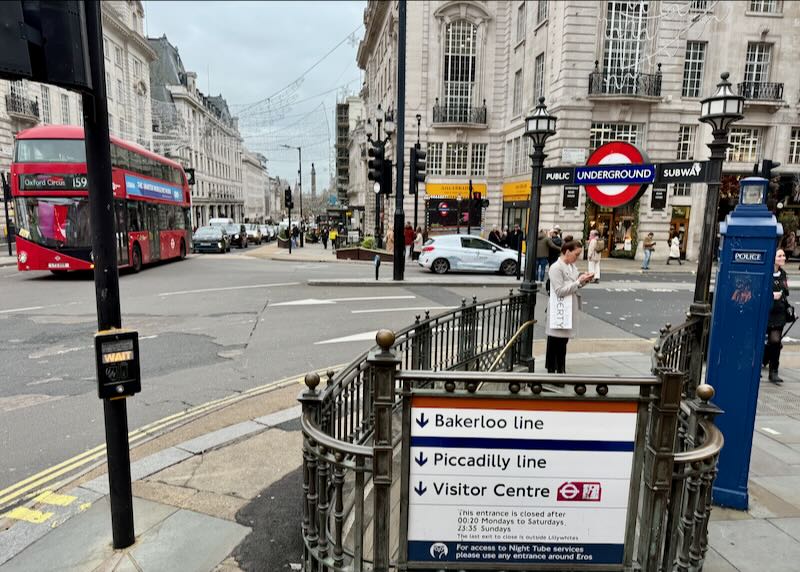
Bars, clubs, and a diverse clutch of restaurants are the hallmarks of Soho, London’s liveliest nightlife area and former red-light district. Centrally located and an easy walk away from the river and several major attractions, Soho is also the heart of London’s LGBTQA+ scene (especially vibrant around Old Compton St), and one of the best parts of London for independent designers and record stores. Soho is bordered to the south by the small, bustling Chinatown (the main drag is Gerrard Street, with its traditional Chinese gates) and touristy Leicester Square, famous for its movie premieres. A short stroll west is the equally touristy junction of Piccadilly Circus with its neon billboards and the Shaftesbury Memorial Fountain’s “Eros” statue (it’s actually Anteros). Other highlights include venerable jazz club Ronnie Scott’s, the street market on Berwick Street, the shops on and around 1960s icon Carnaby Street, the Photographers’ Gallery, and the grand old Liberty department store.• Soho is always very busy but staying here means you’ll have the best nightlife and dining scene at your doorstep, along with easy access to some of the main sights and shopping districts in the city. As a result, rates tend to be very expensive, though there are a several good budget options, noted below.
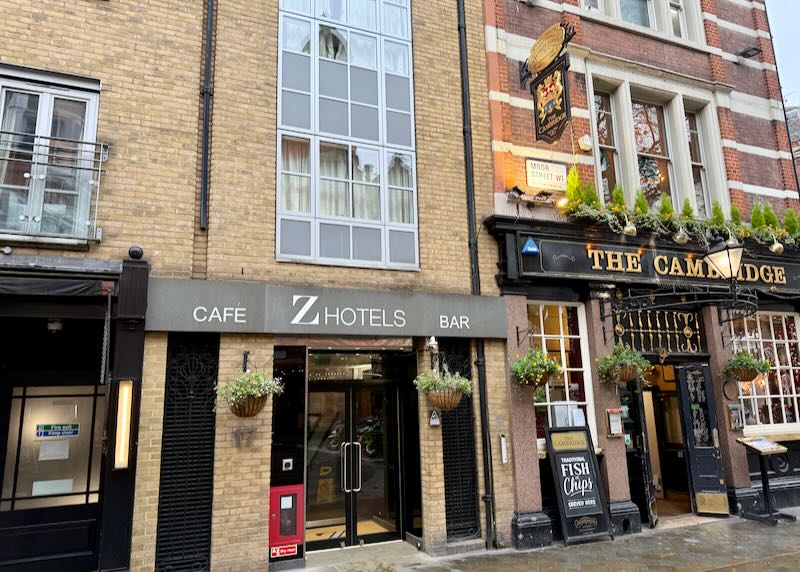
The Z Soho is good value and has a great central location.
- Best Hotels in Soho
The Resident Soho • Hotel phone: +44 20 3697 3697
The Soho • Hotel phone: +44 20 7559 3000
Ham Yard • Hotel phone: +44 20 3642 2000
Hazlitt’s • Hotel phone: +44 20 7434 1771- Best Cheap/Midrange Hotels
The Z Soho • Hotel phone: +44 20 3551 3701
hub Soho • Hotel phone: +44 333 321 3104
Premier Inn Leicester Square • Hotel phone: +44 333 321 9254- Best Hostel
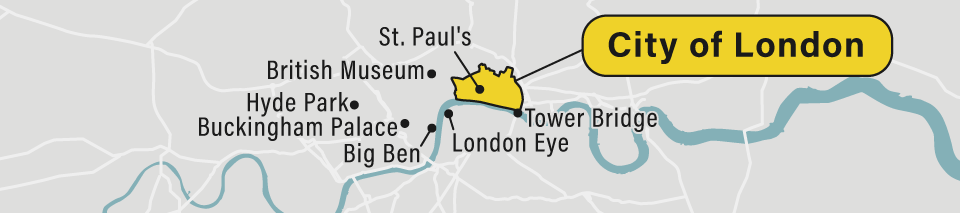
YHA Oxford Street • Hotel phone: +44 20 7734 16185. City of London (The City)
Studded with London’s relatively recent crop of skyscrapers, the financial heart of the city has a 2000-year-old history. This is where the Romans originally founded Londinium in 47 AD, and no other part of London packs so many heavyweight attractions into so small a space as the “Square Mile” (despite the destruction wrought by the Great Fire of 1666 and the German Blitz in World War II). Besides Roman ruins, St Paul’s Cathedral, and the Tower of London (with its iconic “Beefeaters” and Crown Jewels), Tower Bridge (you can walk across the elevated walkways), Wren’s soaring Monument to the Great Fire, the medieval Guildhall, London’s oldest synagogue, and the modern but illuminating Museum of London and the Barbican arts complex, there are numerous churches here loaded with history – some medieval, others built by Sir Christopher Wren, but all well worth exploring (St Bride’s, St Olave’s and All Hallows by the Tower are especially interesting). For a taster of the modern financial district, visit Rafael Viñoly’s “Walkie Talkie” building on Fenchurch Street, which features the popular public Sky Garden on the top floor, with several restaurants and bars (it’s best to book ahead).Other highlights include the Bank of England Museum, Dr Johnson’s House, the Charterhouse, Smithfield Market, the Museum of the Order of Saint John, and the fantastic dining in Clerkenwell. The City is also littered with historic pubs like Ye Olde Cheshire Cheese and the Old Bell Tavern, all dripping with character. There is also one of the city’s finest small museums in Holborn, at the western end of the district: Sir John Soane’s Museum with its fascinating art collections. Nearby are the Inns of Court, where Britain’s top lawyers train and ply their trade, and Temple Church, built in 1185 by the Knights Templar and made famous by Dan Brown’s The Da Vinci Code.
• There are some excellent budget options here, though The City can be quiet at nights and on weekends (apart from Clerkenwell and into Islington). This part of London has a very different feel to the West End, with the juxtaposition of medieval and Roman remains with glass and steel skyscrapers quite jarring.
- Best Hotels in The City of London
Four Seasons at Ten Trinity Square • Hotel phone: +44 20 3297 9200
The Ned • Hotel phone: +44 20 3828 2000
Pan Pacific London • Hotel phone: +44 20 3297 9200
The Rookery • Hotel phone: +44 20 7336 0931
Rosewood London • Hotel phone: +44 20 7781 8888
Vintry and Mercer • Hotel phone: +44 20 3908 8088- Best Cheap/Midrange Hotels
Apex Temple Court • Hotel phone: +44 20 3004 4141
citizenM Tower of London • Hotel phone: +44 20 3519 4830
Motel One • Hotel phone: +44 20 7481 6420
hub City Bank • Hotel phone: +44 871 527 8000
hub Tower Bridge • Hotel phone: +44 871 527 9576
Premier Inn Blackfriars • Hotel phone: +44 333 321 9269- Best Hostels
Wombat’s City Hostel • Hotel phone: +44 20 7680 7600
YHA St Paul’s • Hotel phone: +44 345 371 9012
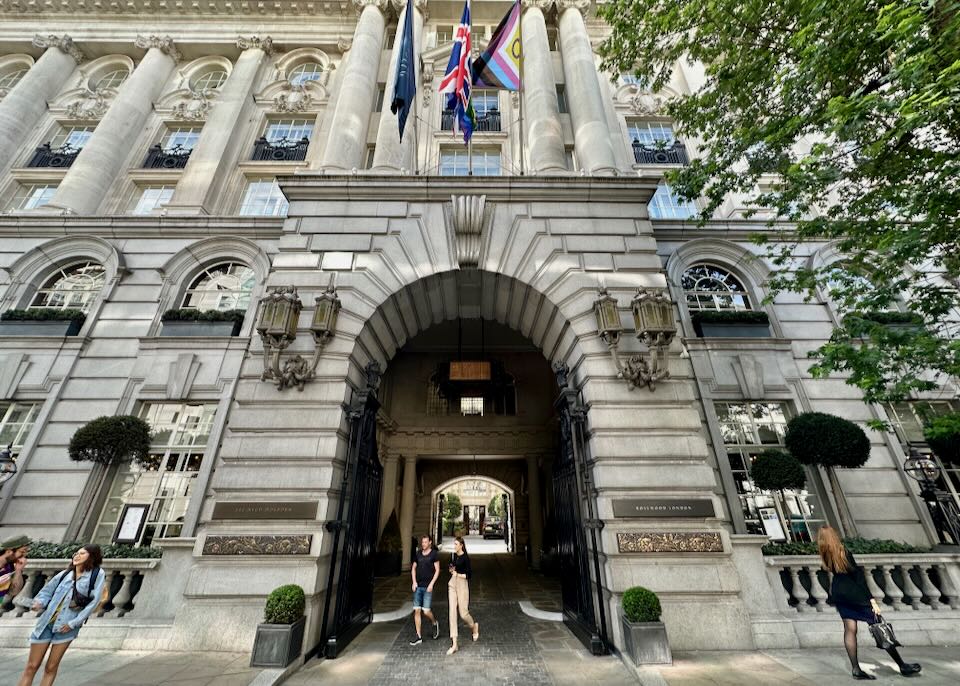
The grand entrance of the Rosewood London in Holborn. Walking through the magnificent archway and into the hotel’s quiet inner courtyard feels like entering a private palace.
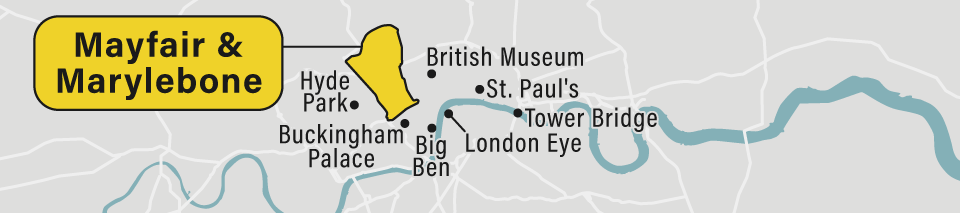
6. Mayfair and Marylebone
Lined with high street fashion outlets and the iconic Selfridges department store, centrally located Oxford Street bisects two distinguished neighborhoods. To the north is fashionable Marylebone, attracting moneyed Londoners with its designer shops and upmarket eateries (especially along Marylebone High Street, with its village-like feel), while the ever-popular waxworks of Madame Tussauds, just south of Regent’s Park, panders to crowds of visitors (book online). The area also contains an excellent (and rarely busy) art gallery, the Wallace Collection, plus the Sherlock Holmes Museum on Baker Street, at the fictional home of the famous detective. South of Oxford Street, Mayfair oozes class and wealth, its grid of tree-lined streets dotted with 5-star hotels, antique shops, boutiques along Bond Street, and the finest menswear outlets in town along its famous shopping street, Saville Row. Posh Piccadilly forms Mayfair’s southern boundary, home to elegant Burlington Arcade, Fortnum & Mason, and the Royal Academy of Arts.• Mayfair is an expensive area, but for good reason – quiet and posh neighborhoods but conveniently central. You’ll get better deals in Marylebone, though note that the cheapest hotels here are poor value – you get what you pay for.
Perfectly located in Mayfair, The Athenaeum sits directly on Piccadilly overlooking the beautiful expanse of Green Park, just a short walk from Buckingham Palace.
- Best Hotels in Mayfair and Marylebone
The Athenaeum • Hotel phone: +44 20 7499 3464
The Beaumont • Hotel phone: +44 20 7499 1001
Claridge’s • Hotel phone: +44 20 7629 8860
The Connaught • Hotel phone: +44 20 7499 7070
The Dorchester • Hotel phone: +44 20 7629 8888
Four Seasons at Park Lane • Hotel phone: +44 20 7499 0888
The Langham • Hotel phone: +44 20 7636 1000
The Marylebone • +44 20 7486 6600- Best Cheap/Midrange Hotel
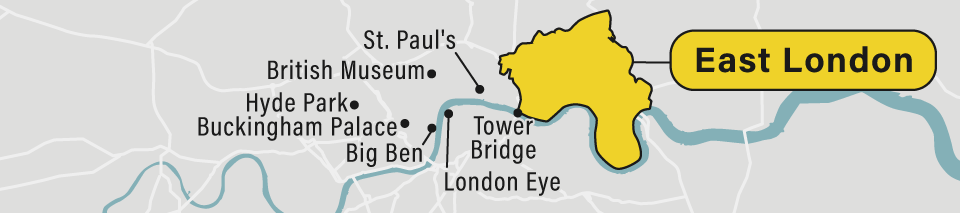
The Z Gloucester Place • Hotel phone: +44 20 3551 37197. East London
East of The City, the East End used to have a bad reputation, with its Victorian slums, Jack the Ripper and the Kray twins stalking the streets, and the squalor surrounding London’s docks and heavily industrialized neighborhoods. The East End retains its immigrant neighborhoods and lively ethnic vibe, but today it’s one of the most dynamic parts of the city, with hip craft breweries, art galleries and murals, boutique hotels, and a cutting-edge club scene.Must-visits include Spitalfields Market and the excellent restaurants surrounding it, the Whitechapel Gallery, the Brick Lane Sunday flea market’s Bangladeshi curry houses and vintage fashion shops, the designer shops and hip Boxpark of Shoreditch, and Hoxton’s frenetic nightlife. You can sample Cockney classics like eel pie and mash and fish and chips, and sip beer in historic pubs like the Kray twins’ Carpenter’s Arms, Lord Nelson’s favorite The Gun, and the Ten Bells (associated with Jack the Ripper). Further out towards Stratford lies the Queen Elizabeth Olympic Park, focus of the London 2012 Olympic and Paralympic Games. In addition to seeing Zaha Hadid’s wavy Aquatics Centre, you can climb Anish Kapoor’s twisting red ArcelorMittal Orbit tower for spectacular views across London, and try its thrilling “Orbit slide”.
Docklands & Canary Wharf
The vast Docklands of East London were largely abandoned by the 1970s, but since the 1990s have been spectacularly transformed into zones of condos, offices, and marinas along the river. Canary Wharf on the Isle of Dogs, with its banks and skyscrapers, has effectively become London’s second financial district after the City. Though there’s not a lot to see (other than the high-rise architecture), curious tourists still pay a visit, strolling along the canals and through subterranean shopping malls. Discover the city’s maritime past at the Museum of London Docklands, or take the IFS Cloud Cable Car from Royal Victoria Dock to the O2 (formerly the Millennium Dome) on the Greenwich Peninsula on the other side of the Thames. It’s not a great idea to stay in Canary Wharf, but the Hilton, Novotel, and Marriott are all excellent options. For the O2, there’s the InterContinental.• East London generally contains much cheaper, edgier neighborhoods, where you’ll be mixing with more locals than tourists. There are some great deals on hotels to be had here, especially with boutiques in Shoreditch.
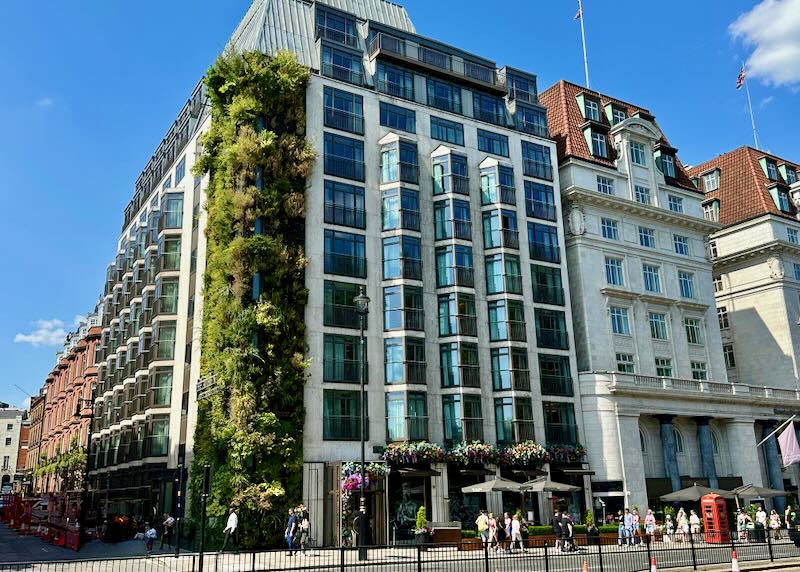
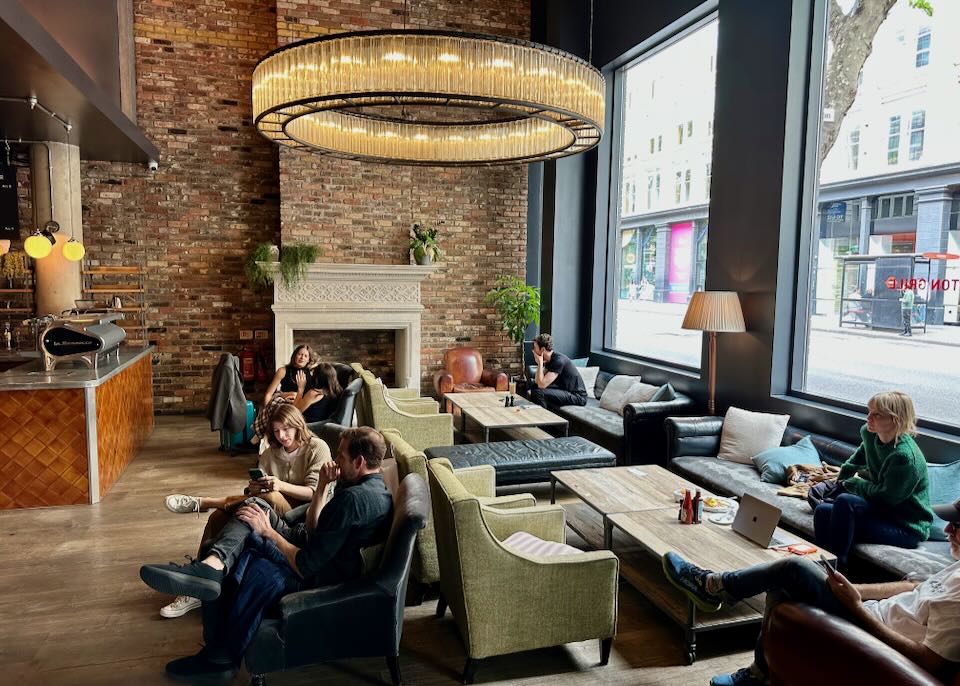
The good-value The Hoxton, Shoreditch, an easy walk to the Old Street tube station.
- Best Hotels in East London
Batty Langley’s • Hotel phone: +44 20 7377 4390
Hart Shoreditch • Hotel phone: +44 20 3995 3655
The Hoxton, Shoreditch • Hotel phone: +44 20 7550 1000
Redchurch Townhouse • Hotel phone: +44 20 3819 8180- Best Cheap/Midrange Hotels
The Corner London City • Hotel phone: +44 20 3021 3300
Holiday Inn Whitechapel • Hotel phone: +44 20 7791 9010
ibis London City Shoreditch • Hotel phone: +44 20 7422 8400
The Z Shoreditch • Hotel phone: +44 20 3551 3702
hub Spitalfields, Brick Lane • Hotel phone: +44 871 527 9588- Best Hostel
Park Villa Boutique Hostel • Hotel phone: +44 20 8980 1439
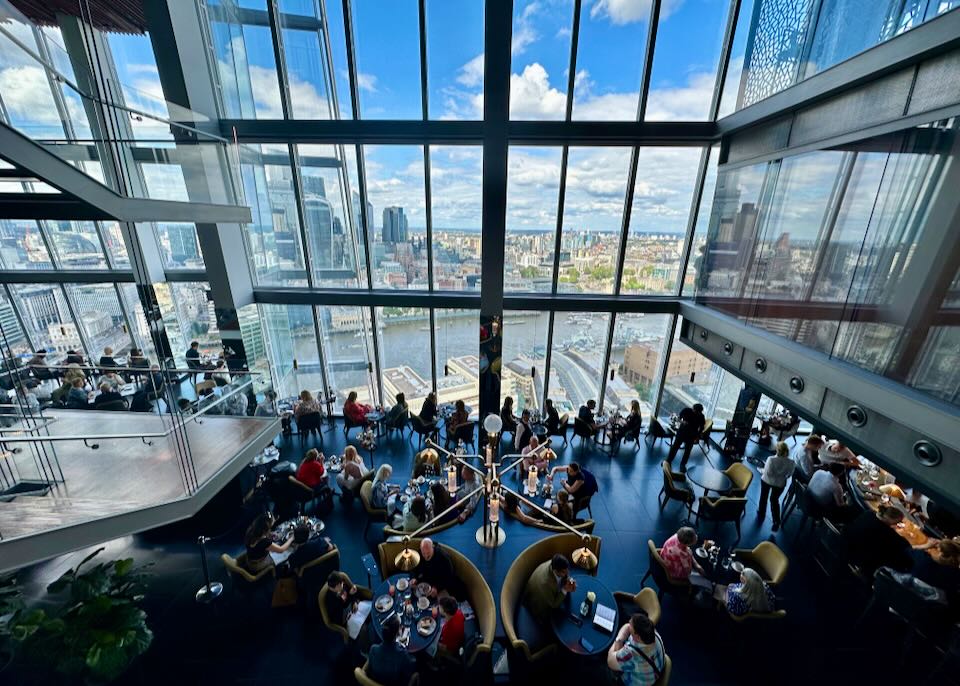
The awesome views from Shangri-La The Shard from its perch on the south side of the Thames.
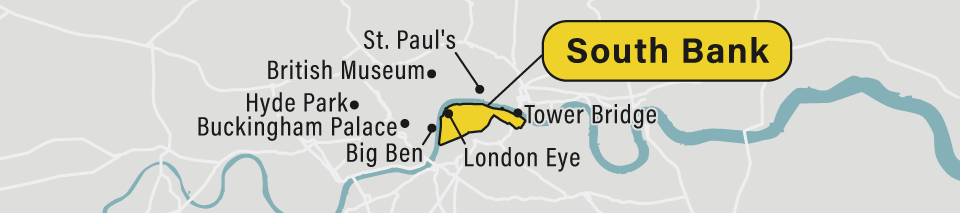
8. South Bank
The Thames is London’s lifeblood, and many of the city’s attractions are concentrated along the revamped promenade that stretches along the river’s South Bank in central London – from Shakespeare’s Globe and the Southbank Centre (Europe’s largest arts venue), and the Tate Modern, the country’s top contemporary (and free) art gallery, to the London Eye (the largest Ferris wheel in Europe) and the Shard skyscraper’s observation deck. Families will want to check out the London Dungeon, Sea Life Aquarium, and replica of Drake’s Golden Hinde ship. Other highlights include battleship-turned-museum HMS Belfast, the White Cube art gallery, medieval Southwark Cathedral, Florence Nightingale Museum, and the excellent Imperial War Museum. Dining options include the standout Borough Market, which is crammed with food stalls, as well as the smaller Maltby Street Market.• Waterloo station and London Bridge are both major transport hubs that serve this area.
• You’ll find a lot of excellent modern midrange hotels here from the Park Plaza, Ibis, Premier Inn and Citizen hotel chains.
The Park Plaza Westminster Bridge is close to many top attractions and a great hotel for families.
- Best Hotels on London’s South Bank
Bankside Hotel • Hotel phone: +44 20 3319 5988
Hilton Bankside • Hotel phone: +44 20 3667 5600
The Hoxton, Southwark • Hotel phone: +44 20 7903 3000
Marriott County Hall • Hotel phone: +44 20 7928 5200
Shangri-La The Shard • Hotel phone: +44 20 7234 8000
Sea Containers • Hotel phone: +44 20 3747 1000- Best Cheap/Midrange Hotels
citizenM Bankside • Hotel phone: +44 20 3519 1680
H10 Waterloo • Hotel phone: +44 20 7928 4062
ibis Blackfriars • Hotel phone: +44 20 7633 2720
Novotel London Bridge • Hotel phone: +44 20 7089 0400
Park Plaza County Hall • Hotel phone: +44 333 400 6116
Park Plaza Westminster Bridge • Hotel phone: +44 333 400 6112
Ruby Lucy • Hotel phone: +44 20 3475 3460- Best Hostel
The Walrus Bar & Hostel • Hotel phone: +44 20 7928 43689. Camden Town and Primrose Hill
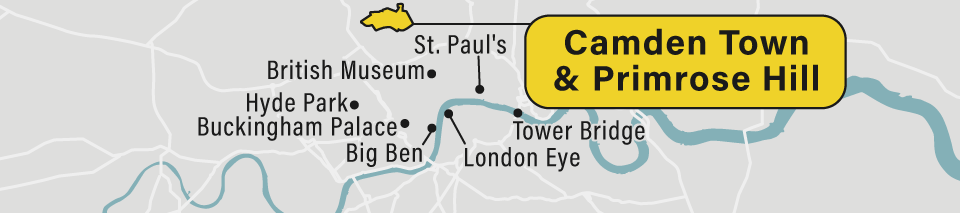
Grungy and rough around the edges, Camden Town nestles in the northeast reaches of Regent’s Park, near the family favorite London Zoo. It’s centered on the sprawling Camden Market – four adjoining markets selling anything from vintage clothing and records to art and gourmet street food (there’s also a beloved statue of late singer Amy Winehouse). You can also take boat rides (or stroll the path) along the canals from here to Little Venice, or visit the Jewish Museum, charting the history and culture of the British Jewish community. The birthplace of British rock music, Camden has a young, studenty vibe, numerous live music venues, and lively pubs, while Primrose Hill, just to the west, is a celeb hangout with artisan coffee shops, gastropubs, and chic stores – climb the grassy hill itself for panoramic views across the whole city.• These are hip areas to stay in, off the main tourist trail, but with far fewer hotels (apartment rentals may be the way to go here).
- Best Hotels in Camden Town and Primrose Hill
Holiday Inn Camden Lock • Hotel phone: +44 20 7485 4343
Marriott Regents Park • Hotel phone: +44 20 7722 7711- Best Cheap/Midrange Hotels
The Hurdwick • Hotel phone: +44 7487 659744
Primrose Guesthouse • Hotel phone: +44 7735 55009810. Bloomsbury, Fitzrovia and King’s Cross
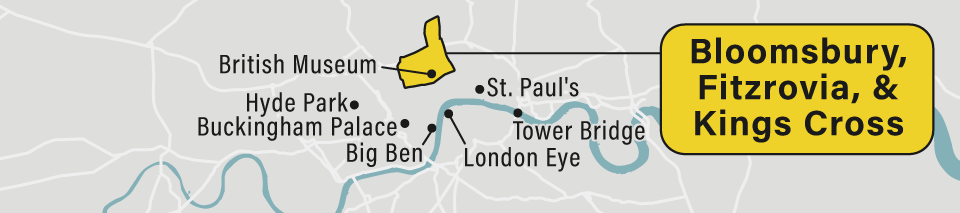
The bookish and offbeat neighborhoods of Bloomsbury and Fitzrovia are just north of Oxford Street. Bloomsbury is centered around the University of London and the enormous British Museum – the UK’s best – which is surrounded by a buzzy grid of streets filled with cafes and restaurants. Other highlights include Charles Dickens Museum, former home of the beloved writer, and the museums on the university campus: Grant Museum of Zoology, the Wellcome Collection of medical artifacts and oddities, and Petrie Museum of Egyptian Archaeology. Just west of Bloomsbury is trendy Fitzrovia – short on sights but with lively pubs and bars frequented by young professionals. To the north is the regenerated King’s Cross, with the international rail hub of St Pancras, the Harry Potter Shop at Platform 9¾ (in King’s Cross station itself), some excellent street food, and the British Library, housing the Lindisfarne Gospels and the Magna Carta.• Hotels tend to be good value here, but note that the cheapest hotels are not good value. It’s a little more sedate, though the student population livens things up a bit.
- Best Hotels in Bloomsbury, Fitzrovia and King’s Cross
The Bloomsbury • Hotel phone: +44 20 7347 1000
Kimpton Fitzroy • Hotel phone: +44 20 7123 5000
The London EDITION • Hotel phone: +44 20 7781 0000
Mandrake • Hotel phone: +44 20 3146 7770
Montague on the Gardens • Hotel phone: +44 20 7637 1001
St. Pancras Renaissance • Hotel phone: +44 20 7841 3540- Best Cheap/Midrange Hotels
Morton Hotel • Hotel phone: +44 20 7692 5600
hub Goodge Street • Hotel phone: +44 333 321 3104
hub King’s Cross • Hotel phone: +44 333 321 3104
Premier Inn King’s Cross • Hotel phone: +44 333 321 1272- Best Hostels
Astor Museum Hostel • Hotel phone: +44 20 7580 5360
Clink261 • Hotel phone: +44 20 7183 9400
YHA London Central • Hotel phone: +44 345 371 9154
YHA St Pancras • Hotel phone: +44 345 371 9344
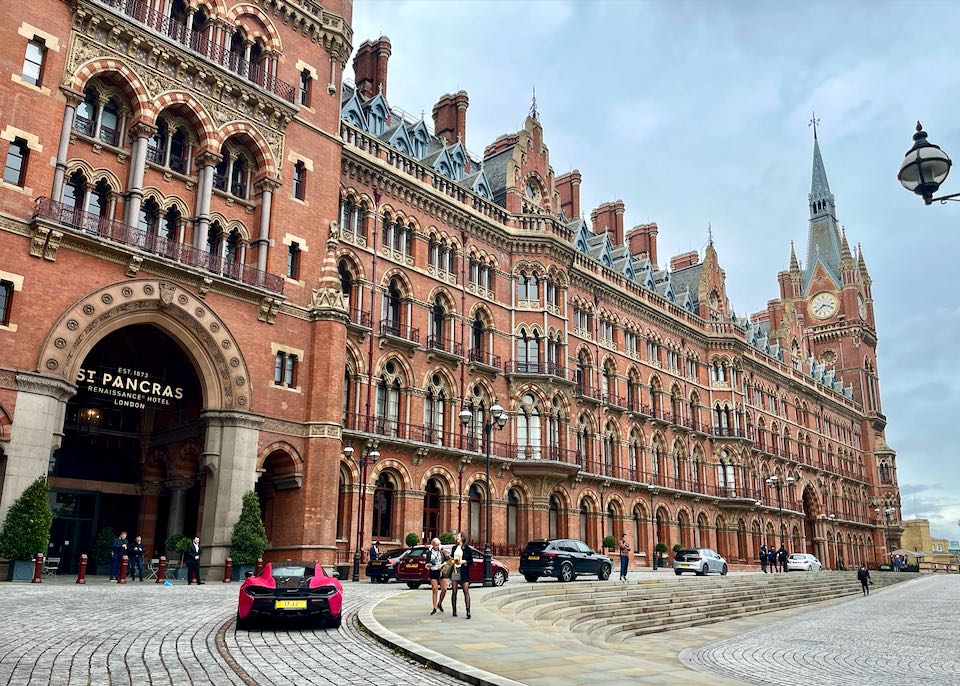
Just north of Bloomsbury, sits the iconic St. Pancras Renaissance at King’s Cross/St. Pancras railway station (with direct trains to Cambridge, Edinburgh, Paris, Amsterdam, and many more).
11. Greenwich
Boats along the Thames give easy access to attractions in other parts of London, including Greenwich, further east – a UNESCO World Heritage collection of museums. Known for giving its name to Greenwich Mean Time, you can see the east-west Prime Meridian Line at the Royal Observatory at the top of Greenwich Park (which also provides the best views of the skyscrapers at Canary Wharf). Back down by the river, the Cutty Sark is the main attraction, the world’s last surviving tea clipper, along with the picturesque buildings of the Old Royal Naval College (designed by Christopher Wren and now primarily used by the University of Greenwich) – the murals in the Painted Hall are definitely worth seeing. Aficionados of naval history will love the National Maritime Museum, which also includes Inigo Jones’s Queen’s House, designed in 1616 for James I’s wife, Anne of Denmark. Greenwich also offers plenty of places to eat and drink, as well as indoor Greenwich Market for gifts and antiques.• Greenwich is worth a full day trip if you have time (easy via public transport), but there are a few decent hotels here if you fancy staying longer: the Admiral Hardy in the center, or the modern Novotel Greenwich and Staycity Greenwich High Road a little further out.
Other London Neighborhoods
We’ve covered our favorite neighborhoods to visit and stay in more detail above, but London is a vast, attraction-packed city and with more time, the following areas are also worth checking out:
- North London: Kids and Harry Potter fans in general will love The Making of Harry Potter tour at the Warner Bros studios in Leavesden (20 miles northwest of central London). Take the train to Watford Junction where shuttle buses (included in the price) zip to the studios. Soccer fans can make the pilgrimage to Wembley Stadium, the home of English football, for tours and major concerts. There are some good hotels here: the Premier Inn London Wembley Stadium is usually an excellent value.
- South London: Tennis fans will want to visit the Wimbledon Lawn Tennis Museum (the Wimbledon Tennis Tournament itself takes place in July), while the history of gin is chronicled at the Beefeater Gin Distillery in Kennington. Further south, art fans should check out the collection at Dulwich Picture Gallery (which includes Rembrandt’s famed Girl at a Window), while the quirky Horniman Museum contains unusual natural history and ethnographic exhibits.
- West London: Made globally famous by the 1999 movie of the same name, affluent Notting Hill lies in West London and is best known for its colorful Victorian townhouses and the Notting Hill Carnival, Europe’s biggest street festival (held every August). It’s also home to the iconic Portobello Road Market, a vast emporium of fashion, gifts, antiques, and street food. You could spend another week seeing the sights along the River Thames west from central London. Kew is the home of the beautifully maintained Royal Botanic Gardens and 17th-century Kew Palace, while Syon House is another huge stately home just across the river with an opulent 18th-century interior. Nearby Richmond is a charming river town that will be familiar to fans of hit TV show Ted Lasso, with the World Rugby Museum and Twickenham Stadium Tours on the other side of the Thames. Henry VIII’s Hampton Court Palace further south is one of England’s most famous royal palaces. Finally, it’s an easy day-trip out to Windsor to visit the massive royal castle, Eton College, and the site of the Magna Carta signing at Runnymede. The Macdonald Windsor Hotel and Castle Hotel Windsor are good central choices here. The Bingham Riverhouse is a romantic option in Richmond.
- There’s not much point in staying at the airports unless you have an early flight (or are arriving very late) and are traveling by public transport; it can be time consuming to travel from central London, especially to/from Gatwick and Stansted. At Heathrow, the Sofitel Heathrow is the best and most convenient, if expensive. Nearby Leonardo and Renaissance hotels are usually much cheaper. At Stansted we like the ultra-convenient Hampton. At Gatwick the Sofitel Gatwick (north terminal) is the best. And Bloc Hotel and YOTELAIR (South Terminal) are solid, convenient options.
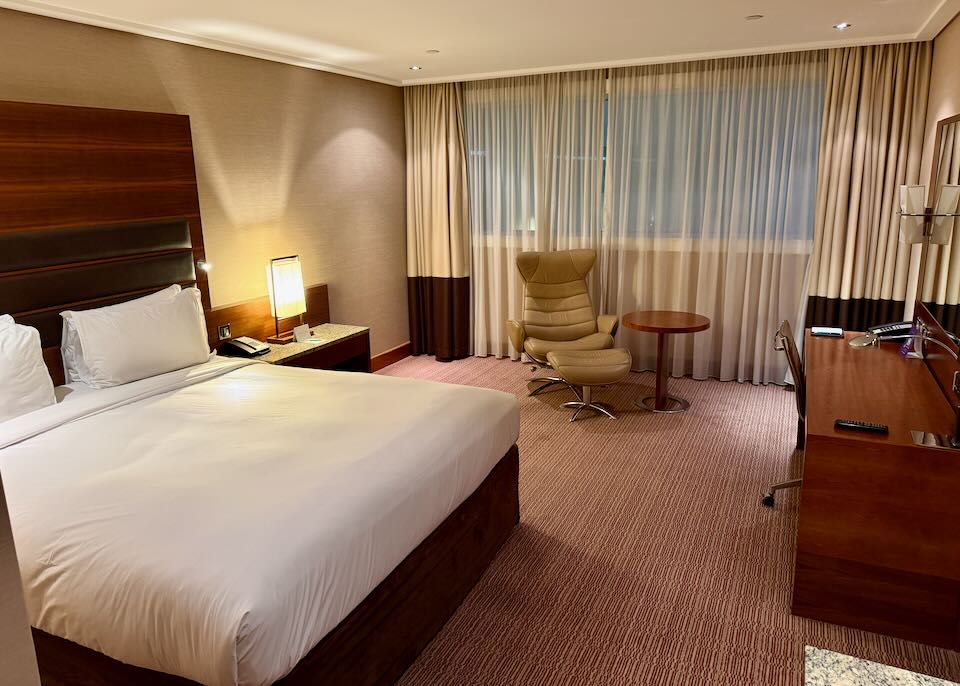
Our room at the Sofitel Heathrow. Direct indoor access to Terminal 5.
England’s Premier League is popular worldwide, and though tickets are not cheap, watching a football (soccer) game at one of the major London clubs can be a memorable experience. Don’t even think about driving to a game: take a train or the Underground. Most clubs also offer stadium tours and have on-site museums displaying the silverware.
- Arsenal plays at the Emirates Stadium in Holloway, North London, served by the Arsenal, Highbury & Islington and Holloway Road Underground stations.
- Chelsea play at Stamford Bridge in Fulham, West London, with Fulham Broadway the closest Underground.
- Tottenham play at Tottenham Hotspur Stadium in North London, close to the White Hart Lane Overground station, plus the Seven Sisters and Tottenham Hale Underground stops.
- Other London Premiership clubs include West Ham (who play at the Olympic stadium in East London), Crystal Palace in South London, and Brentford and Fulham (both West London).
London Travel Tips
- London is served by three primary airports – Heathrow, Gatwick and Stansted – with smaller airports like Luton, London Southend and London City serving a few domestic and European destinations. The best way into the city from the main three airports is to take the train (or Underground from Heathrow); taxis are readily available but expensive.
- There are several tourist discount cards available for London. If you only intend to visit a few sights or just London’s free museums and galleries (Tate Modern, British Museum), it’s usually not worth buying one. Otherwise, you’ll need to do some research to maximize your savings.
– The all-inclusive London Pass (1, 2, 3, 4, 5, 7 or 10 days) is valid at over 90 sights (but NOT the London Eye and Madame Tussauds) and is a good idea for families intending to see at least 3 major attractions (not museums) per day.
– The London City Pass from Turbo Pass is similar but offers a free public transport option, which is useful, but overall is better for visitors staying longer, around 7 days.
– The London Sightseeing Pass doesn’t include as much as the others, BUT is a bit cheaper and not bad for short trips and for visitors who like bus and boat tours.
– We also like the Go City London Explorer Pass, which is based on the number of attractions and activities you choose, instead of the number of days, so assuming you know exactly want you want to do, can be cheaper.- Bike rental is available through bikeshare outfits like Santander Cycles. London is not a bad place to ride bikes, offering plenty of bike lanes and “leisure cycle routes”; but with public transport so efficient, it’s not worth renting a bike just to get around – unless you really enjoy riding them and intend to explore the leisure routes more extensively. Dott, Lime and TIER offer shared e-scooters around the capital.
- Free wi-fi is available at Heathrow, Gatwick and Stansted airports, and throughout The City district (look for “O2 Wi-Fi”). It’s also available at most Underground stations, museums/galleries, and libraries throughout the city, as well as at almost every café and restaurant.
- Tipping: unlike the US, tips in the UK are discretionary and depend on the quality of the service. In London, it’s usual to leave 10–15% of the check (“bill”) when eating out, though if a service charge has been added instead (which does happen) there’s no need to tip. Locals also tend to round taxi fares to the nearest pound. Do not tip the bartender in a pub, though.
London’s Main Transport Options
- The Tube (Underground): This is the fastest way to travel across the city. The network is extensive and connects all major neighborhoods and attractions. Fares are based on the zones you travel through.
- Double-Decker Buses: Don’t overlook the iconic red buses. They are excellent for shorter journeys and offer a fantastic view of the city streets. Buses have a single flat fare per journey, and the “Hopper Fare” allows you to take unlimited bus or tram trips within one hour for no extra charge.
- Other Trains (DLR, Overground, Elizabeth Line): These are other train lines that are fully integrated into the main transport system. Your contactless card or phone works seamlessly across all of them. The Elizabeth Line is a new, fast line connecting Heathrow Airport, Central London, and areas to the east.
- River Bus (Uber Boat by Thames Clippers): This is a scenic way to travel along the River Thames. It is more expensive than the Tube or bus and is not fully included in the daily/weekly fare cap, but using your contactless card or phone gives you a discount over the standard ticket price.

About Santorini Dave