Updated: April 15, 2026
By Santorini Dave
Questions? dave@santorinidave.com
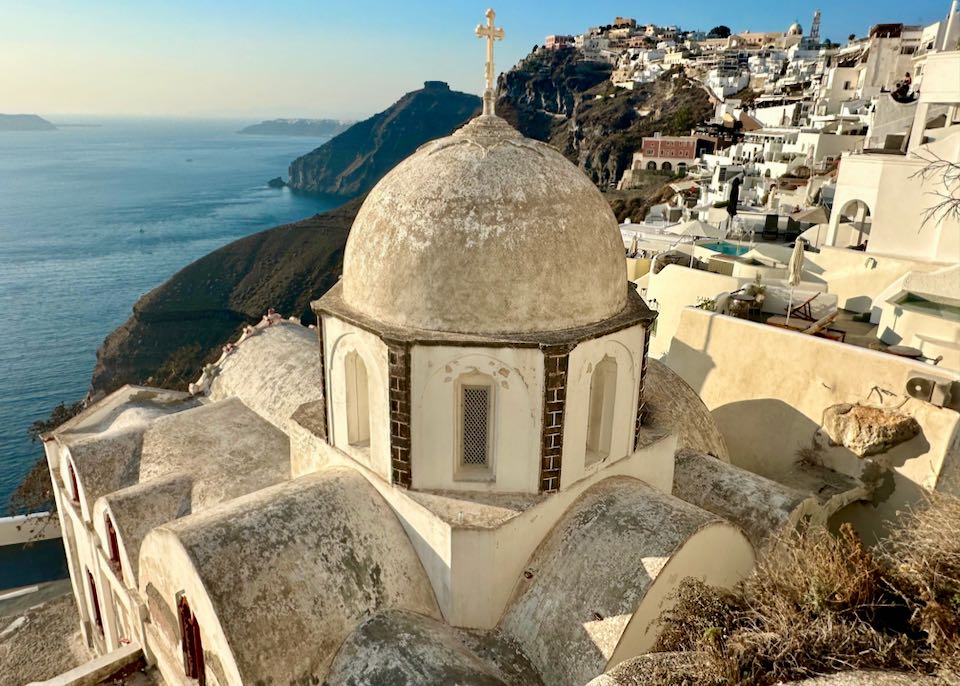
My Greece Travel Guide
Greece is my favorite country in Europe. It offers an unmatched mix of spectacular beaches – Naxos, Mykonos, and Paros have the best swimming – and iconic history in Athens, Crete, and Delphi. You will find stunning natural beauty everywhere, though Santorini, Milos, and the Meteora remain the standouts and my absolute favorites. The magical Greek islands are perfectly scattered for island hopping adventures, while mainland Greece is packed with ancient cities and surprises that reward the unhurried traveler.
- Skip to my Greece FAQ
Travel Guides
Where to Stay in Greece
- Aegina – Best Areas
- Andros – Best Areas
- Athens – Best Areas
- Chios – Best Areas
- Crete – Best Areas
- Delphi – Best Areas
- Folegandros – Best Areas
- Hydra – Best Areas
- Meteora – Best Areas
- Milos – Best Areas
- Monemvasia – Best Areas
- Mykonos – Best Areas
- Nafplio – Best Areas
- Naxos – Best Areas
- Paros – Best Areas
- Poros – Best Areas
- Rhodes – Best Areas
- Santorini – Best Areas
- Spetses – Best Areas
- Syros – Best Areas
- Tinos – Best Areas
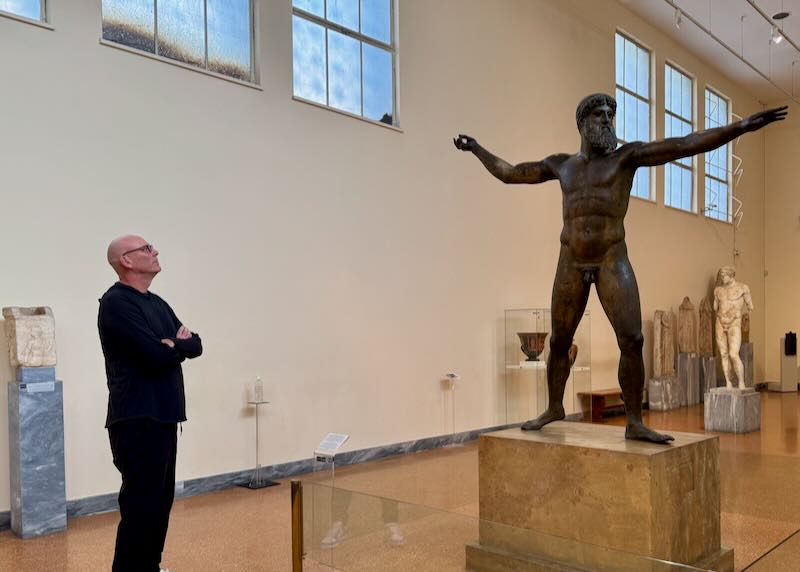
Me at the National Archaeological Museum in Athens.
What to Do in Greece
- Athens – Things to Do
- Crete – Things to Do
- Delphi – Things to Do
- Meteora – Things to Do
- Monemvasia – Things to Do
- Mykonos – Things to Do
- Nafplio – Things to Do
- Naxos – Things to Do
- Paros – Things to Do
- Santorini – Things to Do
Where to Eat & Drink in Greece

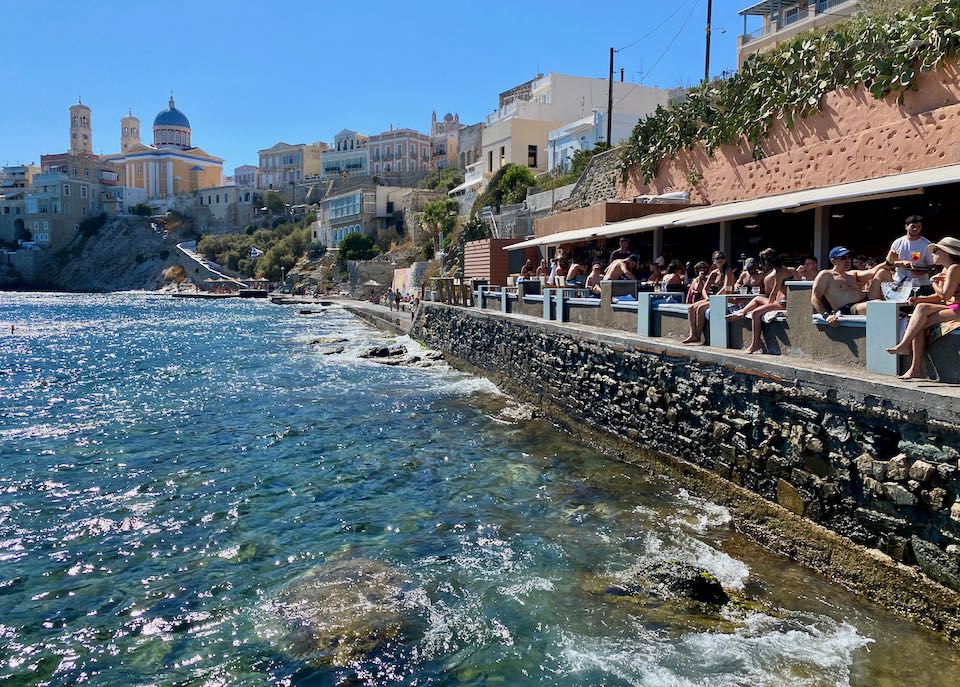
Island hopping by ferry is a great way to get between the Greek Islands.
Where to Go in Greece
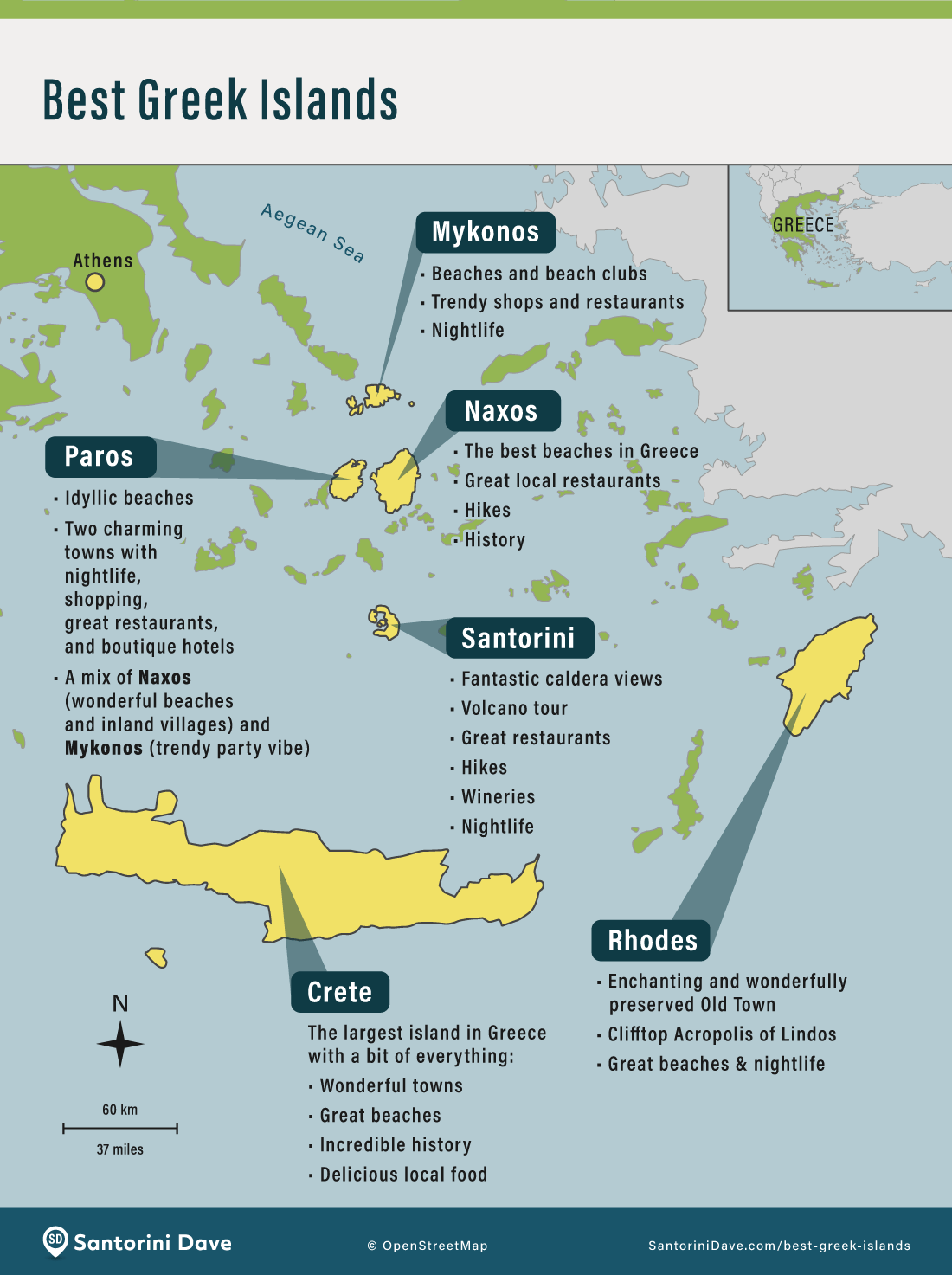
- Best Greek Islands
- Greece with Kids
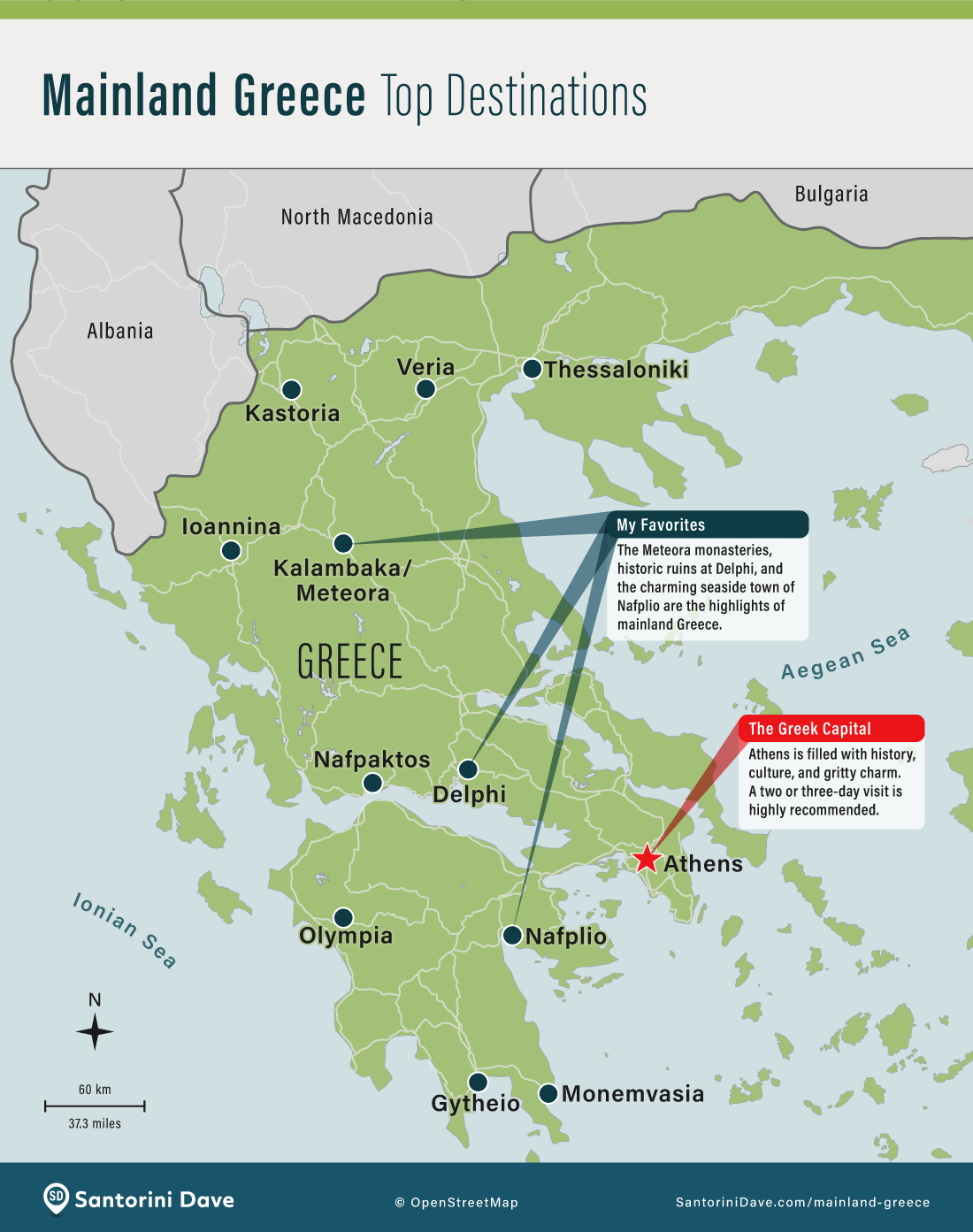
- Mainland Greece – Where to Go
- Peloponnese – Where to Go
- Halkidiki – Where to Go
- Where to Go in Greece
- Greece Itineraries
- Greece & Italy Itinerary
- Greece for First-Timers
- How Many Days in Greece?
- My 15-Day Greek Island Itinerary
The Best Beaches in Greece
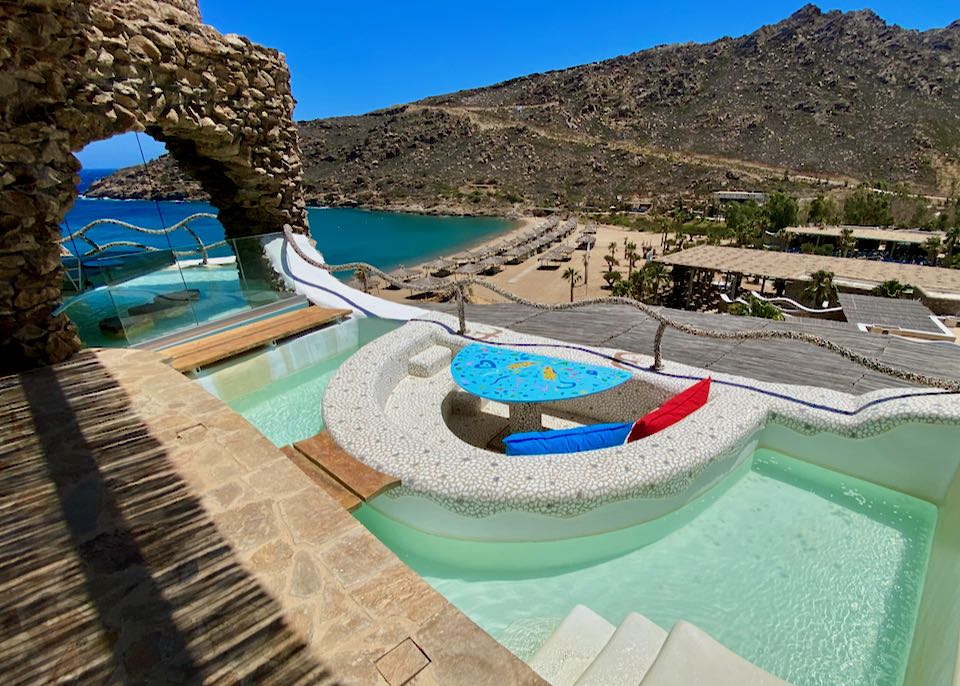
The Calilo Hotel in Ios is one of our favorite new beach resorts in Greece.
When to Go to Greece
- Best Time to Visit Greece & Greek Islands
- Athens – Best Time to Visit
- Crete – Best Time to Visit
- Mykonos – Best Time to Visit
- Naxos – Best Time to Visit
- Santorini – Best Time to Visit
My wife and I at the Grande Bretagne hotel in Athens.
The Best Hotels in Greece
- Mykonos – Best Hotels
- Mykonos – Family Hotels
- Mykonos – Budget Hotels
- Mykonos – Beach Hotels
- Mykonos – Honeymoon Hotels

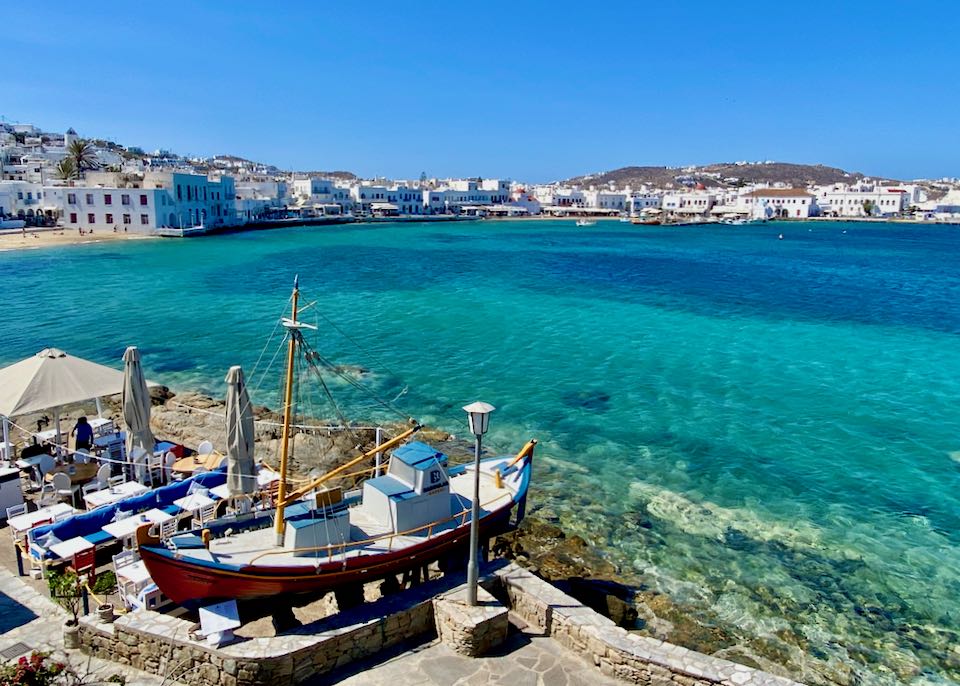
Mykonos Town harbor in Mykonos, Greece.
Getting To & Around Greece
- Greece Rental Cars
- Flights to Greece
- Greek Ferry Guide
- Greek Island Hopping
- Maps of Greece
- Athens to Santorini – Fly or Ferry
- Mykonos to Santorini – Fly or Ferry
- Athens to Mykonos – Fly or Ferry
- Athens – Getting Around Athens
- Athens – Airport Car Rental
- Athens – Ferry Port Guide
- Athens – Maps for Travelers
- Athens to Delphi & Meteora
- Athens to Crete Ferries
- Athens to Milos Ferries
- Athens to Mykonos Ferries
- Athens to Naxos Ferries
- Athens to Paros Ferries
- Athens to Santorini Ferries
- Crete – Heraklion Ferry Port Guide
- Crete – Heraklion Airport Car Rental
- Crete – Maps for Travelers
- Crete to Santorini Ferries
- Crete to Athens Ferries
- Crete to Santorini Ferries
- Mykonos – Ferry Port Guide
- Mykonos – Car Rental
- Mykonos – Water Taxi
- Mykonos – Maps for Travelers
- Mykonos to Athens Ferries
- Mykonos to Santorini Ferries
- Mykonos-Santorini Helicopter
- Naxos – Maps for Travelers
- Naxos to Athens Ferries
- Naxos from Athens Ferries
- Naxos to Santorini Ferries
- Naxos from Santorini Ferries
- Paros – Getting Around by Bus
- Paros – Maps for Travelers
- Paros to Athens Ferries
- Paros from Athens Ferries
- Paros to Santorini Ferries
- Paros from Santorini Ferries
- Santorini – How to Get There
- Santorini – Ferry Port Guide
- Santorini – Airport Guide
- Santorini – Car Rental
- Santorini – Maps for Travelers
- Santorini to Athens Ferries
- Santorini to Crete Ferries
- Santorini to Milos Ferries
- Santorini to Mykonos Ferries
- Santorini-Mykonos Helicopter
- Santorini to Naxos Ferries
- Santorini to Paros Ferries
My Top Tips for Greece (Updated for 2026)
1. Always Choose Euros (Avoid the “ATM Trap”)
This is the single best savings tip I can give you. When you use your credit card at a restaurant or withdraw cash from an ATM (especially the blue and yellow Euronet machines), the machine will ask if you want to be charged in Euros (EUR) or your home currency (USD, GBP, CAD). Always choose Euros. If you choose your home currency, the machine applies a terrible exchange rate called Dynamic Currency Conversion with hidden fees that can cost you 5 to 10 percent extra. Choosing the local currency forces your own bank to do the conversion, which is almost always the better rate.2. Don’t Island Hop Too Fast (The “3 Night Rule”)
I see travelers trying to hit five islands in ten days, and it is almost always a mistake. You lose at least half a day every time you switch islands due to packing, checking out, ferry travel, and checking back in. I recommend a minimum of 3 nights per island. Two nights only gives you one full day, which is not enough to actually see the island. If you have one week, pick two destinations max (for example, Athens and Santorini).3. Fly “Open Jaw” to Save Time and Money
Do not book a standard round trip ticket to Athens. Instead, use the “Multi City” tool on flight search engines. Fly into Athens and out of an island like Santorini, Mykonos, or Crete. This saves you a full day of backtracking to Athens at the end of your trip. While the ticket might look slightly more expensive upfront, you save the cost of an extra ferry and a night in an Athens airport hotel.4. Book Hotels First, Ferries Second
Secure your hotels first. The best boutique hotels in Oia or Mykonos Town sell out 6 to 9 months in advance. Ferries rarely sell out until a few days before travel, with the exception of the August 15th holiday or the Greek Easter period. Get your room locked in, then book your ferry tickets a month or two before you leave.5. Pick the Right Type of Ferry
There are two main options. High speed catamarans (like SeaJets) are fast but can be very bumpy when the wind picks up. If you are prone to motion sickness, these can be a nightmare. Conventional ferries (like Blue Star) are larger, slower, and much more stable. They also have open air decks where you can watch the islands go by, which is one of the best parts of being in Greece. If you get seasick, stick to the Blue Star or just fly.6. Choose Islands That Match Your Interests
Greece is diverse and every island has a different vibe.
- Santorini: The best for views, luxury hotels, and incredible dining. It is busy, but the caldera views are the best in the world.
- Mykonos: The capital of nightlife and beach clubs. It is expensive and trendy.
- Naxos and Paros: These are the best all rounders. They have great beaches, traditional villages, and are more affordable than the big two.
- Crete: Huge island with the best food and history. You need at least 7 to 10 days to see even half of it.
- Milos: Famous for its lunar landscapes and unique volcanic beaches.
- Sifnos: My favorite island for food and a slower, more authentic pace of life.
7. Rent a Car, Never an ATV
I cannot stress this enough: do not rent an ATV. They are notoriously unstable, offer zero protection, and are the primary cause of tourist accidents on the islands. Every year I see people with “island rash” (road burn) or worse. For your safety and comfort, rent a small car. If you do not want to drive, the bus systems on Santorini, Mykonos, Paros, and Naxos are frequent and very reliable.8. The “Acropolis Strategy” (2026 Rules)
The days of just showing up at the gate are over. Mandatory timed entry tickets are required. You must book a specific 15 minute entry slot online weeks in advance. I recommend the 8:00 AM slot. Be at the entrance by 7:45 AM to be the first one up. By 10:00 AM, the heat and the cruise ship crowds make the experience much less enjoyable. Also, note that the old “Combined Ticket” was phased out in 2025. You now need to buy individual tickets for each archaeological site.9. Plan for the “Meltemi” Winds
In July and August, the northern Meltemi winds blow through the Cyclades. They are great for keeping the temperature down, but they can cancel small ferries and make north facing beaches very wavy. If you are visiting during the peak of summer, look for beaches on the south coast of the islands. They will be calm and protected.10. Don’t Ignore the Mainland
While the islands get the fame, the mainland is spectacular. Athens is a world class city that deserves 2 or 3 nights. Beyond that, the monasteries of Meteora and the ruins at Delphi are essential for anyone interested in history or photography.11. Order “Meze” Style and Share Everything
In Greece, “main courses” are for tourists. Locals order a variety of appetizers (meze) for the whole table: tzatziki, fava, saganaki (fried cheese), grilled octopus, and a Greek salad. Pro tip: A real Greek salad (Horiatiki) never has lettuce. If you see lettuce in the bowl, you are in a tourist trap.12. Use the Waste Bin for Toilet Paper
The plumbing in Greece uses narrow clay pipes that clog easily. In almost every hotel and restaurant, you will see a small bin next to the toilet. Put your toilet paper in the bin, not the toilet. It feels strange at first, but it is better than causing a flood in your hotel room.13. September is the Best Month to Visit
The “Sweet Spot” for Greece is late May to June or all of September. September is my personal favorite. The crowds have thinned out, the prices are lower, and most importantly, the sea has been warming up all summer and is perfect for swimming. In May, the water can still be quite chilly.14. Learn These Essential Greek Phrases
Most Greeks in tourist areas speak excellent English, but a little effort goes a long way.
- Efcharistó: Thank you. Pronounced “ef-ha-rees-toh.”
- Yassas: Hello and Goodbye (formal/polite). Use this with everyone you meet.
- Parakaló: Please and You’re Welcome.
- Kaliméra: Good morning. Use this until about 1:00 PM.
- Kalispéra: Good evening. Use this from late afternoon onwards.
- Yamás: Cheers! Use this when clinking glasses (but don’t clink if you are drinking coffee).
- The “Yes/No” Trap: This is the most confusing part. “Ne” means Yes and “Oxi” (oh-hee) means No. It takes a few days to get your brain to accept that “Ne” does not mean no.
15. The Essential Greece Packing List
I always get asked what to pack, and my advice is to pack half as much as you think you need. But there are a few specifics that make a huge difference.
- Documents: Don’t just rely on your physical passport and driver’s license. Take clear photos of them and save them to your phone’s local storage so you can pull them up even if you don’t have an internet connection or Wi-Fi. It is a simple backup that can save you a massive headache if you lose them.
- Footwear: This is the one area where you should not compromise. You need sturdy, broken in walking shoes with good traction. The ancient marble at sites like the Acropolis or Delos is incredibly slippery, and island villages are full of uneven cobblestones. High heels are completely useless for the steep stairs of Santorini and Mykonos. I also highly recommend water shoes for the black volcanic sand on Santorini’s beaches because it gets hot enough to burn your feet in seconds.
- Clothing: Focus on light, breathable fabrics like linen or cotton. Even when it is hot in July, those Meltemi winds can make ferry decks and evenings feel quite cool, so bring a light jacket or a hoodie. Also, keep in mind that monasteries and many churches require modest clothing that covers your shoulders and knees.
- Power Adapters: Greece uses Type C and Type F outlets with a standard supply of 230V. Most modern phones, tablets, and laptops are dual voltage and work fine with a simple plug adapter. However, high heat items like hair dryers or straighteners cause problems. If they are not designed for 220 to 240V, leave them at home. Most hotels have decent dryers anyway.
- Pharmacy and Health: Pack a basic kit with pain relievers and bandages. If you have any history of motion sickness, bring seasickness medication like Dramamine for the high speed ferry rides. When the winds are up, those catamarans can be a very bumpy ride.
- Bags and Accessories: A wide brimmed hat and quality sunglasses are essential for the Greek sun. I also recommend a secure cross body bag or a small daypack for your daily sightseeing. This is especially useful for ferry travel because on most Greek ferries, you are required to leave your large suitcases in the luggage racks near the entrance. You will want a smaller bag to keep your tickets, passport, and electronics with you in the passenger lounge.
- Wait to Buy Sunscreen in Greece: You can save space in your luggage by buying sunscreen at a Greek pharmacy (look for the green cross). European formulas are superior to what we get in North America. Look for SPF 30 or higher and the UVA circle on the label for the equivalent of Broad Spectrum. I personally use Frezyderm and Korres, which are high quality local brands found almost everywhere.
Frequently Asked Questions about Greece
See Also: Greece: Itinerary for First-Timers
Where is Greece?
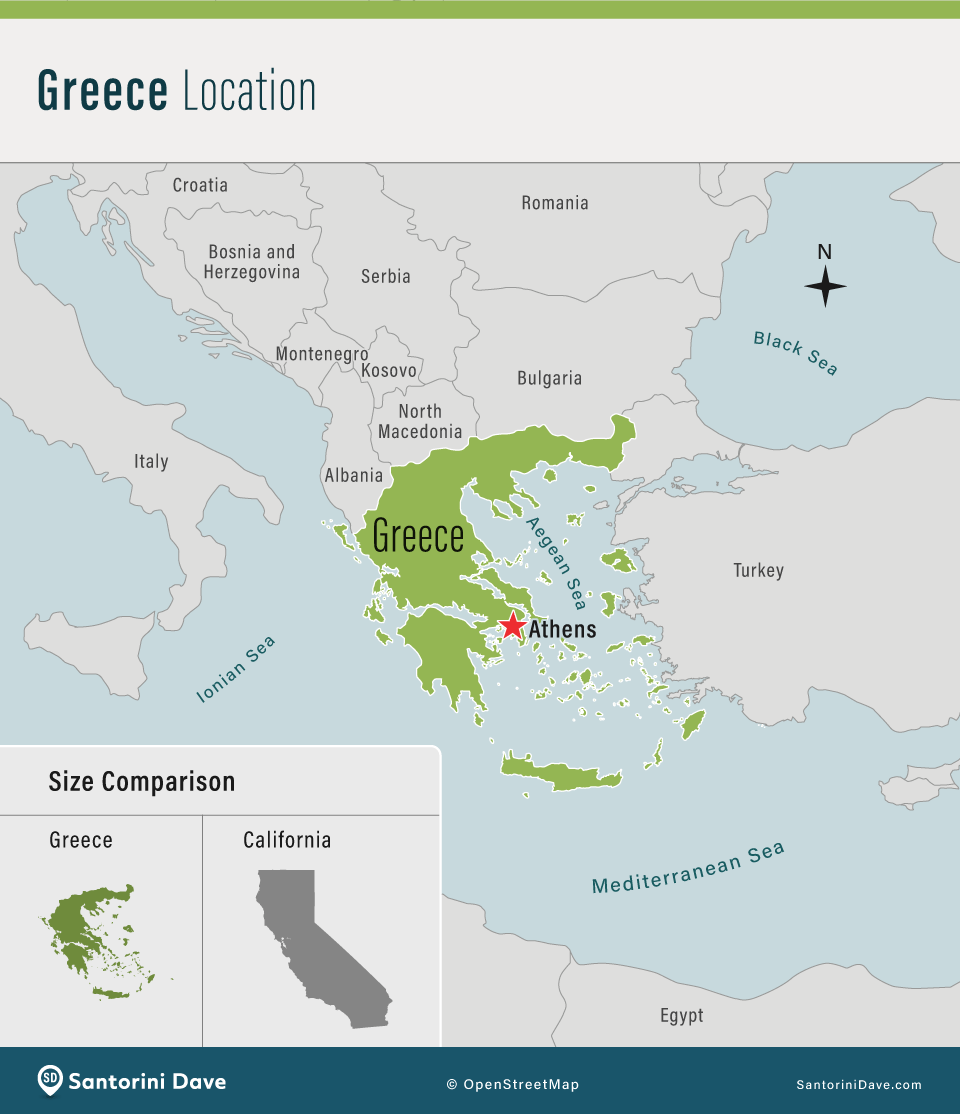
Greece is located in southeastern Europe at the southernmost tip of the Balkan Peninsula. It consists of a large mainland peninsula surrounded by the Aegean and Ionian Seas, home to roughly 6,000 islands and islets. It shares land borders with Albania, North Macedonia, Bulgaria, and Turkey.

What is the population of Greece?
The population is approximately 10.4 million (2025 estimate). The vast majority live on the mainland, with nearly 40% of the country residing in the metropolitan area of Athens. The next largest cities are Thessaloniki, Patras, Larissa, and Heraklion (Crete). Roughly 1.3 million people live permanently on the Greek islands.
How many islands are in Greece?
Greece has about 6,000 islands and islets, but only 227 are inhabited.
- Largest by size: Crete, Euboea, Lesbos, Rhodes, Chios.
- Largest by population: Crete, Euboea, Rhodes, Lesbos, Corfu.
Note: The Peloponnese is technically an island (separated by the Corinth Canal), but it is universally considered part of the mainland culturally and historically.
What language is spoken in Greece?
Greek is the official language. However, English is widely spoken as a second language, particularly in tourist hubs like Athens, Santorini, Mykonos, and Crete. You will rarely have trouble communicating in hotels, restaurants, or shops.
What are the best things to do in Greece?
My favorite destinations and attractions in Greece:
• Acropolis in Athens
• National Archaeological Museum in Athens
• Caldera hike in Santorini
• Boat tour in Santorini
• Wineries of Santorini
• Staying in a caldera hotel in Santorini
• Nightlife & beach clubs in Mykonos
• Beaches of Naxos
• The beaches and solitude of Antiparos
• Boat tour on Milos
• Staying in Chania Old Town
• Staying in Rhodes Old Town
• Visiting Delphi
• Meteora Monasteries
• Staying in Nafplio
• Island Hopping by Greek ferry
What is the best time to visit Greece?
The “best” time depends entirely on what you want to do. Greece has three distinct travel seasons, and choosing the wrong one is a recipe for disappointment.
For Beach Weather (Late May to Early October)
If your main goal is swimming, tanning, and beach clubs, visit during the warmer months.
- Best Months: June and September are the sweet spots. You get hot sunny days without the crushing crowds of August.
- Peak Heat: July and August are scorching hot (35°C+) and crowded. The sea is wonderful, and the nightlife is at its peak.
- Sea Temperature Warning: The sea takes months to heat up. In May and early June, the weather is hot, but the water can be surprisingly brisk. In September and October, the air cools down, but the sea retains its heat. If you hate cold water, choose September over June.
For Sightseeing (April, May, October, November)
If you want to hike the Samaria Gorge, climb the Acropolis, or explore ruins at a comfortable temperature, avoid mid-summer.
- Best Months: April, May, and October are perfect. The air is crisp (20°C-25°C), the light is beautiful for photography, and the sites are not packed with cruise ship groups.
- The Trade-off: The weather is perfect for walking, but it might be too cool for a beach day.
- Bonus: April/May is when the islands are green and covered in wildflowers (by August, they are brown and dry).
The “Dead” Winter Season (November to March)
You need to know what you are signing up for in winter. Greece does not “close,” but the beach islands do.
- What is “Dead”: Beach destinations like Mykonos, Paros, and Ios effectively shut down. 90% of hotels and restaurants close, beach bars are boarded up, and ferry connections become very sparse. It can feel like a ghost town.
- What is Alive: Athens, Crete (Chania/Heraklion), Rhodes, and Corfu have large permanent populations. They remain vibrant year-round with open museums, shops, and restaurants. Winter is actually my favorite time to be in Athens – it feels authentic, cozy, and you can have the Parthenon almost to yourself.
How many days do I need for a trip to Greece?
The ideal duration for a first-time trip to Greece is 10 to 14 days. This timeframe allows you to see Athens and two or three islands without feeling rushed or spending your entire vacation packing, unpacking, and switching hotels.
The “3-Night Rule” (Do Not Ignore This)
When planning your island hopping, follow this guideline: Do not stay less than 3 nights on any major island.
- The Logic: Travel days are lost days. Between packing, checking out, getting to the port, the ferry ride, and checking in, you lose half a day.
- The Math: Staying 2 nights gives you only one full day to explore. That is not enough to see a large island like Naxos, Paros, or Rhodes. You will leave feeling you missed out.
- The Exception: Small, walkable islands (like Hydra or Folegandros) or a quick city stopover in Athens can be done in 2 nights if necessary.
- The Reality: I admit I break this rule occasionally, but I don’t recommend it for first-timers. A single two-night stay sandwiched between longer stops is fine, but stringing together multiple two-night hops will leave you feeling like a pinball.
Recommended Time Allocations
- 5-6 Days (The Minimum): Pick two locations max. For example, Athens (2 nights) + Santorini (4 nights). Do not try to squeeze in Mykonos too; you will spend 30% of your trip in transit.
- 7-10 Days (The Sweet Spot): Athens + Two Islands. For example, Athens (2 nights) + Naxos (3-4 nights) + Santorini (3-4 nights). This is the perfect balance of history, beaches, and views.
- 11-15 Days (The Grand Tour): Athens + Three or Four Islands. For example, Athens (2-3 nights) + Naxos/Paros (3 nights) + Mykonos/Milos (3 nights) + Santorini (4 nights). Two weeks allows for a deeper dive into the Cyclades without feeling rushed.
Final Tip: Do not count “Travel Days” as “Beach Days.” If you take a ferry from Mykonos to Santorini, you likely won’t be settled on a sunbed until 4:00 PM. Plan accordingly.
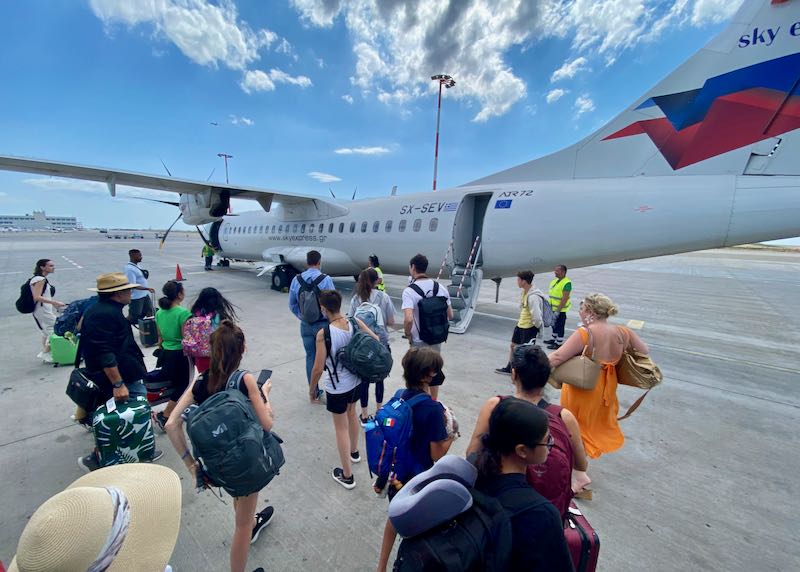
Boarding a Sky Express flight from Athens to the Greek islands.
Which Greek islands are best for first-timers? (The Cyclades)
For a first trip to Greece, the Cyclades are the best place to start. They offer the iconic “Greek” look – whitewashed cubic houses, blue domes, and barren landscapes – that you see on postcards. Ferries between the most popular islands are plentiful and short.
The four most popular islands are Santorini, Mykonos, Paros, and Naxos. Here is how to choose between them.
1. Santorini (The Spectacular One)
This is the one non-negotiable island for first-timers. It is not just an island; it is a geological wonder.
- The Vibe: Dramatic, romantic, and awe-inspiring. Walking along the caldera cliff in Oia or Fira offers views that exist nowhere else on earth.
- Best For: Honeymooners, first-timers, and anyone with a pulse.
- The Trade-off: It does not have great beaches (they are volcanic black pebble/grit, not golden sand). It is also the most expensive and crowded island.
- My Advice: Stay here for 3 to 4 nights to see the views, do the boat tour, and visit the wineries. Then, hop to another island for better swimming.
2. Naxos (The Authentic All-Rounder)
Naxos is the largest and greenest island in the Cyclades. It is the perfect antidote to the glitz of Mykonos and the crowds of Santorini.
- The Vibe: Laid-back, family-friendly, and traditional. It feels like a real community, not just a tourist set. The food is arguably the best in the Cyclades because they grow almost all their own produce.
- Best For: Beaches (Plaka and Prokopios are world-class sandy beaches), families with kids, foodies, and budget-conscious travelers.
- The Trade-off: It lacks the “glamour” and high-end shopping of Mykonos. You need a rental car to explore the mountain villages properly.
3. Paros (The Chic Balance)
Paros sits comfortably in the middle. It has the cosmopolitan nightlife and shopping of Mykonos (but cheaper and friendlier) mixed with the charm and beaches of Naxos.
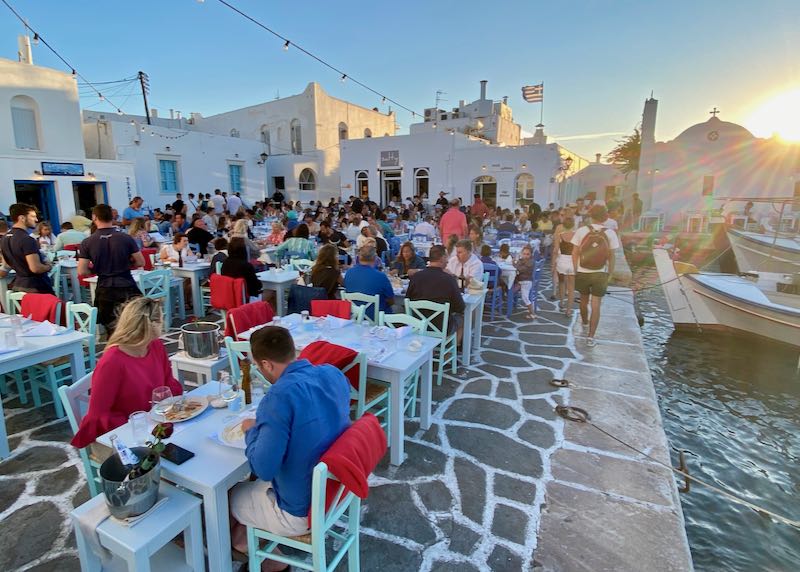
- The Vibe: Trendy but accessible. The village of Naoussa is a highlight – a chic fishing harbor lined with cocktail bars and seafood restaurants that comes alive at night.
- Best For: Couples, teens, and groups of friends who want nightlife and style but find Mykonos too intense.
- The Trade-off: It is becoming very popular, so Naoussa can feel crowded in August. It doesn’t have the dramatic cliffside scenery of Santorini.
4. Mykonos (Party & Luxury)
Mykonos is famous for a reason. It has a unique, high-energy atmosphere and the most beautiful main town (Chora) in the Greek islands.
- The Vibe: Glamorous, energetic, and expensive. It is home to world-famous beach clubs (Scorpios, Nammos) and luxury shopping.
- Best For: Party-goers, luxury travelers, and beach lovers (the beaches are golden sand and far better than Santorini’s).
- The Trade-off: The cost. Everything from sunbeds to cocktails is double the price of Naxos. It can feel pretentious in high season.
Summary Recommendation
- For the Perfect First Trip (10 Days): Combine Athens (2 nights) + Naxos or Paros (4 nights for beaches/relaxation) + Santorini (4 nights for views/romance).
- If you want Nightlife: Swap Naxos/Paros for Mykonos.
- If you want History: Add Crete (but you need at least 5 extra days).
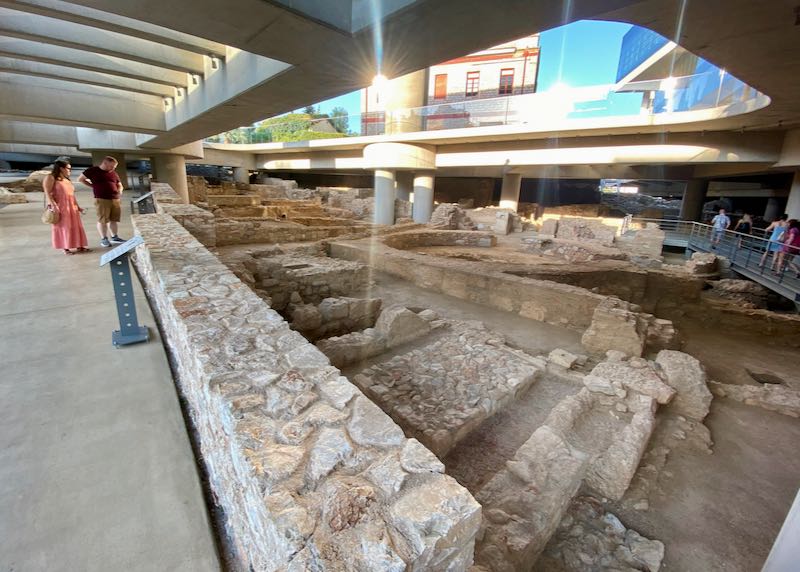
The Acropolis Museum in Athens. Though travel to the Greek Islands is best in the spring and summer, Athens can be a great destination at any time of year.
Santorini vs. Mykonos: Which one should I choose?
This is the most common question I get. The truth is, they are completely different experiences. They look different, feel different, and attract different crowds.
Santorini (The Spectacular One)
- The “Wow” Factor: Santorini offers the most dramatic scenery in the Mediterranean. The view of the caldera (volcanic crater) with the white villages clinging to the cliffs is a bucket-list sight.
- The Vibe: Romantic, awe-inspiring, and sightseeing-focused. It is about hiking the crater rim, boat tours to the volcano, and sunset dinners.
- The Beaches: This is the downside. Santorini beaches are made of black or red volcanic pebbles/grit. They are unique and beautiful to look at, but they get very hot and are not the soft, golden sand you might expect.
- Best For: Honeymooners, first-timers, couples, and anyone who values scenery over swimming.
Mykonos (The Beach & Party One)
- The “Wow” Factor: The energy and the beaches. Mykonos has some of the best sandy beaches in Greece with crystal-clear turquoise water.
- The Vibe: Glamorous, energetic, and expensive. It is famous for its world-class nightlife, beach clubs (like Nammos and Scorpios), and luxury shopping. The main town (Chora) is a stunning maze of sugar-cube houses and bougainvillea.
- The Beaches: Fantastic. Whether you want a party beach (Paradise), a family beach (Ornos), or a quiet cove (Agios Sostis), the swimming here is far superior to Santorini.
- Best For: Beach lovers, nightlife seekers, luxury travelers, and groups of friends.
My Advice:
- Choose Santorini if: It is your first trip to Greece. You cannot come all this way and not see the caldera. It is the more “unique” of the two.
- Choose Mykonos if: Your priority is swimming and sandy beaches during the day and dancing/dining late into the night.
- Do Both if: You have at least 7 days. They are only 2 hours apart by high-speed ferry, and seeing both gives you a more complete Cycladic experience.
Should I visit Athens? And for how long?
Yes, absolutely. Skipping Athens is a mistake. It is the birthplace of Western civilization, and standing in the shadow of the Parthenon is an unforgettable experience. But you do not need a week.
The “Sweet Spot”: 2 Full Days (3 Nights)
For most travelers, 2 days is the perfect amount of time. It allows you to see the highlights without getting bogged down by the city’s intensity.
- Day 1: The Acropolis (Parthenon), the Acropolis Museum, and a sunset dinner in Plaka.
- Day 2: The Ancient Agora, the changing of the guard at Syntagma, and the National Archaeological Museum.
This itinerary gives you the “Best of Athens” – the ancient wonder and the vibrant street life – and leaves you wanting more, which is exactly how you want to feel.
Why NOT to stay for a week:
Unless you are a hardcore history buff, spending 7 days in Athens in the summer is too much.
- The Heat: In July and August, Athens is a concrete bowl. It gets stiflingly hot (often hotter than the islands with little breeze).
- The Vibe: It is a gritty, chaotic, noisy metropolis. After 3 days, the charm of the graffiti and packed shopping streets will wear off, and you’ll be begging for a beach in Naxos.
- The Opportunity Cost: Every extra day in Athens is a day you aren’t spending on an island. If you have a week, spend 2 days in Athens and 5 days in the Cyclades.
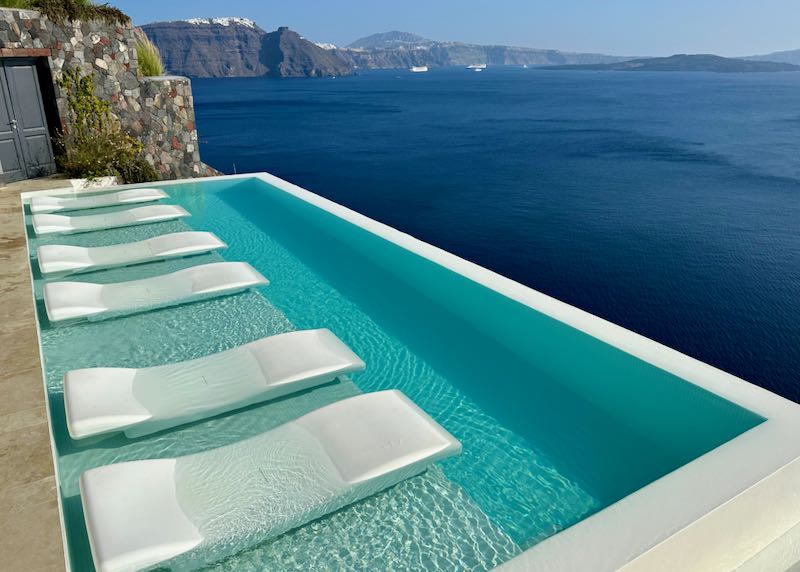
Santorini is famous for its fantastic luxury hotels and caldera views.
Can I visit Greece in the winter?
Yes, absolutely. But treat it as a city break or cultural trip, not a beach vacation. The islands function very differently in winter (November to March).
What is “Open” (The Good Stuff)
- Athens: Winter is arguably the best time to visit Athens. It is vibrant, authentic, and cozy. You can walk the Acropolis without the heat or crowds, and the tavernas in Psirri are packed with locals.
- Large Islands: Islands with large permanent populations stay alive. Crete (Chania/Heraklio), Rhodes, Corfu, and Syros are good winter destinations. The old towns are atmospheric, museums are open, and the food scene is active.
- The Mainland: Winter is perfect for a road trip to Nafplio, Delphi, and Meteora. Though do pack for cool/wet weather.
What is “Closed” (Manage Expectations)
- Beach-Focused Islands: Popular summer spots like Mykonos, Paros, Milos, and Ios effectively shut down. 90% of hotels and restaurants close. Beach bars are boarded up. It can feel like a ghost town.
- Ferries: Schedules are reduced to a bare minimum (often just one per day to major islands). High-speed ferries usually stop running completely.
The Santorini Exception
Santorini is the outlier. Unlike Mykonos, it does not close completely.
- Winter in Santorini: It is very quiet, but about 20-30% of hotels and restaurants in Fira and Oia stay open year-round. The caldera view is just as spectacular in January as it is in July (maybe more so, with the dramatic winter clouds). It is a romantic, peaceful, albeit chilly, escape.
The Weather Reality
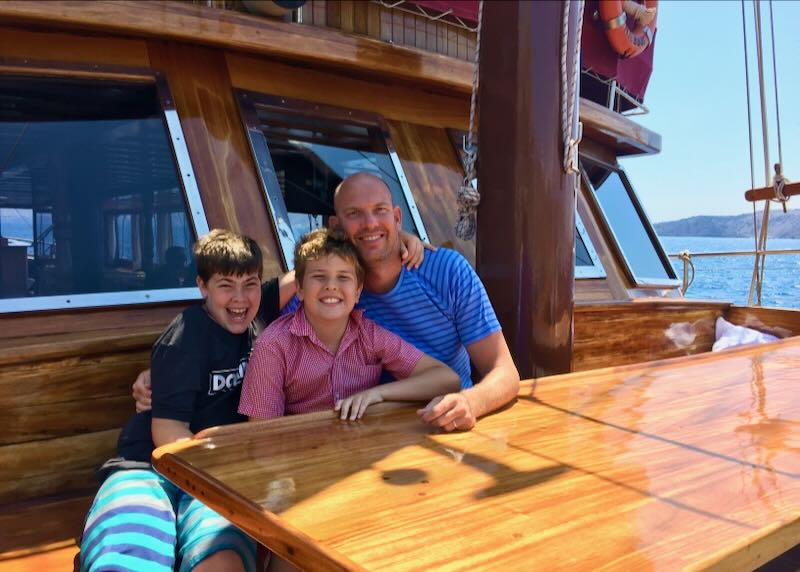
Expect temperatures of 10°C to 15°C (50°F to 60°F). It will likely rain during your trip. It is jacket and scarf weather, not swimsuit weather.My two sons and I on a boat tour in the Santorini caldera.
Is Greece a good destination for families with kids?
Yes, absolutely. Greece is one of the most welcoming, safe, and easy destinations in Europe for families. The culture is incredibly kid-centric – children are welcomed everywhere, from late-night tavernas to town squares. You do not need to worry about “kid-friendly” restaurants; every restaurant is family-friendly.
If you are choosing between islands, two stand out above the rest for families: Naxos and Crete. Here is how they compare.
1. Naxos (The Easy, Relaxing Choice)
If your ideal vacation involves great beaches, easy logistics, and zero stress, Naxos is the winner.
- The Beaches: Naxos has the best beaches for kids in the Cyclades. St. George Beach (in Naxos Town) is shallow and calm – perfect for toddlers. Agios Prokopios and Plaka offer miles of soft, golden sand for older kids.
- The Food: Naxos is the agricultural heart of the Cyclades. The food is fresh, simple, and hyper-local – potatoes, cheeses, and meats – rather than the trendy high-end dining found in Santorini or Mykonos.
- Walkability: You can stay in Naxos Town and walk to dinner, the beach, and the ferry port. You don’t need a car every day, which is huge for parents with strollers.
- Best For: Families with toddlers, younger kids, or anyone wanting a classic “bucket and spade” beach holiday.
2. Crete (The Adventure & History Choice)
Crete is massive. It offers more variety but requires more driving.
- The Activities: It has the “big ticket” attractions: the Palace of Knossos (Minotaur legend), massive water parks (Watercity), the Cretaquarium, and boat trips to Spinalonga island.
- The Beaches: Elafonisi (pink sand) and Balos Lagoon are stunning shallow lagoons that kids love, though they require a long drive or boat trip to reach.
- Resorts: Crete has large, all-inclusive style resorts with kids’ clubs and massive pools (especially around Elounda and Hersonissos), which Naxos lacks.
- Best For: Families with active teens, history buffs, or those who want a resort experience with a large pool.
Summary Advice
- Choose Naxos if you want to relax, swim, and eat well without spending hours in a car.
- Choose Crete if you want to explore history, go on road trips, and keep active teenagers entertained.
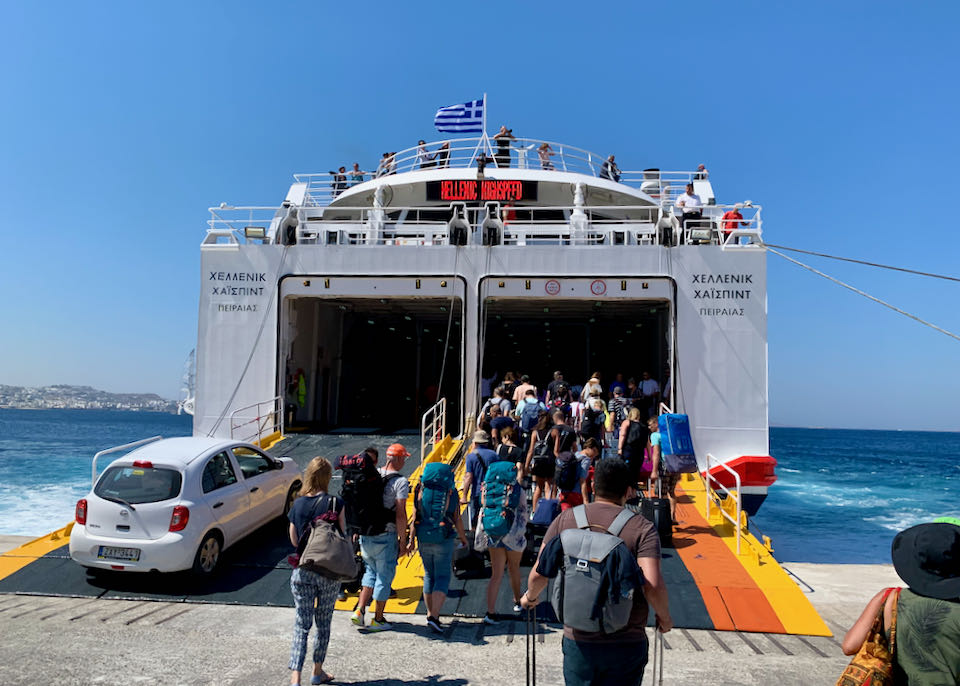
Passengers boarding a ferry in Mykonos. Traveling between the Greek Islands by ferry is easy, fun, and a highlight of a trip to Greece.
Where should we go for a honeymoon?
The “best” island depends entirely on whether you want a high-energy scene or romantic seclusion. Here is how the main contenders stack up.
1. Santorini (The Classic Choice)
It is the most famous honeymoon destination in the world for a reason.
- The Vibe: Dramatic, awe-inspiring romance. Staying in a cave suite with a private plunge pool overlooking the caldera is a once-in-a-lifetime experience.
- The Reality: It is crowded. Oia at sunset is packed shoulder-to-shoulder. However, if you book a hotel in Imerovigli (the quietest caldera village), you get the views without the cruise ship crush.
- Verdict: If it is your first time in Greece, you almost have to go. The views are worth the crowds. Combine it with a quieter island for balance.
2. Milos (The Adventure Romance)
Milos has surged in popularity for couples who want dramatic scenery but fewer crowds than Santorini.
- The Vibe: Wild and photogenic. It has moonscapes (Sarakiniko) and colorful fishing villages (Klima) that feel like a movie set. It feels more adventurous and “undiscovered” (though it is getting busier).
- The Reality: You need a rental car to reach the best beaches. The nightlife is very low-key.
- Verdict: Perfect for active couples who want to explore by day and have quiet dinners at night.
3. Folegandros (The Quiet Perfection)
This small island near Santorini is often called “Santorini 20 years ago.”
- The Vibe: Sophisticated and quiet. The main town (Chora) is set high on a cliff with dramatic views but zero cruise ships. It is incredibly romantic, walkable, and chic.
- The Reality: There is almost nothing to “do” except swim, eat, and relax. The beaches are rugged and require hiking or boat taxis.
- Verdict: The best choice for relaxation and couples who hate mass tourism.
4. Mykonos & Paros (The Social Honeymoon)
- Mykonos: Go here if your idea of romance involves dressing up, world-class dining, and partying until dawn. It is sexy, expensive, and high-energy.
- Paros: The “sweet spot.” It has the cosmopolitan dining and cocktail scene of Mykonos but with a friendlier, more relaxed vibe. Naoussa is an incredibly romantic harbor village for evening strolls.
- Verdict: Choose Mykonos for luxury and parties. Choose Paros for a chic but laid-back mix of beach life and dining.
My Recommendation:
Split your honeymoon. Spend 3 nights in Santorini (for bucket-list views) and 4 nights in Milos or Folegandros (for privacy and beaches).
Should I fly or take the ferry to the islands?
This is the most common logistical question I get. The answer depends on your itinerary, your budget, and your tolerance for travel time.
1. The “Open-Jaw” Strategy (How I Travel)
Most first-time visitors book a round-trip ticket to Athens. This is a mistake. It forces you to waste a full day at the end of your trip traveling back to Athens just to catch your flight home. When I travel I almost never backtrack.Instead, use the “Multi-City” search function on Kayak or Google Flights to book an Open-Jaw Ticket:
- The Route: Fly INTO Athens and OUT OF an island (like Santorini, Mykonos, or Crete).
- The Benefit: You save the cost and hassle of the return ferry to Athens (5-8 hours of travel). You finish your trip relaxing on an island, then fly straight home (or connect through a European hub like London or Paris) without stepping foot in Athens again.
- Example Itinerary: Fly to Athens (2 nights) -> Ferry to Naxos (3 nights) -> Ferry to Santorini (3 nights) -> Fly home from Santorini.
2. The Ferry Experience (Pros & Cons)
Taking a ferry is a quintessential part of a Greek vacation, but it is not always the most efficient choice.
- The “Romantic” Arrival: Arriving in Santorini by Blue Star Ferry (conventional) is spectacular. You stand on the open deck as the ship sails into the giant volcanic caldera. A flight cannot compete with this view.
- The Luggage Advantage: Ferries have no weight limits and no fees for bags. You drag your suitcase onto the ship and leave it on the car deck. On flights, baggage fees can add €40-€60 per person.
- The Seasickness Risk: In July and August (Meltemi season), the sea can be rough. Some high-speed ferries (SeaJets) are small and bumpy (“vomit comets”). Conventional ferries (Blue Star) are large and stable. If you get seasick, take the slow boat or fly.
3. The Flight Experience (Speed vs. Cost)
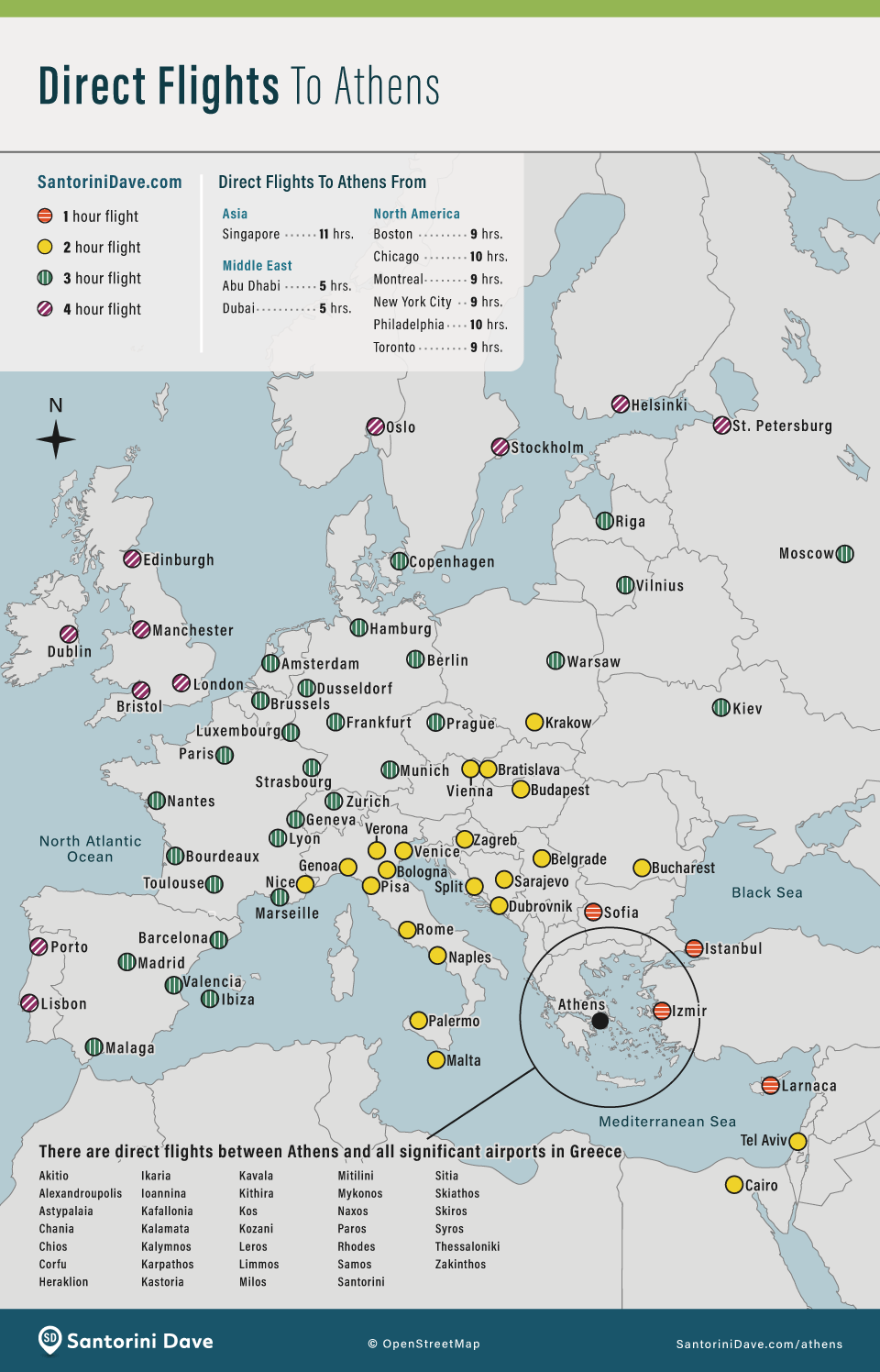
- Flying from Athens: This is the ultimate time-saver. A flight from Athens to Santorini or Mykonos takes about 45 minutes, while the ferry takes 5 to 8 hours. If you have a short trip (under 10 days), I always recommend flying to your first island to maximize your beach time.
- Island Hopping: Do not fly between islands (e.g., Mykonos to Santorini). There are few or no direct flights between islands; for most connections you have to fly back to Athens and then out again. This “Connection Trap” takes 5+ hours and usually costs double. The high-speed ferry between these islands takes just 2 hours and is much more efficient.
My Advice: When to do Which
- Fly if: You are prone to seasickness, you are traveling a long distance (e.g., Athens to Rhodes/Crete), or you are crossing island groups (e.g., Corfu to Santorini).
- Ferry if: You are hopping between nearby islands (Santorini to Naxos), you want to save money (Blue Star Economy), or you want the scenic experience of arriving by sea.
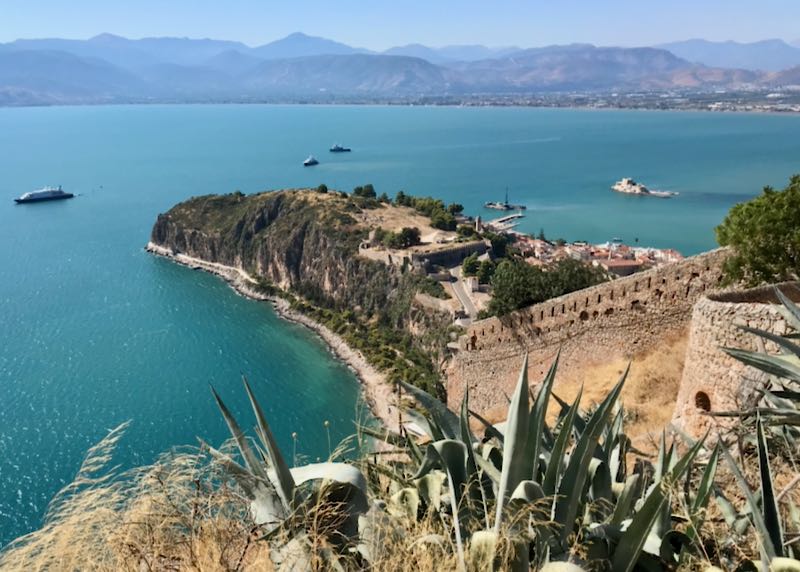
The romantic harbor town of Nafplio is located in the Peloponnese peninsula, about two hours by car or bus west of Athens.
How does Greek island hopping actually work?
Most first-time visitors imagine they can hop from any island to any other island (e.g., Rhodes to Paros). You cannot.
To plan a successful trip, you must understand two concepts: The Island Groups and the Hub-and-Spoke System.
1. The “Island Groups” Rule
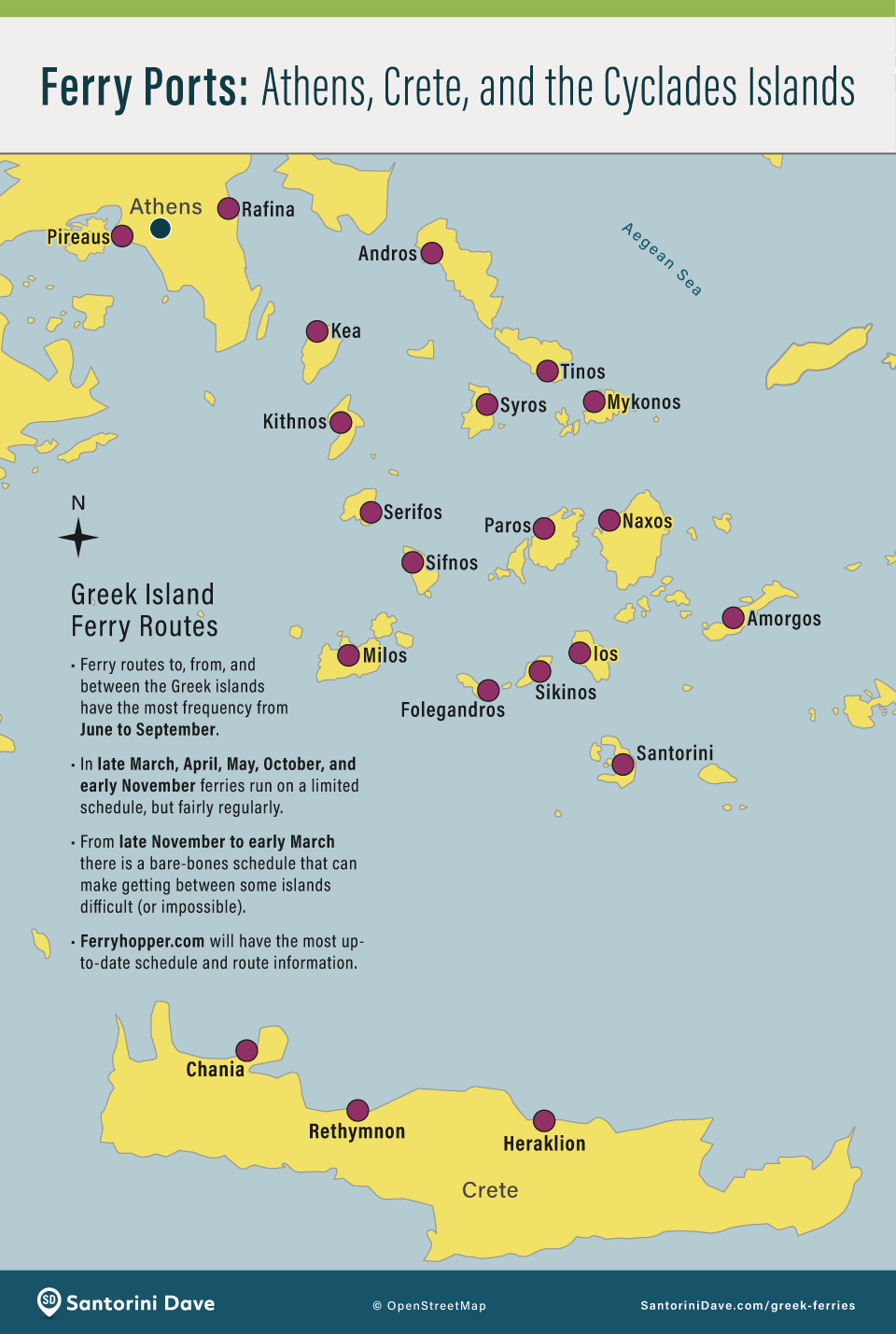
Greece’s 6,000 islands are divided into specific clusters. Ferries run frequently within a group, but rarely between groups.
- The Cyclades: (Santorini, Mykonos, Naxos, Paros, Milos). The most popular group. Excellent internal connections.
- The Ionians: (Corfu, Zakynthos, Paxos). Located west of the mainland. Zero ferry connections to the Cyclades.
- The Dodecanese: (Rhodes, Kos). Far southeast. Connected to the Cyclades by long, infrequent ferries.
- The Sporades: (Skiathos, Skopelos). North of Athens. Hard to combine with anything else.
- The Saronic: (Hydra, Aegina). Near Athens. Good for day trips from Athens.
- Crete: A massive standalone island. Connected to Santorini by high-speed ferry (2 hours).
2. The “Hub-and-Spoke” System (Athens is the Hub)
The ferry network is designed like a wheel.
- The Hub: Athens (Piraeus Port).
- The Spokes: Ferry lines radiate out to the island groups.
- The Reality: To move between different groups (e.g., Ionians to Cyclades), you usually have to return to the hub (Athens) first. There is no “rim” connecting the outer spokes.
Case Study: Why can’t I take a ferry from Corfu to Santorini?
This is the most common route request I get.
- Geography: Corfu is in the Ionian Sea (West). Santorini is in the Aegean Sea (East). Between them sits the massive landmass of the Greek Mainland and the Peloponnese mountains. Ships cannot drive over mountains.
- The Ferry Route: To do this by sea/land, you would have to: Take a ferry from Corfu to the mainland (Igoumenitsa) -> Bus 6 hours to Athens -> Taxi to Piraeus Port -> Ferry 5-8 hours to Santorini. It is a 15+ hour ordeal.
- The Solution: Fly. Book a flight from Corfu to Athens, and a connecting flight to Santorini. It takes about 3-4 hours total.
My Advice:
For a stress-free trip, stick to one island group. If you have 7 days, do Athens + Cyclades. If you want to see Corfu AND Santorini, you need at least 14 days and a budget for flights between them.
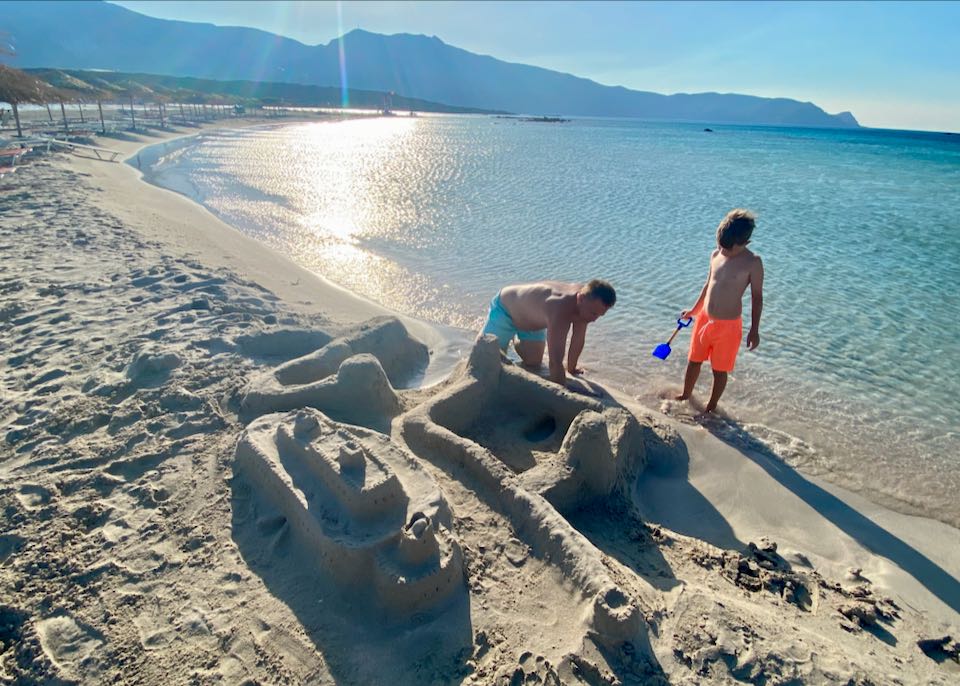
With its pink sand and calm turquoise water, Elafonisi Beach in southwest Crete is my all-time favorite Greek beach.
Do I need to book ferries in advance?
Yes. While you might hear old advice saying “just buy tickets at the port,” this is risky for modern travel, especially in high season. The answer depends entirely on what you are booking.
1. High-Speed Ferries (e.g., SeaJets)
These vessels (catamarans) have limited, airplane-style seating. There is no standing room.
- Risk of Selling Out: High. In July and August, popular routes (like Mykonos to Santorini) frequently sell out days or weeks in advance.
- My Advice: Book these at least 2 to 3 months in advance to guarantee your seat and time slot.
2. Conventional Ferries (e.g., Blue Star)
These are massive ships with huge capacity.
- Economy / Deck Tickets: Rarely sell out, even in summer. You can buy these a few days before or even on the day of travel. Exception: Peak travel dates like August 15th (Assumption Day) or Greek Easter week will sell out.
- Air Seats (Reserved): These offer a dedicated, comfortable seat indoors. They sell out much faster than Economy. Book 1 month in advance.
- Cabins: These sell out first – often 3 to 5 months in advance. If you want a cabin for an overnight trip or just for privacy, book as soon as schedules are released.
3. Vehicles (Car/Motorcycle)
If you are bringing a car, you must book months in advance. Garage space is the first thing to fill up on any ferry.My General Rule:
Since most companies now use E-Tickets (sent to your phone), there is no downside to booking early. You lock in your schedule and skip the stress. I recommend booking everything via Ferryhopper as soon as your hotel dates are set.Paros is an idyllic mix of Naxos (slow pace, traditional, great beaches) and Mykonos (trendy, luxurious, lots of nightlife).
How far in advance should I book hotels?
The answer depends entirely on where you are staying and when you are going. Demand for 2026 is expected to be extremely high.
The “6-to-9 Month Rule” (Santorini & Mykonos)
If you are visiting Santorini or Mykonos in July, August, or September, book early.
- Caldera Views & Private Pools: The best suites in Oia, Imerovigli, and Firostefani sell out 6 to 8 months in advance. If you want a specific hotel (like Grace or Katikies), book 9-10 months out.
- The Reality: You will always be able to find a room in Santorini two months before your trip. But it will likely be expensive, located on the wrong side of the island (no view), or have some significant compromises. To get value and a view, book by January for a summer trip.
Other Islands (Naxos, Paros, Crete, Milos)
- Family Suites: If you need a room for 4+ people, book 6 months in advance. Most Greek hotels are small boutique properties with only one or two “family suites.” These vanish instantly.
- Standard Rooms: For Naxos or Paros in July/August, booking 3 to 5 months out is usually sufficient to get a good spot.
The “Free Cancellation” Strategy
Most hotels on Booking.com offer free cancellation up to 14-30 days before arrival.
The Strategy: Book a refundable room as soon as you have your dates (even if it is 10 months away). This locks in a price and guarantees you a bed. You can always keep looking or cancel it later if your plans change, but you protect yourself from price surges.
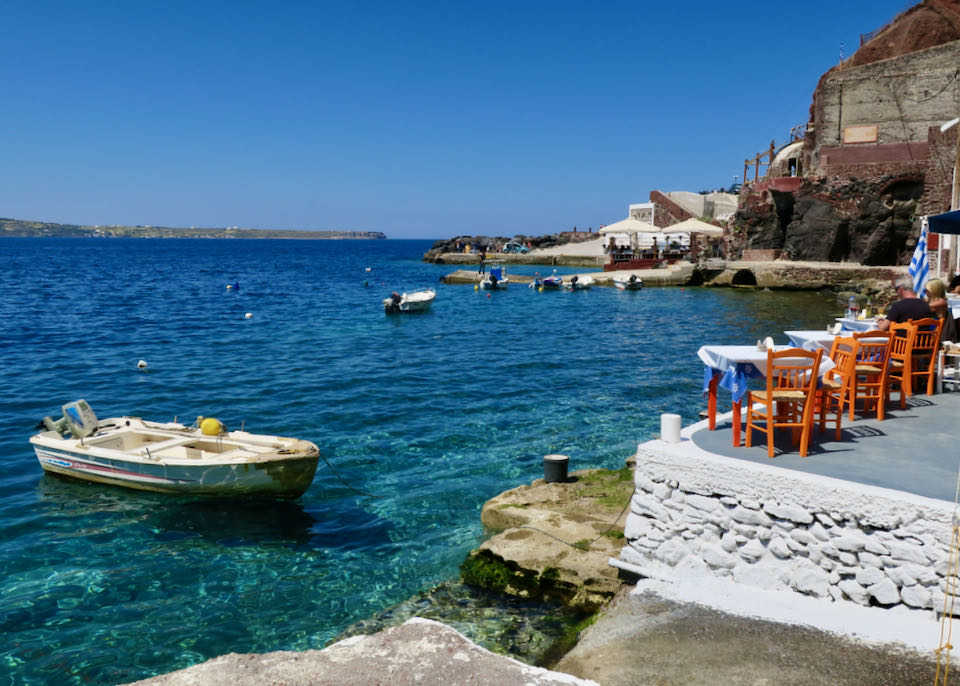
A seafood tavern in Ammoudi Bay below the village of Oia in Santorini. Most restaurants and stores in Greece accept credit cards, but it is a good idea to have some cash on hand for small purchases.
Is Greece expensive? What is a daily budget? (2026 Costs)
Greece is no longer a “cheap” destination, though it remains better value than France or Italy. Prices for hotels and ferries have risen significantly in the last two years. However, food and local transport remain reasonably priced.
Here is a realistic daily budget per person for 2026 (excluding international flights):
The Budget Traveler (€100 – €150 per day)
You can still do Greece on a budget, but you must be disciplined in July/August.
- Accommodation: Hostels or simple “Domatia” (rooms to let) back from the beach (€50-€80).
- Food: Bakery breakfast (€4), Gyros for lunch (€5), simple taverna dinner (€20).
- Transport: Public buses and slow (Blue Star) ferries.
- Activities: Free beaches (bring a towel) and hiking.
The Mid-Range Traveler (€200 – €400 per day)
This is the standard experience for most couples.
- Accommodation: Boutique hotels or sea-view rooms (€150-€250 per night).
- Food: Sit-down lunches, nice dinners with local wine, and sunset cocktails.
- Transport: High-speed ferries to save time, occasional taxi, or rental car.
- Activities: Renting sunbeds (€30+), boat tours, and museums.
The Luxury Traveler (€600+ per day)
In Santorini and Mykonos, the sky is the limit.
- Accommodation: Caldera suites with private pools or 5-star beachfront resorts (€500-€1,500+ per night).
- Food: Fine dining, fresh fish by the kilo, and premium wines.
- Transport: Private transfers and helicopter island hops.
2026 Price Index (What things actually cost)
To help you plan, here are current average prices:
- Pita Gyro: €4.00 – €5.00
- Greek Salad: €10.00 – €14.00
- Freddo Espresso: €3.50 – €5.00
- Cocktail: €12.00 – €18.00 (Up to €25+ in Oia/Mykonos)
- High-Speed Ferry Ticket: €70.00 – €100.00
- Beach Sunbeds (Set of 2): €30 – €50 (Naxos/Paros); €80 – €150+ (Mykonos).
The Hidden Cost to Watch: Ferries
First-timers are shocked by ferry prices. A high-speed ferry from Mykonos to Santorini costs roughly €90 per person. For a family of four, that is €360 for a 2-hour ride. Factor this into your budget early.
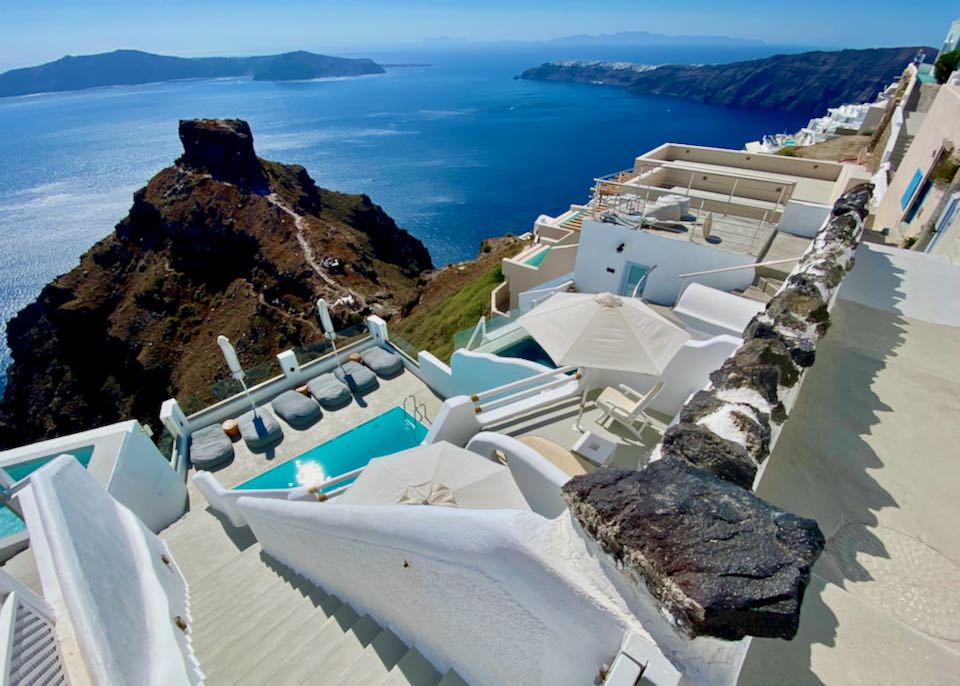
The spectacular walking path along the Santorini caldera.
Do I need a visa for Greece? (2026 Rules)
For citizens of the US, Canada, UK, and Australia, the short answer is No. You do not need a traditional visa for tourist stays of up to 90 days.
However, travel rules for Europe have significant updates for 2026. You need to be aware of these:
1. The Passport Validity Rule (Crucial!)
This remains the most common reason travelers are turned away at the airport.
- The Legal Rule: Your passport must be valid for at least 3 months beyond your planned date of departure from the Schengen area.
- The “Airline” Rule: Many airlines will deny boarding if you have less than 6 months of validity remaining.
- My Advice: Renew your passport if it expires within 6 months of your return date. It is not worth the stress or the risk of a gate agent’s interpretation.
2. The New EES and ETIAS Systems (Active 2026)
The EU’s digital border systems are now a reality.
- EES (Entry/Exit System): As of April, 2026, this system is fully operational. Manual passport stamps have been replaced by digital records. When you arrive at Athens airport or a major ferry port, you must now provide fingerprints and a facial scan. Because this is still settling in, I recommend arriving at the airport earlier than usual as queues at passport control have been longer than normal.
- ETIAS (Visa Waiver Fee): This is a new online travel authorization similar to the US ESTA. It is scheduled to launch in late 2026. The fee is €20 for travelers aged 18 to 70 and it will be valid for three years. If you are traveling in the spring or summer of 2026, you do not need this yet. If your trip is in October or later, you must check the official EU website to see if the portal has gone live.
3. The “90/180” Rule
You can stay in the Schengen Area (which includes Greece and most of Western Europe) for up to 90 days within any 180-day period. This is a rolling window. If you are planning a multi-month tour of Europe, I highly recommend using a “Schengen calculator” app to track your days so you don’t face a fine or a ban on your way out.
Do I need to rent a car in Greece?
The answer depends entirely on which island you are visiting. Greece is not a one-size-fits-all destination for driving.
1. The “Usually No” Islands (Santorini & Mykonos)
For many travelers, a car on these islands is more burden than benefit.
- Santorini: Usually no. Traffic around Fira and Oia can be heavy, parking is limited in the busiest areas, and the island’s bus network is useful for the main routes. The KTEL buses connect Fira with Oia, Kamari, Perissa, Akrotiri, the airport, and other key spots, though schedules are centered on Fira and can be crowded in summer. For dinners, wineries, the port, or the airport, a taxi or pre-booked transfer is easier. A car becomes more useful if you are staying in a quieter part of the island, such as Akrotiri or the far south.
- Mykonos: Usually no. Mykonos Town (Chora) is pedestrian-only, summer roads are busy, and parking can be frustrating near the most popular areas. Many travelers get around with the bus network, walking, seasonal water taxis, and taxi or transfer apps. A car is most helpful if you are staying well outside town or want to explore quieter beaches and corners of the island on your own schedule.
2. The “Usually Yes” Islands (Naxos, Crete, Paros, Milos)
On these islands, a car transforms your trip from good to much more flexible.
- Crete: Yes. Crete is huge, and the best beaches, villages, and archaeological sites are spread far apart. Without a car, you can still see a lot by bus, but you will give up time and flexibility.
- Naxos: Yes. The beaches are easy enough by bus, but a car makes it much easier to explore the mountain villages, inland scenery, and the quieter north of the island.
- Milos: Yes. Milos’s beaches and swimming spots are scattered around the island, and the bus network is more limited than on Santorini or Mykonos. Even with a car, a boat tour is still one of the best ways to see the island.
- Paros: Yes, if you want flexibility. You can do a lot by bus, but a car makes it much easier to link Naoussa, Lefkes, Golden Beach, Aliki, and smaller coves on your own schedule.
3. 2026 Rental Tips
- The automatic warning: Manual cars are still much more common than automatics in Greece. If you need an automatic, book well ahead for July and August.
- The IDP rule: Even when your home license is accepted, some smaller rental agencies may still ask for an International Driving Permit (IDP). For the record, I don’t have an IDP and have never been asked for one.
- Don’t ferry the car unless you need to: In most cases, it is easier to rent a separate car on each island. Taking a rental car on a ferry adds cost and, with some agencies, may limit or complicate insurance coverage.
Should I rent an ATV (Quad Bike)?
No. I strongly advise against renting an ATV on the Greek islands.
While they look fun and adventurous, they are the single leading cause of tourist injuries in Greece every summer. I know multiple people who have made hospital visits because of ATV accidents while traveling.
Why I Recommend Avoiding Them:
- Safety: ATVs are designed for off-road use, but you will be driving them on paved asphalt roads. They have a high center of gravity and are notoriously unstable when turning on pavement. They tip over easily.
- The Roads: Island roads (especially in Santorini, Mykonos, and Naxos) are narrow, winding, and often lack shoulders. Sharing these roads with large tour buses and speeding local delivery trucks while on a slow, unstable ATV is dangerous.
- Comfort: In July and August, driving without air conditioning in 35°C heat is exhausting. You are exposed to the sun and dust all day.
The Better Alternative:
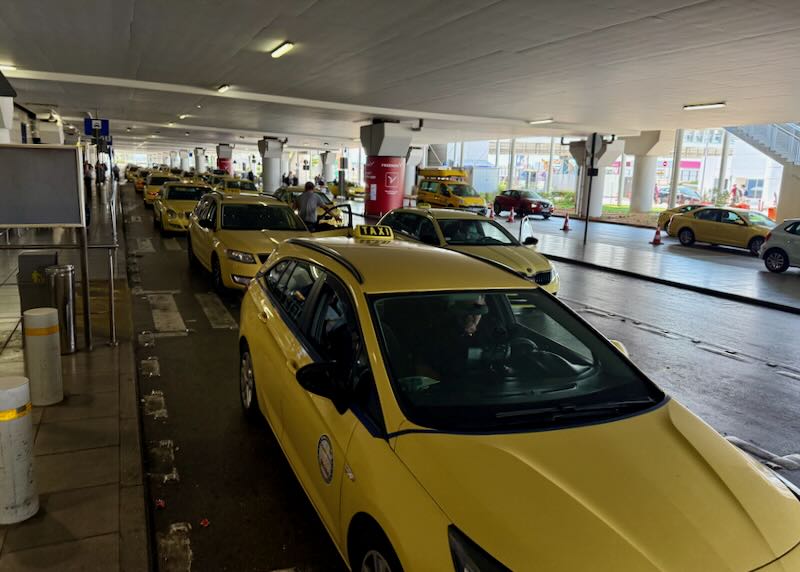
Rent a small car (like a Fiat Panda or Hyundai i10). It costs roughly the same as a large ATV, it’s safer, it has air conditioning, and you can lock your belongings inside while you are at the beach.The taxi queue at the airport. There are always lots of taxis here but the line can still be long, though it moves quickly.
How do I get from Athens Airport to the City Center? (Metro vs. Bus vs. Taxi vs. Welcome Pickups)
There are four main ways to get from Athens International Airport (ATH) to the city center (Syntagma Square/Plaka). The best choice depends on your budget, arrival time, and luggage.
1. The Metro (Fastest & Most Consistent)
- Line: Blue Line (Line 3). Follow the signs for “Trains” as you exit Arrivals.
- Cost: €9.00 one-way. (Return ticket is €16.00).
- Time: About 40 minutes to Syntagma/Monastiraki.
- Frequency: Trains run about every 30 minutes from 6:30 AM to 11:30 PM.
- Pros: No traffic (huge plus during rush hour). Comfortable and air-conditioned (sort of).
- Cons: Pickpockets are active on this line. Not an option for late-night arrivals.
2. The Express Bus X95 (Cheapest & 24/7)
- Route: Non-stop from Airport Arrivals (between Exit 4 and 5) to Syntagma Square.
- Cost: €5.50. Buy at the kiosk or tap your credit card on the bus.
- Time: 60 minutes (can be 90+ in traffic).
- Frequency: Every 15-20 minutes (24 hours a day).
- Pros: Cheap. Always running. Great for late-night flights when the Metro is closed.
- Cons: Can be crowded (standing room only). Gets stuck in city traffic.
3. Official Taxi (Easiest for Arrivals)
- Cost: Fixed flat rate to central Athens (inner ring): €40 by day (5:00 AM – Midnight) and €55 at night (Midnight – 5:00 AM). These official fares include all applicable surcharges and extras.
- Time: About 35 to 50 minutes, depending on traffic.
- Pros: Door-to-door service. Easy to find at the official taxi rank at Exit 3 of Arrivals.
- Cons: Lines can be long in summer. The fixed fare applies to central Athens (inner ring), so if you’re staying outside that zone the price will differ. Ask for a receipt at the end of the ride.
4. Welcome Pickups (Stress-Free & Pre-Paid)
- Cost: Starts around €47 (Day) / €60 (Night).
- The Difference: A driver meets you inside the arrivals hall holding a sign with your name. The price is fixed and paid in advance online.
- Pros: Zero waiting in taxi lines. No haggling. English-speaking drivers. They track your flight for delays.
- Cons: Slightly more expensive than a standard taxi. Must book at least a day in advance.
My Advice:
- Solo/Budget Travelers: Take the Metro (Day) or Bus (Night).
- Couples/Families: Book a Welcome Pickup. For two people, the cost difference between the Metro (€18 total) and a private driver (€47) is small for the huge upgrade in comfort.
Can I drink the tap water? (Mainland vs. Islands)
The answer depends entirely on where you are.
On the Mainland (Athens, Delphi, Meteora, Peloponnese)
Yes. The tap water in Athens and most mainland towns is safe, clean, and tastes good. It comes from mountain reservoirs and undergoes rigorous treatment. You can drink from the tap and ask for “tap water” in restaurants for free.On the Islands (Santorini, Mykonos, etc.)
Generally No.
- Is it dangerous? No. In most cases, it is safe for hygiene (brushing teeth, showering, washing fruit). You won’t get sick if you swallow a mouthful in the shower.
- Why not drink it? Most island water is desalinated seawater or comes from boreholes with high mineral content. It tastes salty, brackish, or metallic. Even locals on the islands usually drink bottled water.
- The Exceptions: Mountainous islands like Crete (in the mountain villages), Naxos (in villages like Apiranthos), and Paros (the water utility explicitly says tap water is safe to drink) have natural springs with delicious fresh water.
My Eco-Tip:
Instead of buying dozens of small 500ml plastic bottles, buy the massive 6-liter jugs at the supermarket (they cost about €2) and keep them in your hotel room to refill your reusable bottle. It saves money and reduces plastic waste.Do I need cash, or are credit cards accepted everywhere?
You need both. While Greece has modernized rapidly, a “cashless” trip is still difficult (and often more expensive).
The 2026 Reality: Tap-to-Pay is Everywhere
Thanks to strict government tax laws, almost every business in Greece – from luxury boutiques to tiny souvenir shops – is legally required to accept card payments.
- Contactless: You can use Apple Pay, Google Pay, and Contactless Cards almost everywhere. It is the standard way to pay.
- The Exception: American Express is accepted at luxury hotels and fine dining restaurants but is frequently rejected at smaller family-run businesses due to high fees. Always carry a Visa or Mastercard backup.
When Cash is Still King
Carry €50 to €100 in mixed small bills (5s, 10s, 20s) for:
- Tips: You cannot always add a tip to the credit card machine. Even when you can, staff prefer cash to ensure they actually get it.
- Small Purchases: Kiosks (peripteros) for water or gum, local buses (cash-only on board), and small village bakeries.
- “Broken” Machines: In remote villages or on small islands, internet connections can drop, making card machines useless.
Warning: The “Pay in Euros” Rule
When you tap your card, the machine may ask: “Pay in EUR or [Your Home Currency]?”
ALWAYS CHOOSE EUROS.
If you choose your home currency (e.g., USD, GBP), the merchant’s bank applies a terrible exchange rate (Dynamic Currency Conversion) with hidden fees. It can cost you an extra 5-10% on every transaction. Let your own bank handle the conversion.Quick Tipping Etiquette (2026)
- Restaurants: Leave 5% to 10% in cash on the table.
- Taxis: Round up to the nearest Euro.
- Hotel Porters: €1 to €2 per bag.
Naxos is one of my very favorite islands in Greece. Relaxed vibe, wonderful local food, and great beaches.
What are the “Meltemi” winds?
The Meltemi is a strong, dry northerly wind that affects the Aegean every summer, especially in the Cyclades.
- When: From late spring into early fall, with the strongest winds most common in July and August.
- The good news: It cools down the summer heat and keeps the air clear and dry.
- The downside: It can make ferry rides rough and can turn some beaches windy and choppy.
How Meltemi affects ferries
- High-speed ferries: More likely to be rough, delayed, or occasionally canceled when the wind is strong.
- Conventional ferries: More stable and the better choice if you are prone to seasickness.
- My advice: In July and August, leave a buffer before any important flight and choose a conventional ferry if comfort matters more than speed.
How Meltemi affects beaches
Because the wind typically blows from the north, north-facing beaches tend to be rougher while south-facing beaches are typically calmer.
- Mykonos: North-coast beaches like Ftelia, Panormos, and Agios Sostis can get blasted; south-coast beaches like Psarou, Platis Gialos, Ornos, and Paradise are more protected.
- Naxos: Northern beaches like Amitis and Abram are more exposed; Agios Prokopios, Agia Anna, and Plaka are better bets.
- Santorini: Monolithos and Baxedes can get choppy; Perissa and Perivolos are more sheltered.
- Paros: Santa Maria and Golden Beach are more exposed; Faragas, Aliki, and Marcelo are calmer choices.
Pro tip: Check Windy.com the night before and again in the morning. On windy days, switch to a south-facing beach and keep an eye on ferry updates.
Is Greece safe for tourists?
Yes, Greece is a very safe destination for tourists. Violent crime against visitors is uncommon. In most towns, islands, and tourist areas, the bigger concerns are petty theft, traffic, heat, and sea conditions rather than serious crime.
However, there is a noticeable difference between Athens and the rest of Greece when it comes to petty theft.
1. Athens: Pickpocketing is the main issue
Athens is not dangerous for most travelers, but pickpocketing is a real concern in crowded areas.
- Where to be most careful: The Metro (especially trains to and from the airport and busy central stations), Monastiraki, and Ermou Street.
- How it happens: Usually through crowding, distraction, or tourists carrying luggage, phones, and wallets in easy-to-reach places.
- What to do: Keep your phone and wallet in a zipped front pocket or crossbody bag, and be extra alert when boarding or exiting trains.
2. The islands and mainland towns
Once you leave Athens, the overall atmosphere is much more relaxed.
- Crime: Petty crime is lower in most islands and smaller mainland destinations.
- The bigger risks: Road accidents, dehydration, sun exposure, and rough sea conditions on windy days.
- Good habits: Wear a seatbelt, be cautious with scooters and ATVs, carry water on hikes, and respect beach warning flags and local advice.
3. Solo female travelers
Greece is generally a comfortable destination for solo women, especially in the daytime and in mainstream tourist areas.
- What to watch for: Occasional unwanted attention in nightlife areas or party destinations.
- My advice: Use the same common-sense precautions you would in any busy tourist destination: watch your drink, stick to well-lit areas at night, and leave uncomfortable situations quickly and confidently.
Emergency numbers (save these):
- 112: General emergency number across Greece and the EU. Free to call. English support is available.
- 1571: Tourist Police assistance line.
What electrical adapter do I need? (And the Hair Dryer Warning)
Greece uses the standard European electrical system:
- Voltage: 230 Volts (50 Hz)
- Plug Type: Type C or F. (Two round pins).
For Travelers from the US & Canada (Read Carefully)
Your outlets run on 110V. Greece runs on 230V. You need to understand the difference between an Adapter and a Converter.
- The Adapter: You always need this. It is the simple plastic piece that changes the shape of your flat-pin plug to fit the round-pin Greek wall socket.
- The Converter: You usually do not need this for modern electronics. Look at the fine print on your power brick (for iPhones, MacBooks, Cameras). If it says
INPUT: 100-240V, it is dual voltage. You can plug it into a Greek wall using just a simple adapter.The “Hair Dryer Trap” (Warning)
Do not bring your American hair dryer, curling iron, or straightener to Greece unless it has a specific manual switch that says “110v/220v”.
- Why? American heating appliances are designed for 110V. If you plug them into a 230V Greek outlet – even with a heavy-duty converter – they will overheat, melt, spark, and maybe even blow the hotel’s fuse.
- The Solution: Use the hotel hair dryer (almost all have them) or buy a cheap travel hair dryer (€15) at a local electronics shop in Athens upon arrival.
For UK, Ireland, Australia & NZ
- You only need a plug adapter. Your devices operate on the same 230V/240V standard as Greece, so you do not need a voltage converter.
- UK/Ireland: You need a Type G to Type F adapter.
- Australia/NZ: You need a Type I to Type F adapter.
My Recommendation:
Buy a Universal Travel Adapter that includes 3 or 4 USB/USB-C ports. Hotel rooms in Greece (especially older boutique ones) have limited outlets. Being able to charge two phones, a watch, and a camera from a single wall socket is a huge convenience.
What is the best luggage for Greece? (Backpack vs. Suitcase)
My short answer: I prefer a high-quality travel backpack.
While you can certainly travel with a suitcase (and many people do), Greece is uniquely hostile to wheeled luggage. The combination of cobblestone streets, endless hotel stairs (especially in Santorini), and chaotic ferry boarding makes a backpack superior for mobility and stress-free travel.
Why I Recommend a Backpack
- The Cobblestones: In towns like Mykonos, Paros, and Naxos, the streets are paved with uneven flagstones. Dragging a 20kg suitcase over these is noisy, exhausting, and often breaks the wheels.
- The Stairs: If you stay in a caldera hotel in Santorini or a castle hotel in Monemvasia, you will likely have to carry your luggage up and down steep steps. A backpack makes this manageable; a suitcase makes it a workout.
- Ferry Boarding: This is the biggest factor. Boarding a ferry is a bit of a “mad dash” with hundreds of people moving at once. Having your hands free to hold your ticket and hold onto a railing while walking up the ramp is nice.
If You Must Bring a Suitcase
If you have back issues or simply prefer a suitcase, it is fine, but follow these rules:
- Two Wheels are Better than Four: On rough Greek pavement, sturdy two-wheeled rolling luggage (like a Travelpro) performs better than 4-wheel “spinners,” which can get stuck in cracks.
- Keep it Light: You will have to lift it at some point. Ensure you can carry it up a flight of stairs by yourself.
Luggage on Ferries (The Reality)
- The “Dump” on the Car Deck: When you enter a large ferry (Blue Star), there are metal luggage racks right on the car deck. You leave your large suitcase there. You do not take it upstairs to your seat (unless you have a cabin).
- Security: It feels unsafe to leave your bag alone in the garage, but theft is extremely rare. To be safe, keep all valuables (laptop, camera, wallet, passport) in a separate daypack that stays with you at all times.
- The Chaos: When the ferry arrives, it is chaotic. Go down to the car deck before the ship docks, find your bag in the pile, and be ready to walk off the moment the ramp drops. A backpack allows you to weave through the crowd; a suitcase is a hassle.
Luggage on Flights
- Domestic Restrictions: Flights within Greece (Aegean, Sky Express) use smaller planes (ATR-42/72) for islands like Naxos, Paros, and Milos. The overhead bins are tiny.
- Carry-On: Standard “US Carry-On” roller bags often do not fit in the overhead bins of these island hoppers and must be gate-checked. Soft backpacks can be squeezed under the seat.
A Note on Laundry
Do not overpack. Laundry service is widely available and affordable on almost every tourist island.
- Service Wash: Look for signs saying “Laundry – Wash & Dry.” You drop off a bag of dirty clothes in the morning and pick it up folded in the evening for about €10–€20. It’s worth every penny to travel light.
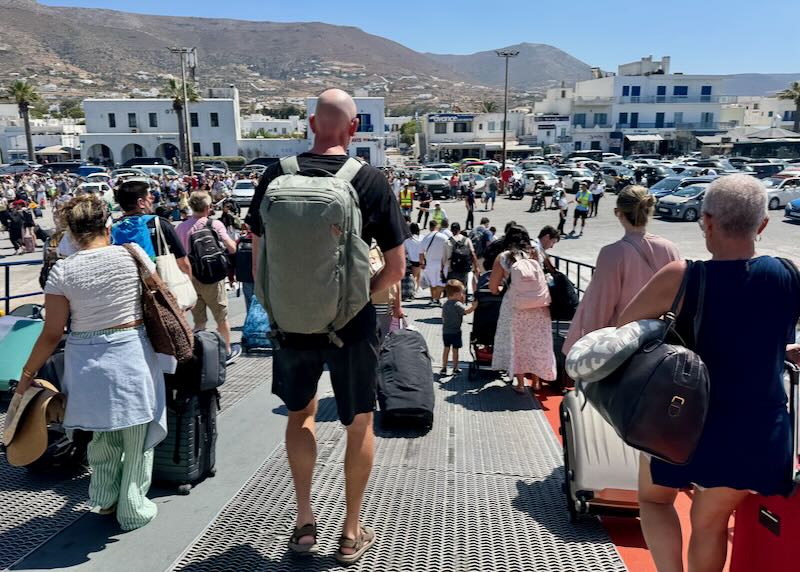
Getting off the ferry in Paros with my backpack – great for ferry travel.
A Brief History of Greece (And Where to See It)
Greece is called the Cradle of Western Civilization. Its history spans over 4,000 years, influencing everything from the alphabet and democracy to theater and science. For a traveler, the joy of Greece is that this history isn’t hidden in a book – it is standing right in front of you.
Here is a breakdown of the major eras and where to find them on your trip.
1. The Bronze Age: Minoans & Mycenaeans (3000–1100 BC)
Before “Greece” as we know it existed, two powerful civilizations rose:
- The Minoans (Crete): Europe’s first advanced civilization – a wealthy, seafaring culture based on Crete. They built palace complexes with advanced plumbing and vibrant frescoes, and traded widely across the Mediterranean. Where to see it: The Palace of Knossos and the Heraklion Archaeological Museum on Crete.
- The Mycenaeans (Mainland): The warriors of Homer’s Iliad, centered on the Greek mainland. They built massive stone citadels with “Cyclopean” walls (stones so large that later Greeks joked only a Cyclops could move them). Where to see it: The citadel of Mycenae (Lion Gate) and the Palace of Nestor in the Peloponnese.
2. The Classical Period & The Golden Age (5th–4th Century BC)
This is the famous era of the city-states (Sparta vs. Athens), the wars against the Persian Empire, and the birth of democracy.
- The Highlight: Athens became the intellectual center of the ancient world. Socrates taught philosophy, Sophocles wrote plays, and Pericles oversaw the building of the Parthenon. It was a short but blindingly bright explosion of culture.
- The Conflict: The era ended with the Peloponnesian War, a brutal conflict between Athens and Sparta that weakened all the city-states and set the stage for Macedonian rule.
- Where to see it: The Acropolis (Athens), the sanctuary and oracle site at Delphi, and the incredibly preserved theater at Epidaurus.
3. The Hellenistic & Roman Eras (323 BC – 330 AD)
After the city-states weakened, Philip II of Macedon and his son, Alexander the Great, conquered Greece and much of the known world, spreading Greek language and culture as far as Egypt and India. Later, the Romans conquered Greece but deeply admired it, effectively becoming its great borrowers and preservationists.
- Interesting Insight: The Romans loved Greece. Emperors like Hadrian poured money into the country, building libraries, aqueducts, and theaters. Many of the “Greek” ruins you see today were actually funded or rebuilt by Roman admirers.
- Where to see it: The Roman Agora and other Roman-period remains in Athens, along with the ancient sites of Kamiros and the Acropolis of Lindos on Rhodes, where Classical, Hellenistic, and Roman layers all meet.
4. The Byzantine Empire (330–1453 AD)
When the Roman Empire split, Greece became part of the Eastern Roman (Byzantine) Empire, ruled from Constantinople. Greek language, Orthodox Christianity, and a new artistic style defined the era.
- The Shift: Pagan temples were closed or converted into Christian churches. The Greek Orthodox religion became the core of identity. Art moved from lifelike statues to gold mosaics and painted icons, focusing on the spiritual rather than the realistic.
- Where to see it: The floating monasteries of Meteora, the ghost city of Mystras (near Sparta), and the great pilgrimage church of Panagia Ekatontapiliani (the “Church of 100 Doors”) on Paros.
5. Ottoman Rule (1453–1821)
For nearly 400 years, most of Greece was under Ottoman Turkish rule. This was a difficult period in many ways, but Greek identity, language, and religion survived through the Orthodox Church and local communities.
- The Revolution: In 1821, the Greeks launched the War of Independence. With help from Britain, France, and Russia (and philhellenes like Lord Byron), they eventually won their freedom. The modern Greek state began to take shape in the 1830s, with Athens becoming the capital in 1834.
- Where to see it: The White Tower in Thessaloniki and the Venetian–Ottoman mix in the Old Town of Chania (Crete).
6. The Modern Era (20th Century – Present)
Modern Greece has survived a turbulent century: World War II occupation, a brutal Civil War (1946–1949), and a military junta (dictatorship) that ruled from 1967 until 1974, when democracy was restored.
- The Population Exchange (1923): A massive, compulsory exchange of populations between Greece and Turkey moved over 1 million Greek Orthodox refugees from Turkey to Greece. This influx dramatically changed the culture, food, and music (Rebetiko) of the country, especially in Athens and Thessaloniki.
- Today: Greece joined the European Union in 1981. Despite the economic crisis of the 2010s, the country has modernized rapidly. It is now a stable, safe democracy that balances a huge tourism industry with a deep respect for tradition and local life.

About Santorini Dave